
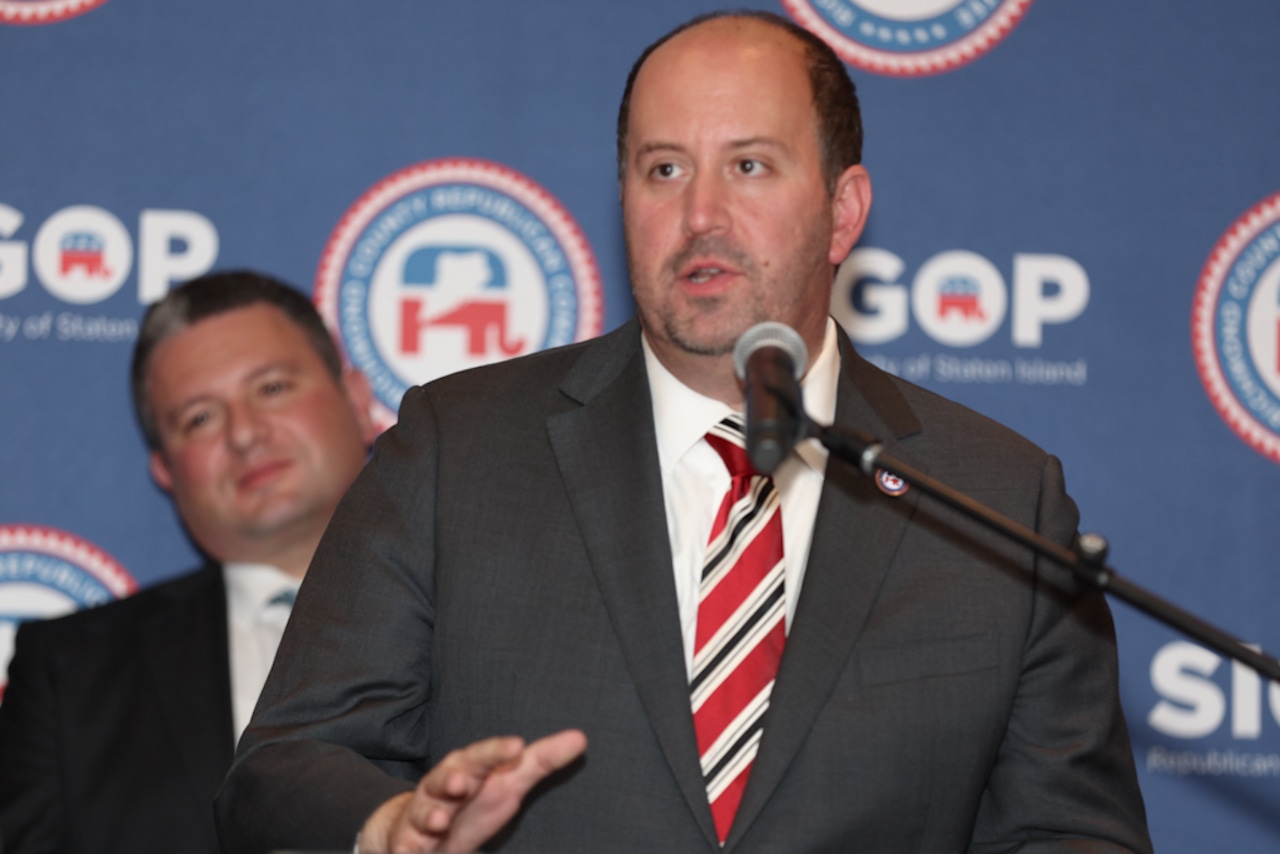
STATEN ISLAND, NY — Two bills sponsored by Councilmember David Carr aimed at supporting veterans and providing local government transparency became law on Friday, after being passed in the City Council last month.
Introduction 740-2024 provides a property tax exemption to Cold War Veterans, while Introduction 1250-2025 requires borough boards, community boards and advisory bodies to publish their bylaws in an accessible way.
“I’m excited to see the positive effect these laws will have on the community,” Carr, a Republican who represents the Mid-Island and parts of southwest Brooklyn, said. “Transparency from government and making life a little easier for our veterans are common sense laws, so I’m not surprised they became law, but I’m honored to have been the one to introduce and negotiate their passage.”
Under the veteran tax relief bill, Cold War veterans across the city will receive an estimated $938 annually in property tax relief, totaling $10.8 million in tax cuts. Prior to this, New York City was the only city or county in the state that had not yet participated in the program.
The bill, which was originally authored by former Minority Leader Joe Borelli in 2018, applies to veterans not eligible for existing exemptions. This includes those who served between World War II and Operation Desert Shield/Desert Storm, but were not in already-covered conflicts such as Korea, Vietnam and Lebanon.
“I’m looking forward to seeing the positive impacts this Cold War Veterans property tax law will have on keep our vets in our neighborhood,” said Carr. “These veterans served our nation and were ready to sacrifice so much. It is only right to fight to make sure they can stay in their home as they grow into old age.”
The transparency measure allows New York City residents to see how their boards operate, forcing accountability, clarifying how government works, and encouraging participation.
“The most entry-level institutions available for public engagement with the government should be easily accessible to everyone,” Carr said. “This law ensures the future of community engagement and the core forum of the neighborhood voices remains operating smoothly.”