
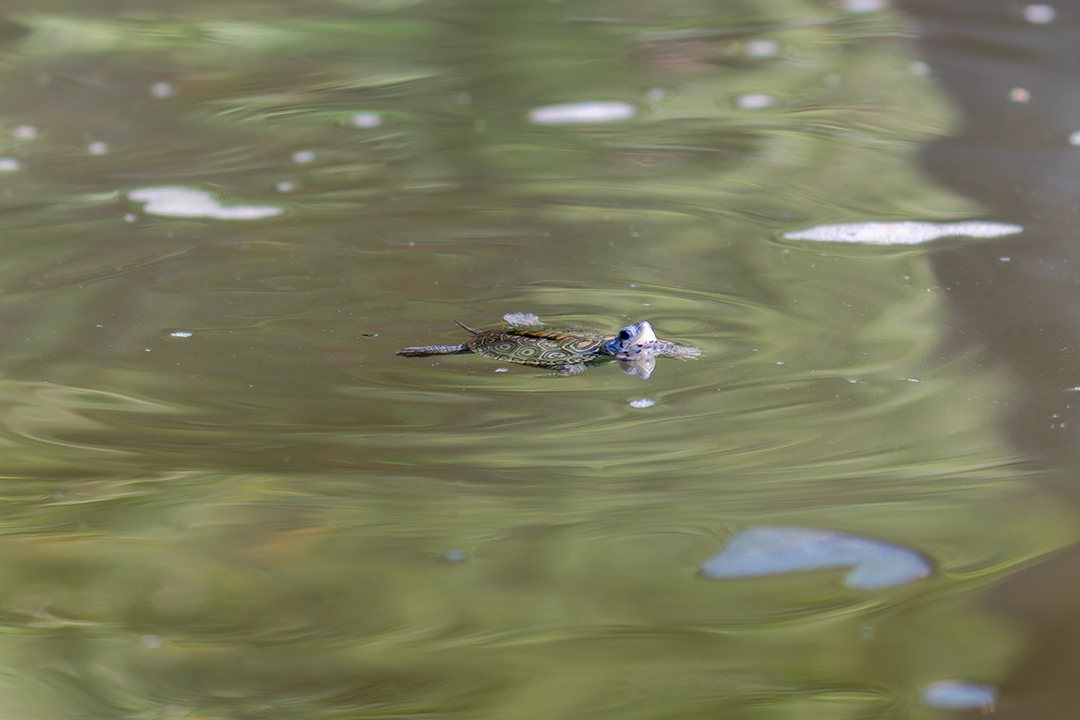
On 9 September, 31 Diamondback terrapin (Malaclemys terrapin) hatchlings raised at the Staten Island Zoo in Staten Island, N.Y., were released back into their native habitat. The successful inaugural conservation effort was attended by media and community partners, including local and government agencies, project donors, and community stakeholders. The release was part of The Staten Island Terrapin Project, initiated in 2019 as a graduate project.
“I wanted to engage my community to figure out if diamondback terrapins were present on Staten Island and what their status was here,” said Elle Fenton-Hulett, lead researcher on the project and animal keeper at the Staten Island Zoo. “It had been over 20 years since anyone had studied the population on Staten Island, so for the first few seasons, we were just collecting observational data on their presence and nesting ecology. Now, with the support of the Zoo and Freshkills Park Alliance, it’s become a much larger conservation project, and we were able to successfully head-start three nests this year, protecting 31 turtles from likely predation.”
The diamondback terrapin, listed as vulnerable by the International Union for Conservation of Nature, was once near the brink of extinction thanks to its popularity as a food item in the 18th century. The population has since begun to recover, though it still faces numerous threats, such as habitat loss and degradation, predation, road collisions, and accidental entrapment in crab pots. Many of these threats are anthropogenic, with the keystone species experiencing increased pressure as humans continue to develop and urbanize areas adjacent to tidal wetlands, estuaries, and marshes.
In the greenest borough of New York City, Staten Island is home to over 11,000 acres of parks and natural areas. This includes 2,200 acres of protected tidal wetlands at Freshkills, once infamously the home of the world’s largest open landfill. Now known as Freshkills Park, the restored habitat serves as the perfect field site to study and protect diamondback terrapins.
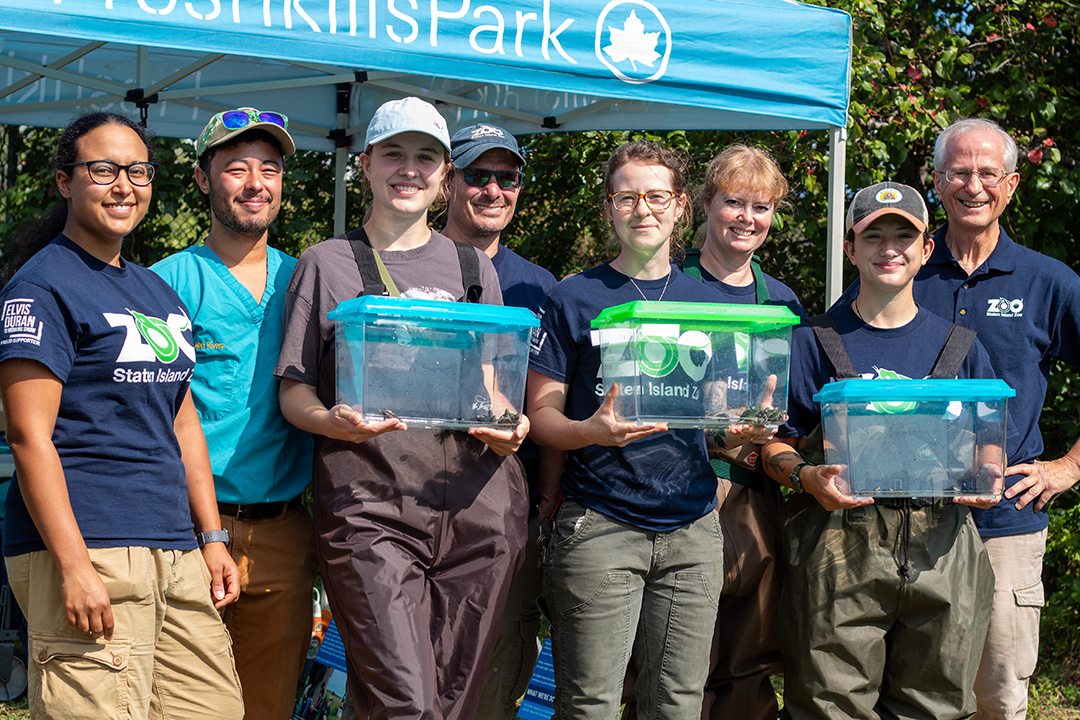
Going into the 2025 season, after conversations with the New York State Department of Environmental Conservation biologists and other stakeholders, researchers decided to pursue a more proactive conservation method—excavation and artificial incubation of three nests from Freshkills Park.
The field site was monitored during the nesting season (June-July), and once a female was observed laying and covering her nest, the field team sprang into action, carefully excavating nests. The eggs were placed in vermiculite and transferred to the Staten Island Zoo, where they were numbered, labeled with the clutch ID and lay date, and placed in an incubator. Out of the 33 eggs collected, 31 hatched after about 60 days. They were quarantined on Zoo grounds, where they received veterinary care and expert husbandry for 30 days before being released back to the wild.
“As an Association of Zoos and Aquariums-accredited institution, the Staten Island Zoo shares a mission to actively engage in wildlife conservation efforts,” said Staten Island Zoo Executive Director, Ken Mitchell. “I am proud of the work of our Zoo team on this project. With the Zoo’s expertise in animal care, and our partnership with the Freshkills Park Alliance, we are giving these terrapins a true survival ‘head start.’ By raising public awareness among thousands of residents, we also are raising public appreciation for protecting animals in their own nearby parks and wetlands.”
“We are looking forward to using the momentum from this successful release to expand the reach and impact in future field seasons,” said Elle Fenton-Hulett.
Photos Credit: © Elle Fenton-Hulett.
Written by Elle Fenton-Hulett, zookeeper at Staten Island Zoo
Edited by Sarah Gilsoul, communications coordinator at AZA