
 By Daniel Katzive
In the cold winter of 1980, a young, pregnant Leslie Day stepped out on the icy deck of her houseboat docked in the 79th Street Boat Basin Marina and picked up her cat. While she had been living on boats in the marina for several years at that point, she still lost her footing that day and plunged into the icy water. A watchful neighbor screamed for help, and Day’s husband hauled her out of the drink, warmed her up, and phoned her obstetrician. The baby was fine and later that year joined the tight-knit community of live-aboards in the marina, where that baby grew up learning to swim in the chlorinated waters of the nearby YMCA at a young age.
The Boat Basin Marina closed in 2021 and there are not many of these former residents around the Upper West Side these days. In fact, the community of year-round residents had already shrunk considerably prior to the marina’s closure, and now these former floating Upper West Siders have largely dispersed, along with their boats, to other neighborhoods and harbors.
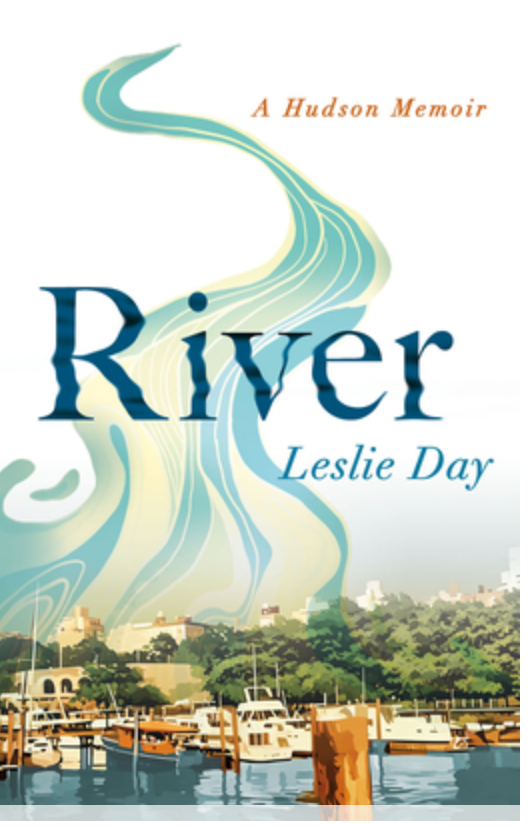
But you can get a glimpse of what life was like for this resilient community in “River: a Hudson Memoir,” a newly published book by Day, who lived on boats in the marina for 36 years starting in 1975. As she describes it, boat life was subject to all manner of natural forces; it was also a way of life that allowed residents to live next to the urban landscape of Manhattan while rising and going to bed each day with unobstructed river views.
“River” is partly a personal memoir and partly an anecdotal history of life in the Boat Basin, but the book also serves as a guide to the Hudson River itself. Day, who spent much of her career working as a science teacher and has previously authored New York City field guides, details the glacial origins of the estuary and provides descriptions of the various fish, birds, and marine mammals that call the river home – or visit periodically. The book also covers the history of the pollution which fouled the river and the successive efforts by activists and nonprofit organizations to clean it and bring it to (sometimes) swimmable levels of water quality.
The Hudson River has been a force in Day’s own life from her early years. She has memories of early childhood living in a rented cottage near the edge of the Palisades cliffs on an estate in Englewood Cliffs, New Jersey. If you are struggling to imagine where such a house could have existed, that is because the landscape there was subsequently transformed by the building of the Palisades Parkway and the Palisades Interstate Park. No one now lives where her family once lived, and probably no one ever will.
Day moved to the Boat Basin as a young adult in 1975, answering an ad for a rental accommodation. She met her husband, another resident, while living there, and raised her son on the river, while commuting to teaching jobs on the Upper West Side and later in New Jersey. Now 80, Day lives in Riverdale with a view of the river below; she can also see the site of her childhood cottage across the way in New Jersey.
Her stories of life in the marina are organized thematically spanning her three decades of residence. Overall, one gets a sense of a tight-knit, self-reliant community who socialized actively on each other’s boats, enjoying quiet summer evenings on the river as crowds in the park thinned out, while also racing to help each other as boat horns sounded in times of emergency. And there are plenty of hair-raising tales in here: adults, children, and dogs falling in the water; sinkings and near-sinkings; docks coated in sheets of ice; hurricanes; brutal nor’easters; crushing ice flows; and at least one fire. “People in the Boat Basin were hardy,” writes Day. “You had to be.”
Decades of deferred maintenance and extreme weather finally caught up with the Boat Basin in 2021 when the Parks Department deemed the facility no longer safe enough to weather another winter. The city evicted the boats and their residents and shut it down. With collective memories of marina life slipping away into the past, Day’s book provides a valuable personal history of what is essentially another one of Manhattan’s many lost villages – what Day calls “one of the few magical villages in the world,” a description she attributes to one of her marina neighbors.
There is some hope for the future though. The city is committed to rebuilding the marina as a larger and more modern facility. The project has been moving through an arduous planning and environmental review process, but the latest word from the Parks Department’s team was that construction on the new marina could begin in late 2026 and that previous residents will be accommodated when the facility reopens several years later. The magical community Day describes seems unlikely to reemerge immediately, but of course nothing on the Upper West Side or anywhere in New York City exists frozen in time. The river, though, is eternal.
“River: a Hudson Memoir” is published by Three Hills and is available at Book Culture on the Upper West Side.
Subscribe to West Side Rag’s FREE email newsletter here. And you can Support the Rag here.