
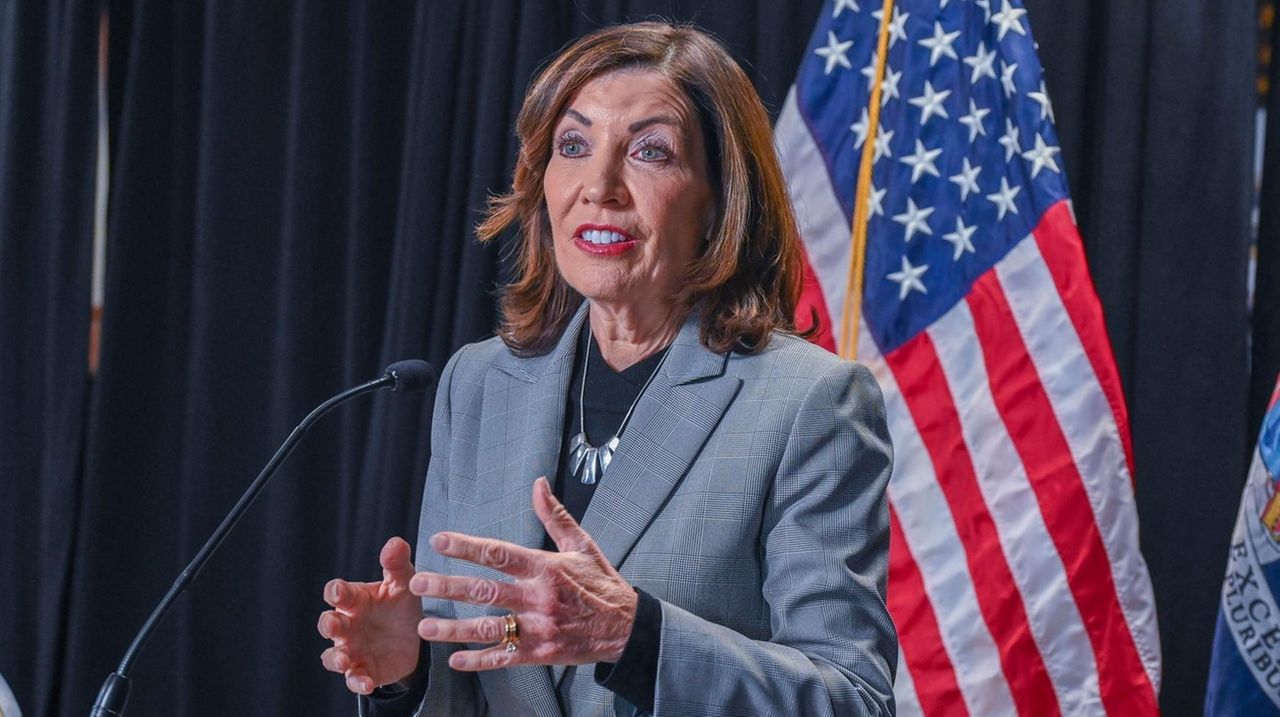
ALBANY — Gov. Kathy Hochul will sign the Medical Aid in Dying bill that will allow terminally ill individuals with less than six months to live to use doctor-prescribed medication to end their lives.
Hochul announced her decision Wednesday morning in an op-ed in the Times Union of Albany.
In the piece explaining her decision, Hochul wrote that she believes government “has a responsibility to protect, not interfere, with an individual’s deeply personal decisions.”
She also shared her own experience of watching her mother die of complications from ALS.
Hochul’s decision to sign the bill came after legislative leaders agreed to amend the legislation to include further precautions and limitations.
Hochul acknowledged opponents’ view that the bill violates the sanctity of life.
“Although this was an incredibly difficult decision, I ultimately determined that with the additional guardrails agreed upon with the legislature, this bill would allow New Yorkers to suffer less — to shorten not their lives, but their deaths,” she said in a statement.
The decision will make New York the 13th state with a law that supporters call medical aid in dying and opponents call physician-assisted suicide.
The bill’s sponsors, state Sen. Brad Hoylman-Sigal (D-Manhattan) and Assemb. Amy Paulin (D-New Rochelle), called Hochul’s announcement a historic victory for New Yorkers suffering from a terminal illness who wished to peacefully end their suffering.
“Since we first introduced this legislation nine years ago, I have consistently said this bill is not about ending life, it’s about shortening death,” Hoylman-Sigal said in a statement.
Paulin said the bill would give patients the autonomy and dignity they deserve at the most vulnerable moment in their lives.
“Most people will never choose medical aid in dying, but they want the reassurance of having it as a compassionate safeguard that offers comfort even if it is never used,” she said.
Cardinal Timothy Dolan and the Bishops of New York State said in a joint statement they were “extraordinarily troubled” by Hochul’s decision. The Catholic leaders said they believed the new law would undermine other investments the state has made in mental health care and suicide prevention.
“How can any society have credibility to tell young people or people with depression that suicide is never the answer, while at the same time telling elderly and sick people that it is a compassionate choice to be celebrated?” the statement said.
The bill would allow a “mentally competent, terminally ill adult,” age 18 or older, who has a prognosis of six months or less to live, to request self-administered, life-ending medication from a physician. The measure also would provide certain protections and immunities for the prescribing health care providers, for example, for not resuscitating qualified patients who have self-administered the medication.
Hochul insisted on several amendments to the bill the state Legislature passed in June to win over her support, including protections to address concerns that vulnerable populations, including those with disabilities and the elderly, might be pressured into a decision they would not have made on their own.
Under the updates, the law will require a mandatory five-day waiting period to provide patients with the chance to change their minds, and both a written and recorded oral statement that patients are making the request of their own free will. In addition, anyone who might financially benefit from the patient’s death is disqualified from being a witness or interpreter.
The initial evaluation of a patient by a physician now must be made in person, and patients will also need to submit to a mandatory mental health evaluation by a psychologist or psychiatrist.
Outpatient facilities associated with religious hospitals can choose not to offer the medication and the effective date of the bill has been pushed back to allow for regulations and training, Hochul wrote.
Additionally, only New York residents will be eligible for medical aid in dying. Any physician who violates the law would be found to have committed professional misconduct.
The bill will be passed and signed in January, according to Hochul’s office. It will go into effect six months after she signs it.
Mandi Zucker, executive director of End of Life Choices New York, celebrated the announcement but said advocates needed to turn their efforts towards education for those impacted by the new law.
“We look forward to working with the Governor’s office and many professional organizations in the coming months and years to ensure the law is implemented successfully and efficiently,” Zucker said in a statement.
CORRECTION: A previous version of this story gave the wrong time frame for Hochul signing the bill, attributed to another publication.