
STATEN ISLAND, N.Y. — Mayor-elect Zohran Mamdani is a stranger to much of Staten Island.
His election as New York City’s 111th mayor (or more likely its 112th) saw him take 51% of the citywide vote in November, but just 23% of Staten Island’s electorate.
The win sparked the latest farfetched calls for the Island’s secession from the rest of the city, something that’s failed in the past and the mayor-elect has said he opposes.
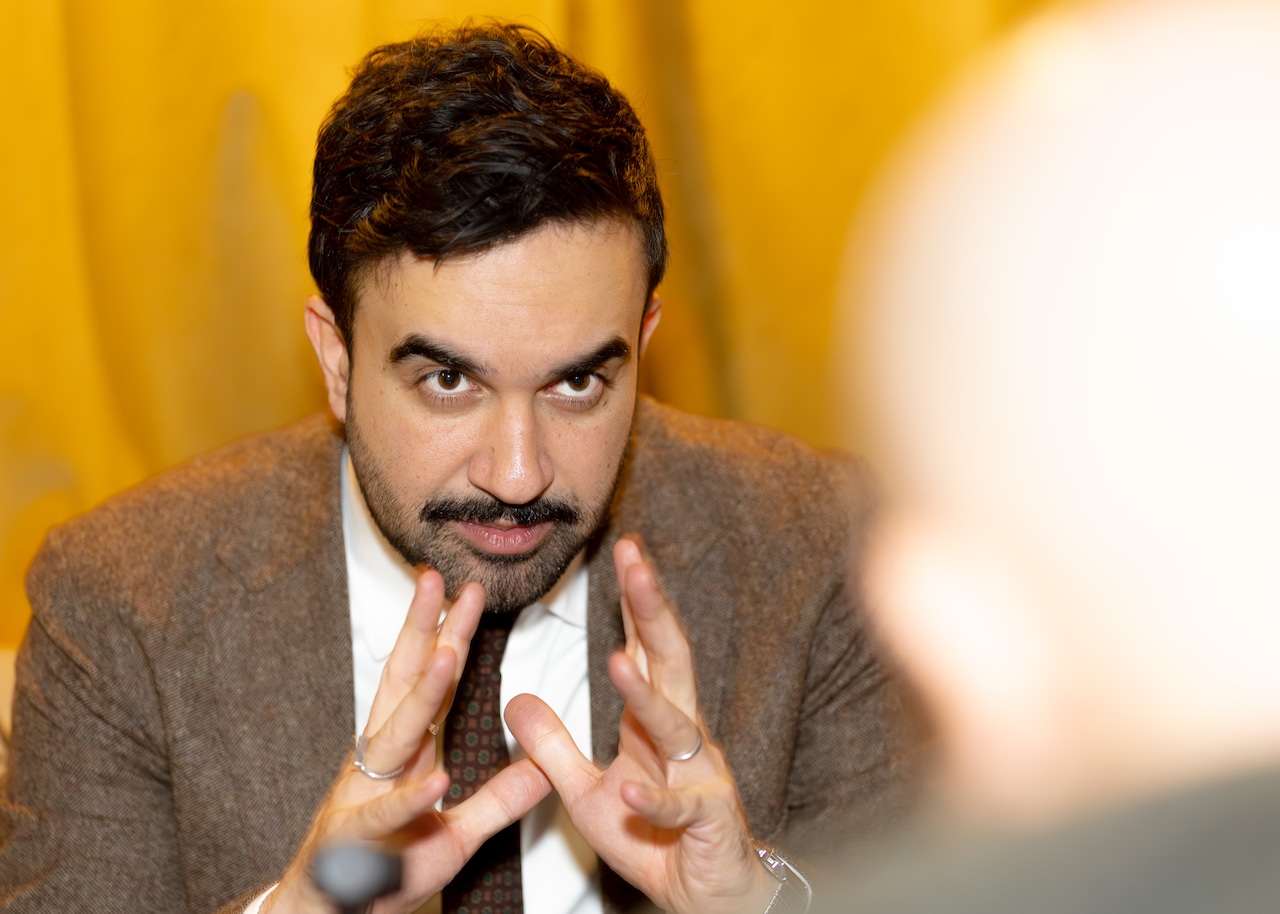
On a Friday visit to the Island, Mamdani seemed to view that opposition through his constant lens of political optimism.
“I think right now is an opportunity to introduce myself as I am, and the focus of what my administration will be,” he said. “It’s very much in line with, I know, what many Staten Islanders care deeply about, which is their ability to not only afford to live in New York City, but also build a life in New York City.”
That comment and others from a 10-minute exclusive interview with the Advance/SILive.com offered a glimpse into how the mayor-elect views Staten Island and its future.
When asked Friday to name some of his favorite local restaurants, the 34-year-old mayor-elect bypassed the borough’s pizza scene, instead recalling a visit he had with friends some years ago sampling the borough’s renowned Sri Lankan cuisine.
The lighthearted question and answer at another top-flight Island eatery, Shaw-Nae’s House in Stapleton, put Mamdani on a clear side of a political and cultural tug-of-war that’s been ongoing in the borough since at least the construction of the Verrazzano-Narrows Bride.
It pits a more-established, whiter old guard hoping to cling to a bucolic way of life against a younger, more diverse crowd that sees Staten Island as their only chance to seize a piece of the American Dream in New York City.
Their dream and Mamdani’s more affordable vision for the city can only be found with the construction of more housing across the five boroughs, none of which have less than Staten Island.
While no advocate for more housing, Mamdani included, will provide an exact number they hope to add to the Island’s 500,000 residents, it’s clear the mayor-elect knows he’s in for an uphill battle.
“I think that there’s no doubt there will be difficult conversations to be had as we try and balance all the different things that are needed in our city,” he said. “I think the goal that we have, however, is that no New Yorker be priced out of living in this city because of a lack of that housing.”
Though the biggest tool in achieving that goal, more housing, is antithetical to Staten Island’s suburban way of life, the mayor-elect does see a lot of opportunity for common ground with the locals.
He’s a proponent of long-sought reform of a property tax system that sees Staten Islanders pay higher rates for their one- and two-family homes compared to multi-million dollar brownstones in more tony parts of the city.
His advocacy for a free bus system would also be a benefit to Islanders that rely on public transit to get around. Mamdani hinted that the express bus system would also be included in that “fast and free” vision.
The mayor-elect borrowed from his host Friday for perhaps his most endearing comments about the Island.
Shaw-naé Dixon, the proprietor of the globally-acclaimed restaurant, shared her family’s story that predates even most of the oldest guard on Staten Island.
Dixon is an eighth-generation Staten Islander and a descendant of John Jackson, the Island’s first Black property owner who in 1799 purchased land that would become part of the Sandy Ground settlement near modern-day Rossville.
For Dixon, that story represents the foundations of her own American Dream and that of the home she calls the “borough of many memories,” a play on the tired “forgotten borough” moniker.
The mayor-elect said those many memories are what he hopes to take to City Hall when he assumes office Jan. 1.
“This isn’t a forgotten borough, it’s a borough of many memories. There’s so much history right here on this Island, and I understand why there are Staten Islanders who would feel that that history is one that hasn’t been recognized,” he said. “What I hope to show through my administration is that we are going to take seriously the concerns of Staten Islanders and deliver on those concerns.”