
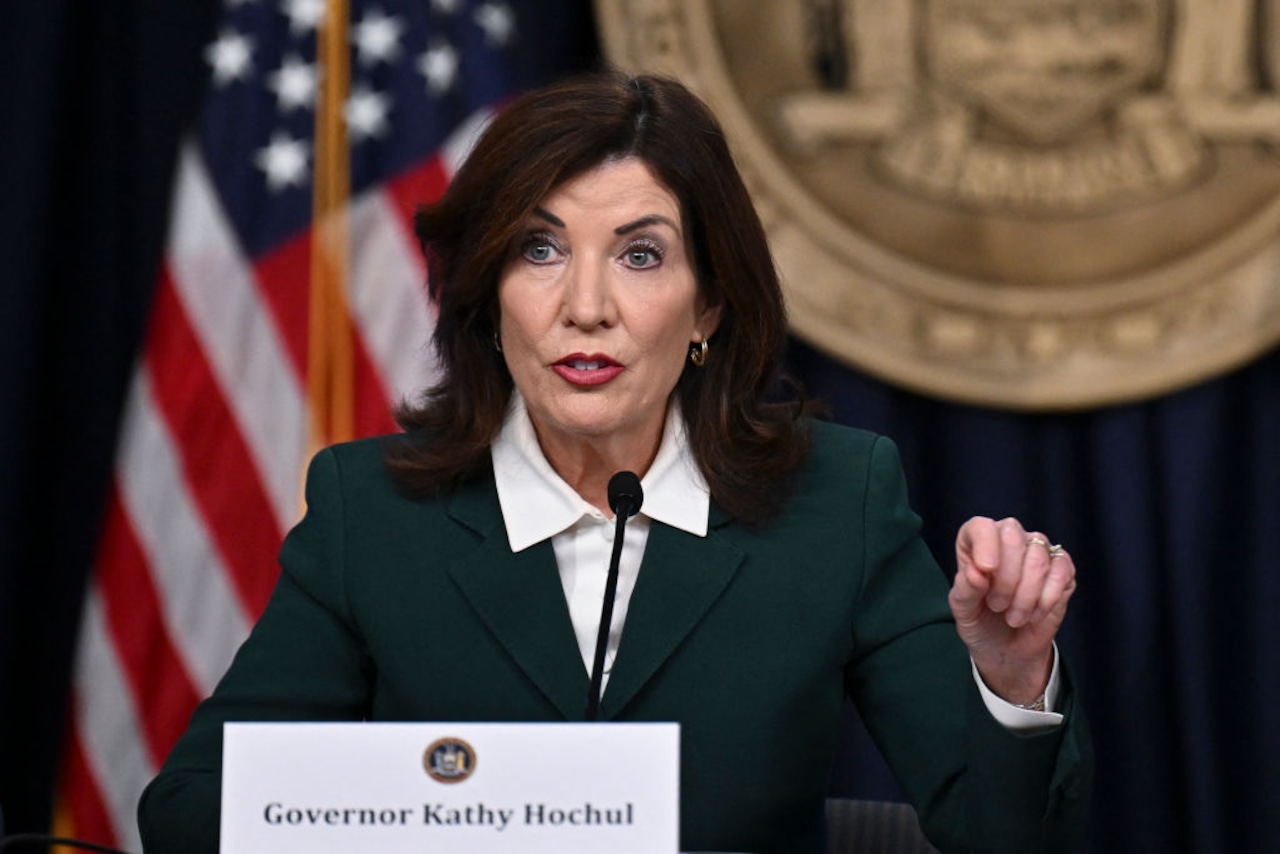
Gov. Kathy Hochul today repealed the so-called 100-foot rule that allows most new customers to hook into natural gas networks for free, but delayed implementation for a year.
Supporters of New York’s aggressive climate policies have long sought to repeal the 100-foot rule, arguing that it subsidizes and extends natural gas networks at a time when state law calls for curtailing fossil fuels to reduce greenhouse gas emissions.
Environmental activists were ecstatic that Hochul signed the legislation.
Ending the 100-foot rule is “an important part of the transition toward the cleaner, healthier, and more affordable energy system that New Yorkers have been expecting,’’ said Jessica Azulay, executive director of Alliance for a Green Economy.
Builders and utility companies had lobbied to keep the rule.
When the 100-foot rule expires next year, the average Upstate customer who gets new gas service from National Grid would pay about $7,000 to install a gas service line to their property, utility officials said. Downstate, the costs would be much higher.
The one-year delay comes on the heels of a similar delay in implementing a new law that would prohibit fossil fuel appliances in all new homes and other buildings of up to seven stories. Hochul’s administration last month agreed to a legal stipulation that suspends the All-Electric Buildings Act for at least a year, pending court appeals.
Hochul and legislators agreed to a 12-month period to end the 100-foot rule, which will give state regulators time to iron out details and builders time to adjust, according to a source with knowledge of the deal.
The delay did not seem to bother State Sen. Liz Krueger, D-Manhattan, who sponsored the bill and has been a champion for energy reform.
“Kathy Hochul just gave New Yorkers a $600 million Christmas present by signing our bill to repeal the 100-foot rule,” Krueger said. “This is a massive win for New York’s gas customers, and for clean air and a livable climate.”
Hochul said subsidizing natural gas service is no longer justified.
“It’s simply unfair, especially when so many people are struggling right now, to expect existing utility ratepayers to foot the bill for a gas hookup at a brand new house that is not their own,” Hochul said in a news release.
Supporters of the repeal often frame it as a cost savings for existing gas customers, who will no longer subsidize new customers. Estimates of the statewide annual cost of installing new lines range from $450 million to $600 million, but those numbers are heavily tilted toward Downstate utilities, whose installation costs run five to 10 times higher than Upstate, according to data from the Public Service Commission.
National Grid officials said Upstate gas customers will save less than $1 a month when the rule is repealed.
Utility officials also said ending the 100-foot rule will make it more expensive for customers to switch to natural gas from dirtier fuels like oil and propane.
“We are disappointed that the 100‑foot rule has been repealed,” said Jared Paventi, a National Grid spokesman. “This law could make it more expensive for customers to convert from oil to natural gas – an efficient way of reducing emissions and saving energy costs.”
Republican state Sen. Joseph Griffo, of Rome, said the repeal would add to the cost of new housing.
“This additional expense will further exacerbate the state’s housing affordability crisis and limit access to the most reliable heating source available,” he said.
For some homebuilders, the stops and starts of new policy have made for a bumpy ride.
Dan Barnaba, who is planning to build 38 houses at his Glen View development in Salina, originally expected to build electric-only homes in keeping with the All-Electric Buildings Act, which was slated to take effect Jan. 1, 2026.
When the law was delayed by the court agreement, he changed plans and decided to bring in natural gas. He’s still planning to bring in gas thanks to the one-year extension of the 100-foot rule, but there’s still some uncertainty, he said.
For example, the 100-foot rule actually allows gas-heating customers up to 200 feet of free pipe. Customers who use gas for heat – as opposed to those who use it only for cooking or other purposes — can get up to 100 feet of main and 100 feet of service line. For other customers, the limit is 100 feet of main and service line combined.
Barnaba said he’s waiting to see if that remains the rule.
Another issue for builders, Barnaba said, is what happens the day the 100-foot rule is repealed? Will developers who paid deposits to bring gas into a subdivision be able to continue extending gas service to new homes they haven’t yet built?
The 100-foot rule has existed since at least 1890, according to Public Service Commission staff. Basically, it says that the utility will not charge a new gas customer to install up to 100 feet of pipe to bring gas to their property.
It benefits two types of customers: occupants of new buildings, and people who are converting from different fuels such as oil or propane.
The rule requires existing customers to subsidize new customers. The rationale for that, utility officials say, is that over the long term it spreads out the cost of operating the network over more customers. The average payback period, when monthly gas payments of new customers exceed the cost of installing their service lines, is about 7.7 years, according to a 2024 report by the PSC staff.
But continuing to build out gas networks flies in the face of state energy policy, which aims to reduce the role of natural gas over time and increase reliance on electricity. Building out gas infrastructure just adds to the number of pipes that will have to be maintained and paid for over the coming decades, critics say.
Lisa Marshall, director of advocacy and organizing at New Yorkers for Clean Power, said repeal of the 100-foot rule is an important step toward scaling back natural gas infrastructure and building a cleaner energy system.
“Are we going to keep expanding fracked gas and expanding climate pollution and indoor air pollution in New York, in all our buildings? Or are we going to stop doing that?” Marshall said. “Are we going to keep charging people hundreds of millions of dollars a year to put new pipelines, new gas line extensions, out there? Or are we going to stop doing that?”
Staff writer Tim Knauss can be reached at:email|Twitter| 315-470-3023.