
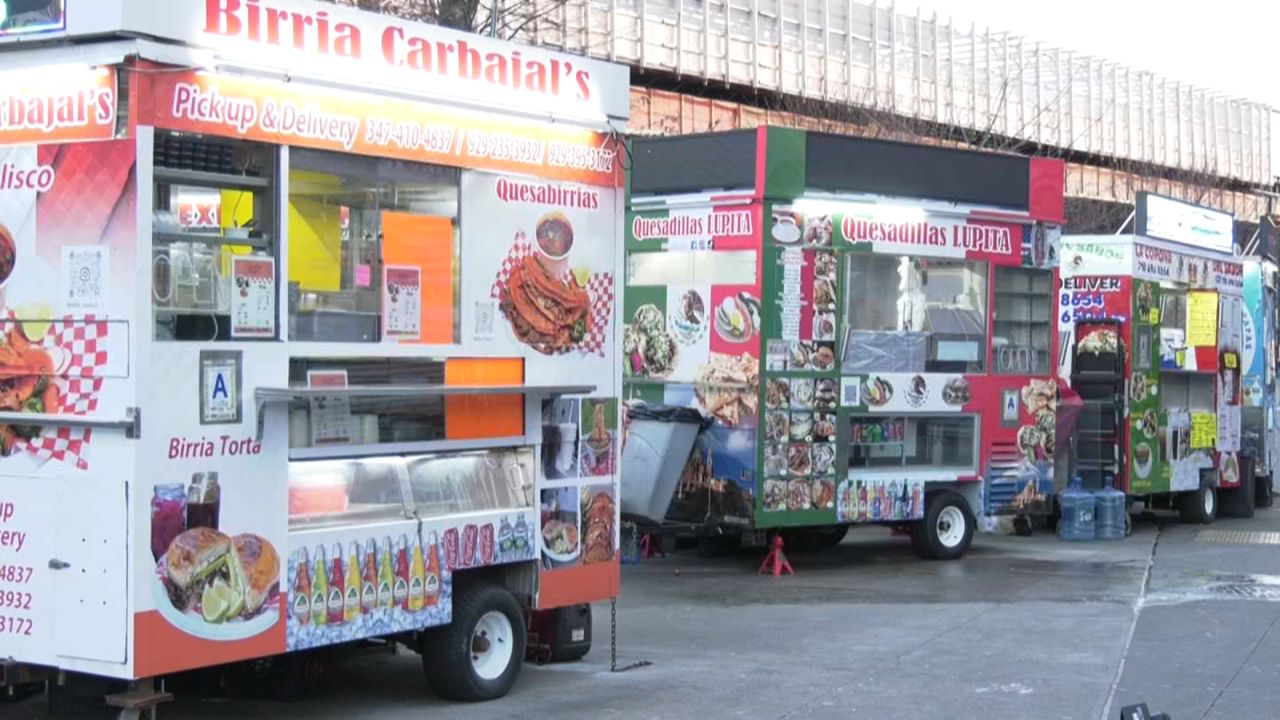
A series of measures that will reform street vendor regulations has passed in the City Council, opening up thousands of new opportunities to apply for a street vending license — but also implementing stricter rules.
Corona Plaza in Queens is a hotspot for vendors. But citywide, vendors say it’s been difficult to get the legal permits needed.
What You Need To Know
A series of measures that will reform street vendor regulations has passed in the City Council, opening up thousands of new opportunities to apply for a street vending license — but also implementing stricter rules
Around 20,000 street vendors work across the city, but fewer than half actually have licenses, according to the Street Vendor Project advocacy group
Up to 2,200 new mobile food vending licenses will be made available each year through 2031, while more than 10,000 new general merchandise vending licenses will open up in 2027
Most street vendors in the city work in Queens and Manhattan, with an estimated 96% of street vendors being immigrants, according to the Immigration Research Initiative
Around 20,000 street vendors work across the city, but fewer than half actually have licenses, according to the Street Vendor Project advocacy group.
Street vendor licenses granted by the city had previously been subject to strict caps.
Up to 2,200 new mobile food vending licenses will be made available each year through 2031, while more than 10,000 new general merchandise vending licenses will open up in 2027.
However, the reforms also include stricter penalties for vendors who sell without a license and new standards around cleanliness and waste disposal.
The bills also establish a new Division of Street Vendor Assistance within the city’s Department of Small Business Services, which would handle training and educating vendors.
Bronx Councilwoman Pierina Ana Sanchez was the chief sponsor of the largest reform bill.
“Enforcement was inconsistent and ineffective, and stakeholders were so polarized they feared even sitting at the same table. Vendors felt criminalized, brick and mortar businesses felt ignored, reform was stalled, but today’s bill is more balanced,” Sanchez said on the chamber floor earlier in the week.
NY1 spoke with customers who like to purchase food from street vendors in Corona. They said they liked the idea of more street vendors in the area.
One restaurant owner said he welcomes more street vendor regulation because he often sees vendors disposing of their trash with his restaurant trash.
Most street vendors in the city work in Queens and Manhattan, with an estimated 96% of street vendors being immigrants, according to the Immigration Research Initiative.
The bills now head to the mayor’s desk, but have passed with a veto-proof supermajority.