
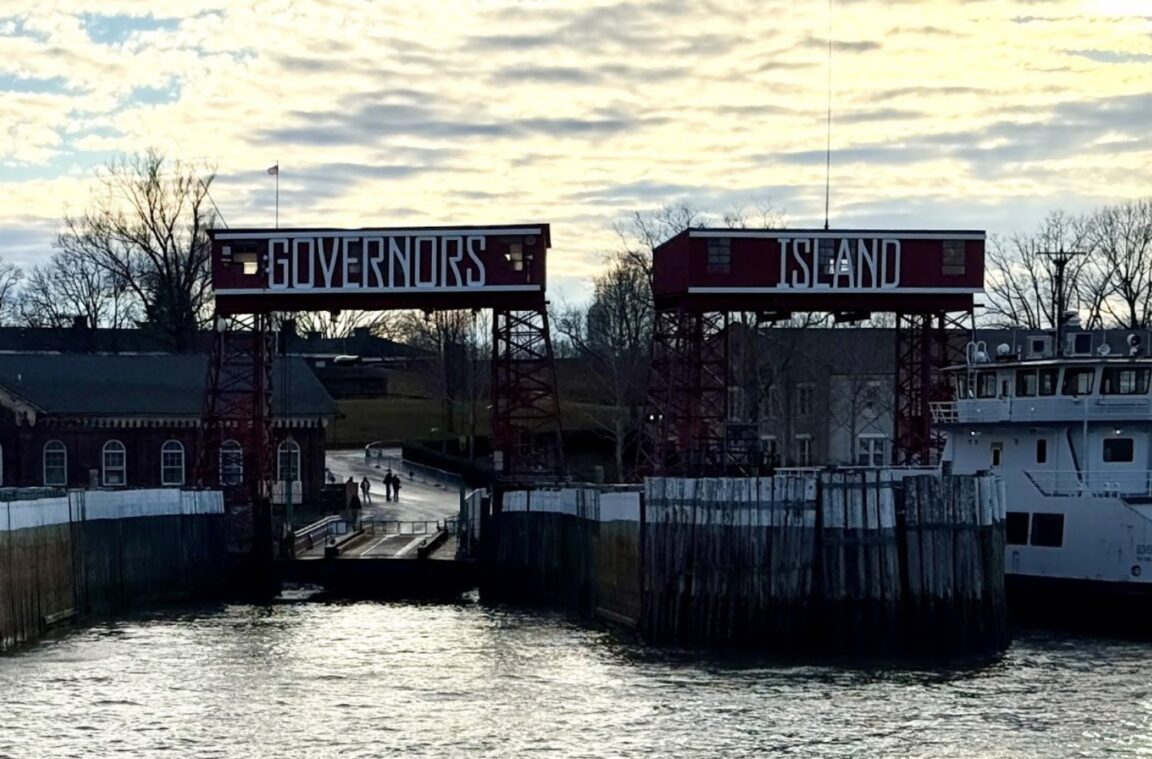
On a sunny December afternoon, the most challenging part of reaching Governors Island is finding the ferry. There are no signs or staff, and the Staten Island Ferry is the only obvious terminal, leaving many to rely on their phones to figure out where to go. When the Governors Island boat arrived, no one checked tickets. A crew member waved passengers forward and about 30 people boarded the 12:30 p.m. crossing.
When the ferry pulled into the dock, the atmosphere changed. It was quiet and unexpectedly calm for New York City. The air was crisp and clean, helicopters moved overhead in a pattern every 15 minutes and the baseball fields were empty.
“Each turn on the path gives you another view of the Statue of Liberty, the bay and the skyline,” Andrew Valavan, a Brooklyn resident, said. “It all feels special, like you’ve stepped into a different world.”
About a million people visit Governors Island every year, but winter is different. Summer draws crowds for concerts, festivals and long days in the park. Winter brings the island back to nature. When the warm season ends and most activities shut down, a smaller community keeps it going: students who travel for school, construction workers who build in the cold, ferry crews who connect the island to lower Manhattan, and visitors searching for peace or a moment they will remember. Together they show what life on the island looks like when the summer crowds disappear.
“Cold temperatures and wintry conditions can act as a deterrent,” said Sophia Maitino, senior associate for Heller Inc., a public affairs firm that represents The Trust for Governors Island. “But there’s still a lot of beauty here, and more ways than ever for New Yorkers to engage with the island during the winter months.”
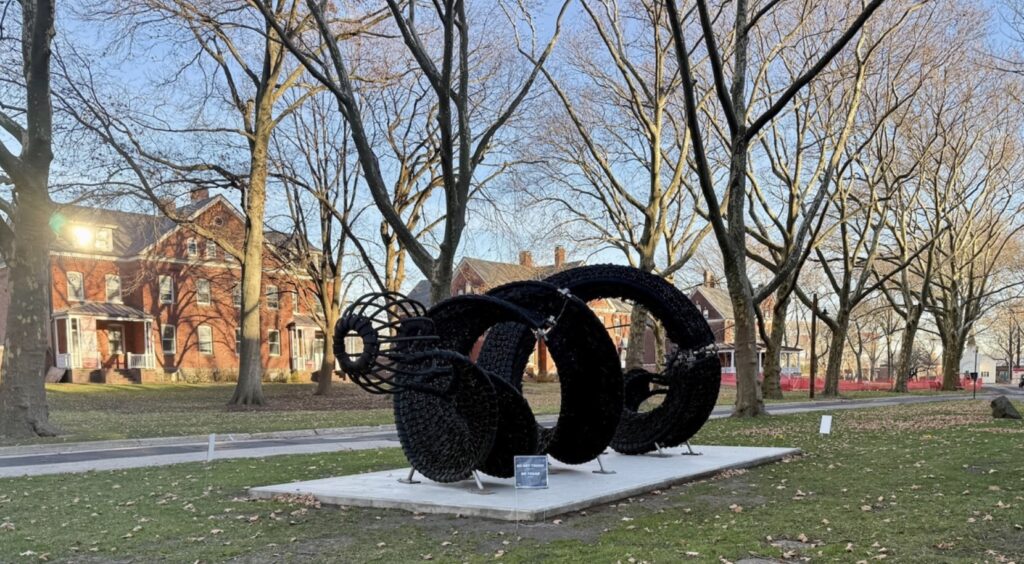
Historic structures and empty winter paths shape much of the island’s character in the cold months. (Credit: Baron Carr)
Students who cross the harbor every day
Urban Assembly New York Harbor School is the busiest place in winter. The public high school maintains enrollment around 500 students a year, and their routine continues through every season. Students gain experience through hands-on work outdoors, welding metal, hauling barrels of dirt and debris, and carrying equipment across the field without slowing down.
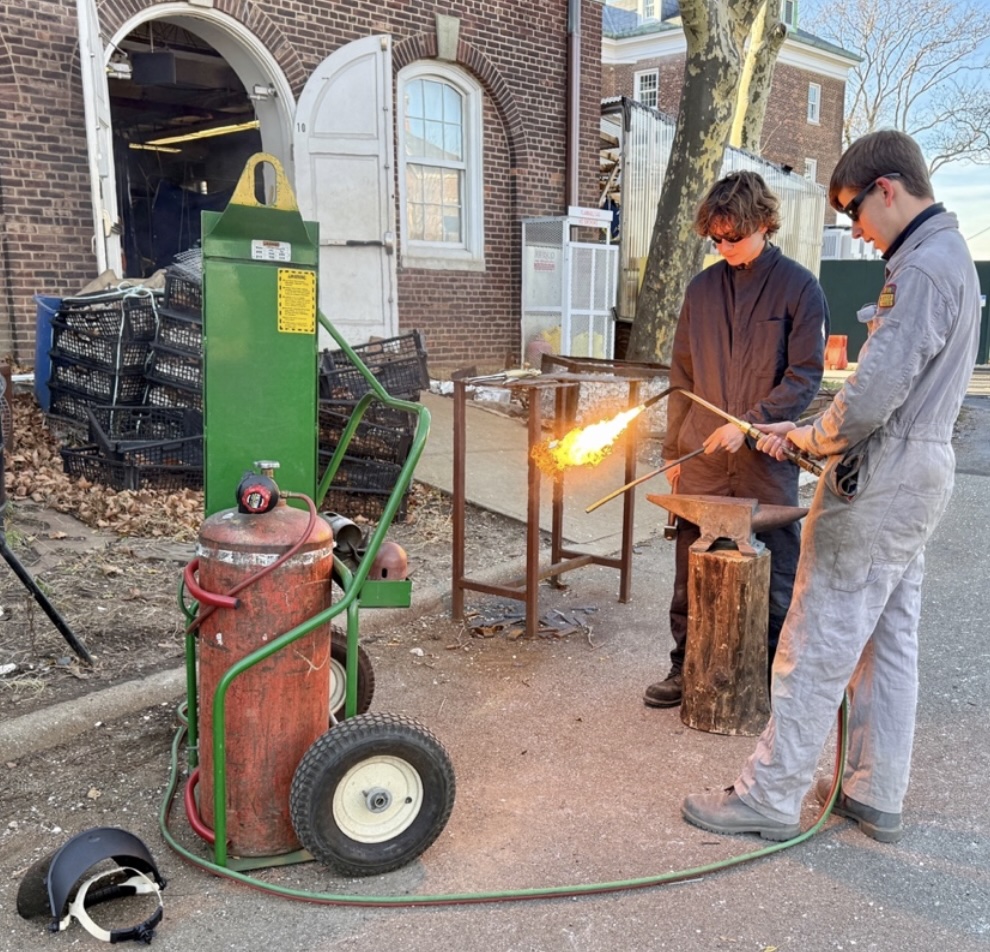
Harbor School students work with fire and metal outside a brick workshop. (Credit: Baron Carr)
“It’s a bit cold. It’s not too bad,” said Nathan Duffy, a junior who travels from Queens and has grown used to the ferry ride. Another student, Yasmeen Beharry, described her commute with one word. “Cold,” she said, with laughter. “You just get used to it.”
Their movement brings steady life to an island that otherwise is quiet.
Near the school, construction crews are working on a new Harbor School facility that will include a 12-foot-deep swimming pool for scuba and water training. Work continues even as temperatures drop.

Mike, a construction worker, stands in front of the new Harbor School building construction. (Credit: Baron Carr)
“Governors Island has its own weather channel,” said Mike McGorman, a construction worker. “It is always windy, and it is always cold.”
He set up barricades and scaffolding and kept the area safe. Most winter days, the only people who pass the construction zone are students. Many of the old Coast Guard buildings nearby remain closed, adding to the stillness. The construction workers supply much of the island’s winter activity as they push long-term projects forward.
Ferry workers who keep the island connected
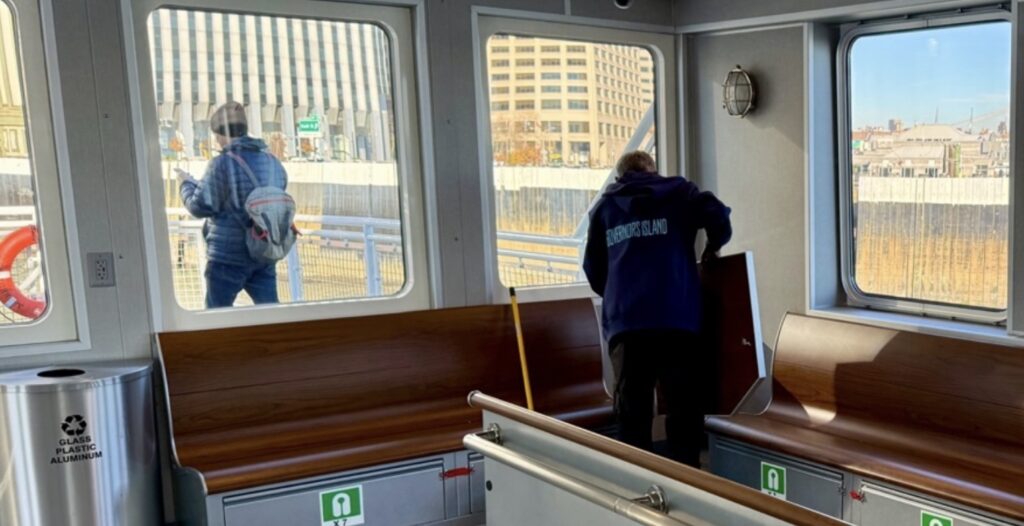
A crew member prepares the cabin of the Governors Island ferry between runs as a passenger walks along the dock outside. (Credit: Baron Carr)
The ferry is the only way in and out. Service begins at 7 a.m. and the final scheduled ferry departs at 5:30 p.m. Tenants of participating organizations Governors Island organizations and their registered guests can use extended ferry hours. A new electric vessel now serves the route, and the ferry workers take pride in the shift to cleaner operations.
“This vessel is electrical. It does not need the type of maintenance a traditional vessel needs,” said Hamilton Clyde, an oiler with 40 years in marine engineering. He said the ship is quieter, cleaner and warmer in the winter. After two years working on Governors Island, he plans to retire and return to Trinidad. At 70, the cold is harder on his body. “This is my last job,” he said.
Ferry workers are the backbone of daily life, ensuring the island runs through every season.
Vendors who stay open when most do not
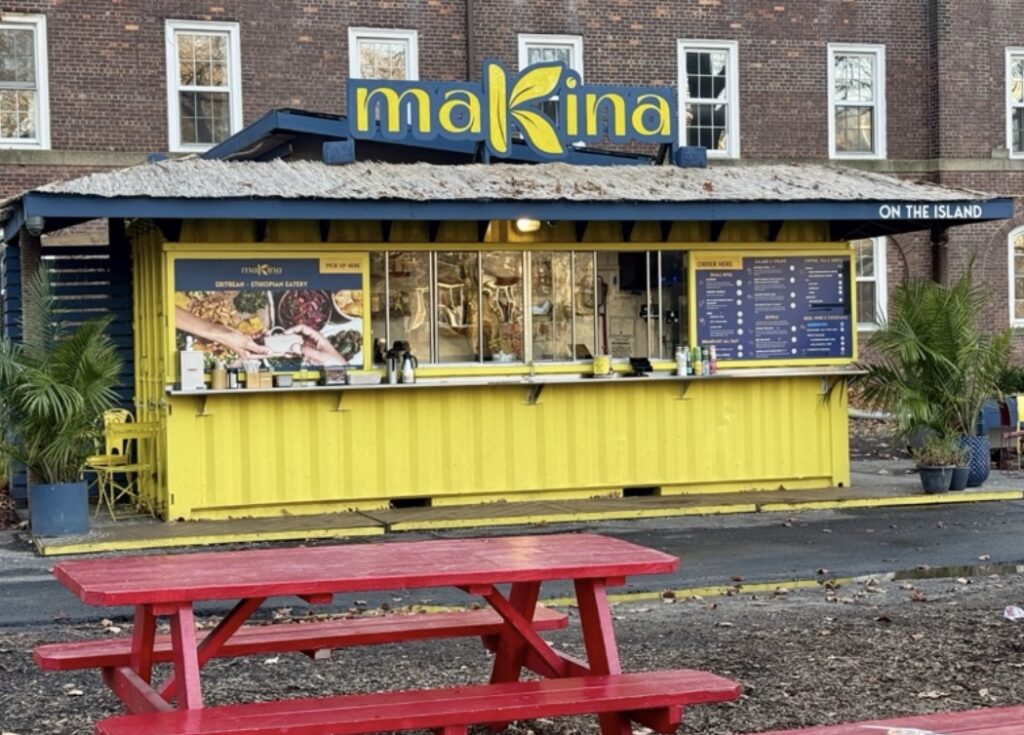
Makina Café serves Eritrean and Ethiopian dishes from a bright yellow stand. (Credit: Baron Carr)
Most food stands close for the winter, but Makina Café remains open and serves Ethiopian and Eritrean dishes. Kevin Garcia, who works there, explained that staying open year-round is easier than training new staff each spring.
“Right now, not many people come,” Kevin, who works on the island, said. “In the summer, it’s about four or five thousand people a day.”
In winter, the stand mainly serves students, construction workers, visitors, and employees from the QC Spa New York . Joe Coffee Company at the ferry landing keeps morning hours and completes the small but steady winter food scene.
Visitors looking for space, quiet and meaning
QC NY Spa stays open year-round, its outdoor pools steaming against the cold air. Visitors come for quiet, warmth, and views of New York City.
“It is beautiful,” said Lena Frechen from Williamsburg. “It is so empty. A little mysterious.”
Her partner described the challenge of reaching the island in winter. “There was no sign. We had to follow the map on my phone.”
Other visitors come for something more personal. On October 11, Andrew Valavan proposed to his fiancée Emma on Outlook Hill, one of the island’s highest points.
“In the five boroughs, it is hard to find a spot where you can be alone,” he said. “This was one of the only places where we could get a private moment.”
Clouds covered the sky that day, but the moment stayed memorable. As they walked toward the hill, a fire department boat sprayed water into the harbor, a sight Valavan said he will never forget.
An island that slows down but never stops
By late afternoon, around 4 p.m., temperatures fell below 40 degrees as the sun lowered. The island grew quieter. Empty fields, shuttered houses, and old barracks that housed soldiers and their families during the island’s long military history sat still in the fading winter light.
Arts programs, which are a major summer attraction, close from November to April. Historic sites are only accessible on ranger or guide-led tours that must be reserved in advance. The Urban Farm welcomes visitors only on weekends.
Even so, a small community continues to move across the island. Students heading to and from class. Construction workers making progress in the wind. Ferry workers that keep the schedule running. Vendors serving whoever arrives. Visitors seeking peace, reflection, or a private moment.
Winter changes the pace of Governors Island, but it does not stop it. The people who show up in the cold bring life to this place long after summer ends.
They are the winter people.
“It has its own weather,” McGorman said.