
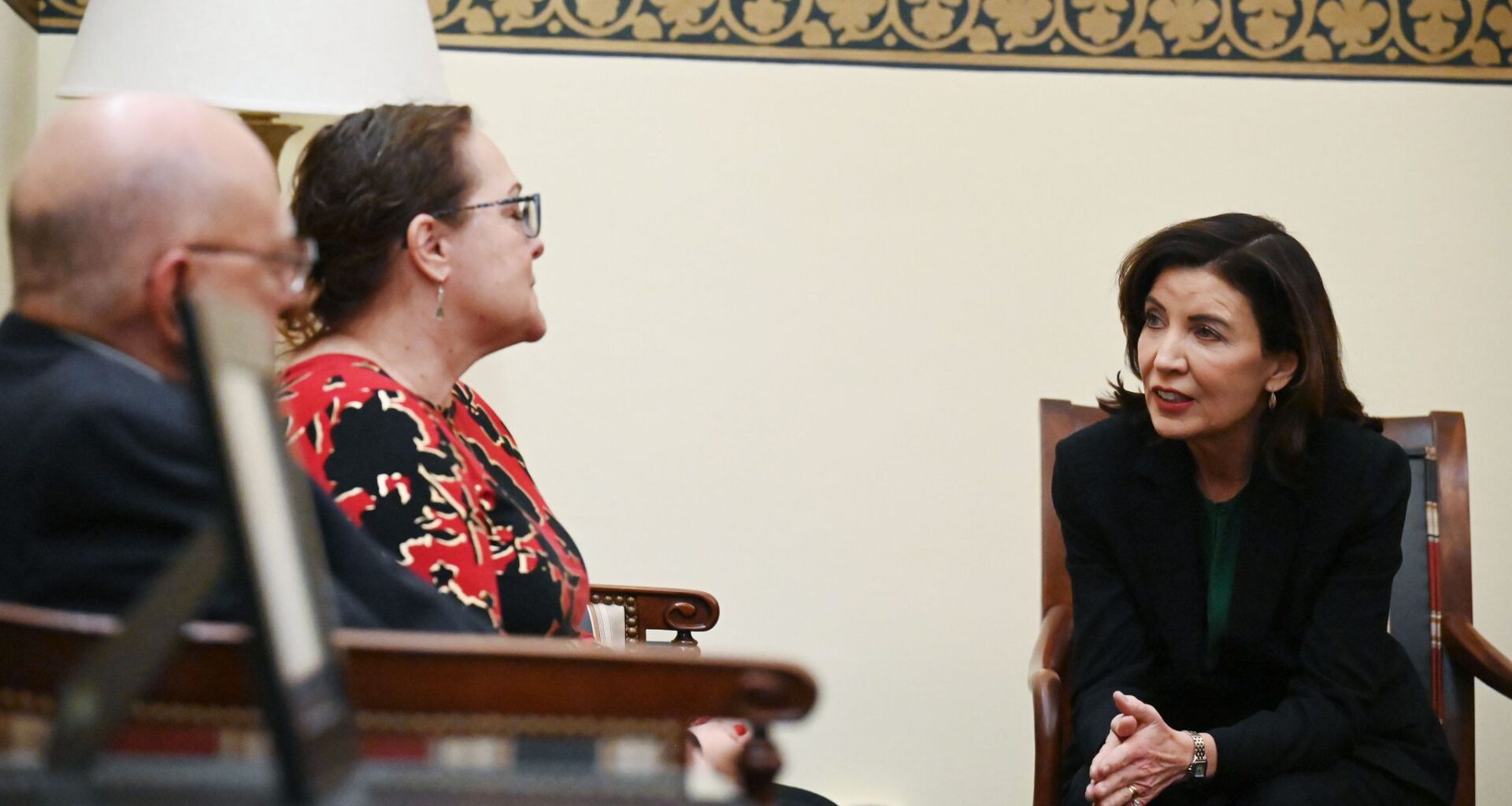
Gov. Kathy Hochul, right, met with Cari Scribner, left, who lost her 24-year-old son Nick Scribner to kratom use in 2024, before signing legislation aimed at protecting New Yorkers from the harmful effects of kratom, a commercially available herbal product sold for recreational use.
Will Waldron/Times Union
Cari Scribner has been advocating for restrictions on kratom since she lost her son last year to an overdose linked to the drug.
Jim Franco/Times Union
Kratom is made using a plant native to southeast Asia. It’s widely available in gas stations and convenience stores.
Jim Franco/Times Union
The two bills Hochul signed will restrict kratom sales to adults at least 21 years old and require new labels that disclose the risks of the drug.
Will Waldron/Times Union
ALBANY — New York has set new restrictions on the sale of kratom, an unregulated drug that has been tied to at least 100 deaths in the state in the past year and is commonly sold in gas stations, bodegas and specialty shops.

Gov. Kathy Hochul signed two bills Monday that will prohibit the sale of products containing that drug to anyone below the age of 21 and require new labels warning consumers about its risks.
Article continues below this ad
“I believe New York consumers should know what they’re buying, what they’re ingesting,” Hochul said at a press event in Albany. “If a product carries a real risk, don’t you think people should know about it?”
Nick Scribner, a 27-year-old from the Capital Region, died last year from asphyxiation while he was asleep after consuming a large amount of kratom.
He had started using the drug to help with chronic insomnia, said Cari Scribner, his mother.
Make the Times Union a Preferred Source on Google to see more of our journalism when you search.
Add Preferred Source
“Within six to eight weeks, he was hooked,” she said.
Article continues below this ad
While grieving the loss of her son, Scribner turned to the state Legislature. Despite concerns over the drug, New York had not acted to regulate it. The same is true at the federal level, where it’s not approved by the U.S. Food and Drug Administration.
Kratom is made from a plant that’s native to southeast Asia. It comes in more than one form but is commonly sold in capsules or drinks. Users say it can help relieve the symptoms of chronic pain and anxiety.
State Assemblyman John McDonald, who sponsored the bill to set age restrictions, said he sought out the drug just to see how widely available it was and how it was labeled.
“I was amazed at how easy it was to pick up and how small the print was — and that’s not because I’m getting older,” said McDonald, a longtime pharmacist.
Article continues below this ad
The other bill signed by Hochul will require a specific label to be placed on products that contain kratom. That label must list the ingredients in the product and warn that kratom can be addictive and interact with certain medications and drugs.
Some products with kratom already warn consumers about their potential to be addictive, but only in “very, very fine print,” said Sen. Pat Fahy, a Democrat who sponsored the labeling bill.
“This is common sense. Maybe there’s more we’ll need to do in the future to stop this,” Fahy said. “Science and government are struggling to keep up with these new natural supplements.”
The new labels will help to inform users about the product, which is one of countless mystery supplements available to consumers across the state.
Article continues below this ad
Lawmakers could target other unregulated, widely available products in the future, said Assemblyman Phil Steck, who also sponsored the labeling bill and chairs the Alcoholism and Drug Abuse Committee.
“This is unfortunately a situation we are in with a lot of substances that are on the shelf and I’m certainly hoping this can be a springboard to doing some constructive legislation that will hopefully save lives in this area,” Steck said.
That could also include more restrictions on kratom, which will still be available to purchase for age-appropriate consumers. Both bills were supported by the American Kratom Association, a trade group that said it intends to engage with lawmakers on amendments next year.
“Age restrictions and clear, transparent labeling are foundational consumer protections that the (American Kratom Association) has long supported as part of a science-based regulatory framework.” said Mac Haddow, senior fellow on public policy for the group.
Article continues below this ad
But it’s possible that New York could go further. When asked if she would consider supporting an outright ban on the drug, Hochul said it wasn’t off the table.
“I’m willing to consider anything that’s going to save lives in the state of New York,” Hochul said.