
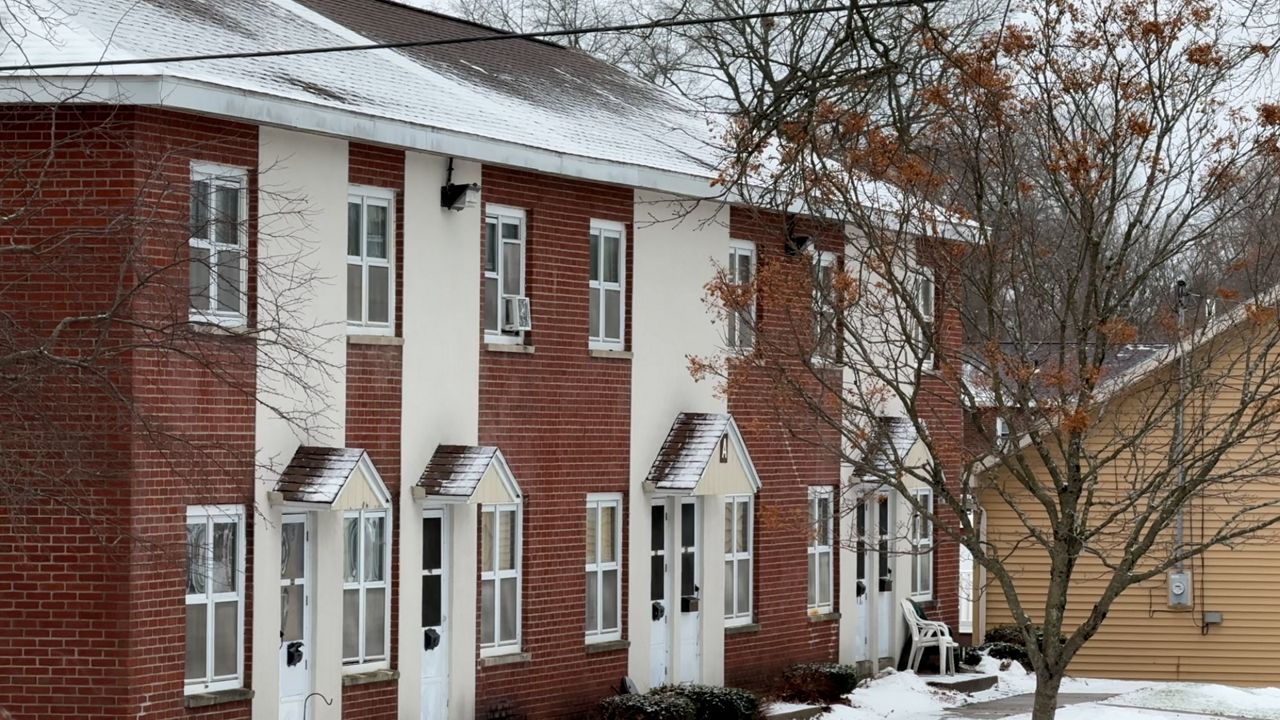
Waitlists are filled up at many upstate organizations trying to house people.
This year, People First, formerly known as the Utica Municipal Housing Authority, helped 39 families this holiday season, delivering gifts and furniture.
Between 3,500-4,000 people are living in its residences.
“The need of people that walk in the doors frantically saying, ‘I have no place to live whether couch surfing, or I’m living on a bench and in some park,’ is pretty overwhelming,'” said Robert Calli, executive director of People First.
People First is an independent public-benefit corporation that receives funding from the United States Department of Housing and Urban Development (HUD).
It has more housing projects underway.
“Our mission is to provide safe, affordable and secure housing,” Calli said.
What You Need To Know
Waitlists are filled at many upstate organizations trying to house people
Housing agencies determine eligibility based on annual gross income, whether the applicant is elderly, has a disability, or qualifies as a family, and if they are a U.S. citizen or have an eligible immigration status, according to HUD
HUD-funded People First has more housing projects underway; other organizations not funded by HUD are also trying to help house people
The Utica Center for Development is one of them; its executive director said there are barriers making it difficult for certain populations to find a place to live
According to HUD’s website, a local housing agency determines eligibility based on their annual gross income, whether the applicant is elderly, has a disability, qualifies as a family and if they are a U.S. citizen or have an eligible immigration status.
It says local housing authorities will deny admission to anyone whose habits and practices may have detrimental effects on other tenants, or on the project’s environment.
People First reviews credit scores and background checks.
“HUD has a responsibility to protect people, and many of our complexes are family-oriented,” said Calli.
Of course, there are other organizations with the same goal of housing people. One of those is the Utica Center for Development.
It does not receive funding from HUD.
“We’re not in lack of clients. We’re just in a lack of housing,” said Utica Center for Development Executive Director Vincent Scalise.
The Utica Center for Development has its own housing options and is working on more units, but it also tries to help place their clients elsewhere.
Scalise said more housing is needed and added that there are people who do not have places to live because of their criminal history and/or credit scores.
He said Americans need to work together to help address the issues.
“Barriers need to be lessened, money needs to be funneled into the proper programs, housing options need to be consistent with the neighborhood that they’re serving. So there’s a lot of factors that go into why we have a housing crisis in upstate New York,” said Scalise.
Gov. Kathy Hochul previously signed legislation that calls for investing $100 million for pro-housing communities to build infrastructure projects supporting housing development; another $100 million to promote mixed-income housing developments; and $50 million to build affordable starter homes.