
How close is Hudson Canyon? 99 miles north of Manhattan puts you in popular weekend retreats in the Catskills
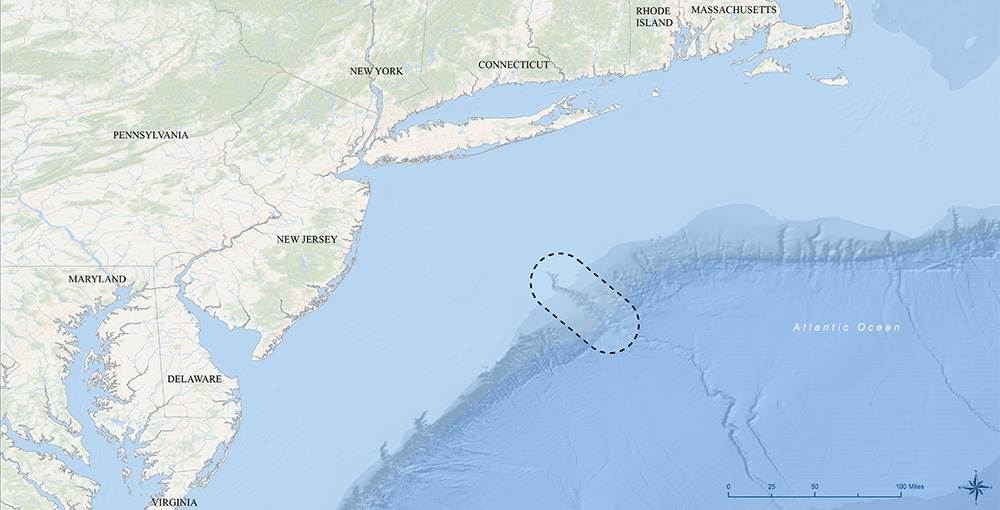
A map displaying Hudson Canyon’s location off the coasts of New York and New Jersey. Photo: NOAA
 NEW YORK — On a warm September evening, scientists and crew members aboard the Nancy Foster research vessel dropped what they were doing and rushed to the deck. Dozens of pilot whales surrounded the ship. The moment stunned the National Oceanic and Atmospheric Administration (NOAA) employees on board.
“It’s hard to explain how impactful it was,” said Cait Clemmer, NOAA community engagement specialist.
The ship was on a research expedition in Hudson Canyon, a biodiversity hotspot just 99 miles east of New York City where 200 species of fish and 17 marine mammals live within a complex, fragile ecosystem.
“We refer to it as the sea that never sleeps,” said Noah Chesnin, associate director for the Wildlife Conservation Society’s New York Seascape program.
A proposed National Marine Sanctuary designation could protect Hudson Canyon from overfishing and potential oil, gas and mineral extraction, but political turmoil, shifting federal priorities and the recent government shutdown stalled the process.
As the Trump Administration pushes for expanded offshore drilling and deprioritizes sustainability initiatives, scientists, conservation groups and local businesses warn that a lack of protections for Hudson Canyon could permanently shape its future.
Hudson Canyon is a seven-hour boat ride from the coast and comparable in depth to the Grand Canyon, but most New Yorkers have never heard of it.
“For a marine person like myself, it’s kind of like going on safari,” said Carl LoBue, senior marine scientist at the Nature Conservancy. He cited the presence of North Atlantic right whales, one of the world’s most endangered whale species with fewer than 100 breeding females left. “At one point, there were 55 right whales in the canyon — about 15% of the entire population on Earth.”
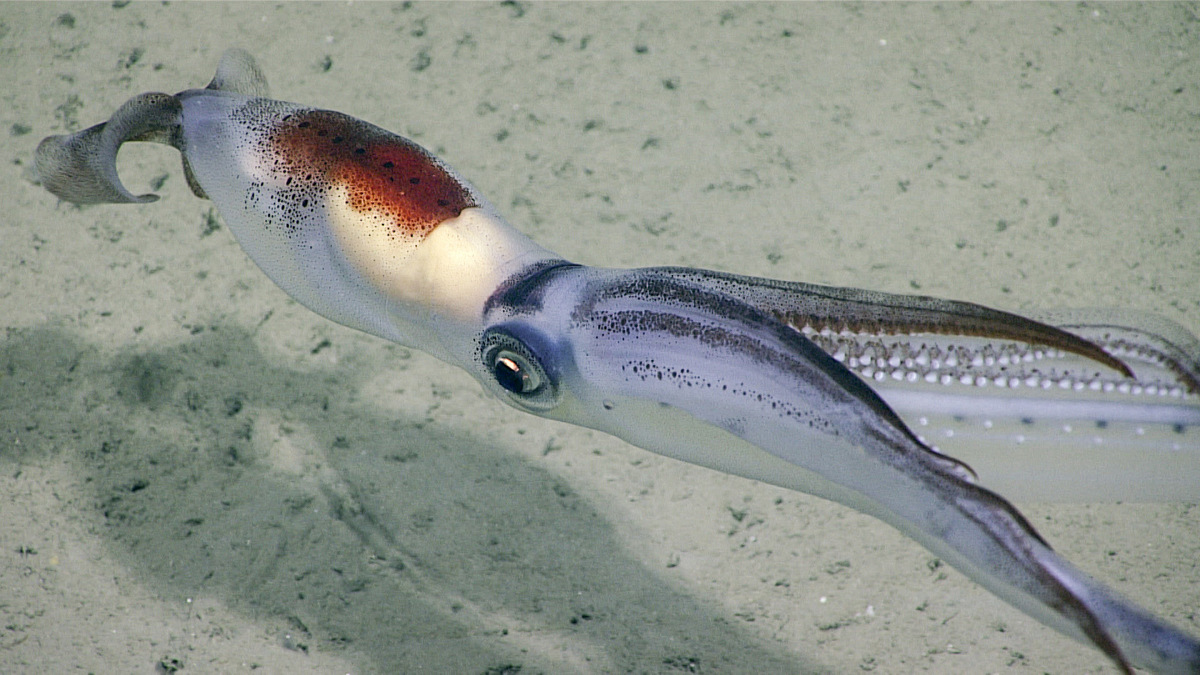 A squid photographed in Hudson Canyon. Photo: NOAA
The Nature Conservancy has advocated for the canyon’s designation as a National Marine Sanctuary. Currently, “there are no special protections for Hudson Canyon,” LoBue said. “It just fits in as one of many places within the region being reconsidered for oil and gas exploration. It was put to rest in the last administration and now, that’s back on the table again.”
Shortly before leaving office, former President Joe Biden announced he would withdraw major offshore areas from future oil and natural-gas leasing, including the entire East Coast. It would have been one of the largest withdrawals of federal waters from potential drilling in U.S. history, but once sworn in, Trump immediately issued an executive order revoking Biden’s withdrawal.
After a legal back-and-forth, a federal district court judge in Louisiana ruled on Oct. 2 that Biden’s withdrawal exceeded his authority, siding with states and industry groups seeking new offshore leases. It remains to be seen what this could mean for places like Hudson Canyon.
“We’re at a critical juncture,” said Chesnin from the Wildlife Conservation Society’s New York Seascape program. “Marine sanctuaries typically — not always, but most of them — close areas to oil and gas and mineral exploration.”
‘We want those documents released’
NOAA’s National Marine Sanctuary System protects 18 underwater parks that span 629,000 square miles of ocean and Great Lakes waters throughout the U.S. In 2016, the Wildlife Conservation Society nominated Hudson Canyon for sanctuary status, and a year later, NOAA determined that the site met all national significance criteria.
After a five-year review, NOAA announced in June 2022 that it would begin the formal designation process, prompting over 17,000 public comments.
“This was more than any other sanctuary had received in a long time,” Clemmer said.
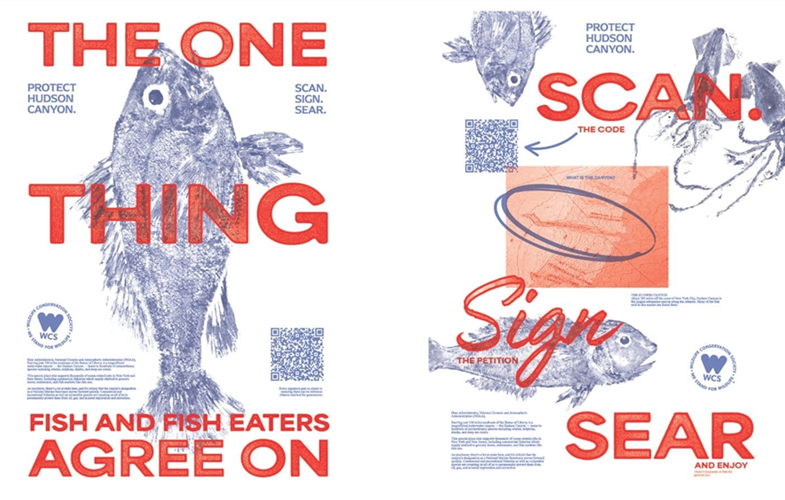 During World Ocean Month, seafood markets wrapped their fish in butcher paper informing customers about proposed protections for Hudson Canyon. Photo: WCS
As part of that process, NOAA established a Sanctuary Advisory Committee (SAC) with representatives from fishing, shipping, business, science, education and tribal communities. The SAC’s role was to help the Office of National Marine Sanctuaries develop a sanctuary proposal, including a draft environmental impact statement and management plan for Hudson Canyon.
From May 2023 through January 2025, the SAC met regularly to ensure local priorities helped shape the proposal and consulted with the Shinnecock and Unkechaug Nations. Trump’s second administration ordered all sanctuary-related work to pause indefinitely.
“Until we receive direction, all related activities, including council meetings, are paused,” Clemmer said.
“We’re hoping that the administration will decide to release the draft designation documents,” said Chesnin. “We’re hopeful that we can build local support and keep the process moving, but we want those documents released.”
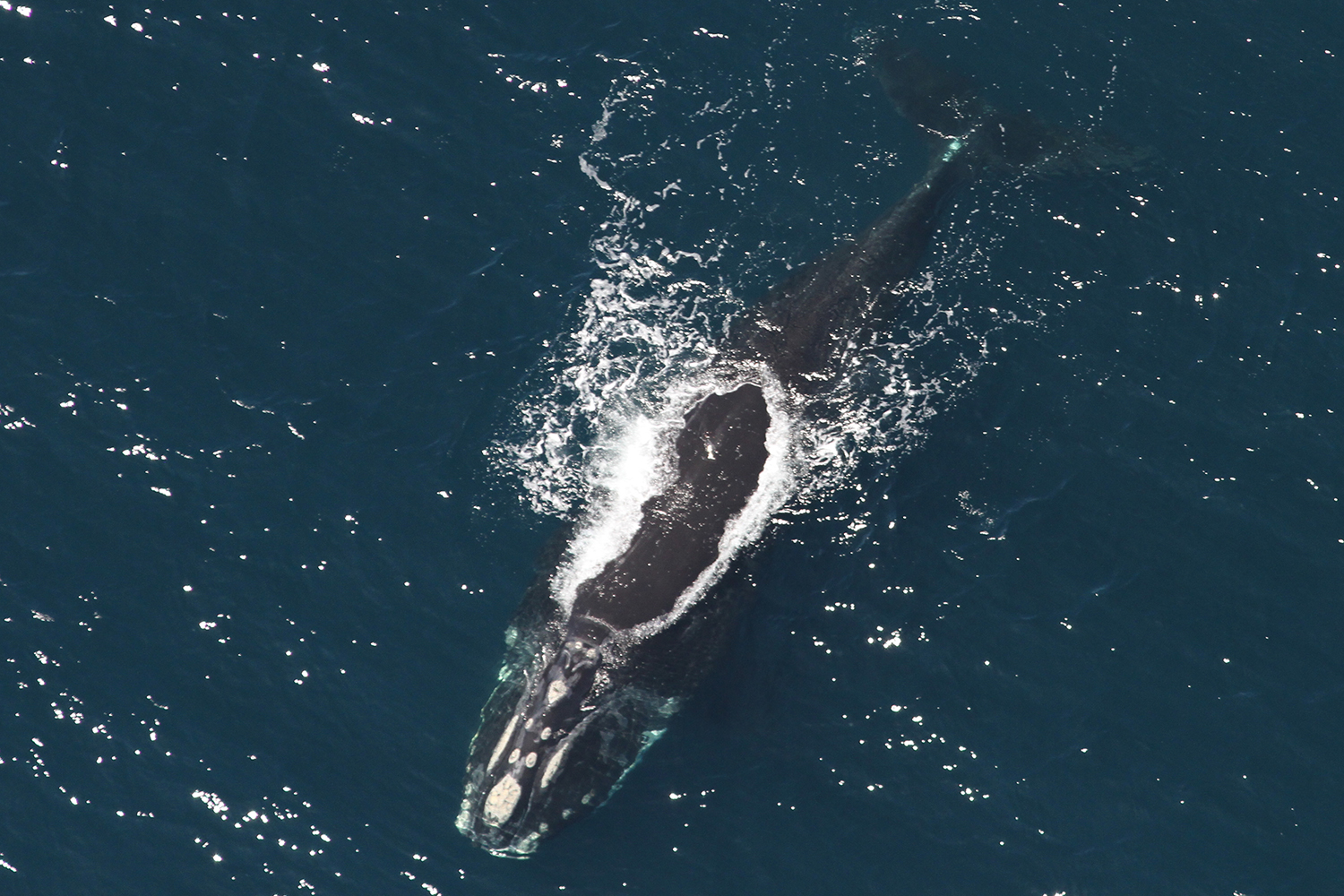 A critically endangered North Atlantic right whale spotted at Hudson Canyon. There are approximately 370 right whales remaining on Earth. In 2024, 45 of them were seen feeding in Hudson Canyon. Photo: NOAA
Implications of sanctuary designation
Designating the canyon’s ecosystem as a sanctuary would protect it from environmental harm. Beyond its ecological value, Hudson Canyon is economically vital for New York City and nearby coastal communities.
Commercial and recreational fisheries depend on the canyon’s resources. New York’s seafood industry alone supported nearly 70,000 jobs and generated more than $9.2 billion in sales in 2022, according to the most recent NOAA fisheries report. Sanctuary status would still allow both commercial and recreational fishing, but it could introduce additional regulations that fishermen would need to navigate.
The canyon also supports wildlife tourism, maritime traffic and telecommunications made possible by deep-sea cables running through the region.
Beyond its economic value, sanctuary designation would also bring federal investment in research to help protect the canyon’s species and habitats.
“The sanctuary would provide an ongoing platform for long-term research and monitoring so that we can better understand the importance of the canyon and the potential anthropogenic risks that it faces,” Chesnin said.
Designation would also advance educational initiatives for surrounding communities to learn about Hudson Canyon, marine conservation and Indigenous connections to the area.
“When a place becomes designated, it elevates the attention it gets not only in scientific research but in communications and in collecting the kinds of images and videos that people might see at the aquarium or in New York City and realize that this place is really close,” said LoBue.
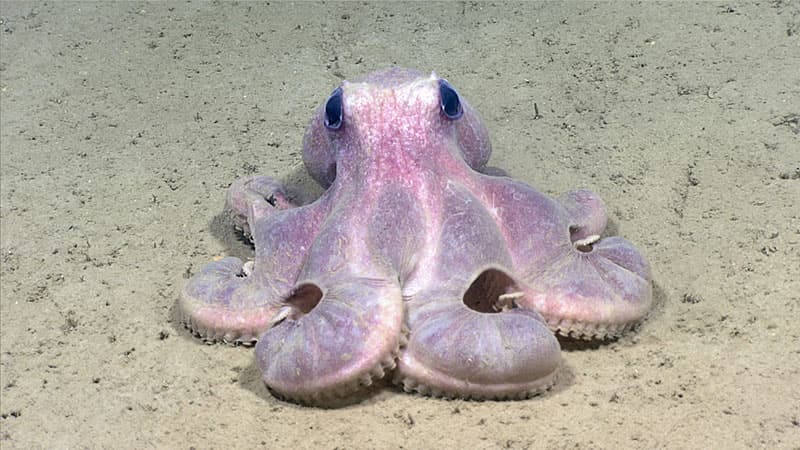
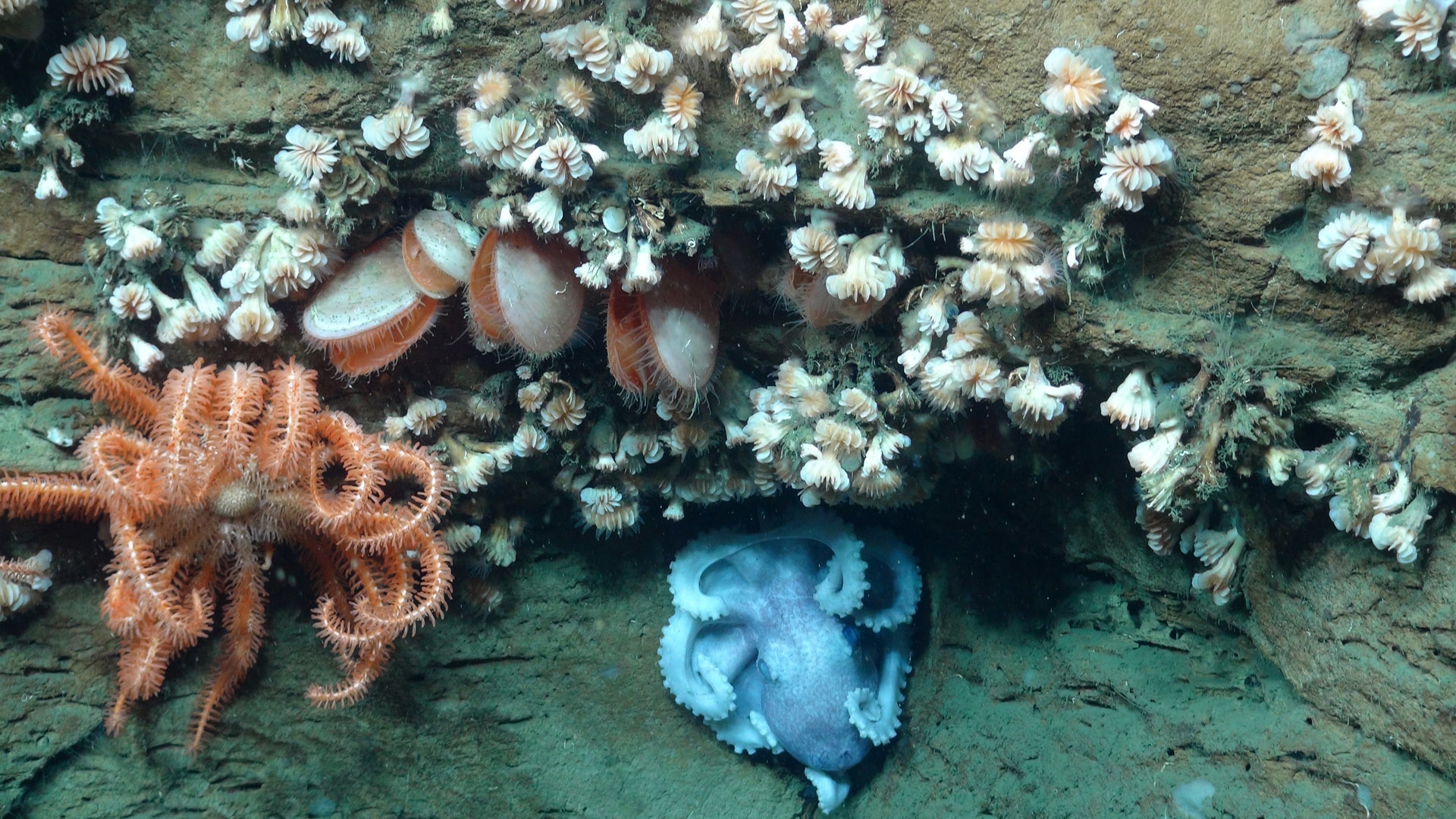 At Hudson Canyon, an octopus, a sea star, bivalves and dozens of cup coral all share the same overhang. Photo: NOAA
Fishing in Hudson Canyon
Fisheries, local markets and restaurants rely on healthy fish populations in Hudson Canyon. Along with protecting the habitat, a National Marine Sanctuary designation would set regulations and catch limits to ensure a future for sustainable fisheries.
In June, during World Oceans Month, the Wildlife Conservation Society engaged several seafood markets across New York City and New Jersey to raise awareness and grow support for the proposed designation. One of these businesses was Mermaid’s Garden, a sustainable seafood market in Brooklyn led by husband and wife Bianca Piccillo, a marine biologist, and Mark Usewicz, an acclaimed chef.
“New Yorkers have this really amazingly biodiverse ecosystem in our backyard,” Piccillo said. “We should be proud of it. I have a friend who’s a fisherman, and he saw all these bluefin tuna this summer, and he was like, ‘You have to come out, it’s the most amazing thing you’ll ever see.’”
Mermaid’s Garden partners with small-boat domestic fisheries with strict regulations and non-destructive catch methods. From Hudson Canyon, the market sells large quantities of golden tilefish, but “they’re fishing for an awful lot of species out there,” Piccillo said. “The thing that’s really important about a protected area is that you’re not thinking about a species or a fishery individually, you’re thinking about an ecosystem.”
As a campaign participant, the shop wraps its seafood in butcher paper printed with information about Hudson Canyon and a QR code linked to a petition. Piccillo said it hasn’t made a big impact.
“Even though our customers are predisposed to be interested and engaged about that kind of stuff, everybody’s really overwhelmed right now,” he said. “It’s hard to process one more thing unless it’s directly related to you.”
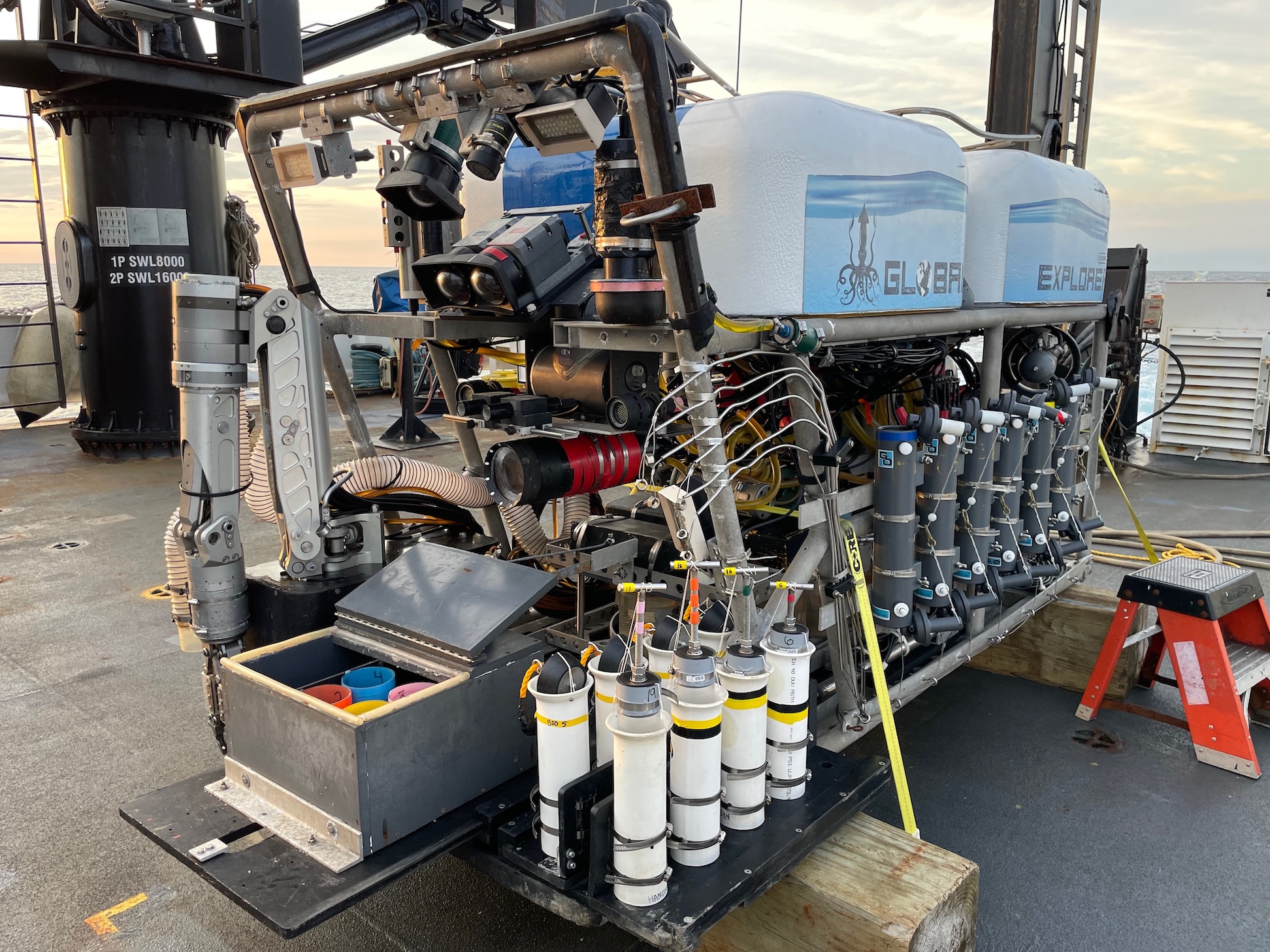 ROV aboard the Nancy Foster research vessel. Photo: NOAA
Scientific discovery continues
Research and discovery at Hudson Canyon continue despite uncertainty about the sanctuary designation status.
In September, NOAA coral scientists, ecologists and ocean explorers aboard the Nancy Foster used the remotely operated vehicle (ROV) Global Explorer to capture high-definition video, collect samples and gather environmental DNA. They hoped to showcase Hudson Canyon’s diverse marine ecosystem to the world, raising awareness about this remarkable place.
On the final day of their two-week expedition, the ROV embarked on its last and deepest dive. Within minutes, it picked up footage that thrilled and surprised watching crew members: a coral garden. Multiple coral species covered a canyon wall.
“We have a lot of happy scientists behind me,” said Clemmer on the livestream.
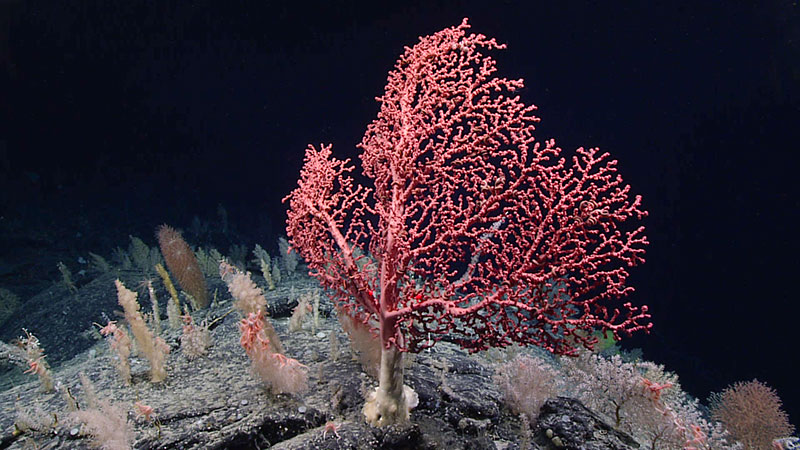 Paragorgia Arboreia, also known as bubblegum coral. Photo: NOAA
“We found one of the larger corals, Paragorgia Arboreia, which we haven’t seen in other canyons,” said Dave Packer, a NOAA research ecologist. Paragorgia Arboreia, also known as bubblegum coral, resembles pink tree branches. “It’s huge. It’s old. It’s beautiful. What more can you ask for?”
Soon after, the ROV picked up footage of a massive red tree coral.
“I’m really surprised to see it here,” Meredith Everett, NOAA Fisheries chief scientist for the expedition, said with a smile. “I don’t know how often it’s been documented this far south. That makes diving this morning A-plus-plus — 100% worth it.”


NineDot Energy to provide over $60M in energy credits for low-income households in the next decade
December 15 |
Special from NineDot Energy

December 5 |
Special from the J.M. Kaplan Fund

November 19 |
Joanna Insco
✰PREMIUM
Report: Last-mile facilities pose risks to delivery workers, overburdened communities
November 18 |
Joanna Insco