
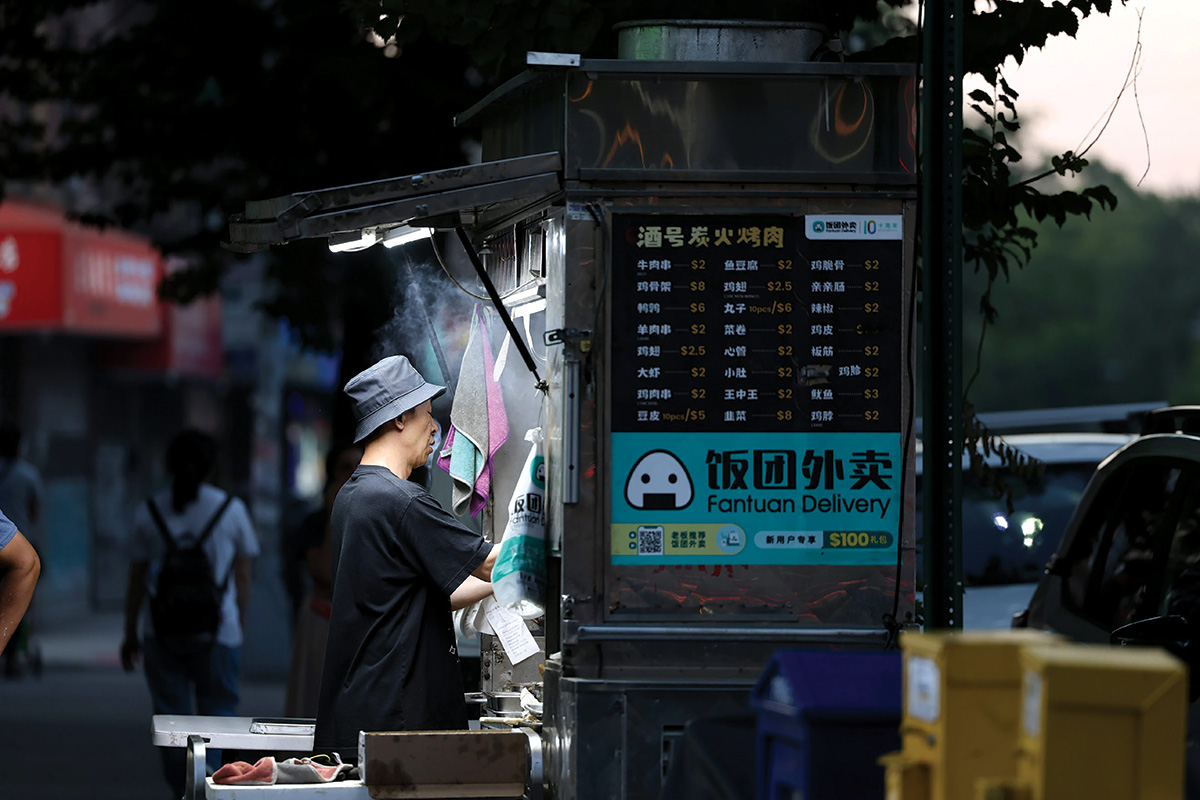
There’s mala in the air. Anywhere from a tickle to a burn, the spice blend made with Sichuan peppercorns and chilies suffuses the sidewalks of Flushing, Queens. And that’s not the only enticing aroma that will grab any visitor who treads the streets of one of the busiest parts of New York City.
A journey to Flushing is the closest enthusiasts of regional Chinese food may get to the motherland without a long-haul flight. From the nose-tickling piquancy of northeastern Chinese-style fermented cabbage to the sugary scents of boba shops selling rainbows of sweet tea, there’s something to represent nearly every region and taste.
Amtrak trains take about three to 3½ hours to travel from Union Station in Washington, D.C., to New York’s Penn Station. Once you arrive there, find the Long Island Rail Road listings for the next train to Flushing-Main Street in Queens. The 20-minute ride allows you to see the underground of Manhattan give way to diverse Queens neighborhoods. In Flushing, take the elevator down from the platform to arrive in the heart of busy Chinatown.
Queens in general and Flushing in particular have long been destinations for global diversity. Flushing Meadows Corona Park has been the site of two World’s Fairs, in 1939 and 1964. According to Rob MacKay, director of the Queens Tourism Council and deputy executive director, community, for the Queens Economic Development Corporation, comic actress Awkwafina’s (aka Nora Lum) great-grandfather opened Lum’s, which MacKay says was the first Chinese restaurant in Flushing.
That was in the 1950s. By the time Lum’s closed in the 1980s, roughly 60,000 Chinese immigrants lived in Flushing, according to the Flushing Chinese Business Association. MacKay posits that the influx may have begun with the second New York World’s Fair. “There’s also the philosophy that it’s between two airports,” he says.
Either way, Flushing’s Chinatown is considered by many to have eclipsed the one in Manhattan in size and quality.
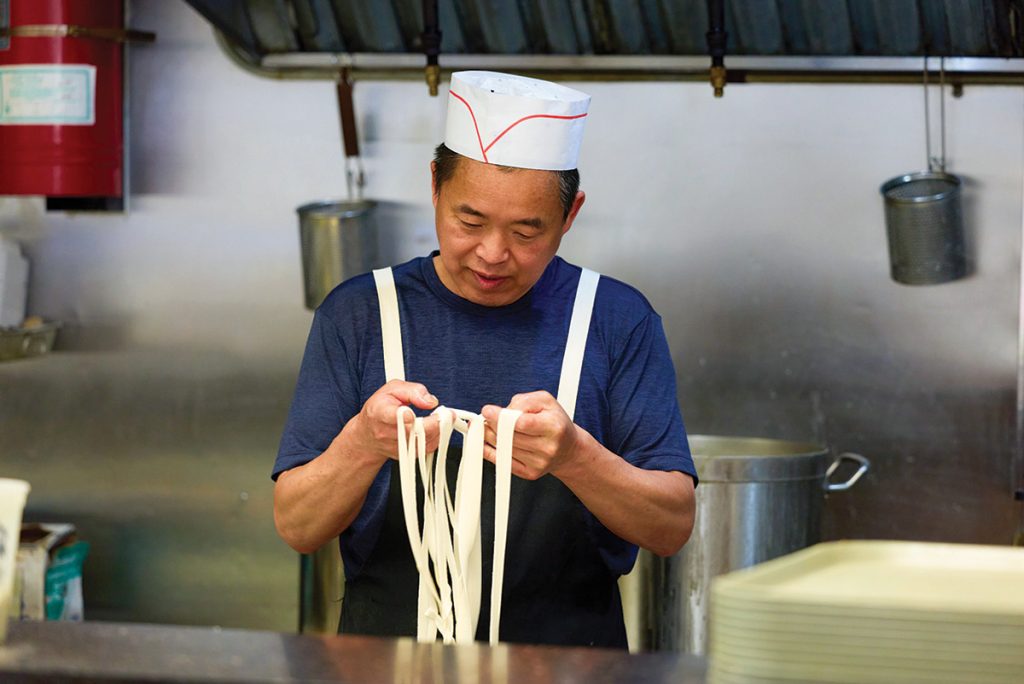 A cook hand-pulling noodles at He Nan Mian Guan. Photo credit: Tyson Bateman
As such, it’s not unusual for a visitor to come across businesses where signage, menus and the language spoken within include little or no English. My first stop is just such a business. I’m in the market for hand-pulled noodles and a rou jia mo sandwich from central China’s Henan province.
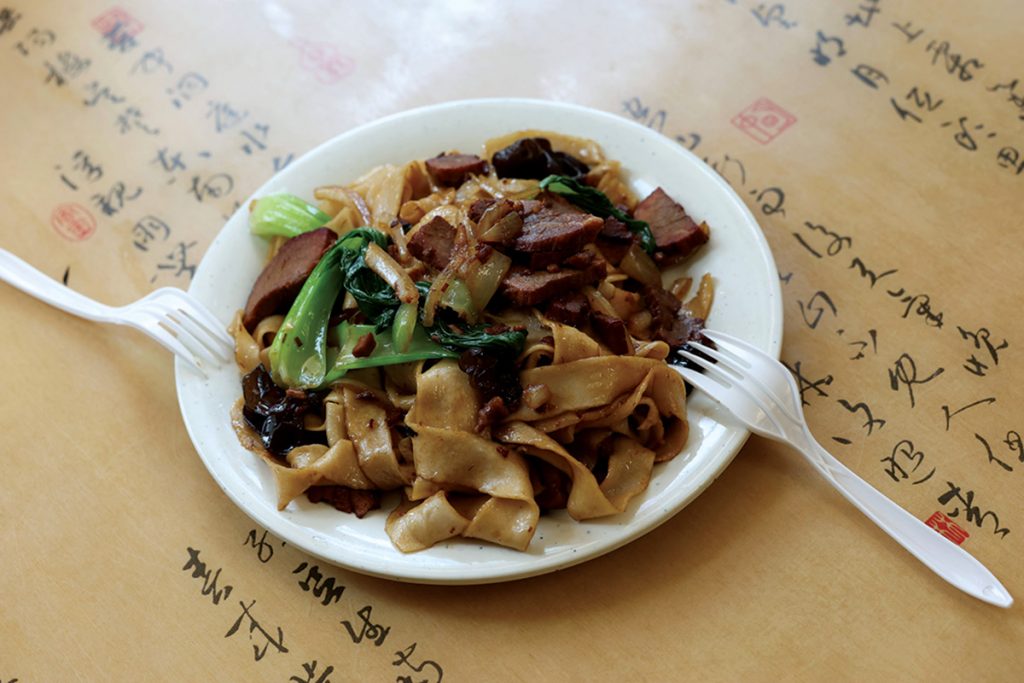 A plate of beef noodles at He Nan Mian Guan restaurant on 41st Avenue in Flushing, Queens. Photo credit: Tyson Bateman
Each member of the family behind the counter at He Nan Mian Guan constantly works small balls of dough that are pulled into what look like cats’ cradles of yarn before a brief trip into boiling water. From there, the wide strands are combined with a soy-based sauce, onions, bok choy and sliced lamb or beef. At the table, I add house chili paste and black vinegar to make the noodles even more irresistible.
Even better? The rou jia mo, a sandwich with origins in pre-Christian Shaanxi. The sandwich has since made it all over China, but the juicy pork burger at He Nan Mian Guan is a standout. Including two drinks, I pay $20 for the two-person meal. The restaurant is cash only, but through pointing and gesturing from the youngest members of the restaurateur family, I figure out how to Zelle them their fee.
My lodging is a few quick blocks away. As its name suggests, the Asiatic Hotel caters to visitors from the largest continent. A sign at the front desk warns in both characters and letters, “Durian cannot be brought into hotel. $250 cleanup fee will be charged.” Such signs are a common sight in Asia, where the fruit, which smells like a mix of melon and motor oil, is often banned from public transport and anywhere else it might offend.
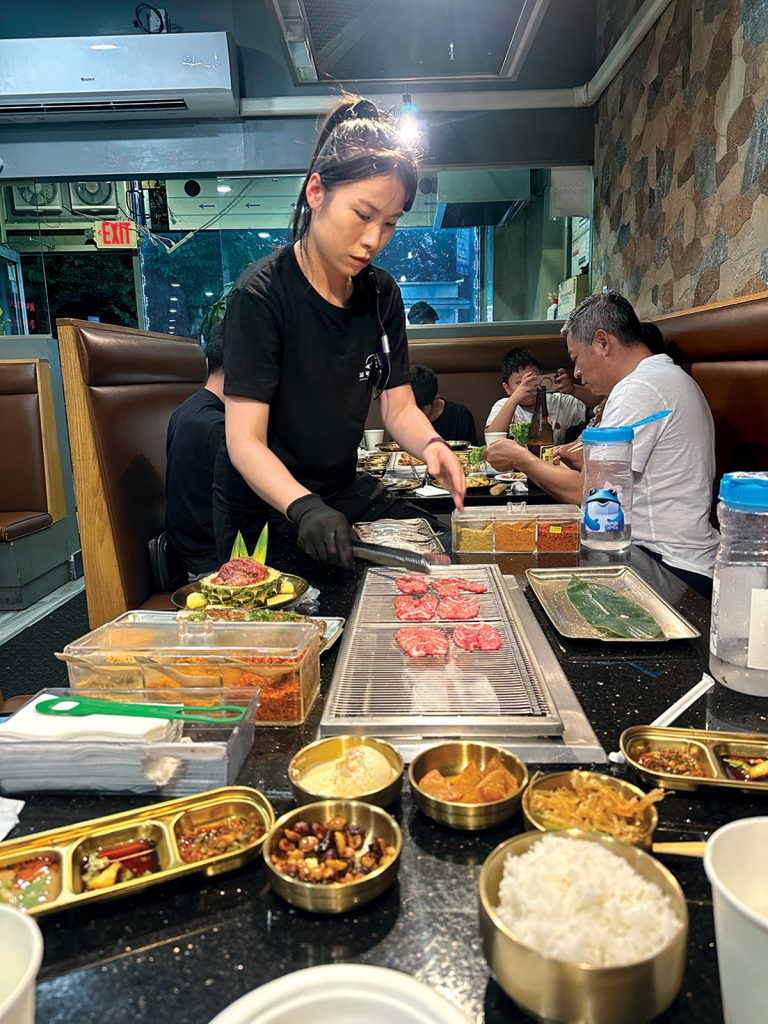 A server cooks barbecue beef on a tabletop at Jiu Hao. Photo credit: Alive Levitt
My room is large for New York City. The light varnished woods create a pleasant austerity. At less than $150 per night, I consider it a steal, especially considering its location on a relatively quiet street that’s still just steps from the action.
It’s a 10-minute walk to my dinner destination, Jiu Hao. Out front, a gentleman grills skewers, the charcoal of his stand smoking as he sells a few sticks of lamb to passersby. But most of his yield goes inside. Once seated in a booth, ordering is easy, thanks to a tablet complete with pictures.
Jiu Hao specializes in tabletop barbecue in the style that’s served in Dongbei, the chilly northeastern region of China that touches Russia and North Korea. The overlap with Korean barbecue is clear as soon as the small plates (called “banchan” in Korean restaurants) come out. Instead of kimchi, you get spiced peanuts, potato salad topped with colorful sugar sprinkles, cilantro-dotted spicy bean sprouts, and pickled radish.
The icy winters of Dongbei must feel a little warmer thanks to restaurants like this one, where servers grill dishes, such as live eel, over blazing charcoal. The highlight for me is the tender garlicky-marinated beef served in half a pineapple. Though it’s packed with flavor on its own, the three cumin-scented chili powder mixes that wait on the table add several more dimensions. I toss some onto the complimentary watermelon for a savory and sweet bite at meal’s end.
No matter the weather, it makes sense to escape it with a mall crawl or two. The window-shopping ranges from luxe jewelry stores at New World Mall to the anime-focused gift shops in Tangram mall, but let’s face it, the real goal is to continue my gustatory quest.
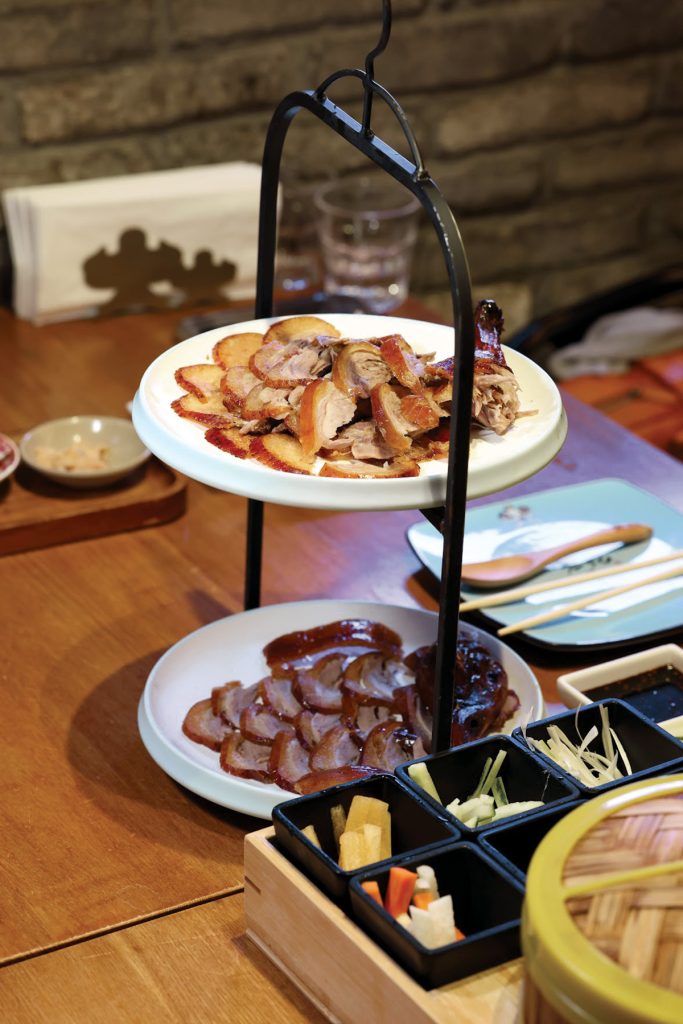 Sliced Peking duck at Juqi in Tangram mall. Photo credit: Tyson Bateman
For more than a decade, New World Mall has been host to what many consider Flushing’s preeminent food court. The location, once home to a Caldor department store, draws diners downstairs with a cacophony of scents that include stinky tofu and live fish ready to be cooked in myriad ways. It used to be my top choice, too, but since Tangram opened in 2022, I’ve preferred its sleeker, brighter appearance. There are both Asian- and American-born casual chains such as Kura Sushi and Xi’an Famous Foods at Tangram, but my favorite destination is the more upmarket Juqi.
Part of a chain of about 20 restaurants in Beijing, this is the place for crisp-skinned Peking duck that you eat with skinny, satiny pancakes. A friendly server shows me how to use my chopsticks to wrap the juicy fowl with cucumber and scallions. The showy appetizers, including mashed potatoes molded into the shape of a rabbit, and desserts are worth your money, too. My favorite is the almond pudding, contained in a white chocolate shell that resembles a peach.
The Peking duck meal, with its long history, presented in the basement of a bustling mall, is an appropriate way to cap off a visit to Flushing. In this neighborhood, Chinese traditions are packed together in an accessible collection of food courts and storefronts. For an urban escape with a taste for vibrant cuisine, it’s an unmissable budget vacation.
Where to Eat & Stay
He Nan Mian Guan (136-31 41st Ave.) is open from 6:30 a.m. to 9 p.m. daily. The tight-knit family that runs it may not pay much attention to the ambience (wait to use the restroom elsewhere), but even in China, I’ve never seen such beautiful noodles produced so quickly.
At Jiu Hao (34-40 Union St.), ordering Dongbei-style barbecue cooked at your cozy booth is easy for anglophones, thanks to a tablet complete with pictures. Don’t miss the high-quality marinated beef.
Inside Tangram mall, cool down with a sip at Sing Choi Kee (133-36 37th Ave.), a Hong Kong-style cafe. Its specialty is large teddy bear-shaped ice cubes that melt into your drink, adding flavor. I like the grapefruit soda, crowned with a strawberry-flavored bear.
 Servers dole out dim sum at Asian Jewels Seafood Restaurant. Photo credit: Tyson Bateman
No Chinese food crawl is complete without bites from the northwesternmost region of Xinjiang. The halal Uyghur cuisine fuses influences from across the Silk Road. I got my favorite spicy lamb kebabs and thin-skinned pumpkin dumplings at the newest entry in the neighborhood, New Nurlan Uyghur Restaurant (135-51 39th Ave.), in the lower level of the Best Western Queens Court Hotel. Dim sum carts barrel by with unusually convivial force thanks to the ladies who staff Asian Jewels Seafood Restaurant (133-30 39th Ave.). Most speak some English and are happy to share the details of their fare, which includes all the usual suspects, such as flaky pork pies and coral-like fried taro filled with shrimp and pork.
Before you hop back on the train, get a scoop or two at Sundaes Best (136-17 39th Ave.) inside The Food Hall at Queens Crossing. Sorbets and gelati are mostly hard-to-find Asian-inspired flavors such as Jeju mandarin, calamansi, and matcha dotted with Japanese Kit Kats.
The Asiatic Hotel (asiatichotelnyc.com) is conveniently located in Flushing’s Chinatown. The hotel offers rooms with queen and double beds and provides complimentary Wi-Fi and breakfast.
Just up 37th Avenue, rest in the lap of luxury at the Renaissance New York Flushing Hotel at Tangram (marriott.com/en-us/hotels/nycbu-renaissance-new-york-flushing-hotel-at-tangram/overview), a newer lodging that stretches above the Tangram mall. Standard king rooms are an impressive 245 square feet and all rooms boast Aveda shampoo and soap. Aside from its proximity to some of the best eats in Flushing, the most notable reason to stay here is the rooftop bar, which allows for views of all the action of the neighborhood.
Where to Shop & Explore
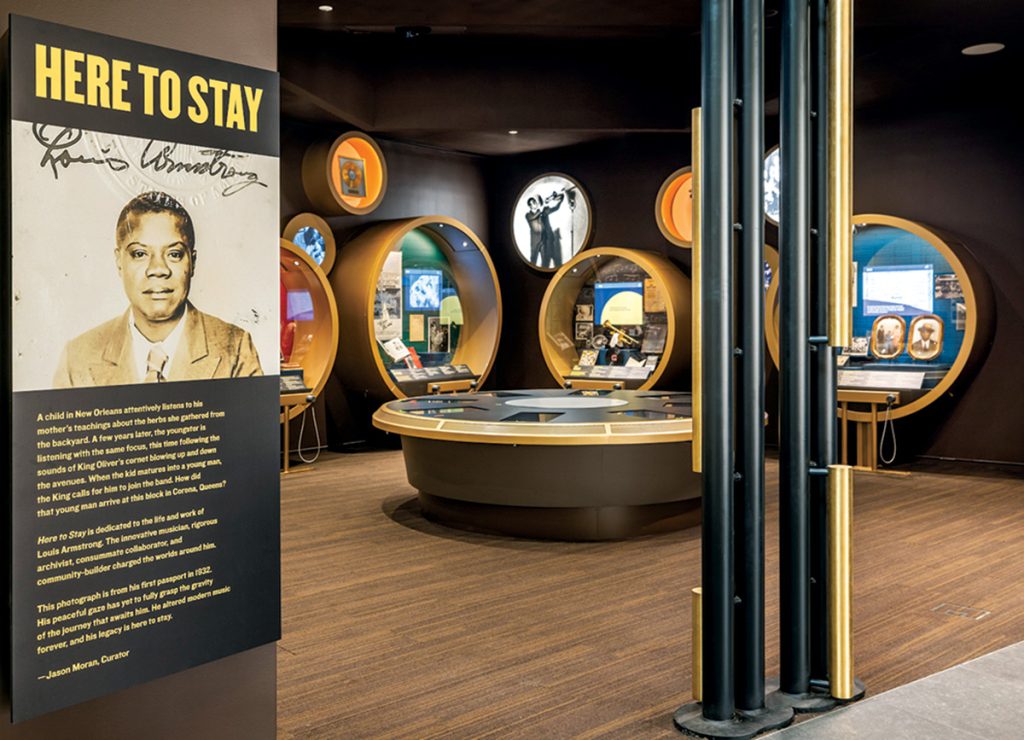 Photo credit: Courtesy Louis Armstrong House Museum
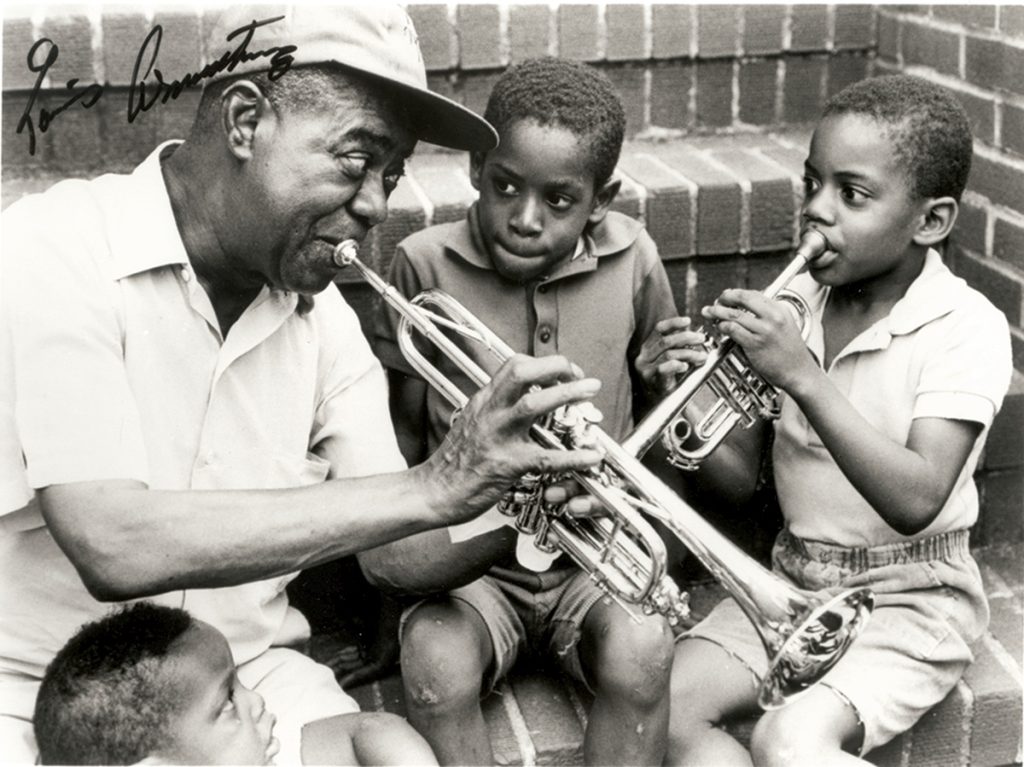 Photo credit: Courtesy Louis Armstrong House Museum
Window-shopping ranges from luxe jewelry stores at New World Mall (136-20 Roosevelt Ave.) to the anime-focused gift shops in Tangram mall (133-33 39th Ave.). About a mile’s walk from downtown, Flushing Meadows Corona Park has been the location of two World’s Fairs. Buildings constructed for the events now hold attractions that include the Queens Botanical Garden, the Queens Museum and the New York Hall of Science. But my favorite museum of all is nearby in Corona. The Louis Armstrong House Museum (34-56 107th St.) lovingly preserves the home of the jazz legend, Technicolor kitchen and all.
Alice Levitt writes about food, travel and medical technology from her home in Northern Virginia. Her bylines have been featured in Vox, Simply Recipes, Atlas Obscura, EatingWell and Culture: The Word on Cheese.
This appears in the November/December 2025 issue of Bethesda Magazine.