
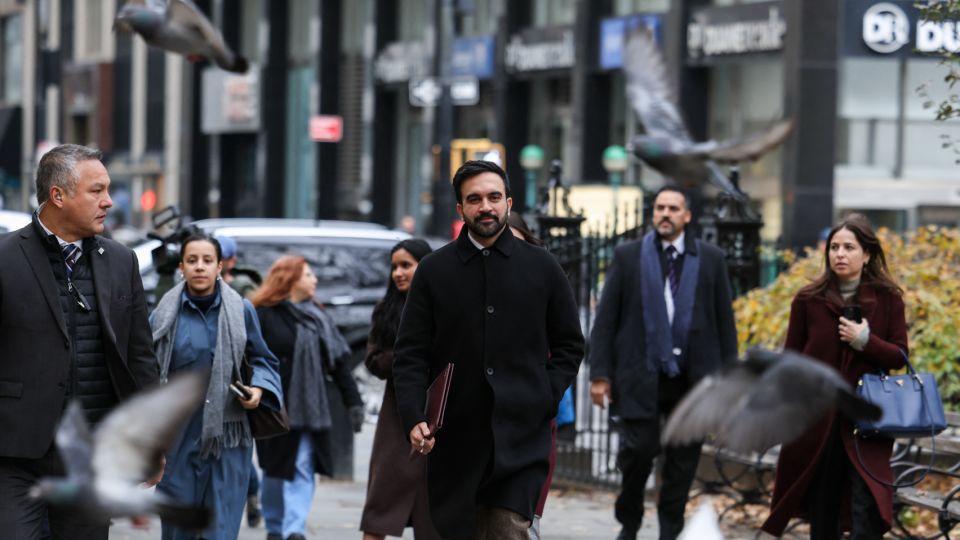
Zohran Mamdani becomes New York City’s mayor on Thursday with an ambitious agenda that drove a national conversation about affordability but will require billions in public funding and the backing of politicians who have expressed reservations.
The 34-year-old democratic socialist has just a few weeks before the start of state and city budget season begins at the end of January. He’s proposed that many of his top agenda items be paid for by raising taxes on the city’s wealthiest residents and corporations.
Mamdani does not have power to increase or lower taxes on his own. He will need the support of Gov. Kathy Hochul and the state legislature.
Here’s a look at his top policy proposals and the path forward for each of them.
Expanding universal childcare
Mamdani campaigned on a plan to offer universal childcare to every child from 6 weeks to 5 years old. The program, which is estimated to cost approximately $6 billion every year, would also expand existing pre-K and 3-K programs and increase worker salaries.
If implemented, free universal childcare would amount to one of the most significant government policies in more than a decade, since former Mayor Bill de Blasio successfully launched universal pre-K.
The cost of childcare in New York City has skyrocketed. A 2025 report by the city comptroller found the average cost of childcare for infants and toddlers in small, family-based options was around $18,200 a year, a 79% increase since 2019. The figures were even higher for center-based care, which came in at an average of $26,000 a year, reflecting an increase of 43% since 2019.
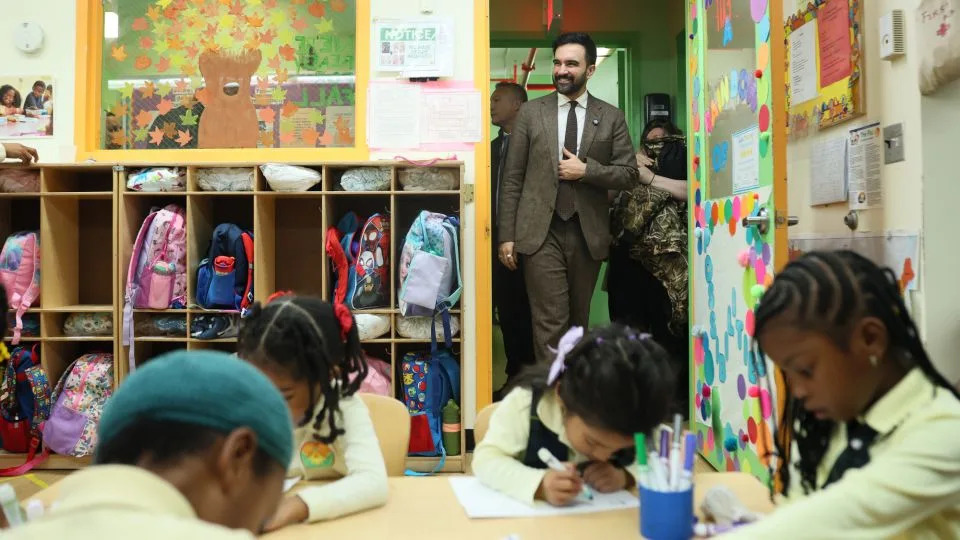
Mamdani interacts with Pre-K students at Friends of Crown Heights Education Center on November 13, 2025 in Brooklyn’s Flatbush neighborhood. Mamdani met with educators and visited with young students, speaking about his campaign promise of free care for children starting at 6 weeks old. – Michael M. Santiago/Getty Images
Mamdani has said he would fund his proposal by taxing wealthy residents and raising the city’s corporate tax rate.
Hochul, who is heading into her own reelection campaign in 2026, has thrown cold water on Mamdani’s plan to raise income taxes on the wealthy, but she has left the door open on the possibility of raising the corporate tax. Facing a Democratic primary challenge from Lt. Gov. Antonio Delgado, Hochul will be under pressure to deliver an affordability-themed win of her own.
Hochul is the first woman elected to New York’s top office and often talks about being the first “mom governor.” She has already moved to increase state subsidies for low-income families, which she says will help pave the way towards a universal option.
Freezing increases in rent-stabilized apartments
Mamdani wants to freeze the rent for roughly two million rent-stabilized tenants in New York City.
The proposal is a core plank of Mamdani’s housing and affordability agenda, which also includes a pledge to build 200,000 units of affordable housing over the next decade and increasing funding to maintain already existing public housing.
To make the rent freeze happen, Mamdani has said he would appoint members to the city’s Rent Guidelines Board who support his proposal. The nine-member board, which is controlled by the mayor, sets annual rent increases on stabilized units every year.
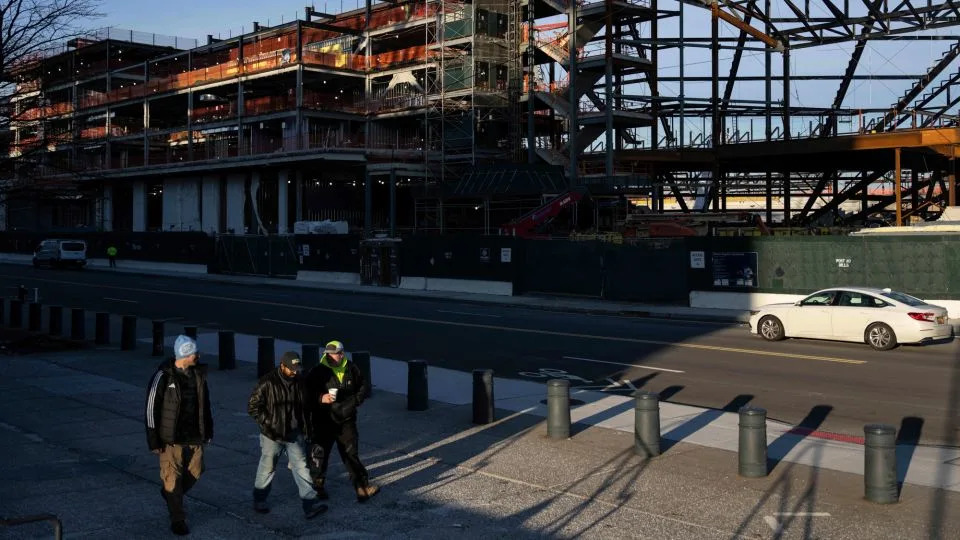
Construction workers walk past an affordable housing development in Willets Point in Queens on Monday, December 22, 2025. – Yuki Iwamura/AP
The outgoing mayor, Eric Adams, appointed or reappointed four members of the board in the final days of his term. That could delay a rent freeze by a year or more if Adams-picked members reject Mamdani’s proposal and he waits for their terms to expire to replace them.
Board members serve terms of varying length, from two to four years, while the mayor can replace the chair at any time.
While there is wide support for a rent freeze among housing and tenant advocates, there is also opposition from the city’s landlords and some experts who say freezing the rent in stabilized units without providing financial resources for small landlords will lead to apartments falling into disrepair and possibly worsen the city’s housing crisis.
Making city buses ‘fast and free’
Mamdani often reminded New Yorkers about how slowly city buses crawl through New York City’s congested streets. He campaigned on a promise to make city buses free to all passengers. His plan also seeks to speed up buses so New Yorkers can get to their destinations quicker and for free.
Mamdani’s plan, estimated to cost approximately $800 million per year, would be paid for by increasing corporate taxes and taxing wealthy residents. The proposal is yet another agenda item that would hinge on support from the state legislature and Hochul.
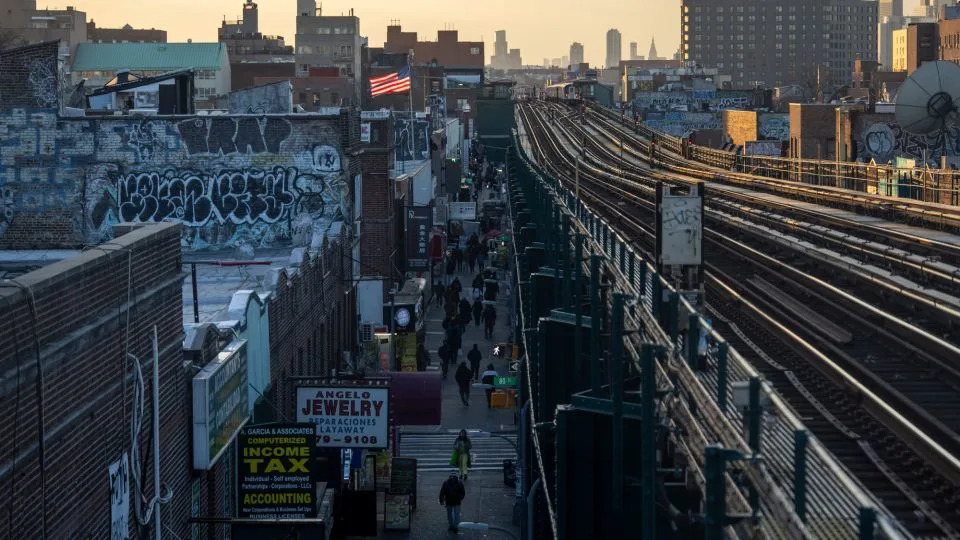
An American flag is seen on a rooftop as people walk on a street on Monday, December 22, 2025, in Queens. – Yuki Iwamura/AP
Hochul cast doubt on making buses free for everyone after Mamdani’s November victory.
“I cannot set forth a plan right now that takes money out of a system that relies on the fares of the buses and the subways,” she said at a political conference in Puerto Rico, according to The New York Times. “But can we find a path to make it more affordable for people who need help? Of course we can.”
Free buses are not an entirely new idea in the city. During the Covid-19 pandemic, bus fares were suspended on most bus routes. In 2023, while serving in the state assembly, Mamdani helped launch a free bus pilot program across five routes that ran for a year with some mixed results.
A Metropolitan Transportation Authority analysis of the program found that while ridership increased by riders who took more trips, the buses did not speed up significantly on the free routes.
Five city-controlled supermarkets
Mamdani’s plan to create five municipally controlled supermarkets, one in every borough, would offer groceries at lower prices to customers who have limited access to fresh food. In some neighborhoods, more than 30% of residents are food insecure, according to a 2024 City Council analysis.
The proposal drew intense criticism during the campaign, with opponents accusing Mamdani of wanting to install Soviet-style grocery stores.
Mamdani’s plan would provide subsidies to the stores by providing discounted rent, utilities, buying wholesale produce and exempting property taxes. The city already helps to subsidize private grocery stores through initiatives like the Food Retail Expansion to Support Health program, which offers tax and zoning incentives to supermarkets that open in underserved areas.
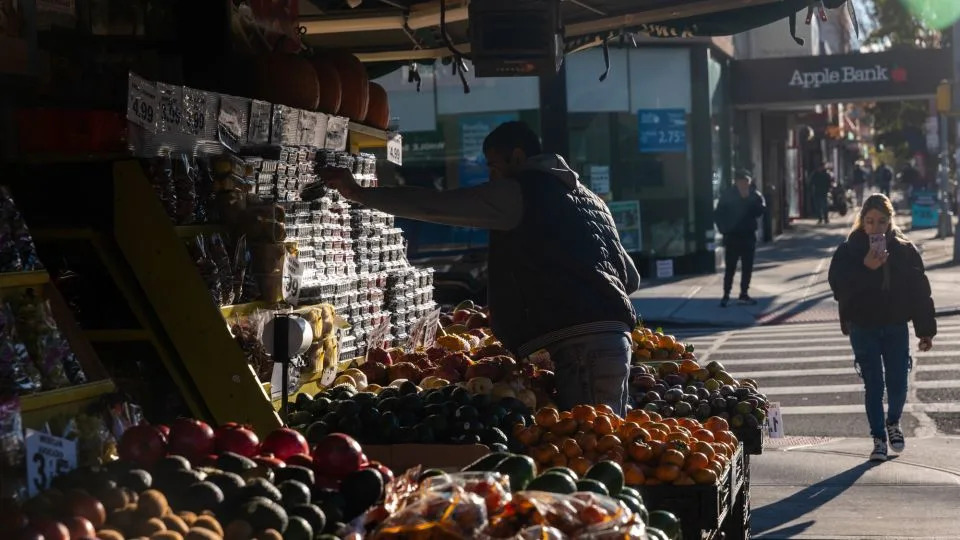
A man stacks fruit at a grocery store on November 6, 2025, in Brooklyn. – Spencer Platt/Getty Images
As a landlord, the city also leases its commercial space to private supermarket owners willing to set up shop in underserved areas including near public housing complexes. Mamdani has said he would redirect some of those funds to stores that are controlled by the city.
The program would likely need the support of the New York City Council, which would approve funding to set up the pilot program. In a city dotted by bodegas – the small convenience stores that typically offer sandwiches and sell essential items but seldom have fresh produce – it’s possible council members will face criticism from constituents who see the plan as a threat to their own business models.
For more CNN news and newsletters create an account at CNN.com