
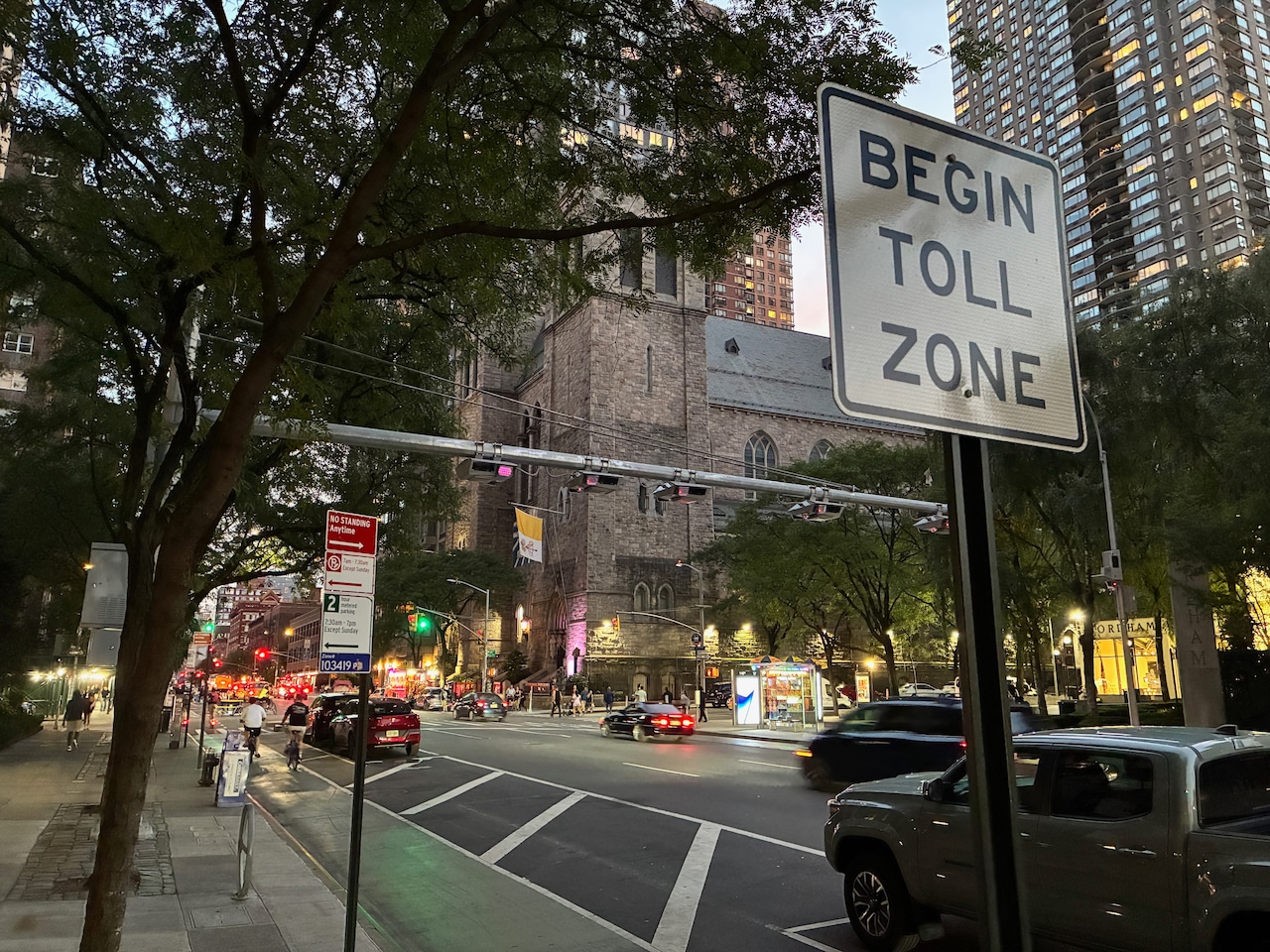
The long-awaited court showdown between the Trump administration and the Metropolitan Transportation Authority, that could decide the fate of New York’s $9 congestion pricing toll, is set for Jan. 28.
Attorneys for the U.S. DOT and the MTA will argue before U.S District Court Judge Lewis Liman in Manhattan, almost a year after the MTA sued on Feb. 19 to save congestion pricing from a federal shutdown. Each side gets two hours to make their case, according to the judge’s Dec. 23 notice.
The hearing will take place just weeks after the first anniversary of New York’s congestion pricing program, which began Jan. 5, 2025.
That program charges non-commercial passenger vehicles $9 to enter Manhattan south of 60th Street, in addition to any bridge or tunnel tolls, and imposes higher rates for larger trucks and some buses.
The MTA sued U.S. Transportation Secretary Sean Duffy after he rescinded the Biden administration’s 2024 congestion pricing approvals in February that had allowed the program to start.
Duffy announced an ultimatum in April to withhold federal highway funding unless the program was ended. The MTA successfully challenged that in May when Judge Liman placed a hold on any federal action until the MTA’s lawsuit was heard in U.S. District Court.
Drivers may welcome one piece of good news as the program hits its Jan. 5 anniversary: the congestion pricing toll for E-ZPass users will remain at $9 until it’s next scheduled increase to $12 in 2028.
Even though Port Authority bridge and tunnel tolls will increase on Jan. 5, drivers will still get the same $3 credit during peak hours under the congestion pricing plan.
The court date was set after the MTA and Gov. Kathy Hochul reported that congestion pricing met many of its stated goals. Traffic in the congestion zone was 12% lower, travel through the Lincoln and Holland tunnels took less time, and the program raised $500 million for the MTA’s capital program.
That success even led to a suggestion by New Jersey Gov.-elect Mikie Sherrill that New Jersey consider imposing a congestion pricing toll on travelers from New York attending FIFA World Cup soccer games at MetLife Stadium in June and July.