
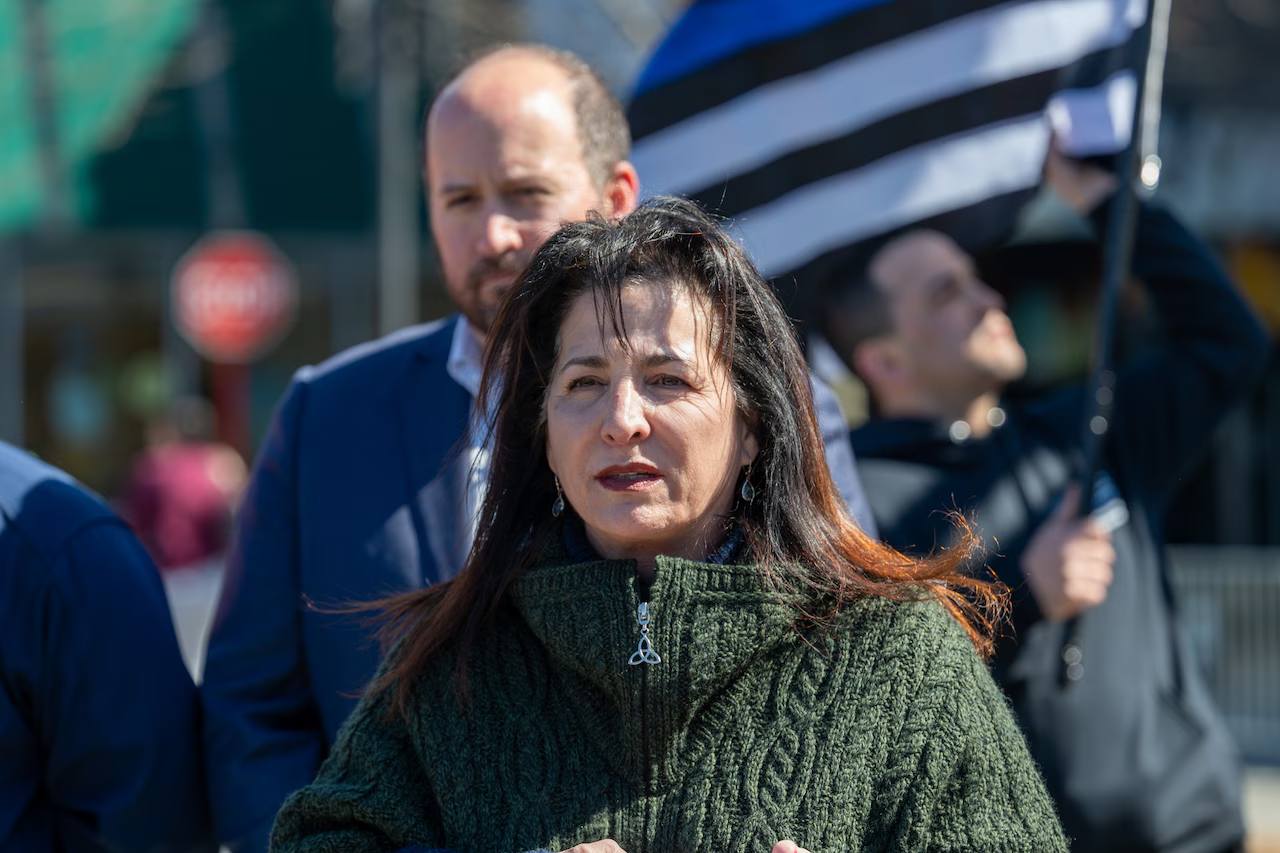
(This Q&A is based off a transcription made using an AI tool. It has been edited for content and clarity.)
STATEN ISLAND, N.Y. — Diane Savino spent almost 20 years representing the Island’s North Shore in the State Senate, and capped off a decades-long career in public service with three years in former Mayor Eric Adams’ administration.
Her work there focused largely on advancing the mayor’s legislative agenda in Albany where she spent so much of her political career.
She spoke with the Advance/SILive.com about her time with the Adams administration, her plans for the future and what she thinks is next for New York City.
Here’s a look at some of the conversation:
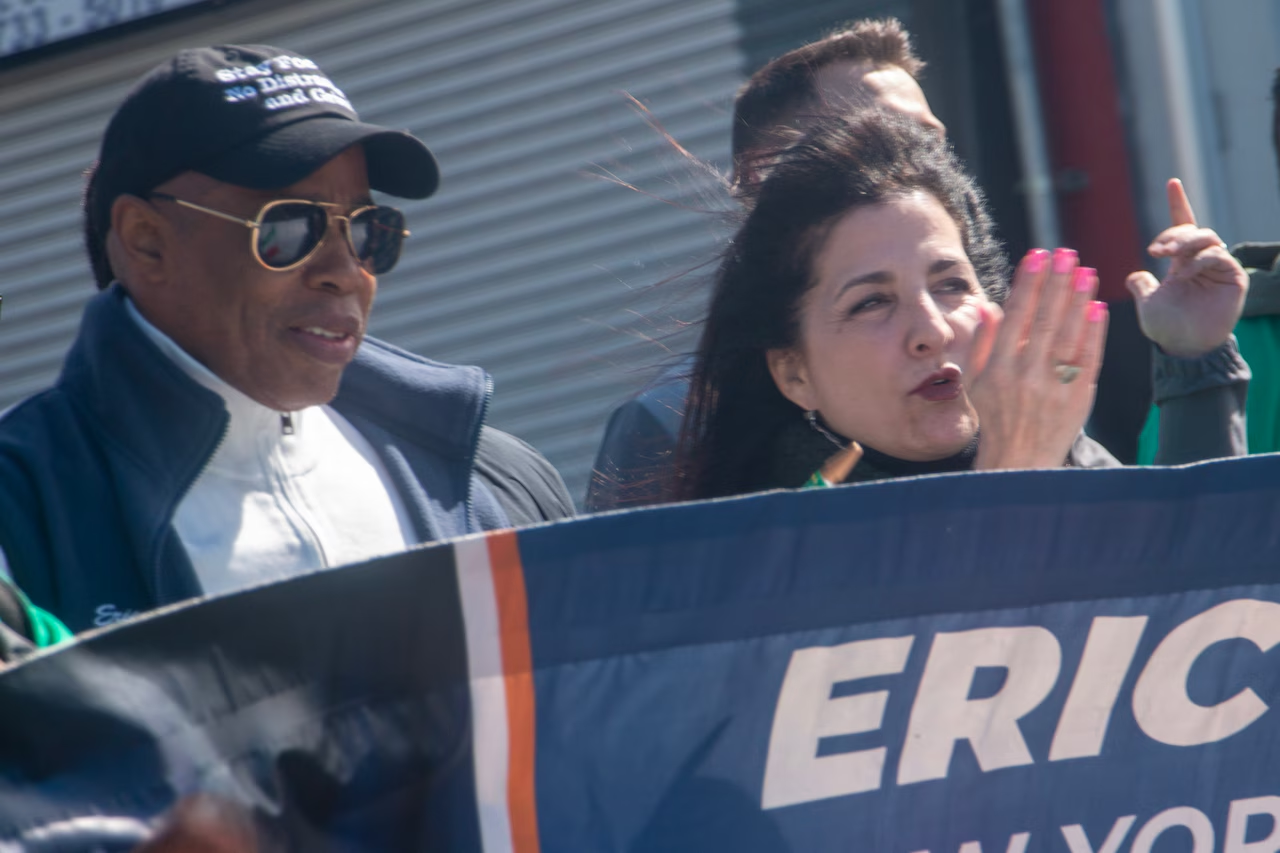 Mayor Eric Adams and former State Sen. Diane Savino march in the first inclusive Staten Island St. Patrick’s Day Parade Sunday, March 17, 2024. (Staten Island Advance/Paul Liotta)
Liotta: Those three year in the Adams administration, what was it like from your perspective? What were some of your most memorable moments?
Savino: You have to remember, I started in city government in 1990 working for HRA (Human Resources Administration) in the Child Welfare Administration, and then of course, I went to work at the union [the Social Service Employees Union, Local 371, DC 37 of the American Federation of State, County and Municipal Employees], so I was very involved in city government from that perspective.
Having worked in city government through the Dinkins administration, the Giuliani administration and then later into the Bloomberg administration, city government has changed so much since I first started working there and trying to explain to people — they don’t understand how New York city operates: it is the largest corporation on the globe.
State government is, while it’s vast and has a lot of responsibility, and yes, the city is a creature of the state, it’s still a completely different environment. Having spent the early years in the city as they went through the challenges of the high crime rate and the crack epidemic and then into the boom of the stock market and then the collapse of it after 9/11. It was so many different [events] and you see the ways the city has to adapt, and move. Certainly, that still happens today, but the agencies are run differently. They have different responsibilities and there are so many added things that have been put on the agencies over the years and it’s a wonder that anything gets done quite honestly. I think it’s a testament to the workforce.
Spending 18 years in Albany and then coming back, it was quite an eye-opening experience at first, because every City Hall really follows the lead of the guy who’s in the corner office (the mayor), so if they’re a data-driven technocrat like Bloomberg, then you’re staff is going to reflect that around you. If you are a hard-charging prosecutor who wanted to clean up the city when he came in [Giuliani], your staff is going to reflect that. De Blasio was exactly who he said he was going to be, a lefty, progressive. He never vetoed any bills. He didn’t engage the Council on anything, and he’s probably responsible for why the agencies have so many things that they’re required to do that they should never be involved in. But, moving that aside, his staff reflected that.
I think the mistake [Adams] made on staffing, and everybody has their own opinions, is that he didn’t do what [Mayor Zohran Mamdani] did. [Mamdani asked over 100 Adams appointees to resign during his transition period].
He kept way too many people that really were loyalists to de Blasio, if not the individual but to his ideology, which sometimes clashed, obviously, with [Adams]. [Adams] campaigned on, ‘I’m going to focus on reducing crime, recovering from COVID, and reducing costs for working families.’ He should’ve gotten rid of most of de Blasio’s people and he didn’t.
You had all these people in these little offices who essentially worked against him every day because they didn’t believe in that. One, they didn’t believe in him. Two, they didn’t believe in the direction he wanted to take the administration. So there was that internal clash that happened a lot.
In spite of it, we had three incredibly successful years on the legislative side in Albany, in spite of the fact that they (the Legislature) couldn’t even pass a budget on time, but nobody gave him credit. That’s largely because everything else took up all the oxygen in the room — the investigations, the resignations, the FBI raids, the indictment, everything overshadowed everything that he did. In spite of it all, I think the history books will look back at some point and say that he made some positive changes in the city, and that’s largely a result of the dedicated people who stuck around when everybody else jumped off what they thought was a sinking ship.
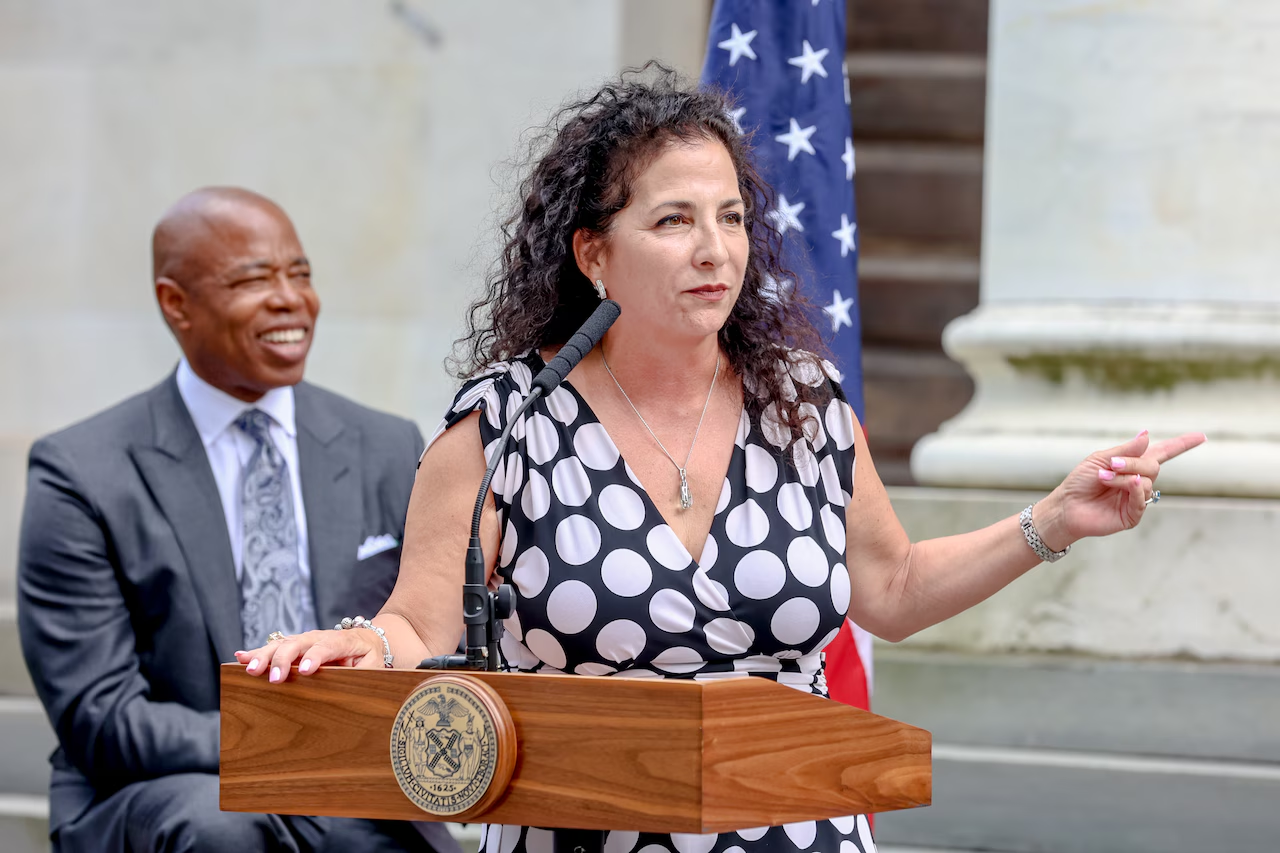 State Sen. Diane Savino (D-North Shore/Brooklyn) speaks as Mayor Eric Adams looks on as the Department of Cultural Affairs announce a $3.4 million investment in the Snug Harbor Music Hall in a press conference on Wednesday July 13, 2022. (Staten Island Advance/Jason Paderon)
Liotta: The tangibles, the results are, I think good. I think the ledger would say that they’re good. But then there’s all that other stuff, the underlying, the indictment, the scandal, the chaos of the four years. How do you think that comes out on balance when people look back on it?
Savino: It’s going to take a while. In much the same way it took people, I can’t say how many years, but it did take people a while to realize the positives of the Dinkins administration.
If you had spoke to someone at any point in time during the Giuliani years, they would have just completely derided him. ‘He was worthless. He didn’t get anything done.’ But the truth is, he laid the groundwork for a lot of the success of Giuliani’s ability to reduce crime in the city. [It] wouldn’t have happened if Dinkins hadn’t gone to Albany and got a dedicated tax to pay for more cops.
I think [the Adams administration] will go through the same course. It’ll take probably a little longer, though, because of two things. One, because we live in an era now where you can immediately Google something. You get the information right away. Twenty years ago, if you wanted to look back at the Dinkins administration, you had to go to the library.
Google ‘Eric Adams,’ the first thing that is going to come up is the indictment. It’s not going to be that he was the 110th mayor. Maybe it’ll say the two things next to each other.
The other thing that I think colored his story in ways…was he and his communications team making an enemy out of the press corps was a tremendous mistake. You cannot get into a pissing match with people who buy ink by the barrel or bandwidth by the megabyte and expect to win. And it just got worse and worse with each passing month. So when the people whose responsibility is to tell your story hate your guts, well your story’s not going to come out too well.
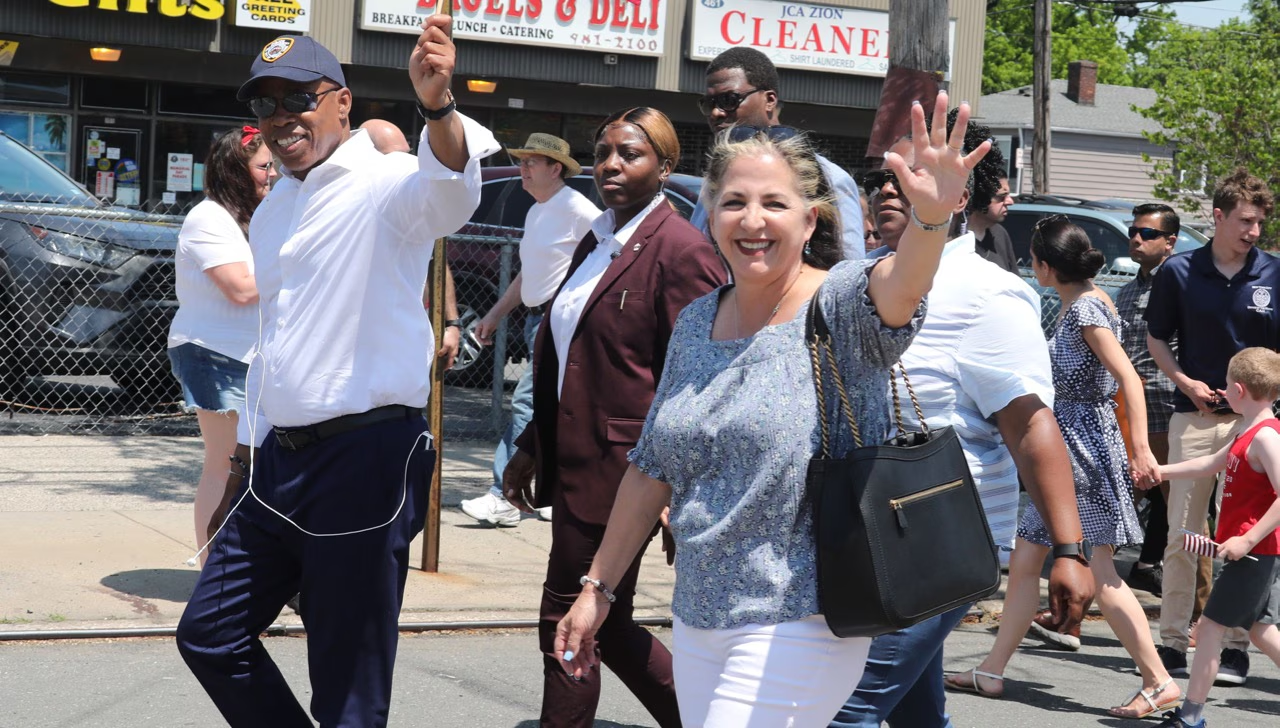 Mayor Eric Adams and State Sen. Diane Savino walk the 103rd annual Staten Island Memorial Day Parade, held on Forest Avenue, which began at Hart Boulevard and ended at Livermore Avenue. May 30, 2022. (Staten Island Advance/Derek Alvez)
Liotta: I don’t know if it took three months before we were at odds with the Adams administration.
Savino: It was frustrating to watch, because in some respects, he could be a very skilled communicator and could be self-deprecating, and he could connect with people. But, somehow or other it became built into the approach that we had to be at war.
It was just crazy to watch and so counterproductive.
Liotta: In my dealings with you, you have always seemed like a no-nonsense person. That view I have of you seems at odds with sort of what you were talking about in the Adams administration, that there was a lot of chaos behind the scenes. How did you navigate that?
Savino: To borrow a phrase from [Adams], ‘Stay focused, no distractions, and grind.’ You stay out of it, because one you are going to impact it anyway.
I learned early on when I got there that there was so much work that needed to be done, that I just stayed away from people. I knew what I brought to the table. Besides having been a legislator for 18 years, there was certainly a skill set that they desperately needed in Albany. The [administration’s] first year in Albany was a disaster.
That was one of the reasons why they hired me to help with the state [legislative affairs] team, [and you] could get away from the insanity in City Hall, because one, you weren’t included on it — you had to really be in [Adams’] inner circle on an intimate basis — and the rest of it you could ignore. Whatever was happening with who was under investigation, and as long as it didn’t affect you, you just stayed away from it.
There was so much more work to do. We had an incredibly aggressive agenda on the legislative side and the the blow back from what was happening in the city did affect that, so you needed somebody who could sit down with the leaders in the legislature, the relevant members, the governor’s office, to kind of walk them through why they needed to give New York City what it needed.
At the end of the day, New York City is independent of whoever’s sitting in the mayor’s office. We had real needs, whether it be additional funding for the asylum seekers or helping us address the crisis of the cannabis rollout, which that was a major accomplishment. The way I dealt with it, is just you stick your head down and just do the work.
Liotta: To kind of pivot to Staten Island-specifics, what do you think the Adams administration’s impact on Staten Island was, overall?
Savino: The entire North Shore redesign was only made possible because the [New York City] Economic Development Corporation under the mayor and [Councilmember Kamillah Hanks] sat down and worked it out. Otherwise, we would be looking at another vast wasteland, but instead, you have years of housing that’s going to be coming up and development and a whole new renaissance for the North Shore that is completely attributable to the relationship between [Hanks] and the mayor.
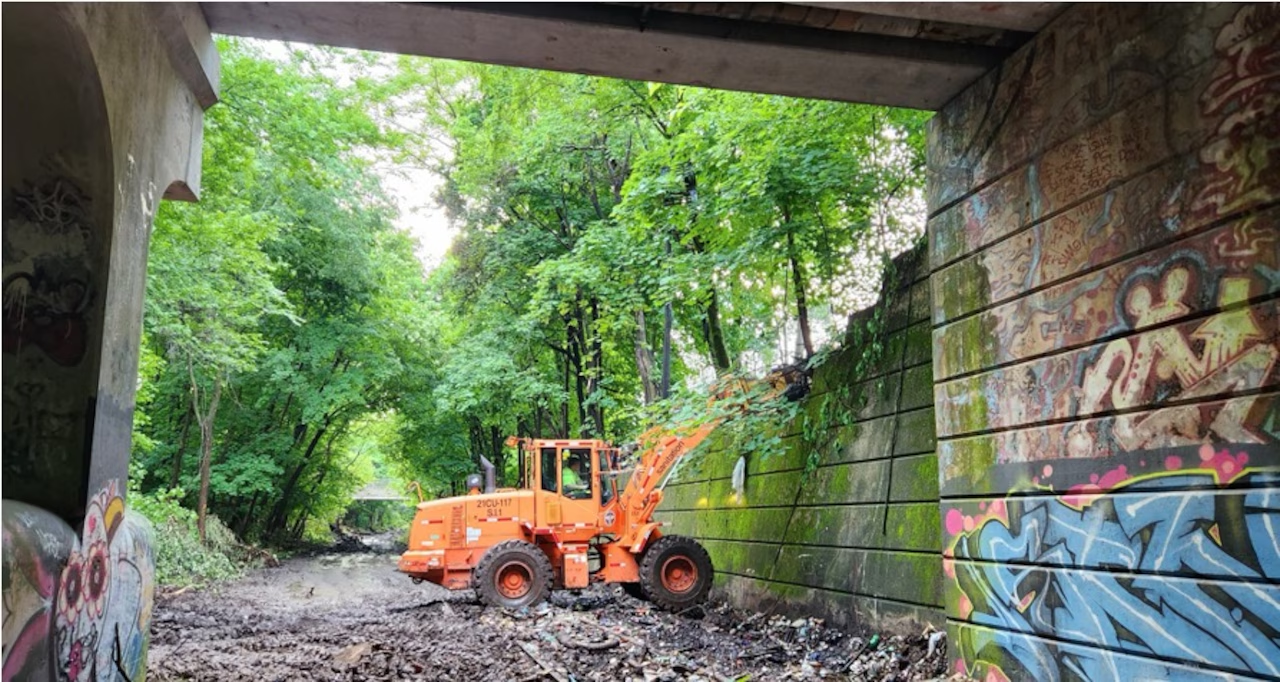 DSNY staff cleared more than 200 tons of debris and trash from the old North Shore commuter rail line in a 20-day cleanup project begun May 8, 2024. (Courtesy: DSNY)DSNY
Even little things, quality of life, stuff. Port Richmond had the Old North Shore rail line. The amount of dumping that was happening there, and they couldn’t get anywhere. They called me in City Hall. I pulled together the EDC, which owns the property, the sanitation department and [the Department of Transportation] and in less than a months time, they pulled three tons of garbage out of there.
The administration came through in ways that no one had ever done before. It was like, ‘stop the bullshit, clean this up.’ Before that, it was always, ‘well, who’s responsible? Is it DOT? Is it this one? It’s that one.’ It doesn’t matter.
Liotta: What do you think Staten Islanders should be looking forward to with the new Mamdani administration?
Savino: What’s going to make a difference for Staten Island is does the administration continue its commitment to the North Shore Action Plan? Is there a reduction in police presence on Staten Island as cops retire? Do we replace them?
They are going to want to see the visual evidence of government working, and what that really means for most people is, if you put your trash out, does it get picked up? Is there a presence of public safety? Are your parks clean?
That’s what people on Staten Island will judge his administration by, because everybody benefits from that. Quite honestly, those are the things that really show you that government is working. All the rest of it is happy nonsense.
God forbid, there’s a big, major snowstorm and the streets don’t get plowed, those are the things. It’s the function of government that people expect. Everyone knows you pay taxes. They feel that they pay too much, but what they want is to see their tax dollars at work.
I just hope that we all recognize that it’s not in anyone’s interest for this guy to fail. Like the things he talks about, you may not agree with him, but we shouldn’t be wishing for each other to fail, because that just impacts all of us who are staying here, who are homeowners, who have kids in school, or rely on government services. Failure is not helpful to those of us who depend on government to be functional.