
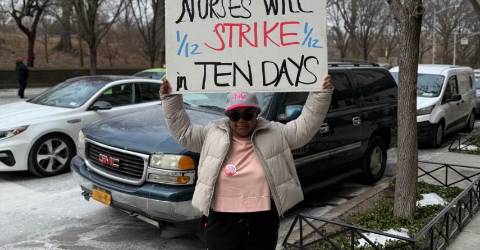
What is being billed as the largest nurses strike in NYC history could hit January 12 if the hospitals do not come to an agreement with the New York State Nurses Association.
The hospitals that could be hit by a strike include six hospitals in Manhattan owned by the Mount Sinai and New York Presbyterian health care systems but only one of the strike targets is on the UES.
Weill Cornell Medical Center on E. 68th St. will not face a strike. But Mount Sinai Morningside, at 1111 Amsterdam Ave., which is a frequent stop for emergency room patients and crime victims, is among the hospitals on the list.
The only east side hospital on the strike list is a branch of Mount Sinai at 1468 Madison which was the scene of an active shooter incident on November 14 last year when police shot dead a suspect identified as Elijah Brown, who had been threatening to shoot up a hospital. Police said he was shot dead after firing first at police.
The union claimed that Mount Sinai disciplined nurses who spoke to the media after the incident. After the shooting, the nursesunion pushed for weapon detection devices to be installed at all hospital entrances, a demand that so far has been rebuffed by the hospital.
The other Manhattan hospitals that could face a strike are all on the west side and include: NewYork-Presbyterian Allen at 5141 Broadway, New York; NewYork-Presbyterian Columbia University Medical Center at 177 Fort Washington Ave; NewYork-Presbyterian Children’s Hospital of New York, 3959 Broadway; and Mount Sinai West at 1000 Tenth Ave.
The nurses union, headed by Susan Hagans, gave ten-day notices of a strike to start on Jan. 12 to 12 private hospitals in the five boroughs and to three hospitals owned by Northwell Health on Long Island. If the strike does come to pass as many as 20,000 nurses could be on strike, making it largest nurses strike in New York City history.
The last time NYSNA went on strike was three years ago and the strike by about 7,000 nurses lasted three days.
This time around, the nurses voted on Dec. 22 to authorize a strike. The current contracts expired Dec. 31 and the two sides began negotiating in September but talks appear to have deteriorated in recent weeks.
“Management is refusing to guarantee our healthcare benefits and trying to roll back the safe staffing standards we fought for and won,” NYSNA Hagans, said in the release. “We have been bargaining for months, but hospitals have not done nearly enough to settle fair contracts that protect patient care. Striking is always a last resort; however, nurses will not stop until we win contracts that deliver patient and nurse safety. The future of care in this city is far too important to compromise on our values as nurses.”
Hagans also pointed to an active shooter incident at Mount Sinai Hospital on November 14 in which a man who threatened to shoot up the hospital, Elijah Brown, was shot dead by police. The nurses union said that nurses who spoke to the media about the need for more safety were disciplined by Mount Sinai. The union said it wants weapon detection systems installed at hospital entrances, but the hospitals have balked.
The hospitals said they are being hammered by the health cuts in medicare and medicaid and other health care cuts in Trump’s Big Beautiful Bill which passed last year. But the union claims that the hospital systems are among the richest private hospitals in the country and are sitting on cash reserves of a combined $1.6 billion.
A NewYork-Presbyterian spokesperson said its hospital system is taking necessary steps to ensure safe patient care as the strike date looms. “We have proposed benefits, and new strategies that demonstrate our shared commitment to safe staffing,” the spokesperson said. “So far, NYSNA hasn’t moved off from its unrealistic demand of nearly 30% wage increases over three years. Collective bargaining requires compromise from both parties in order to reach an agreement.”
A spokesperson for Mount Sinai said: “NYSNA has acknowledged that federal funding cuts will cost New York hospitals $8 billion and 35,000 jobs, but just three years after its last strike the union is showing once again it is willing to use patients as bargaining chips this time while pushing billions of dollars in economic demands that would compromise the financial health of our entire system and threaten the financial stability of hospitals across New York City.”