
Sherrod Brothers was in eighth grade when he and his family were evicted from their Coney Island apartment. The upheaval forced Brothers into a new school just as the pandemic shut New York City down, cutting him off from friends, routine, and stability all at once.
It was the kind of dislocation and isolation that often leads young people into a life of violence and incarceration, but after Brothers connected with a city-funded mentorship program, he was able to regain his footing. “I needed someone to show me that I didn’t have to put a ceiling on my life,” said Brothers, now 20.
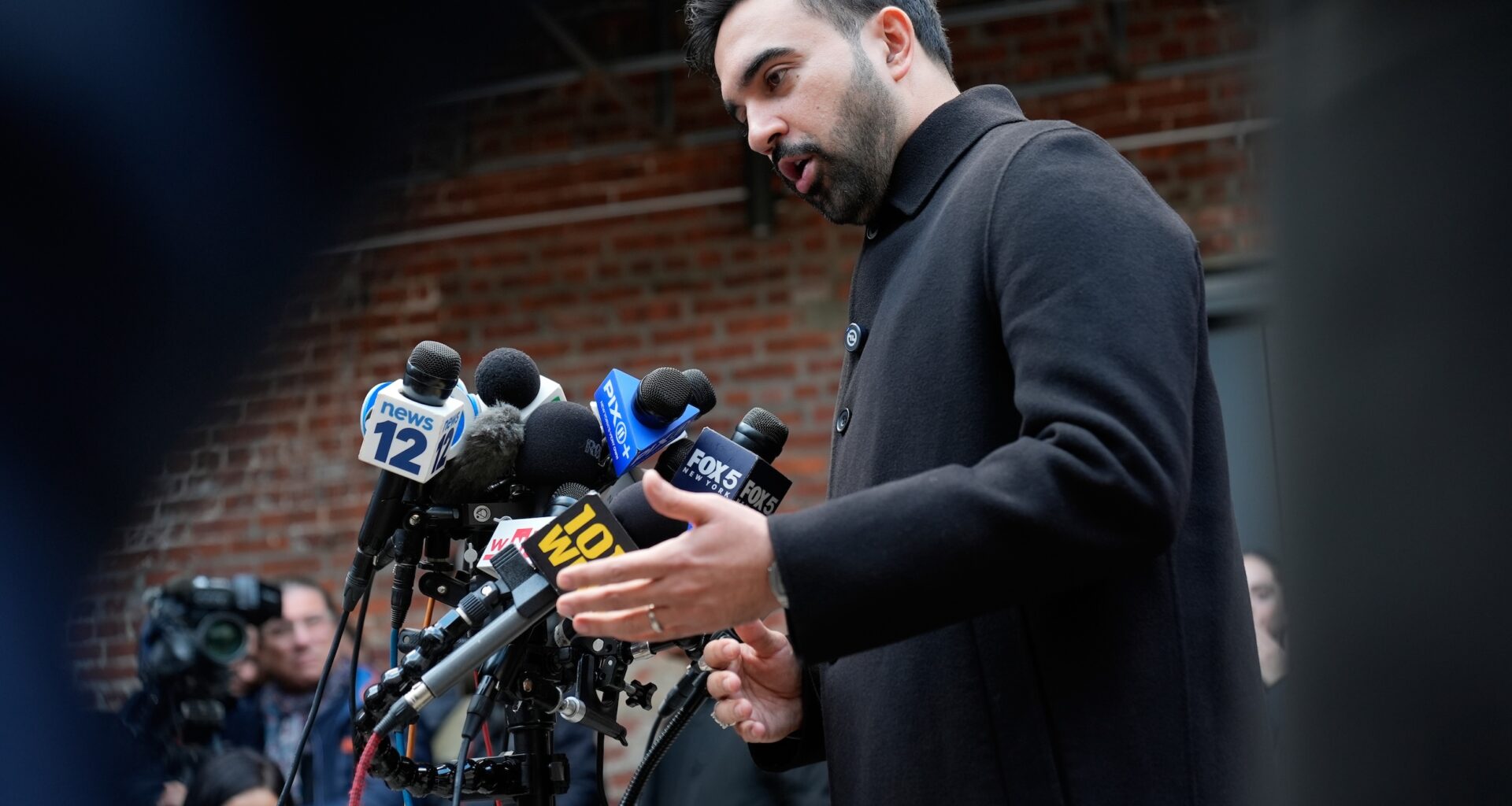
Brothers and other young people who’ve benefited from such programs are watching closely as Mayor Zohran Mamdani begins his term. Mamdani, who was sworn in on January 1, inherited a city with its lowest rate of gun violence on record. But rather than riding that wave, he is preparing to overhaul the machinery of public safety itself, shifting the focus from police enforcement to a “whole-of-government” prevention model.
Brothers hopes Mamdani expands the kind of early interventions that support young people before they become locked in a cycle of violence. “People who don’t have a sense of direction in their lives, that creates collateral damage,” he said. “The short answer to me is an alternative: finding role models — a second chance for a life outside of gun violence and dangerous environments.”
While advocates see the lull in New York’s violence as a rare opportunity to attack the root causes of crime without a crisis looming overhead, skeptics say Mamdani’s plan risks dismantling the very strategies that made the city safe.
The success of Mamdani’s efforts will hinge at least in part on his ability to navigate a political minefield that extends far beyond the five boroughs. Now in control of the city’s anti-violence networks, police, and social service agencies, Mamdani faces threats from Washington. He has to grapple with the looming possibility of increased federal immigration enforcement, which could spark local unrest, and President Donald Trump’s ongoing threats to deploy the National Guard to New York.
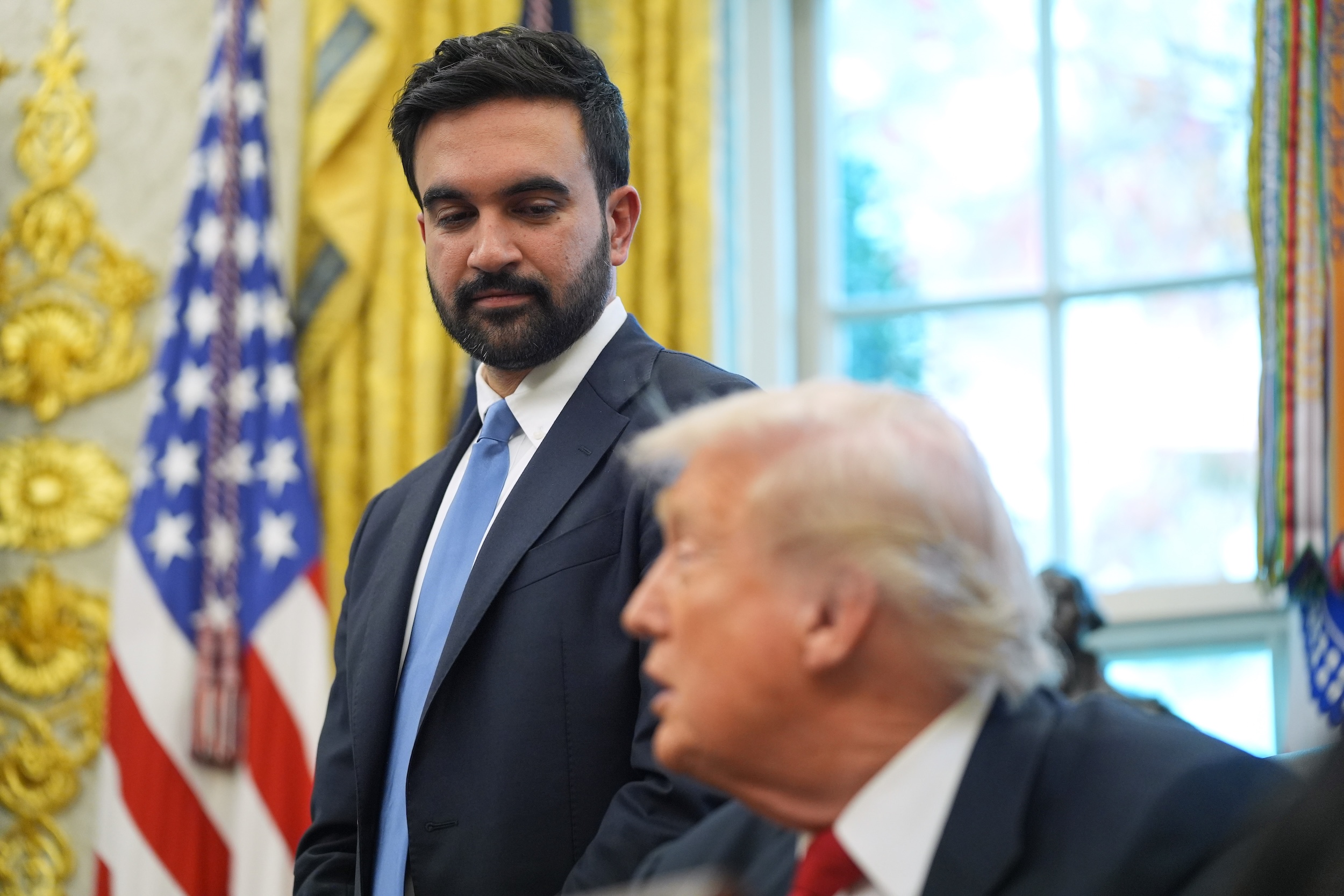 Zohran Mamdani meets with President Donald Trump after winning New York City’s mayoral election in November.
Evan Vucci/AP Photo
Closer to home, Mamdani must also manage competing constituencies and a polarized electorate. Mamdani’s opponents spent the 2025 campaign painting him as a threat to public safety. To neutralize these attacks and demonstrate his willingness to defy the most progressive wing of his base, Mamdani announced he would retain Police Commissioner Jessica Tisch. But the criticisms haven’t slowed. The New York Post recently seized on Mamdani’s decision to tap a police critic for his transition committee as evidence that he “will push cop-hating policies.”
Mamdani, who did not respond to requests for an interview for this piece, appears intent on walking a fine line. His transition committee was composed of police reformists, abolitionists, former public safety officials, and former NYPD leaders — signaling a desire to bridge the gap between reform politics and traditional law enforcement.
Mamdani’s 26-member transition committee started meeting in November to shape the administration’s public safety agenda. The mayor’s definition of “safety” is broad, and he has tied economic stability to violence prevention, promising to fight for a rent freeze and more housing construction. He also pitched free bus service as not only sound transit policy but also as a public safety imperative.
The centerpiece of Mamdani’s public safety platform is the creation of a Department of Community Safety, or DCS. According to his campaign proposals, DCS would consolidate existing violence prevention offices under one roof and have a budget of $1.1 billion, roughly a tenth of the New York Police Department’s annual budget. DCS’s mission would be to treat safety as a public health issue, coordinating across agencies to “prevent violence before it happens.”
On December 18, the City Council introduced legislation to create DCS. Under the bill, the mayor would appoint a commissioner to run the department, and it would operate offices open 24/7 in each borough. It would also work with law enforcement and community volunteers, respond to emergencies, and conduct outreach in neighborhoods with high rates of violence.
DCS would likely take control of the Crisis Management System, the city’s network of nonprofit violence intervention and social service providers. Mandani’s plan includes a 275 percent increase in funds for the system.
Ideally, DCS would fix the fragmentation that has long plagued the sector, advocates said. But they also warned that without the right structure, the new department risks becoming just another layer of red tape.
Jarrell Daniels, a formerly incarcerated advocate turned public safety scholar at Columbia University, said that the violence prevention ecosystem is often hindered by tensions between government officials and community leaders. DCS’s success will depend on staffing the department with people willing to put the mission above politics. “Government can’t do it by themselves, and community organizations can’t do it by themselves,” Daniels said. “There needs to be somebody helping to broker the relationships and move the needle forward together.”
Richard Aborn, president of the Citizens Crime Commission of New York City, takes the critique a step further. He worries that a standalone “department” might lack the political teeth necessary to force siloed city agencies to collaborate. “Departments tend not to get the highest level of priority from City Hall,” Aborn said. Instead, he argues the administration needs a deputy mayor for public safety with the authority to command resources from the police, housing, and education agencies, among others.
The new department, no matter its final form, will likely be tasked with helping reshape who responds to crises. Mamdani has vowed to significantly expand the city’s B-HEARD pilot program, which dispatches EMTs and social workers rather than police officers to mental health 911 calls. A May audit by the city’s comptroller found that while the program has expanded since its 2021 launch, it still operates with limited capacity and is unable to respond to about a third of eligible calls within its pilot area.
Talib Hudson, the founder of The New Hood, a think tank focused on community-based policies for Black and brown neighborhoods, said the DCS proposal is well-intentioned but that Mamdani should avoid giving it too much responsibility without commensurate resources. “Someone who is experiencing a mental health episode or suffering from an opioid addiction on the subway is not necessarily the same as someone who is trapped in a cycle of violence,” Hudson said. “There may be similarities and overlaps, but my concern would be that the specific community-based public safety work could get overlooked without enough specific attention.”
Precision and Communication
For experts and community leaders, the question isn’t just how the bureaucracy is organized, but how the mayor gets the police and the community to work together.
Tisch, the police commissioner, credited “precision policing” in a January 2024 statement touting the city’s falling crime numbers. Developed in New York, the strategy uses crime data to target enforcement at repeat offenders and increase patrols in specific micro-areas. Aborn urged Mamdani to maintain the precision-policing model but said the city must apply that same rigor to social services and prevention programming. “We need to get after the people who are likely to offend and provide them with the panoply of services before they commit another offense,” Aborn said.
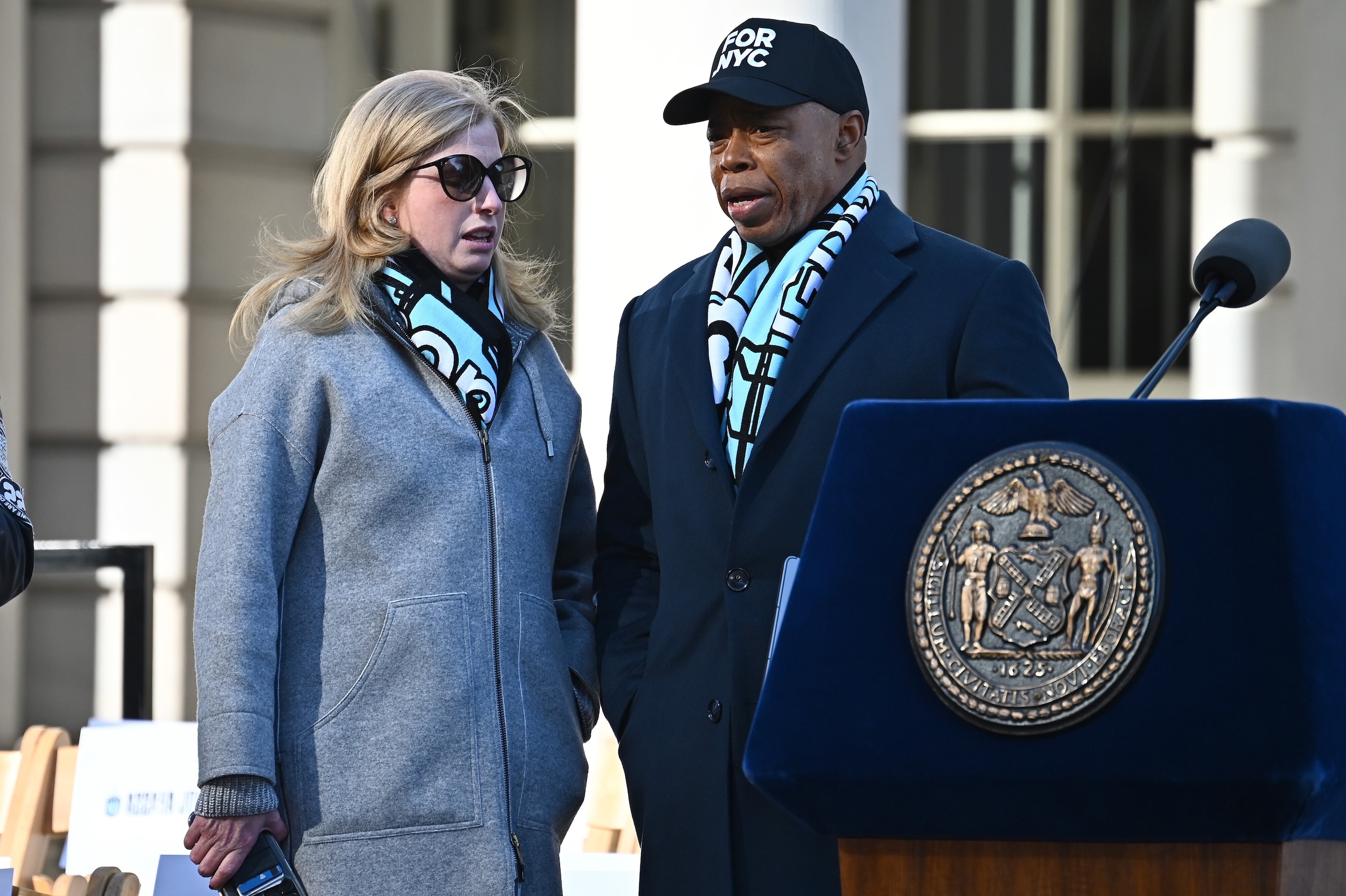 New York Police Commissioner Jessica Tisch and then-Mayor Eric Adams talk during an event at City Hall on November 24.
Anthony Behar/Sipa va AP Images
Police precincts used to share intelligence and alert violence prevention leaders to tensions before they turned into shootings. Under Mamdani’s predecessor, Mayor Eric Adams, that communication went silent. Advocates would like to see it resume. “If we were able to get information about these young kids, we could have stopped their behavior,” said AU Hogan, a Southeast Queens community leader and chief of streets at the violence prevention program LIFE Camp.
Darryl Philips, director of operations for We Build the Block, agreed that tactics should be targeted, but argued that the new administration’s definition of public safety must expand beyond arrests. He hopes Mamdani will fix streetlights and clean vacant lots in the communities that bear the brunt of the violence. “If you give them the tools, people are willing to do the work,” Philips said. “The community is actually interested in helping keep itself safe.”
Youth Input
Young people also have ideas for how Mamdani can catch other members of their age group before they slip into crime. Brothers was one of about two dozen people in their teens and early 20s who presented proposals during a recent graduation for the Justice Ambassadors Youth Council, a program that pairs youth with government officials to co-write policy.
Brothers’s group laid out a blueprint for a middle school pilot program centered on “healing circles,” art therapy, and family resources. Another group had an idea for a centralized digital portal to connect schools with underutilized after-school programs to fill the critical “danger window” between 2 and 8 p.m. when youth violence spikes. A third group proposed hiring coordinators to help young adults on probation get their GEDs.
Daniels, the Columbia University scholar who founded Justice Ambassadors, said the Mamdani administration needs to understand that for young people in the city’s most under-resourced neighborhoods, threats of arrest or prison time don’t deter most crime.
Gangs often offer the only available sense of identity and belonging. To break that cycle, the city has to provide a compelling alternative with better-paying jobs and economic opportunity. “When I think about public safety and crime, I think about economic insecurity and how that’s driving all of it,” Daniels said.
Those working on the ground to prevent violence hope that the city’s improving public safety statistics don’t discourage Mamdani from focusing on ways to reduce the problem even further. “One life taken is a crisis,” Hogan said. “We’re not out of the crisis until no one is killed.”