
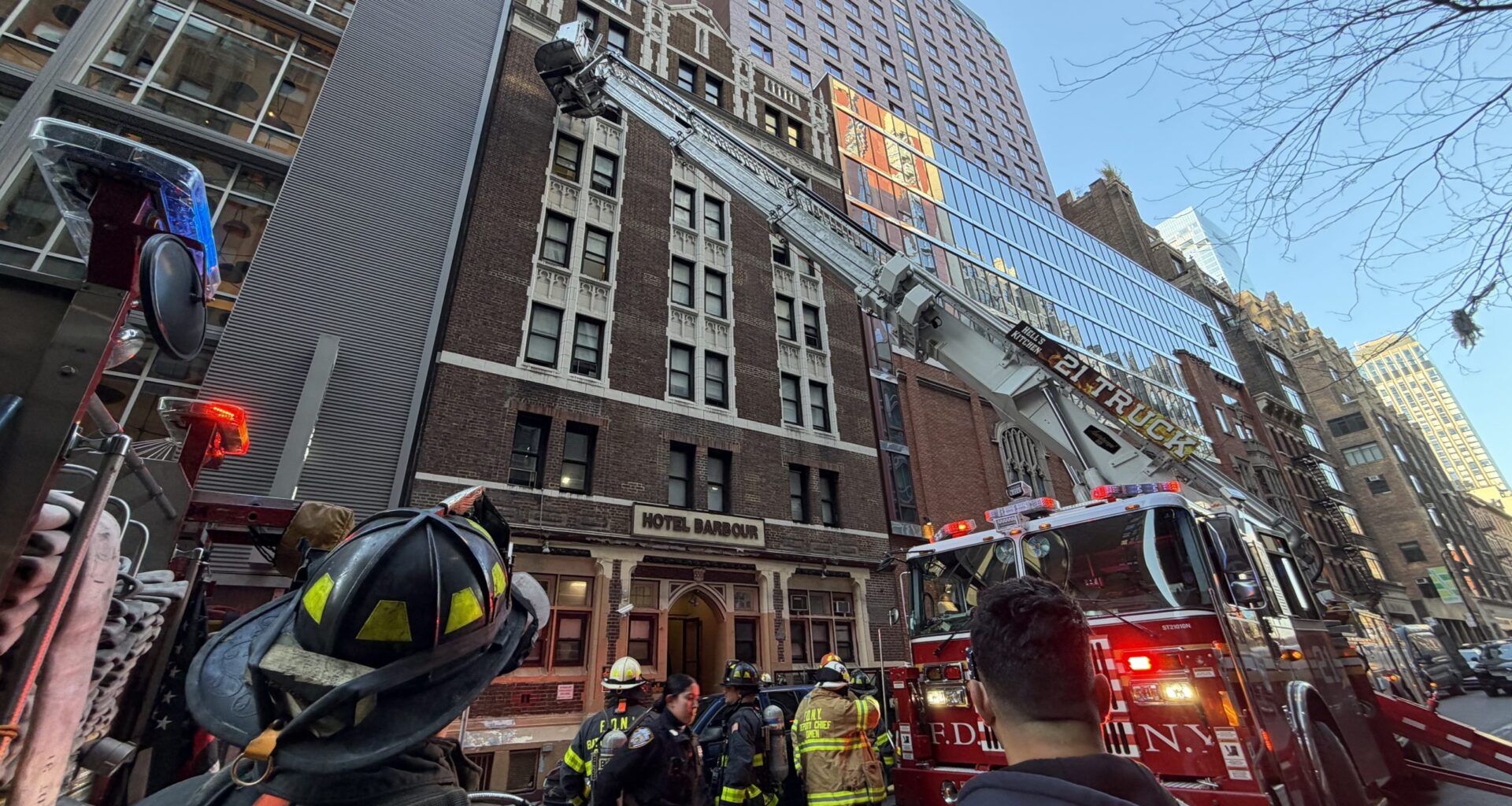
A fire broke out this morning (Thursday) at Barbour House, an eight-story building at 330 W36th Street between 8th and 8th Avenues, prompting a major FDNY response and leaving one civilian critically injured.
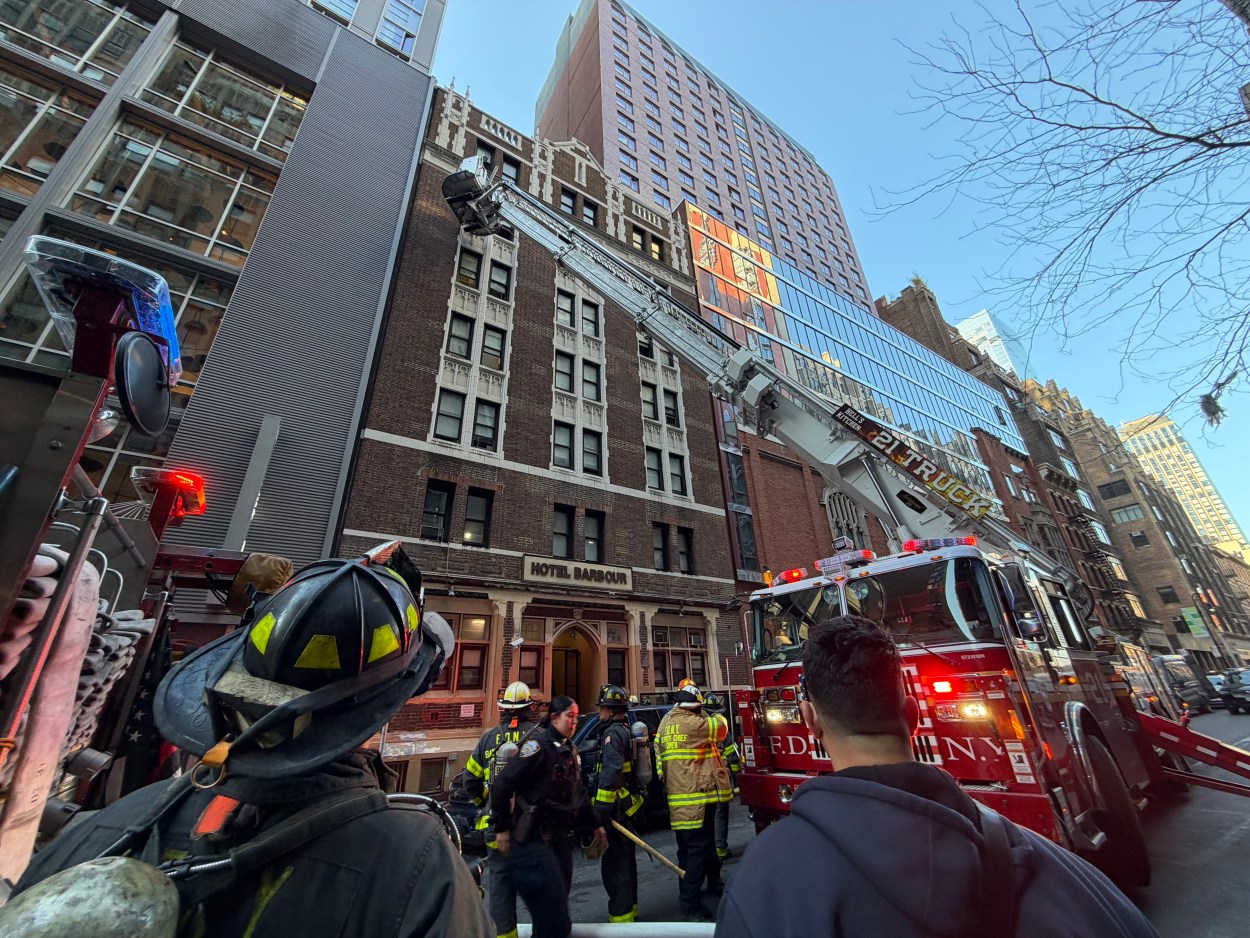 Emergency responders blocked off W36th Street between 8th and 9th Avenues while they worked to put out the fire. Photo: Phil O’Brien
According to FDNY, the call was received at 9:42am, with reports of a blaze on the sixth floor of the building. The incident was classified as a 10-77 high-rise fire, drawing 38 fire and EMS units and approximately 120 personnel to the scene. FDNY established a command post in the building’s lobby as crews worked to contain the fire.
The century-old structure contains 102 rooms, two enclosed stairwells and roof access, but does not have exterior fire escapes. It is currently operated as a transitional housing facility serving residents with HIV and AIDS.
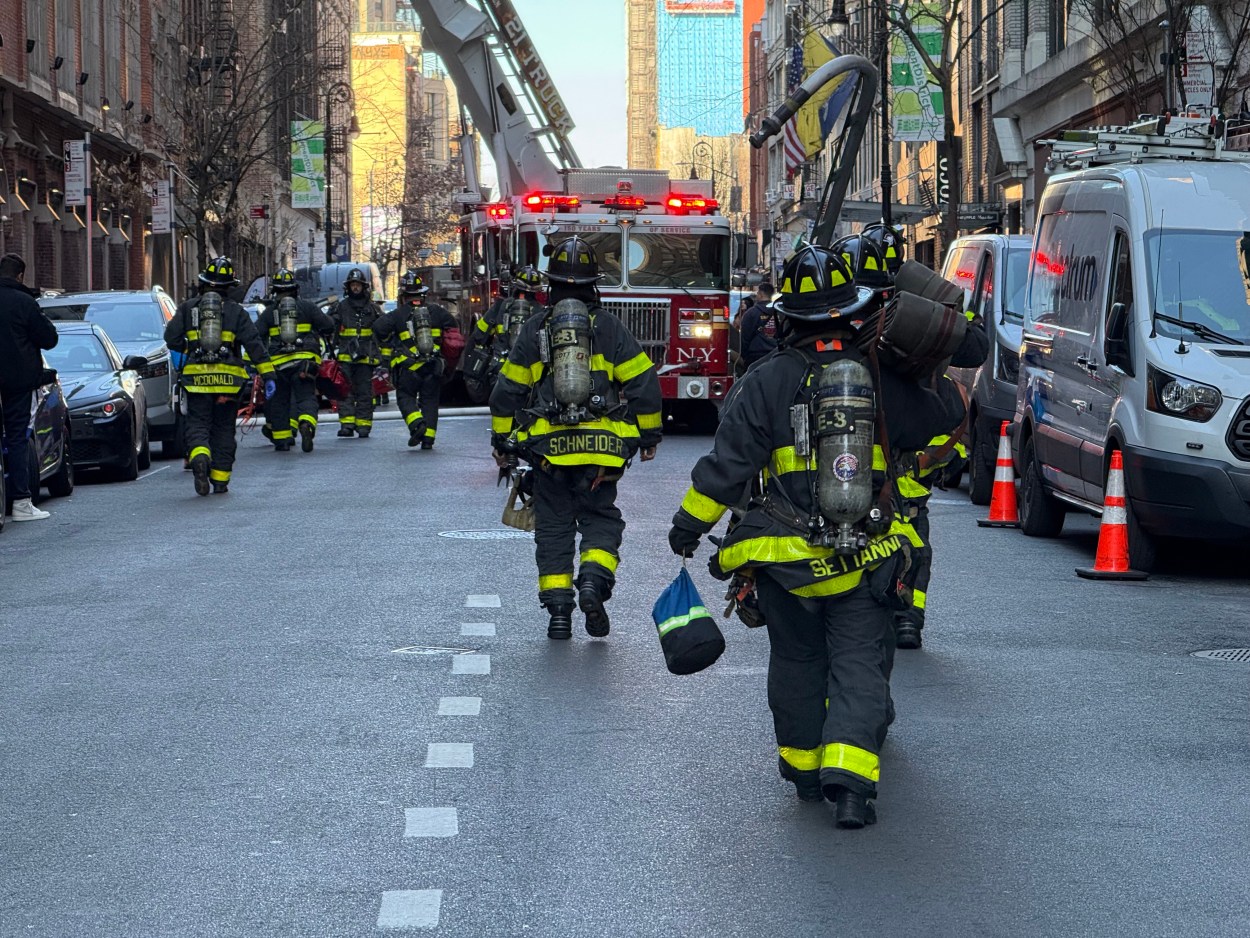 Multiple FDNY units replied to the scene. Photo: Brian Weber
One civilian was critically injured and transported for urgent medical care to NewYork-Presbyterian/Weill Cornell Medical Center, according to FDNY. Three firefighters sustained minor injuries and were also taken to the hospital for treatment.
FDNY reported the fire was under control by 10:12am and the cause remains under investigation.
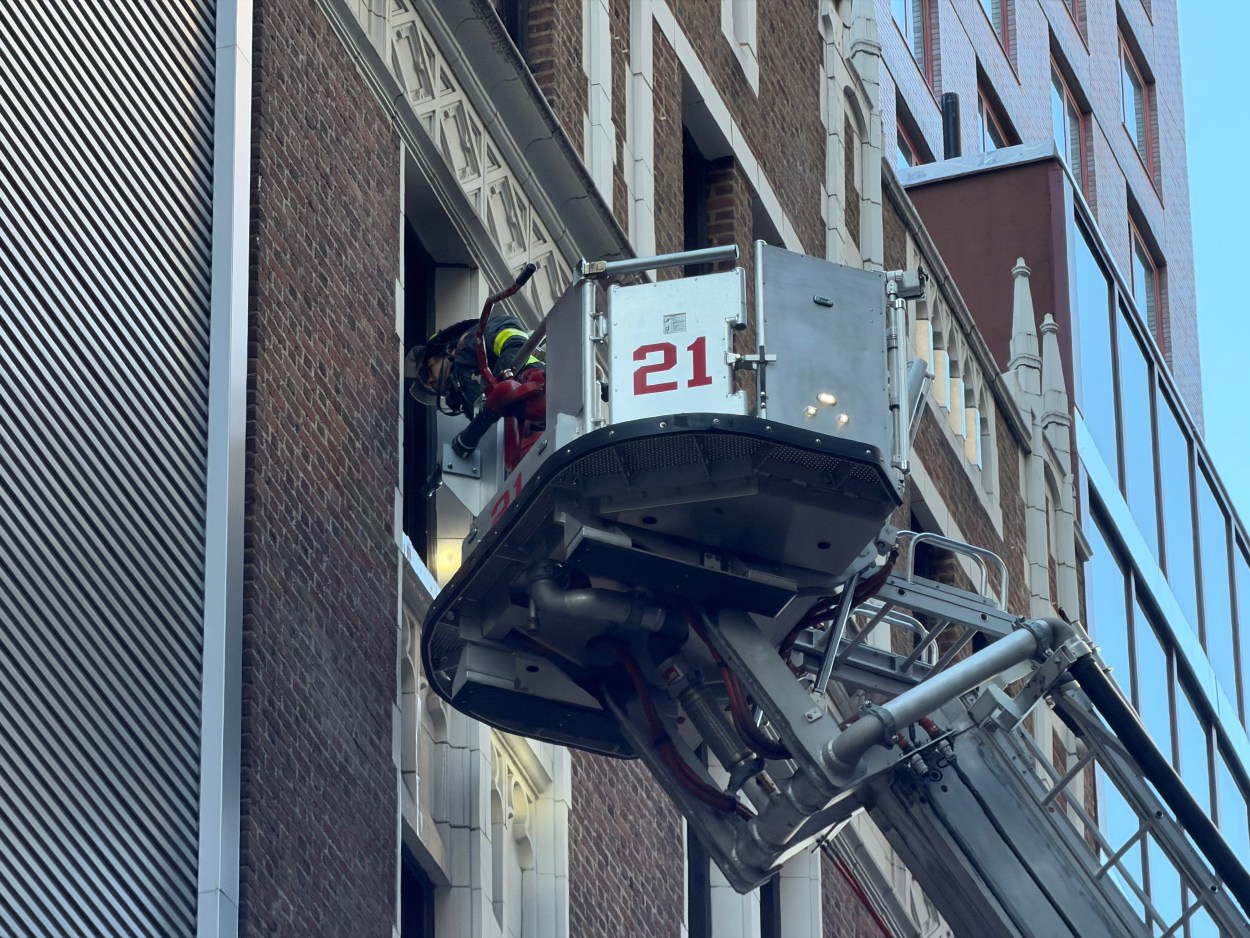

Firefighter in a ladder truck peers inside the building and EMS removes a patient to the hospital. Photos: Phil O’Brien
While today Barbour House functions as supportive housing, the building has a long and layered history on the West Side.
The structure was completed in 1916 as a seven-story dormitory for working women, built by the Brick Presbyterian Church to address a growing shortage of safe, affordable housing near the expanding retail and transportation hub around Penn Station. Named in memory of William D Barbour, a longtime advocate for West Side children and families, the building was designed in a Gothic Revival style to complement Christ Church and its adjoining parish house next door.
Originally known as the Barbour Dormitory — and later simply Barbour House — it offered modestly priced rooms, shared amenities and social spaces meant to provide stability and community for wage-earning women, many of whom worked nearby in department stores and garment factories. Over the decades, the building adapted to shifting neighborhood needs, eventually expanding its mission and serving a broader population.
By the late 20th century, Barbour House had transitioned into supportive housing under Praxis Housing Initiatives, operating under contract with the city to provide on-site services, counseling and harm-reduction programs for residents living with HIV/AIDS and other health challenges.
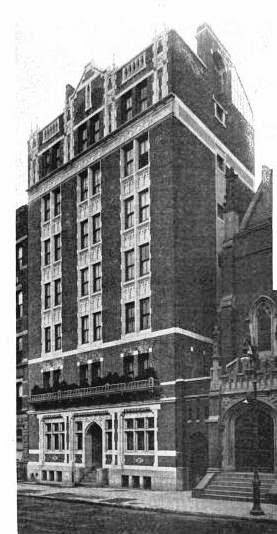
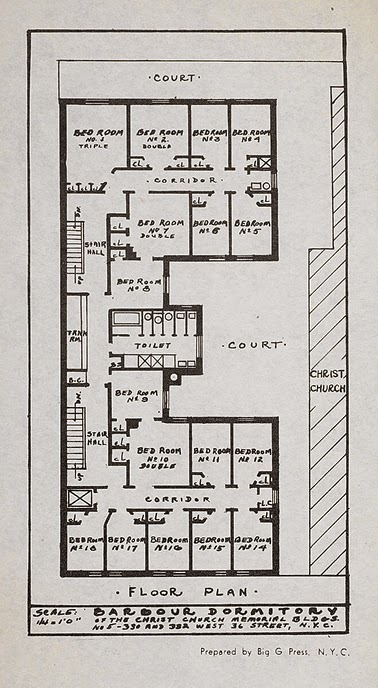
Barbour House in April 1917 and a floor plan showing rooms lined up along hallways with a central communal restroom. Photos: Architecture & Building and Columbia University
Today, the century-old building remains one of the few survivors of its original church-anchored complex, standing amid waves of redevelopment that have reshaped much of the surrounding block.
This is a developing story. We will update as more information becomes available.