
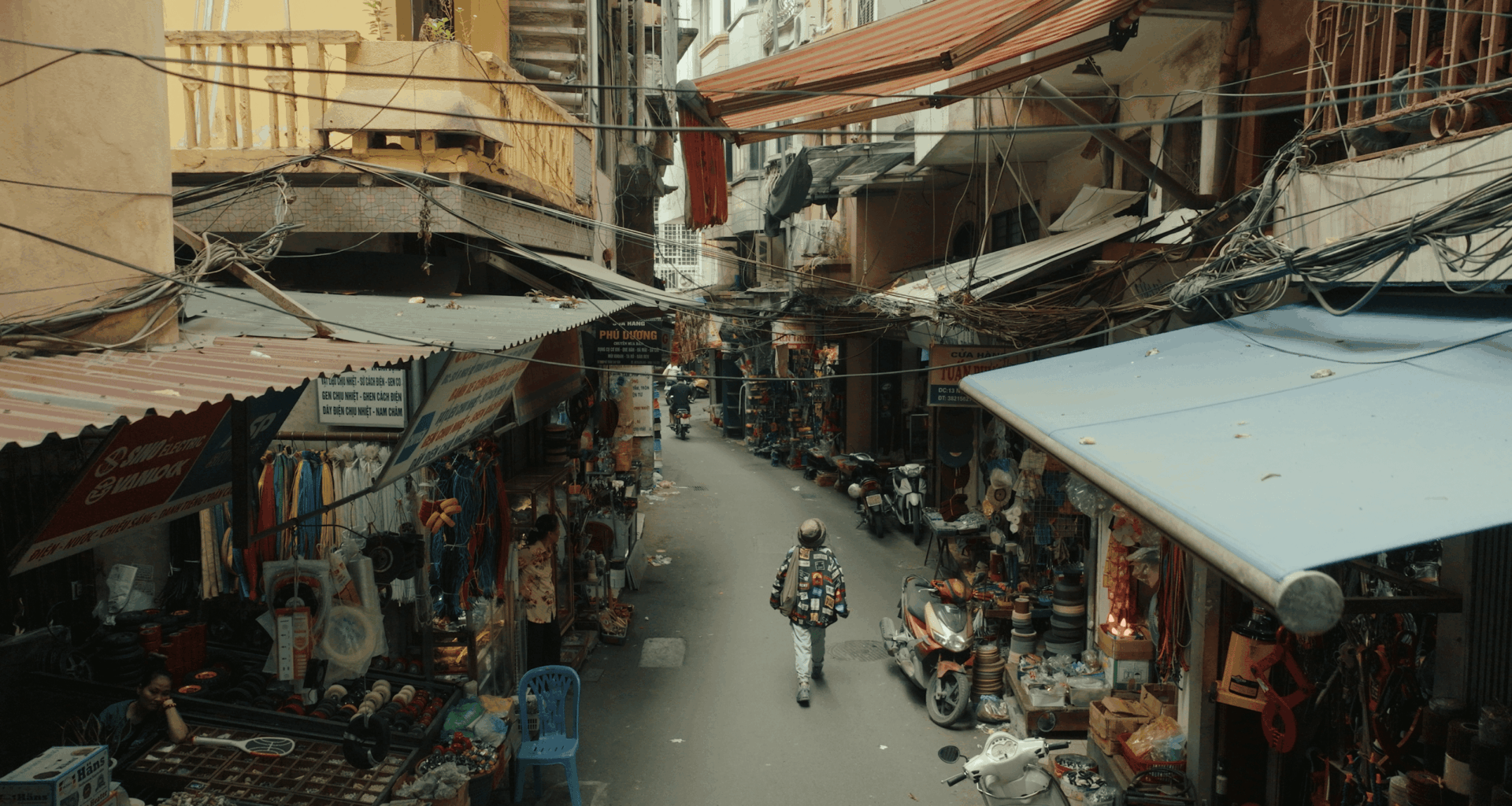
A Park City High School alumnus has produced a “cultural time machine” that landed in the Top 10 films of DOC NYC, one of the most prestigious documentary film festivals in the country.
“Y Vân: The Lost Sounds of Saigon,” co-directed by Khoa Ha and Victor Velle and celebrated its world premiere during the 2025 festival in November, recounts and revives the career of late and beloved Vietnamese songwriter, producer and arranger Y Vân, who passed away in 1992, Emerson said.
“DOC NYC has been a big dream of mine for a long time,” he said. “So to get the film in for competition and make the Top 10 most popular films was very exciting.”
The origin of the film started eight years ago when Emerson, who has been producing documentaries for nearly 15 years, met Ha, who is Y Vân’s granddaughter.
“She brought me some sheet music of her grandfather’s, and she was so passionate about it,” he said. “At that point, she had found one song of his, and she was in this zone where she wanted to tell the story but didn’t know how because she wasn’t a filmmaker.”
Emerson knew the film would be an incredible story once he heard Ha’s idea.
“So, I basically gave her a checklist of how to do some research and how to set up the initial vibes of what would end up being a movie,” he said.
At that time, Emerson, who graduated Park City High School in 2014, didn’t know he was going to be involved with the project.
“I just showed her the first steps because I wanted the movie to be made,” he said.
That changed three years later.
“After Khoa had done all the research, she came back and said, ‘Let’s make this movie,’” he said with a laugh. “And I told her I wanted to make this movie the second I saw the first piece of sheet music and that I was honored she chose me.”
From that time, which was about four years ago, Emerson and Ha started putting everything together, which included tapping Velle as co-director.
“Victor is a good friend of mine,” Emerson said. “I have known him for a decade, and we have made many films together, including our first feature, ‘8 Billion Angels.’”
Watching the dynamic between Ha and Velle inspired Emerson.
“I told Victor even though Khoa hadn’t made a film before, she was the authenticity of the story,” he said. “I also told Victor that she needed to direct the story, but since she would be on screen for almost the entirety of the film, he needed to direct her as the character. So, together their visions would make the complete film.”
In a sense, the project served as a filmmaking bootcamp for Hal, Emerson said.
“But she also got to embody everything she wanted to be about the film, and Victor was the one who sculpted it and became almost like the editor of the story,” he said. “At the end it was almost like doing a dance. It was great to see her grow into a very proficient filmmaker.”
Before things got rolling, Emerson put things in perspective for Ha.
“One of the things I try to tell up-and-coming filmmakers is that a movie is a whale,” he said. “It’s huge and terrifying to think about. And it will take multiple years of your life because there are so many moving parts.”
Emerson told Ha to break the “whale” down into bite-sized pieces.
“When you understand that process, the whale becomes a meal every day for a couple of days,” he said. “That way it makes it less scary and at the end of three or four years, you have a movie.”
Another piece of advice Emerson gave Ha was to mitigate.
“Movies can also become monsters that will try to eat you up,” he said. “They can become all-consuming, so you have to recognize that and build structures against that.”
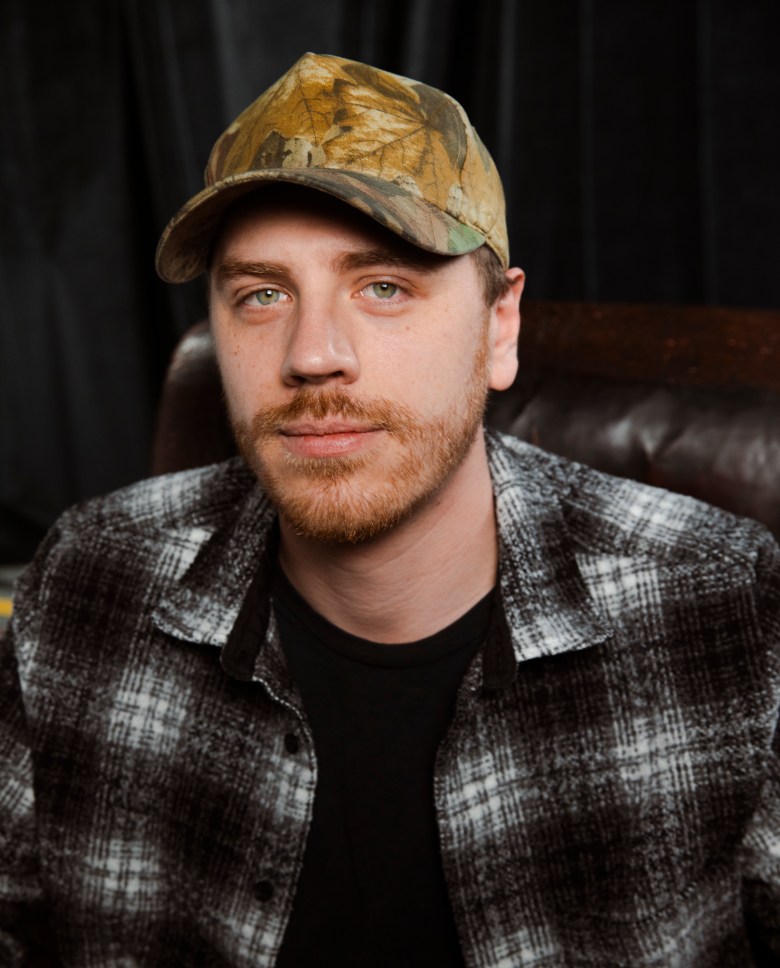 Douglas Emerson graduated in 2014 from Park City High School and has since forged a successful career as a film producer. His latest project, “Y Vân: The Lost Sounds of Saigon,” co-directed by Khoa Ha and Victor Velle, premiered at DOC NYC and made the festival’s Top 10 list. Credit: Photo courtesy of Douglas Emerson
In turn, Emerson also became Ha’s student during the process.
“She brought in this freshness because she had never made a movie,” he said. “She didn’t know what the rules were about what you can and can’t do, and she came in with this wild-card, wild-west approach that brought things into light that Victor and I would never have thought of.”
Ha specifically did that through the film’s graphics.
“Khoa, who is a designer, has an incredible eye and brought in this Saul Bass, pop-art aesthetic, where instead of each graphic being one image, it was like a collage that moved,” he said. “So all of sudden the graphic language of the film changed into something that I had never seen in a doc before.”
Seeing Ha implement her unique techniques showed Emerson there are no rules when it comes to telling a story emotionally and visually.
“That blew my mind open with documentaries,” he said. “I’m working on a documentary right now that is half animated, and I’m looking at what this genre can do when you think about approaching it from an entertainment and visual perspective, as opposed to approaching it as a traditional doc.”
Ha, Emerson and Velle also faced and solved an array of puzzles during each step of the project.
“They say you make a film three times,” Emerson said. “You make it in pre-production. You make it during production and you make it, again, in post production. And each had their own challenges.”
The first challenge the team confronted during pre-production was the story itself, according to Emerson.
“It’s huge and involves three generations of family, two countries and hundreds, if not millions of people involved in the cultural movements,” he said. “So, we helped Khoa understand that we wouldn’t be able to tell all of that story in 90 minutes. And to do that, we had to really curate and find the meat inside of this thing so everybody could feel the story.”
One of the challenges during production was taking a group of 35 people, including co-producer Mike Pham and cinematographer Jake L. Mitchell, and three cameras to Vietnam.
“It was still a lot of fun,” Emerson said. “It was like ‘Planes, Trains and Automobiles,’ and there was good energy.”
What Emerson enjoys most about filming a documentary is the freedom to film everything and anything.
“You’re not trying to be surgical like you do with features and narratives, where you have a shot list,” he said. “With docs, you’re trying to capture everything, so there is the beauty of living the adventure as you film it.”
The biggest challenge the three came up against was during post-production, Emerson said.
“I think we recorded 90 hours of footage, but only 1% of that ended up in the movie,” he said with a laugh. “So, to go into post with everything and do another curation to slim all that down was a big challenge.”
Emerson also knew this story needed a personal and global perspective.
“The one thing about this story is that it touches on the history of a family, but also the cultural history of Vietnam,” he said. “The war is a very traumatic moment for those who live there and for the ex-pats who moved to the United States, and they still don’t talk too much about it. So, the film would also be a combination of Khoa going back into that history and facing down those cultural and generational divides in order to get the story told.”
While making cuts, Emerson kept reminding Ha of a saying: “Trust your gut and kill your darlings.”
“There are things you get attached to, but you have to listen to that voice that says, ‘I don’t think that will work,’ and be willing to shelve things you love for the sake of the ultimate story,” he said. “I think Khoa learned that through trial by fire in post, and I also think she nailed it.”
Emerson remembers when he and Ha found out DOC NYC accepted the film.
“I had flown back to Vietnam to work with Khoa’s distribution stuff, and we were both sitting there when I got an email,” he said. “I clicked it and said, ‘Khoa, we just got into DOC NYC,’ and she was like, ‘What?’”
To be fair, DOC NYC had heard about the film and asked Ha and Emerson for a submission.
“So, we felt good about our chances, but it was so cool to be in the same room in Vietnam together,” Emerson said.
Landing in the festival’s Top 10 was the capper.
“To me it’s about getting the film the recognition it deserves and getting the story out into the world,” he said.
With that in mind, Emerson felt a sense of responsibility and the cultural weight of the film.
“There are 100 million people in Vietnam who love this music but haven’t heard it in a very long time,” he said. “And there are millions of Vietnamese people who live in America who feel the same. So, to have the film put into the Top 10 list of the biggest documentary festival in the country felt like I was honoring Y Vân’s legacy.”
Emerson felt that sentiment right after the film made its premiere.
“I was in my hotel and knew that Y Vân was up in the sky there smiling at us because we had done something for his family, for him, for his legacy and country that had been sitting on a shelf for 60 years,” he said.
The next step is more festival screenings in California and embarking on a distribution campaign in Vietnam, Emerson said.
“We say this film is a cultural time machine because we have restored all of this original music that hasn’t been heard in 60 years,” he said. “Y Vân never sold his rights, so the family owns the music and we’re able to rerelease all of his hits back to the world.”
The plan is to release a soundtrack during the summer when the film is released globally, Emerson said.
“We also want to get a lot of up-and-coming Vietnamese artists to remix the music into V-Pop and V-House versions, and we’re also going to have a making-of book with archival photographs,” he said. “With this film, we’re bringing back the Golden Age of Saigon, which was the 1960s and 1970s, where everyone can go and experience these things that have been lost in history.”
For information about “Y Vân: The Lost Sounds of Saigon,” visit yvan.film.
Related Stories