

Less than two years after Mayor Eric Adams stood inside a newly opened life sciences hub on W54th Street to celebrate the arrival of an 11th Avenue “biotech corridor,” the same building has entered a new and more uncertain chapter.
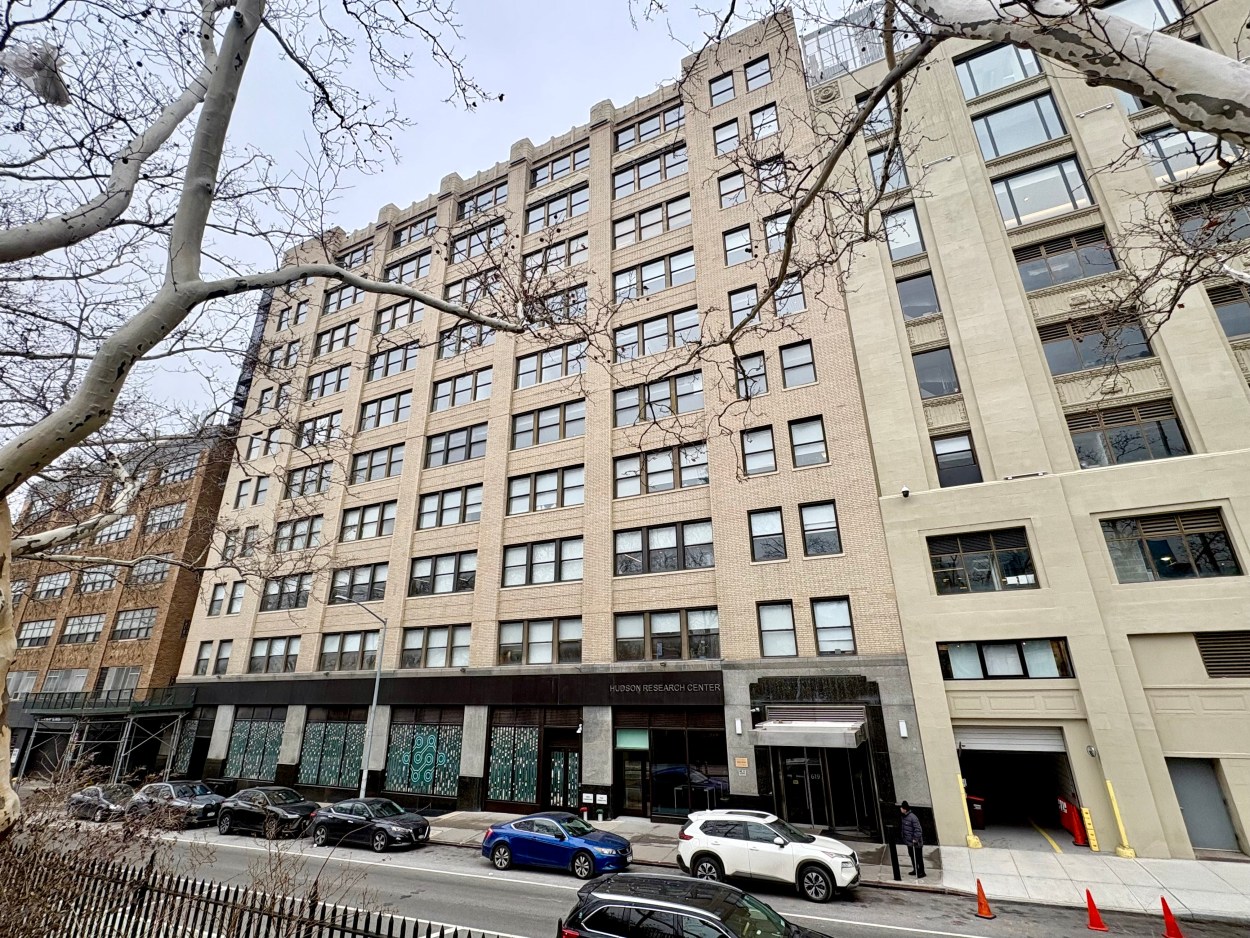 Hudson Research Center at 619 W54th Street has been recapitalized following the acquisition of a $191.7 million stake by Affinius Capital
Hudson Research Center, the 320,000-square-foot life sciences building at 619 W54th Street (between 11/12th Avenue) in Hell’s Kitchen, has been recapitalized after Affinius Capital agreed to buy a $191.7 million ownership stake from Silverstein Properties, according to city property records first reported by PincusCo.
The deal closed just before Christmas and was recorded at the end of the year. While the exact share of the building that changed hands has not been disclosed, the transaction marks a significant shift in ownership at a property that City Hall once held up as proof that New York’s biotech future had arrived.
Taconic Partners said the deal was intended to stabilize the project and keep it moving forward in a slower market. In a statement, the firm said it had “successfully recapitalized the Hudson Research Center with strategic capital” through its life sciences affiliate, Elevate Research Partners, allowing for new investment in leasing efforts and future development while continuing to pursue the building’s long-term plan.
The timing is notable. Hudson Research Center was one of the earliest and most visible pieces of the city’s effort to establish a life sciences cluster on the far West Side — an effort that surged during the pandemic and then slowed as interest rates rose and research funding tightened nationwide.
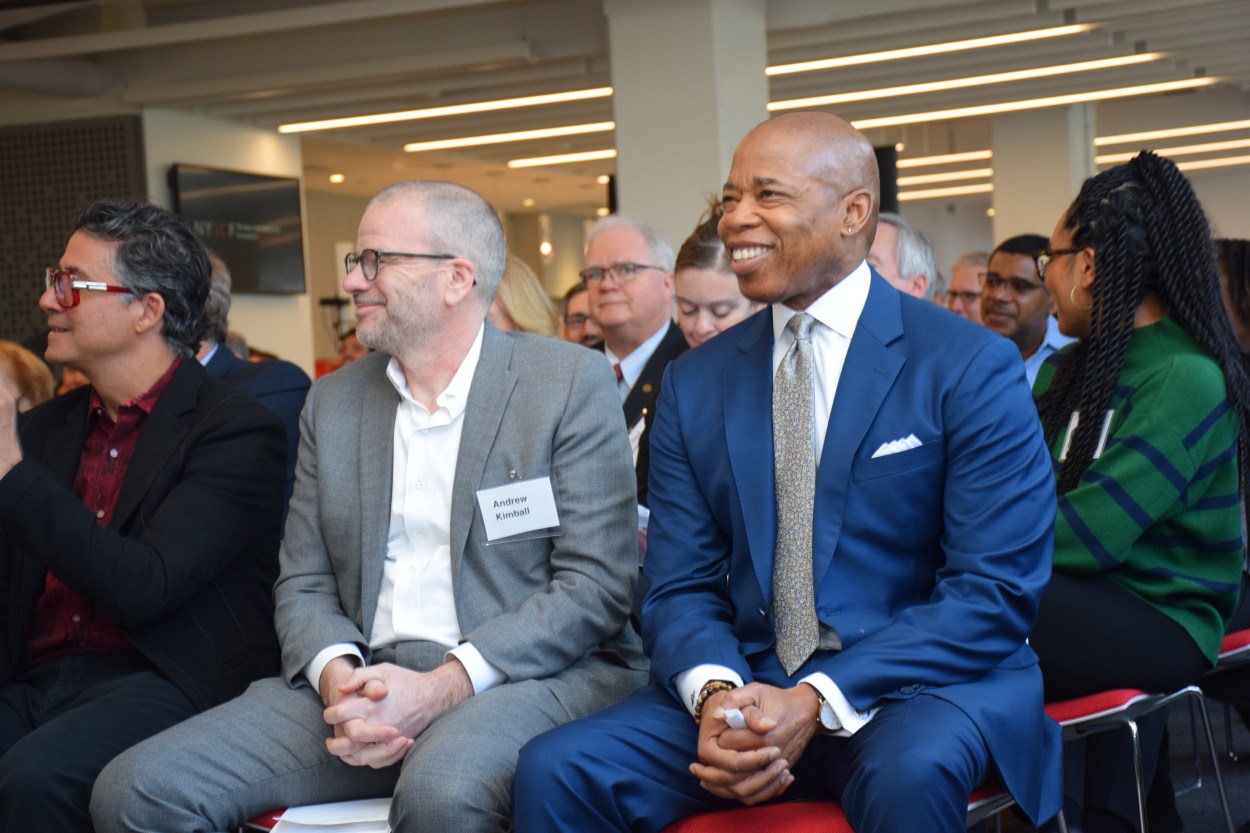 Former NYC Economic Development Corporation CEO Andrew Kimball and Mayor Eric Adams visited the research building in March 2023. Photo: Phil O’Brien
When Adams and then-NYC Economic Development Corporation (EDC) CEO Andrew Kimball visited the building in March 2023, the mood was celebratory. Officials described the project as a generational investment, with Kimball saying the city was planting seeds for “10 or 15 years from now.” Adams tied the push for biomedical research to his own experience managing chronic illness, framing the corridor as part of a healthier and more resilient future for New York.
At the time, the building was marketed as a plug-and-play research hub designed to attract early-stage biotech companies, with wet labs, shared conference space and collaborative work areas intended to lower the cost of entry for startups. Silverstein, which bought into the project in 2017, called Hudson Research Center “the future of the burgeoning New York City life science cluster” on its website.
Behind the optimism, signs of a market shift were already emerging. In September 2023 — while New York’s life sciences sector was still widely described as booming — Silverstein publicly put its majority stake in Hudson Research Center up for sale, seeking either a new capital partner or a full exit. At the time, owners continued investing in lab conversions and marketing the building’s future potential, but as more life sciences space came online across the city, fewer tenants were prepared to commit to long-term leases at the rents developers had expected just a few years earlier.
The new investment by Affinius appears to formalize that transition, bringing in a capital partner with previous experience financing the building. Property records show Hudson Research Center generated about $17.9 million in revenue in its most recent reporting period — roughly $56 per square foot, significantly below the rents many developers expected when the life sciences market was booming just a few years ago. Across the city, life sciences landlords have increasingly turned to smaller, turnkey labs and flexible layouts to attract tenants that are growing more cautiously.
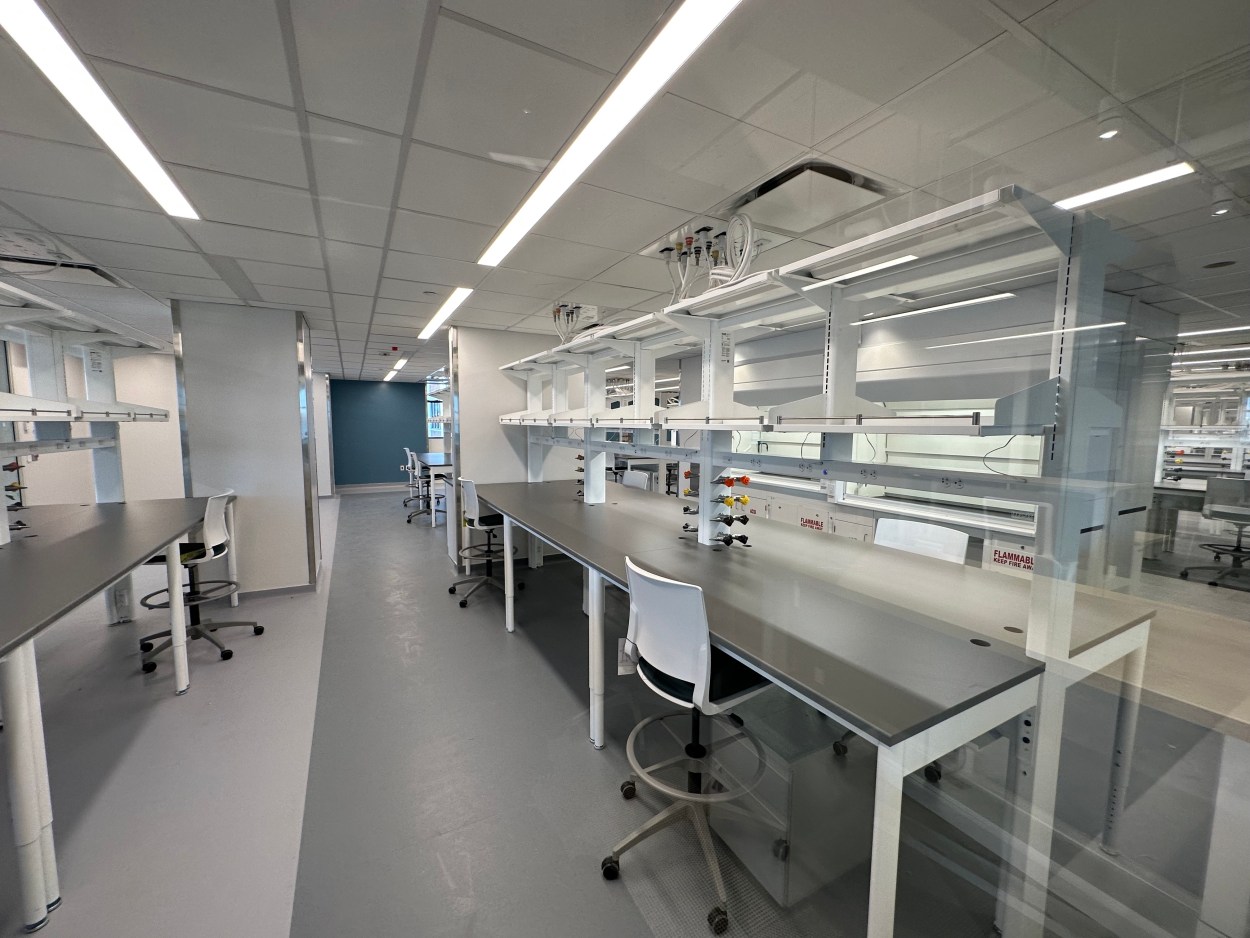 The laboratories at Hudson Research Center during a March 2023 tour. Photo: Phil O’Brien
For city officials, the reset at Hudson Research Center highlights the challenge of executing a long-term economic development strategy in a volatile market. New York has committed billions of dollars to building a life sciences ecosystem meant to compete with established hubs like Boston and San Francisco, even as demand has softened.
Just a few blocks south on 11th Avenue, another high-profile life sciences project announced during the boom has yet to progress. In 2023, developers Georgetown Co and Beacon Capital Partners unveiled plans to demolish the former Kenneth Cole headquarters at 707 11th Avenue and replace it with a purpose-built, 185,000-square-foot life sciences center. The project was pitched as part of the same emerging biotech corridor championed by City Hall, with construction expected to begin the following year. As of early 2026, however, no demolition or construction work has commenced on the site — another sign that timelines set during the height of the life sciences boom are now being reconsidered as the market cools.
EDC has long argued that investments like Hudson Research Center should be judged over decades, not election cycles. Recent industry reporting, including a December analysis by Bisnow, suggests the harder question now facing the city’s life sciences push is not whether the vision was ambitious — but how long developers, lenders and public agencies can hold steady while a once-red-hot market works through slower demand.