
Photo by Clara Witmer for The Lafayette
Warehouse developer Scannell Properties has been joined in a lawsuit against Easton by the town’s neighbor, Wilson Borough.
After facing a unanimous denial by the Easton Planning Commission in December, developer Scannell Properties has not stopped in its efforts to further its proposed 1-million-square-foot warehouse on Wood Avenue, including legal action. However, the past two months have seen further city pushback against the project. Here’s a look at some of the movement — or lack thereof — on the warehouse from Lafayette College’s winter interim.
Developers, Wilson Borough seek legal recompense
Scannell Properties and the Borough of Wilson — in which the majority of the warehouse would sit — filed a lawsuit Jan. 6 against the City of Easton, the Easton Planning Commission and individual commission members.
The lawsuit aims to overturn the warehouse denial, calling on a county judge to force Easton’s hand to approve the project. The plaintiffs also call for an award of more than $50,000 for the alleged wrongful decision.
The plaintiffs argue that the warehouse proposal met the objective requirements of Easton’s zoning and land development rules and that commissioners did not act objectively in their denial. Pennsylvania state law requires development plans to be approved if they meet a municipality’s rules and regulations.
The lawsuit alleges that Commissioner Kim Wagner advocated against the project to the Easton Zoning Hearing Board and that Commissioner Ronald Shipman advised opponents of the project. It claims that the evidence in opposition to the proposal, presented by the Stop Wood Warehouse Coalition during hearings, was “misinformation.”
A hearing date has yet to be announced.
Special exception denied despite developer threats
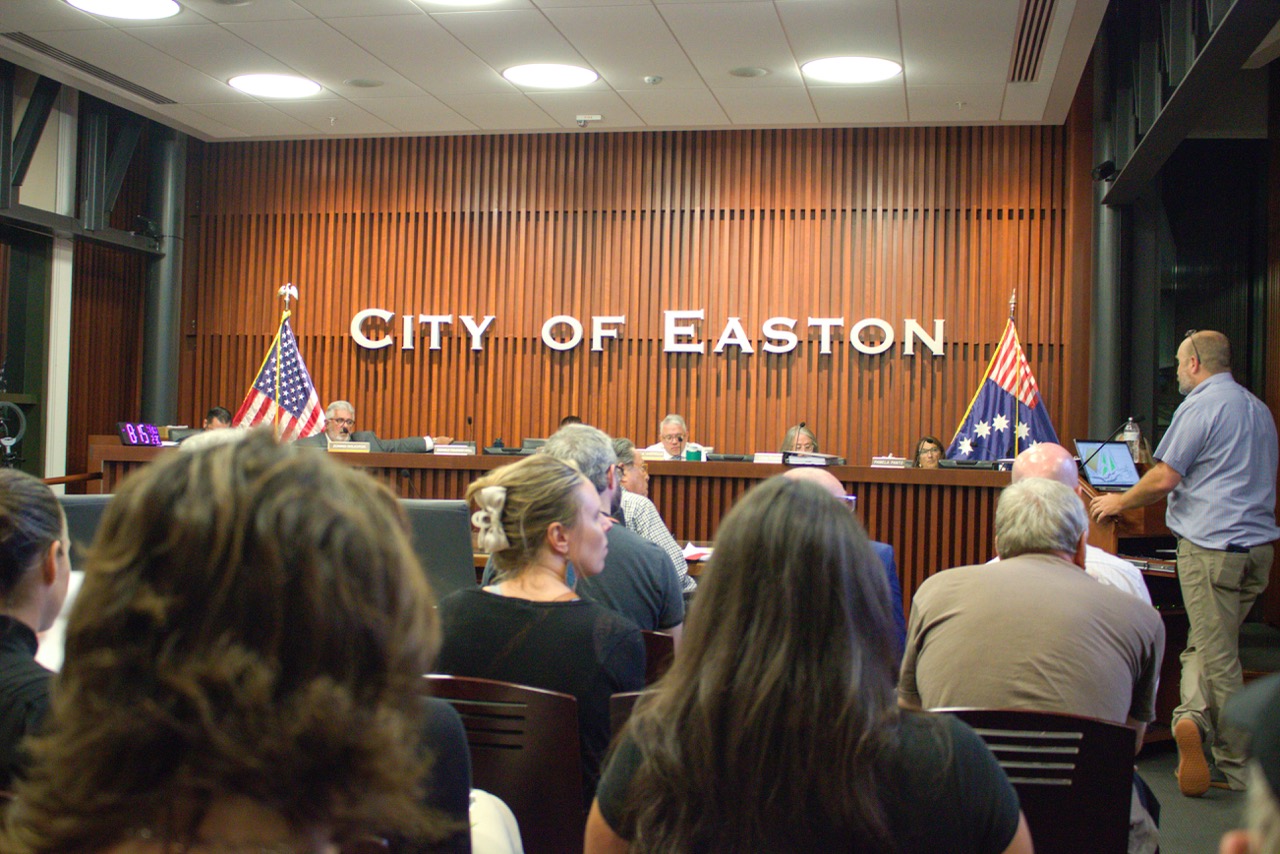
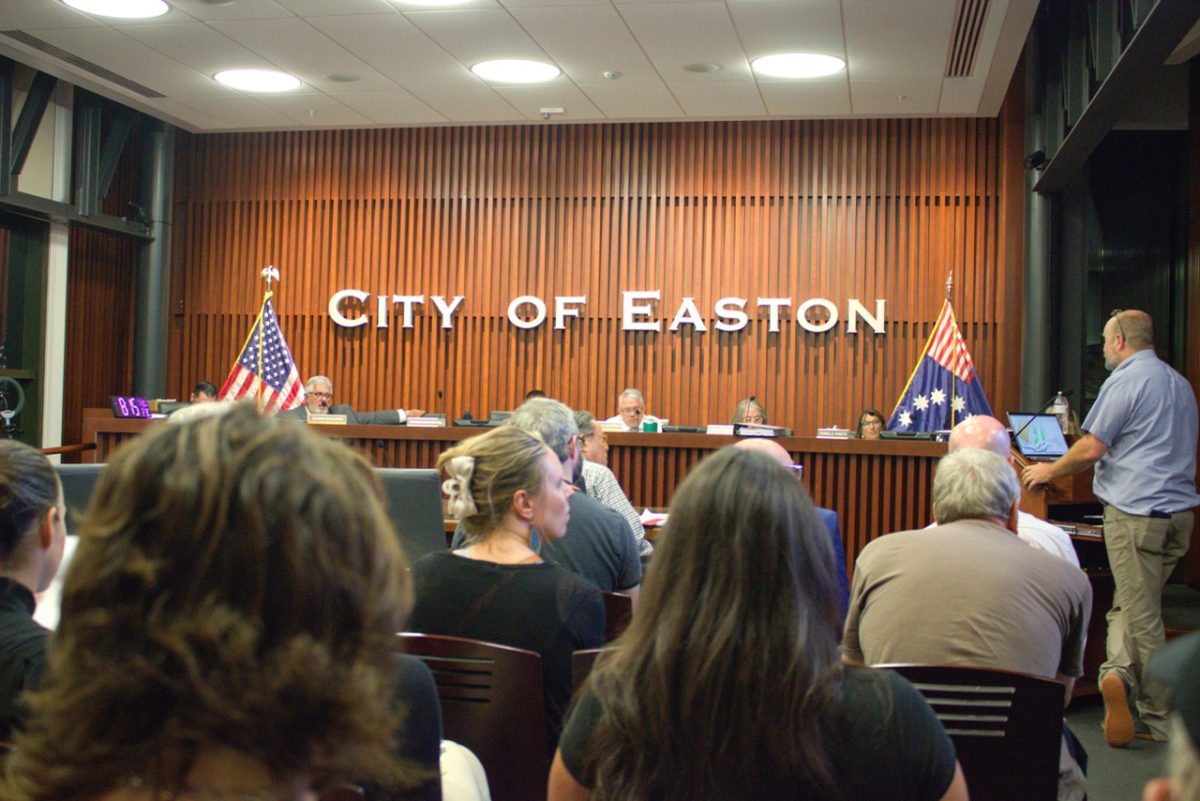
Amid the pending lawsuit, the Easton Zoning Hearing Board rejected a special exception request during its Jan. 15 meeting.
Developers sought a special exception to reroute a tributary stream off the Bushkill River, and install a roadway and retention basin.
Following closing statements from both the developers and representatives of the Stop Wood Warehouse Coalition, the board entered into executive session. Zoning Hearing Board Solicitor Robert Nitchkey emphasized that this was exceptionally rare.
“I’ve served as the solicitor to this board for 34 years, and we have never once gone into executive session,” he said. “That’s because this board likes everything to be transparent, and we’re not going to be any different tonight as far as transparency is concerned.”
After the over-hour-long session, the board voted unanimously to oppose the special exception without further discussion. Nitchkey cited the “insufficiency of some of the certifications that were attached as exhibits,” as well as an opposing expert testimony that was “more convincing.”
The decision was met with applause by the full room of Stop Wood Warehouse coalition members.