
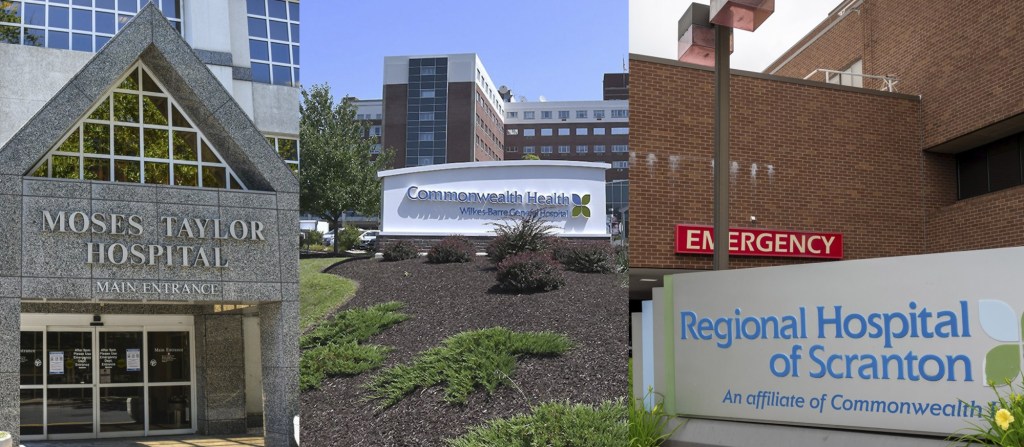
In a statement lauding the state’s approval of the nonprofit Tenor Health Foundation’s proposed purchase of Commonwealth Health’s Regional Hospital of Scranton and its Moses Taylor Hospital campus — along with Wilkes-Barre General Hospital — the Lackawanna County hospitals’ union president said workers there are “hopeful and relieved” that there is finally clarity on the facilities’ future.
There is no question those who live throughout the area are feeling the same way in the days that have followed.
Another deal to purchase the hospitals somehow falling through could have proven disastrous for the region. In his comments following the state’s OK, U.S. Rep. Rob Bresnahan, R-8, Dallas Twp., pointed out the stark likelihood that lurked beneath the surface for the two Scranton hospitals: Closure was “dangerously close.”
With that, you get too many unfortunate outcomes to list. But, crippling job losses, a dearth of options for those seeking immediate attention to medical needs, and the likely hardships remaining health systems throughout the area would need to shoulder to even attempt to compensate for the loss of a provider so well established in the community certainly are a formidable tip of the iceberg.
The area escaped those pitfalls in no small part because so many chipped in money and time, ideas and direction, to keep the hospitals operating, a buyer motivated and the negotiations on point for more than a year. Employees stayed loyal to the hospitals, and the area it serves, by staying in the area to work. A collection of foundations and local nonprofits contributed millions of dollars in funding to ensure services didn’t lag and those staffers got paychecks.
When Tenor officials announced it finally garnered state approval to proceed with the sale, they credited two elected officials representing the region for their hard work to get it across the finish line. One was a Democrat, state Rep. Bridget Kosierowski, D-114, Waverly Twp. The other: Bresnahan, a Republican. That is a testament to both the importance of getting the sale through for patients and workers, but also the power of bipartisan cooperation to rally around a community’s best interests.
Northeast Pennsylvania residents can breath a sigh of relief now, for sure. But the important part of this sale, whenever it becomes official, is the other half of that feeling shared by the union workers.
Can we dare dream that Tenor’s ultimate acquisition of those three ever-important health care facilities can invigorate the area, to help make ours a healthier region not just because of open doors but innovative practices? It won’t be an easy job in a time when Medicaid and other health care funding were reduced in President Donald Trump’s One Big Beautiful Bill Act, and enrollment in the Affordable Care Act dropped due to rising costs spurred by the expiration of subsidies that made those plans much more cost effective. A bill to extend those subsidies was passed by the House last month, but now must survive the Senate.
As both Bresnahan and Kosierowski noted, elected officials at the state and federal levels will have to work enact policies that strengthen health care. But, the heavy lifting in the meantime will have to come from investments in facilities, services and workforce from Tenor.
Keeping the hospitals open and running is important. It helps everybody, including their competing hospital systems. But the real challenges for their future once the sale becomes official will come in providing the tools doctors and nurses at the two Scranton hospitals and at Wilkes-Barre General will need to make these facilities truly thrive in the market and be difference-makers in a challenging climate.
Relief and hope. They’re the two feelings the news from the state brought to workers at those hospitals, and to area residents as a whole. But the former is temporary, even fickle.
The hope is what lasts, if it can truly be offered.
We sure could use that when it comes to health care these days.