
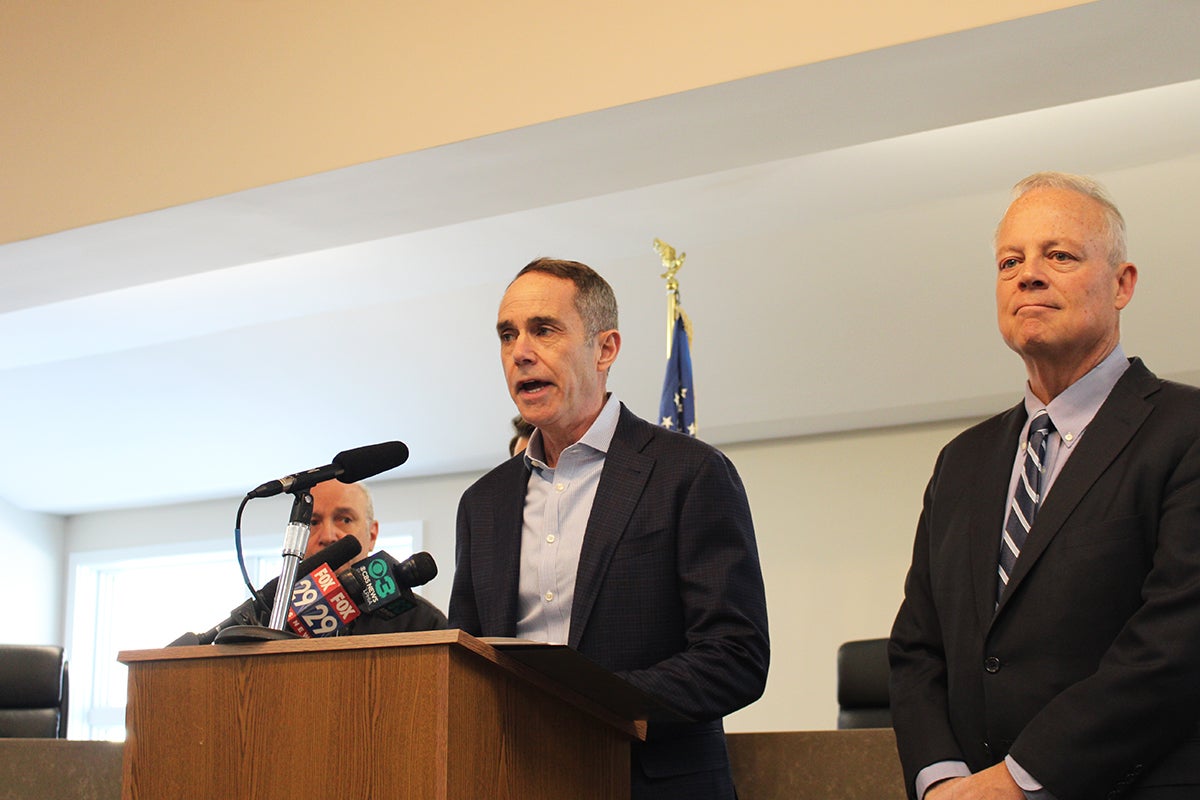
Residents still don’t know how much fuel leaked, how far it spread, what chemicals were in the pipeline, how long the leak was occurring before detection and why recovery is slow, Weldon said.
“Sunoco has been able to delay, deflect and avoid accountability, in large part because the agencies overseeing this process are constrained by existing laws that must change,” Weldon said.
Energy Transfer did not immediately respond to a request for comment.
Last year, the company created a website with resources for impacted community members and has hosted a series of public meetings.
Mt. Eyre residents are ‘living in limbo’
Kristine Wojnovich said she and her family first reported the smell of jet fuel in their water in September 2023 to pipeline operator Energy Transfer. Water sampling did not show any contamination. Wojnovich reported it again in January 2025, and the leak was identified by Energy Transfer on Jan. 31, 2025.
“On behalf of our neighborhood task force and our whole community, many, many who could not be here today, but wish they could have been, we greatly appreciate any legislation that will accelerate the speed of which pipeline leaks are identified, and legislation that requires the spill to be completely cleaned up, completely, restoring the contaminated environment to its original state,” Wojnovich said Friday.
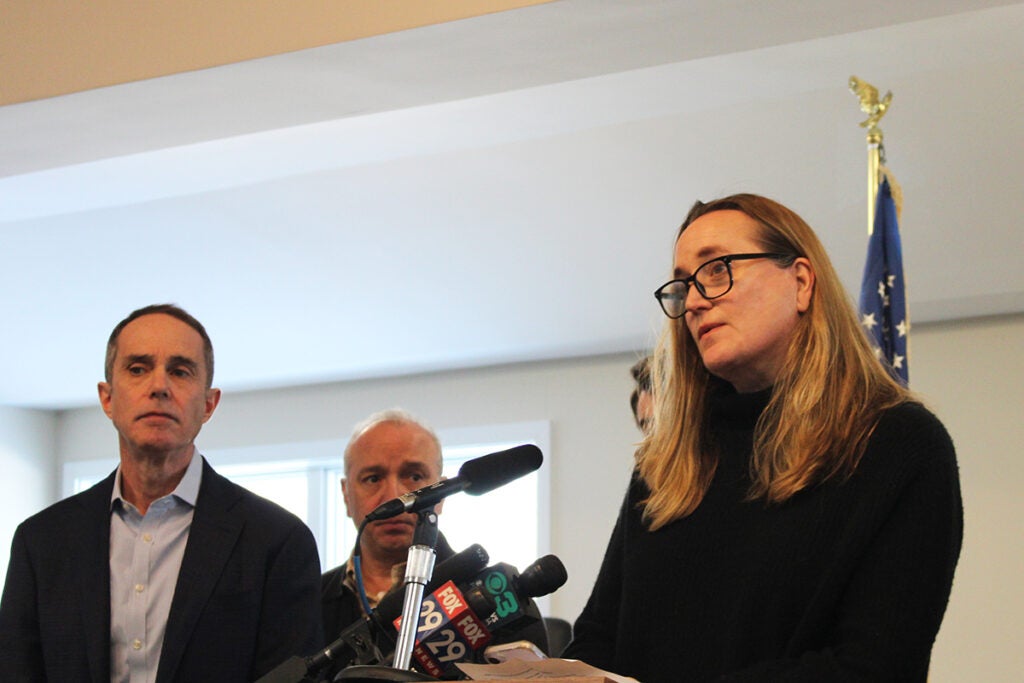 Kristine Wojnovich, right, speaks at the announcement of the Pennsylvania Environmental Cleanup and Responsibility Act on January 30, 2026. The announcement came almost a year to the date that a Sunoco pipeline leak was discovered. The leak contaminated six wells with jet fuel. (Emily Neil/WHYY)
Ruth Kuenzig and Melissa Tenzer are neighbors who live adjacent to Wojnovich’s property. They described how constant digging and visits from Energy Transfer’s technicians to recover the leaked jet fuel and monitor the pipeline have upended life in the once quiet neighborhood.
“The cleanup act has not been quick enough for my liking,” Tenzer said. “I cannot believe, and [I] feel emotional coming a year later, that we’re still in this position, and we don’t have any answers.”
They told WHYY News that they continue to use bottled drinking water. Energy Transfer reimbursed them for filtration systems, but they are still fearful of how contaminants in their tap water could impact them and their family members.
“We’re not fully contaminated, but it’s still higher than the normal standards of the drinking water that is a privilege and the law and the right of human citizens to be able to have clean water, to shower, to drink,” Tenzer said.
Tenzer said she also uses bottled water for cooking and washing her face, although she uses tap water for showering.
Tenzer, who has lived in her house for more than 24 years, said she wanted to “move out immediately” when she first learned of the leak, and was “really nervous and scared and very upset all the time.”
But she said she loves the neighborhood, her house and the surrounding nature, including the parks and canal where she walks her dog every day. She added that her 21-year-old daughter, who is away at college, also “loves the house and its stability in her life.”
Tenzer’s concerns about health impacts of contaminated water remain, especially for her daughter and stepdaughter. She said she and other impacted residents are “living in limbo” as cleanup continues.
“I worry about if something happens, I’ll never forgive myself for not moving, and that’s a burden I have to live with, in making that decision to go or to stay,” she said.