
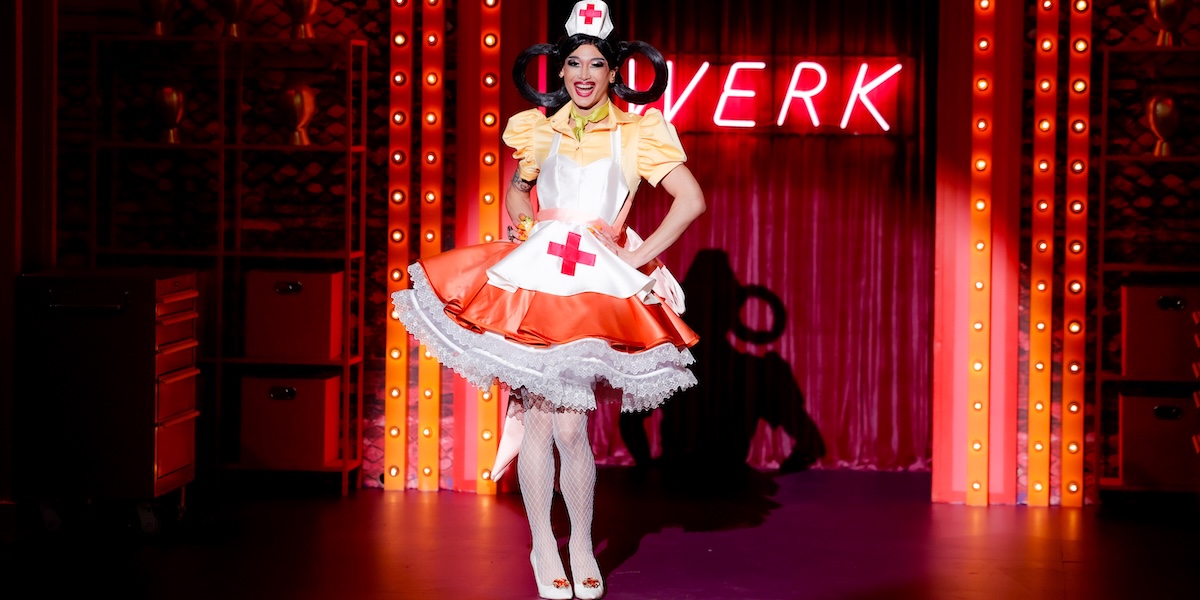
When Mandy Mango first stepped foot into the “Werk” Room of the reality MTV competition RuPaul’s Drag Race on January 2, she was decked out in a bright orange nurse look. Mango was paying homage to the manga characters that the Filipino American drag queen grew up on: Dark Magician Girl from Yu-Gi-Oh!, Cardcaptor Sakura, Sailor Moon, and Nurse Joy from Pokemon. But the outfit was also a nod to her day job.
“I love to do the stunts, give the shows, give the glamor, but mama, I’m also drawing your blood, giving the injections,” she said on that first episode of season 18. “Because I’m what? Registered!”
The Lansdale native spoke the truth: When not performing lipsynchs and death drops, Mango goes to work for the Philadelphia Department of Public Health’s Division of HIV Health (DHH) as a prevention clinical associate. (In scrubs, Mango goes by Sigfried Aragona, but asked that The Citizen refer to her by her drag name.) She also has a master’s (in nursing) and a certification in AIDS care (ACRN).
And although Mango made her national television debut to a record-breaking 24 million viewers — and, in her time on the show, proudly repped Philly (she’s one of just two local queens to appear on the Race) — it’s her work in and for the LGBTQ+ community that makes Mango our Citizen of the Week.
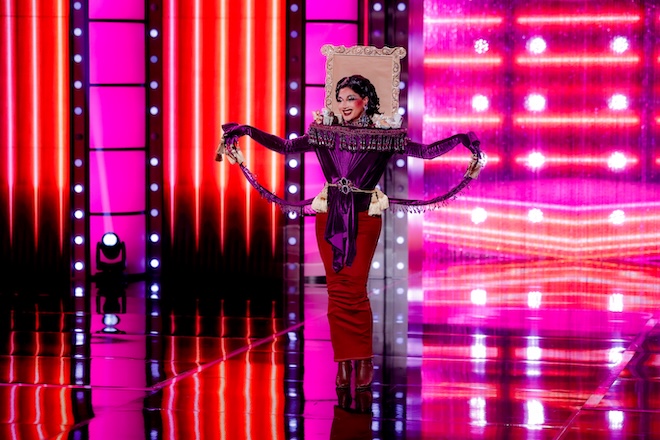 Mango Mandy on episode 2 of season 18 of RuPaul’s Drag Race. Photo courtesy of MTV. From bullied to beauty queen
Growing up in suburban Montgomery County to Filipino parents — including a beauty queen mother — who’d immigrated to the U.S. before she was born, Mango always felt different, and didn’t always feel proud.
“I was someone who had been bullied in middle and high school for being more feminine or not being the most masculine, jock person,” Mango recalls.
After graduating high school, she decided to pursue nursing, and enrolled at West Chester University.
In Mango’s third year, she saw a flyer for an on-campus drag competition. She chose a song, her friends did her makeup, and, in a moment of foreshadowing, Mandy Mango was first introduced to the world by Latrice Royale, Miss Congeniality on RuPaul’s Drag Race, season 4.
Mango won her first competition. The next day she could not stop watching her performance. The victory felt deeply personal: For the first time, she was being openly celebrated for being her true, unapologetic self. That self wasn’t just about drag. It was also about heritage.
“Learning about American culture through my parents’ Filipino lens has lent to the things that bring me joy, the things that I try to aspire in my drag,” she says.
AAPI identities are often underrepresented in the drag scene, even in Philadelphia. Yari, a fellow Philadelphia Filipino drag queen, says when Mango came along, it was “like an answered prayer.”
“Drag people are such a great example of how you can be unapologetically queer, and you have a voice, and that still matters in this day and age.” — Mandy Mango.
“Mandy carries within her both the Filipino spirit of resilience, warmth and community and the American spirit of possibilities, drive and expression,” Yari says.
Nearly every season RuPaul’s Drag Race has featured one Asian American contestant. But only one such queen has won the crown — Nymphia Wind in season 16. Sadly, this season, Mango will not join her.
Although Mango never threw shade or read an opponent (fellow season 18er Kenya Pleaser even called her “the sweetest individual ever” on Untucked, Drag Race’s behind-the-scenes show), show host and icon RuPaul nonetheless instructed Mango to “sashay away.” Her fans, especially Philly fans — after all, some had seen her dressed as the Phanatic — were sad. Many cried unfair, especially since longtime judge Michelle Visage told the contestant to “take it down” so she could “fit in.” Some fans took to Reddit to complain, and fellow season 18er Mia Starr went so far as to make a diss track about Briar Blush, the queen who sent Mango home in the lipsynch battle.
But really, the early exit delivered Mango back to doing the work that’s so important to her, and to our city, and, at this moment, to the nation.
 A scene from season 18 of RuPaul’s Drag Race, featuring Mango Mandy, executing the show’s signature “death drop.” Photo courtesy of MTV. Caring for her community
After graduating in 2018, Mango became a Sexual Health Nurse and Clinical Case Manager with AIDS Resource Alliance in Pennsylvania, a free clinic in Williamsport. Williamsport is small — fewer than 28,000 residents — and Mango’s patients soon realized that the drag queen who was hosting shows at the town’s Pajama Factory arts center was also giving STI tests, managing HIV prevention, and doing community education. Mango embraced the recognition and her role as a confidant to her LGBTQ+ neighbors.
“I understood the value of being a visible queer leader in the community, because then it made people more comfortable to engage with healthcare, where [POC] and LGBTQ+ people have had generations of trauma,” she says.
To her mind, “[Drag entertainers] were unapologetically queer. They were very confident people, and they always seemed to know what to say, what to do and handled things with finesse.”
Embracing Philadelphia’s sisterly love
A couple years later, Covid hit, and Mango moved to Philly for new opportunities in both her nursing and drag. She spent a few years at Penn Presbyterian’s infectious disease clinic in West Philly, before joining DHH to train clinicians, give presentations on developments in HIV research, and work closely with LGBTQ+ organizations like Philly Asian Queer.
The past two decades have seen incredible advancements in HIV treatment resulting in a steady decrease in mortality rates, from about 10,000 annually in 2000 down closer to 5,000 in 2021. One reason for the improvement: PrEP, the popular medication that prevents HIV transmission. Another reason: Highly toxic HIV medications like azidothymidine (AZT) have been replaced by safer, more effective antiretroviral therapy (ART). Today, treatment can make patients’ virus levels undetectable and therefore virtually untransmittable, dramatically reducing risks of infection.
“Mandy carries within her both the Filipino spirit of resilience, warmth and community and the American spirit of possibilities, drive and expression.” — Yari
Though all of these wins are exciting for the RN, she acknowledges that these days, there are still battles to fight. HIV infection and mortality rates remain highest among Black, Latino and unhoused men. Why? The stubborn stigma of HIV care, overall lack of trust in the healthcare system — and a federal government that’s recently stripped funding from HIV research and care, including here in Philadelphia.
“There’s way more to be done because, when you don’t have people accessing tools that really can help,” Mango says, “We need to look at how we are providing these tools to these people and do they feel comfortable accessing them.”
Like many members of the LGBTQ+ community, Mango has been paying attention to both Trump’s executive orders, anti-LGBTQ+ bills in Harrisburg, other regions’ much-discussed drag ban bills — and feels under attack.
The nurse worries that LGBTQ+ communities nationwide are losing strength. She has been using her expanded platform to urge people to stay up-to-date with testing and support the organizations fighting HIV. Her work gives her purpose. Drag gives her power.
“Drag people are such a great example of how you can be unapologetically queer, and you have a voice, and that still matters in this day and age,” says Mango.
“She’s a nurse, and all about HIV prevention,” said drag queen Bianca Del Rio on The Pit Stop recap of episode three. “She’s helped many of us in our community, so I have to applaud her for that.”
Her parting words were all class. “I’m so grateful to Ru and my Season 18 sisters for showing that being queer is such a super power,” she said as she ended her Drag Race journey.
No doubt: Mandy Mango will go down as the sweetest fruit in Philadelphia.
 MORE CITIZENS OF THE WEEK
Mango Mandy makes her debut on season 18 of RuPaul’s Drag Race. Photo courtesy of MTV.