
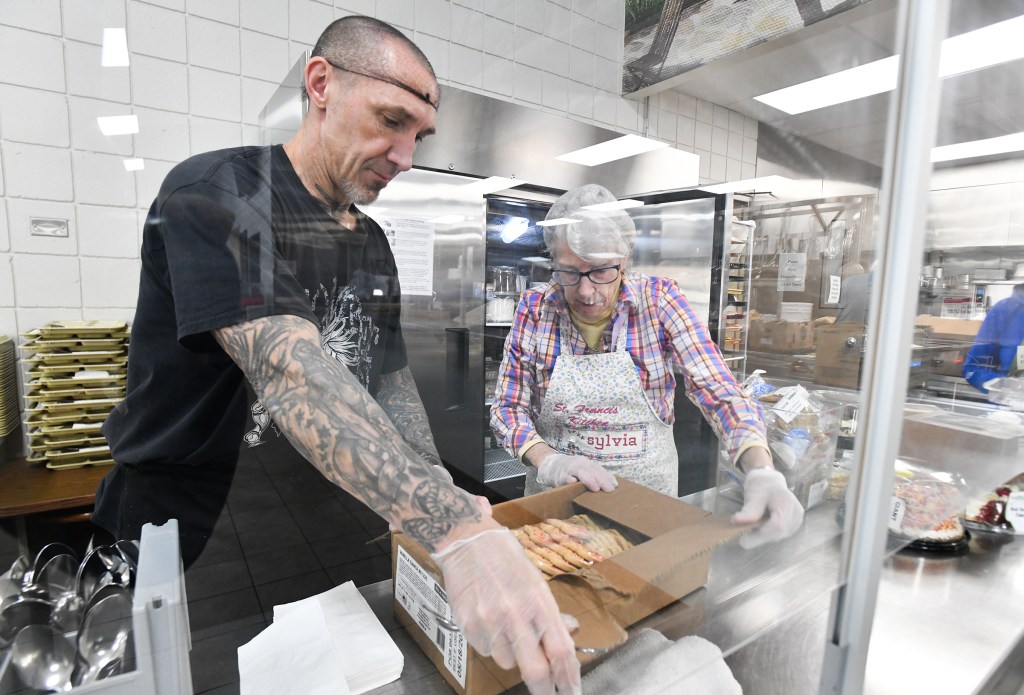
As temperatures plummeted and snow threatened to pile up, St. Francis of Assisi Kitchen prepared to feed more than just its weekend crowd.
The kitchen in Scranton provides food for shelters in Code Blue emergency situations. Expecting the storm Sunday to make travel treacherous, head chef Selena Gonzalez, her staff and volunteers worked ahead to feed people at the city’s Code Blue shelter at Weston Field House, as well as St. Anthony’s Haven overnight shelter, Community Intervention Center’s day shelter and St. Francis Commons, a permanent shelter for homeless veterans.
When Code Blue is declared, the city’s community partners spring into action. But keeping a Code Blue shelter up and running amid a perilous winter storm takes months of preparation and collaboration. Without the effort, the results would be disastrous, said Eileen Wilson, Community Intervention Center executive director. She has worked in larger cities, such as New York and Boston, where things don’t run as smoothly, leaving too many people out in the cold.
“We would be having people freeze to death on the streets. We would be having more people overwhelming the emergency rooms locally, we would have more people committing petty crimes so that they could get a warm, safe place to stay, which is completely unnecessary,” Wilson said. “Without a day drop-in center, without multiple overnight shelters to ensure that anyone who’s experiencing homelessness has a safe place to go. It would be horrific. Horrific is the only word. … Seeing New York City had 10 deaths (last weekend) of unsheltered homeless people in 24 hours is absolutely horrifying.”
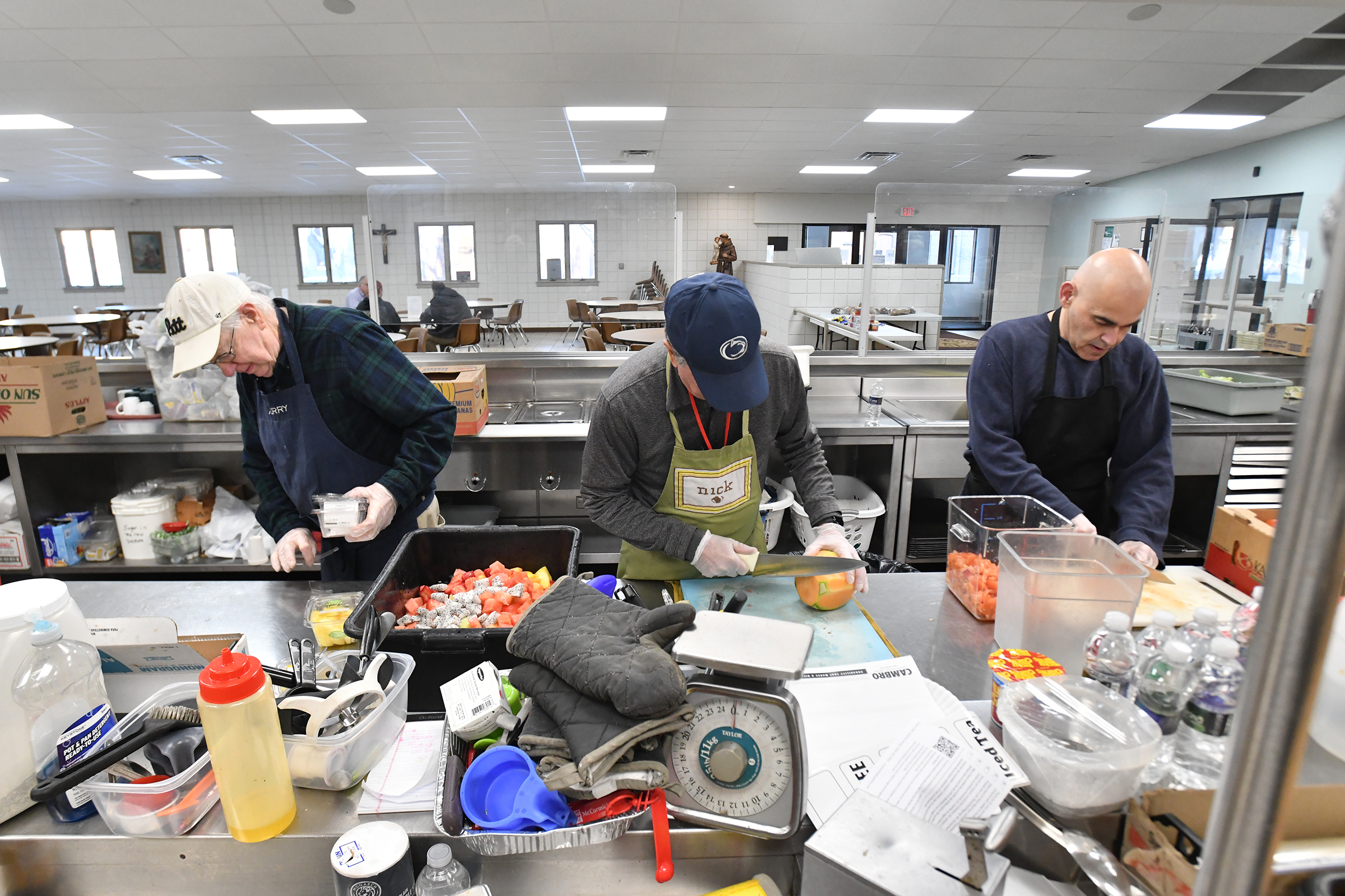
Volunteers Jerry Burns, Nick Donato and Alexis Ramos prepare for lunch at St. Francis of Assisi Kitchen in Scranton Wednesday, January 28, 2026. (SEAN MCKEAG / STAFF PHOTOGRAPHER)
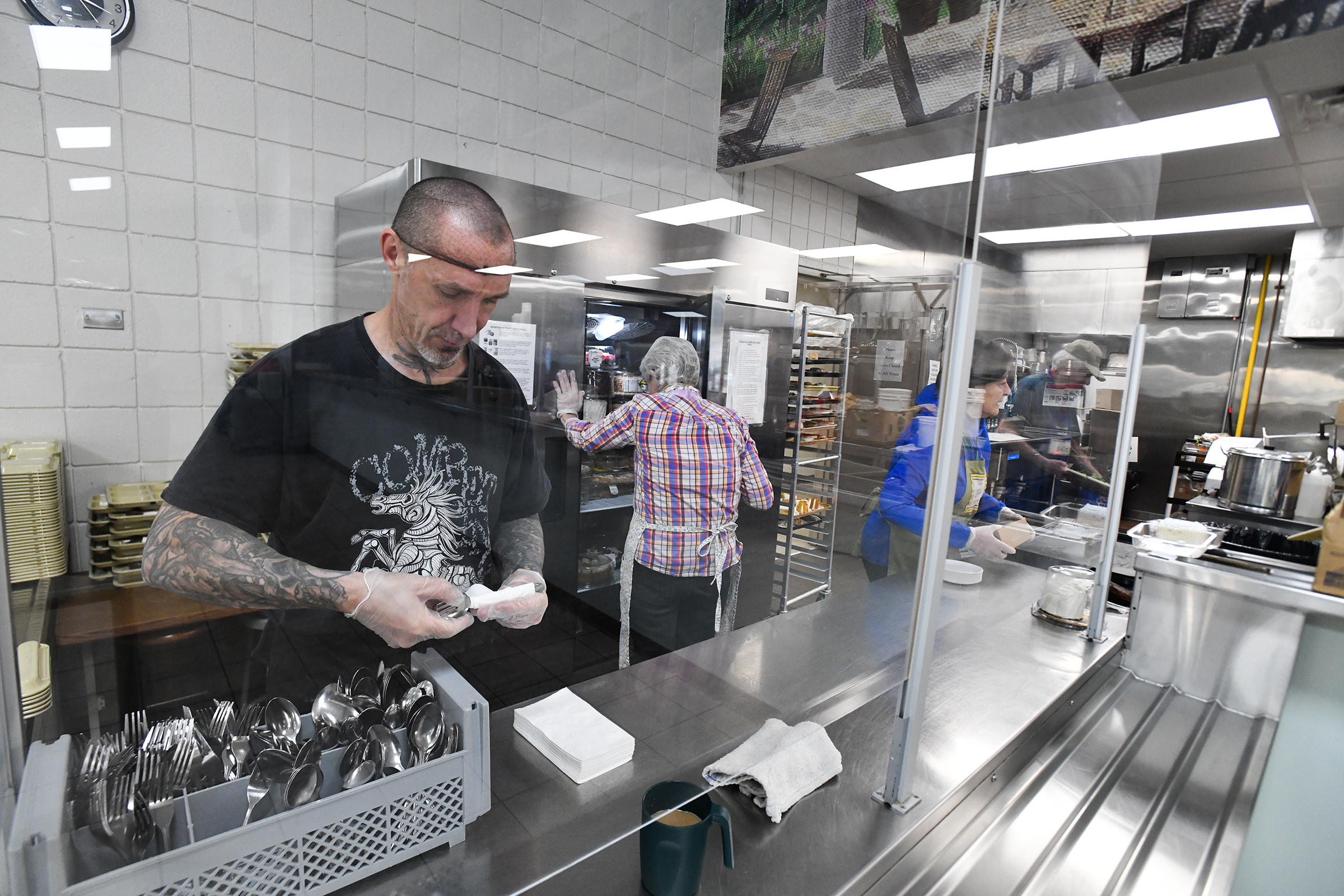
Volunteer Matthew Lerch rolls silverware in preparation for lunch at St. Francis of Assisi Kitchen in Scranton Wednesday, January 28, 2026. (SEAN MCKEAG / STAFF PHOTOGRAPHER)
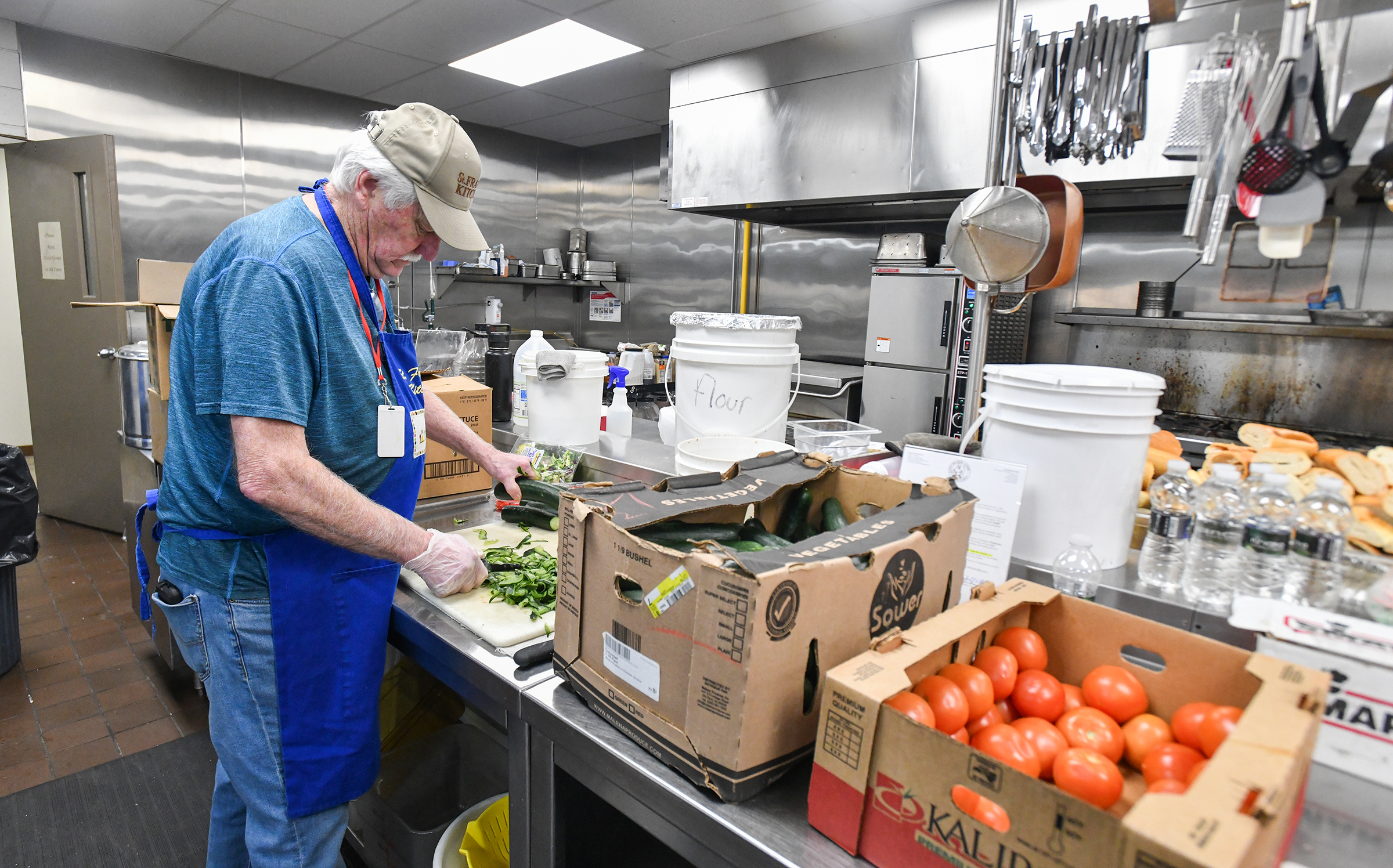
Volunteer Mike McDermott peels cucumbers in preparation for lunch at St. Francis of Assisi Kitchen in Scranton Wednesday, January 28, 2026. (SEAN MCKEAG / STAFF PHOTOGRAPHER)
Show Caption
1 of 3
Volunteers Jerry Burns, Nick Donato and Alexis Ramos prepare for lunch at St. Francis of Assisi Kitchen in Scranton Wednesday, January 28, 2026. (SEAN MCKEAG / STAFF PHOTOGRAPHER)
Code Blue is declared when the temperature and wind chill are expected to fall below 20 degrees. The Weston Field House shelter at 982 Providence Road opens to allow people to stay out of the dangerous cold overnight. Because last weekend’s storm made travel between shelters impossible, the St. Anthony’s Haven and Weston Field House shelters stayed open into Monday.
The process of declaring Code Blue begins with the city monitoring the National Weather Service, said Scranton Fire Chief and Emergency Management Coordinator John Judge. Scranton’s threshold for Code Blue declarations is similar to Lackawanna County’s, so the city coordinates with the county’s emergency management and communications director and the Scranton Area Community Foundation.
“We know the days that (the Code Blue shelter) is going to be open so that Catholic Social Services can staff it, and CIC is aware that it’s going to be up and running for that night,” said Judge. “So, everybody’s made aware, and internally in the city, we make sure that the police and fire departments are aware as well in case they run into anybody out in the street suffering from the effects of the cold temperatures and we can get them to Weston Field or St. Anthony’s Haven if they’re not at capacity.”
Judge and other agency supervisors collaborate to keep Code Blue shelters operating. Last weekend was a challenge, with the extra hours the shelters stayed open, but they all said things went smoothly and attributed the success to their collaborative effort. Judge said this winter has been particularly difficult.
“I’ve been doing it now for the last six years. I think this year is probably, out of the last six, has definitely been the coldest that we’ve dealt with. I think as of today, since Dec. 1, I think we’ve only had 11 days that we did not declare Code Blue because of the temperature thresholds,” Judge said.
Weston Field House served a total of 582 people during Code Blue nights in December, said Jessica Spangenberg, supervisor for area shelters. St. Anthony’s served 555.
Code Blue shelters will remain open even if funding dries up, said Joe Mahoney, CEO of Catholic Social Services, which operates the Weston Field House shelter.
“Either way, if we run out of money, I’ll have to explain that to my board, but you know, it’s going to stay open,” Mahoney said. “We’re on the hook. We promised. … These people might freeze to death if we don’t keep our word, right? There are real repercussions for folks. It’s not something that happened out of the blue, no pun intended, but this was a strategy. There was a larger committee that met and discussed the strategy. So, we knew that this could possibly be open for this this long, and that it was necessary.”
Agency directors and supervisors praised the performance of each other’s staffs last weekend. Scranton’s Parks and Recreation staff plowed parking lots, St. Francis provided food, Catholic Social Services and Community Intervention Center staff stayed overnight at the shelters, and the city’s emergency personnel combed the streets to make sure no one was out in the cold.
The representatives agreed that the personal relationships they have are a major reason they are able to collaborate so well, something that is not always seen in larger cities.
“One of the big elements that is the difference between some of those larger cities is there’s a lot more movement of personnel. So, you’re not dealing with the same people all the time, so you have to redevelop those relationships,” Judge said. “I worked in D.C. for four years in law enforcement, and I can tell you, from a city our size, it’s a lot easier to get stuff done. You’re not dealing with large bureaucratic organizations that take a long time to move. We’re a lot more nimble.”
St. Francis of Assisi Kitchen has missed only four of its 11 a.m. meals since 1978. Last Sunday’s meal wasn’t one of them.
Two employees and four volunteers served the Sunday meal, cleaned up and were out the door by 1 p.m., said Rob Williams, the kitchen’s executive director.
“So, thankfully, by the thick of the storm on Sunday, our people were already gone home,” Williams said.
Head chef Gonzalez, who graduated with an associate in science degree in culinary arts from Lackawanna College in 2022, remembers times when her family had to rely on similar community services when she was a child.
“So honestly, what inspired me is I grew up one of six children. I was a family of eight. My parents had to go to pantries. They had to utilize these things. I mean, having six kids was hard no matter what. They did their best. They were very hard workers, but there were times that we had to go to a soup kitchen or a food pantry,” Gonzalez said.
Her position at St. Francis allows for two of her main passions — culinary arts and helping others, like others once helped her — to blend together and create a job she loves.
“I lived this, and I was younger, so I’m sure I didn’t live it the way that most adults do, but, you know, as soon as the opportunity arose and I was able to give back, my thing was, I want to do this. It’s not only going to help my culinary career, but it’s going to help those who actually need it,” Gonzalez said.
The Diocese of Scranton runs the kitchen at 500 Penn Ave. St. Anthony’s Haven at 600 Olive St. is also run by the diocese through Catholic Social Services.
The food at St. Francis is donated, so they have to use what they have. But having a creative chef with culinary training allows their visitors to eat a four-course meal similar to what they would receive at a restaurant.
“They’re going to get bread, they’re going to get a dessert, they’re going to get a fresh fruit salad made daily, fresh green salad that’s made daily, a starch, meat, a vegetable and a soup,” Gonzalez said. “So, when you go down that line, you have more than enough food to fill your plate and fill your stomach for your day. Today I’m actually doing fish stick sandwiches. It’s like a fried fish sandwich with cheese. We got some rolls donated from National Bakery, so we’ll make them up some hoagies with that.”
St. Francis also runs on the efforts of volunteers. Jerry Burns has been volunteering three days a week for almost 20 years. He said it’s the people he works with and serves that inspire him to keep coming back.
“People are so appreciative of the help that St. Francis and the CIC provides in terms of daily meals and support, and that kind of drives my interest in volunteering, making sure that that population has at least some basic level of support throughout the community, and if I’m able to help in that way, that’s the motivation that I find,” Burns said.