
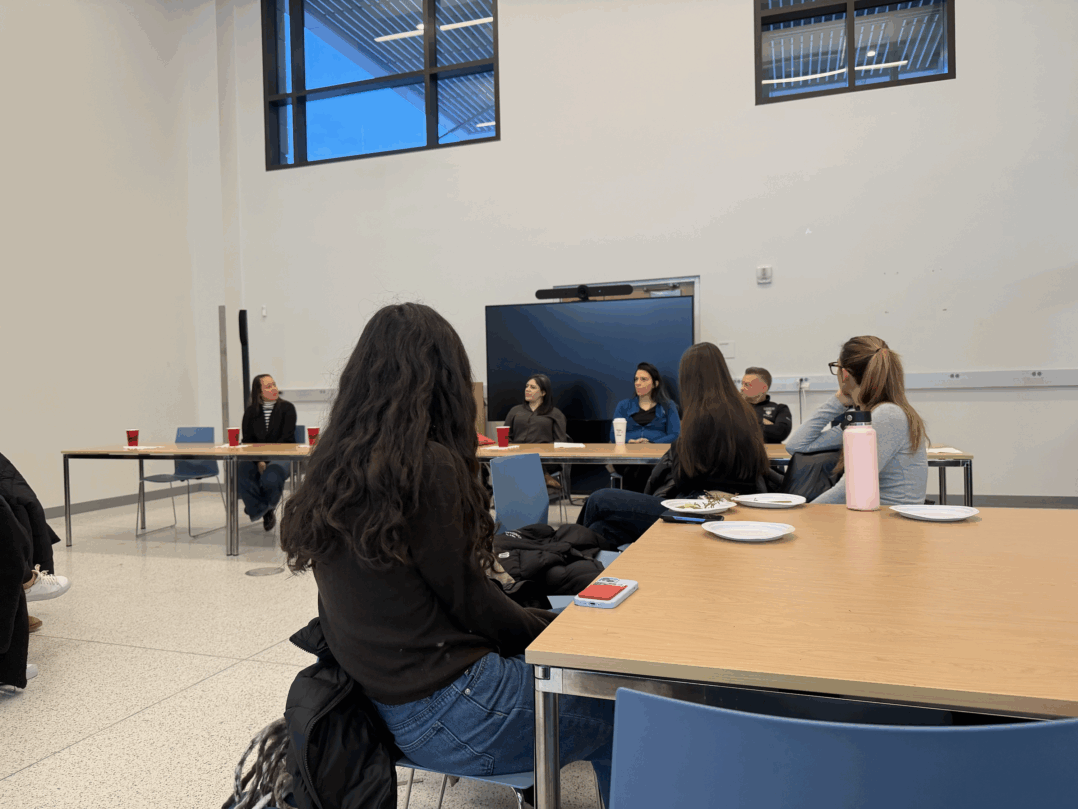
More than 40 attendees gathered in the Health Science and Technology Building on Wednesday for a panel discussion on human trafficking hosted by Break the Silence, a peer-led university education organization that raises awareness about sexual assault, stalking, gender-based violence and other forms of abuse through educational events and sessions.
The event provided a space for students to engage in conversation and learn from local experts, including representatives from Boom, St. Luke’s Hospital, the Lehigh University Police Department and the Crime Victims Council of the Lehigh Valley.
Panelists began by defining various forms human trafficking can take.
Carol Andersen, the CEO of Bloom, a Bethlehem-based nonprofit that supports victims of sex trafficking, said trafficking often looks different than people expect.
“It takes on more forms than people are aware of, and some people may not realize that it is happening when it is,” Andersen said.
She said many people assume sex trafficking involves kidnapping, when in reality it can occur through a range of situations. In some cases, someone close to the victim may attempt to lure them into “trading sex.”
Panelists also discussed where and when trafficking most commonly occurs.
Danyla Frazier, a forensic nurse at St. Luke’s Hospital, who’s been working there for five years, said trafficking happens everywhere.
Often, she said, patients come in for unrelated injuries, and her team discovers past injuries connected to sex trafficking abuse.
Andersen said one warning sign to look for is deliberate manipulation by traffickers, who identify personal needs and insert themselves into victims’ lives as part of a grooming process.
She said traffickers may attempt to fill a role in someone’s life to gain trust and control.
Anderson said recognizing luring methods is only part of a broader response to sex trafficking, emphasizing that responsibility should remain on perpetrators rather than victims.
“If there is someone there to consume (the grooming), (traffickers) will find vulnerable people that have a need,” she said.
Emily Grigonis, the associate director of the Crime Victims Council of the Lehigh Valley, said traffickers can be difficult to identify.
She said traffickers are difficult for law enforcement to identify because they’re skilled at hiding their behavior and manipulating others.
In hospital settings, Frazier said health care workers play a critical role in identifying trafficking situations.
She said forensic nurses in emergency rooms are trained to recognize warning signs, but they don’t pressure patients to disclose information they’re uncomfortable sharing.
According to Bloom’s website, the organization offers direct-to-survivor outreach, preventative services and community education, serving men, children and youth survivors.
Andersen said Bloom staff often visit public spaces to start conversations about sex trafficking, which can lead to connections with victims and opportunities to educate residents about available resources.
Alyssa Almonte, the president of Bloom, discussed how survivors can rebuild their lives through these programs.
She said Bloom operates long-term programs that help individuals leave trafficking situations and adjust to life afterward. The program lasts about two years and supports survivors by providing housing and helping them become engaged in the community.
Almonte said recovery takes time and requires undoing many of the beliefs and behaviors instilled during trafficking.
“Once people are in the program, they go from a victim survivor to an overcomer to a thriver,” Almonte said.
Anderson said healing isn’t linear and that community support plays a crucial role in the process.
Lehigh University Police Sgt. Tal Cashatt said statistics show trafficking is more common than many people realize, adding that education and awareness on campus can empower students.
“Maybe somebody in this room is part of the statistics that were shared originally about percentages,” Cashatt said. “Especially in this diverse community, the chances of somebody sitting within these four walls getting an education right now may feel powerful enough to share their story or realize something wasn’t right.”
Frazier also emphasized the importance of knowing these resources are available and spreading awareness on campus.
Bibian Verdugo, ’29, one of the event’s organizers, said education is especially important for students.
“It’s important for everyone to be educated on this, especially students, because trafficking can happen in any kind of interpersonal relationship, and people can be in vulnerable situations.” Verdugo said.
Break the Silence concluded the event by reminding students that it serves as a resource, highlighting anonymous reporting options and recommending the university counseling center.