
During World War II, the U.S. military would parachute medics into combat where they were needed.
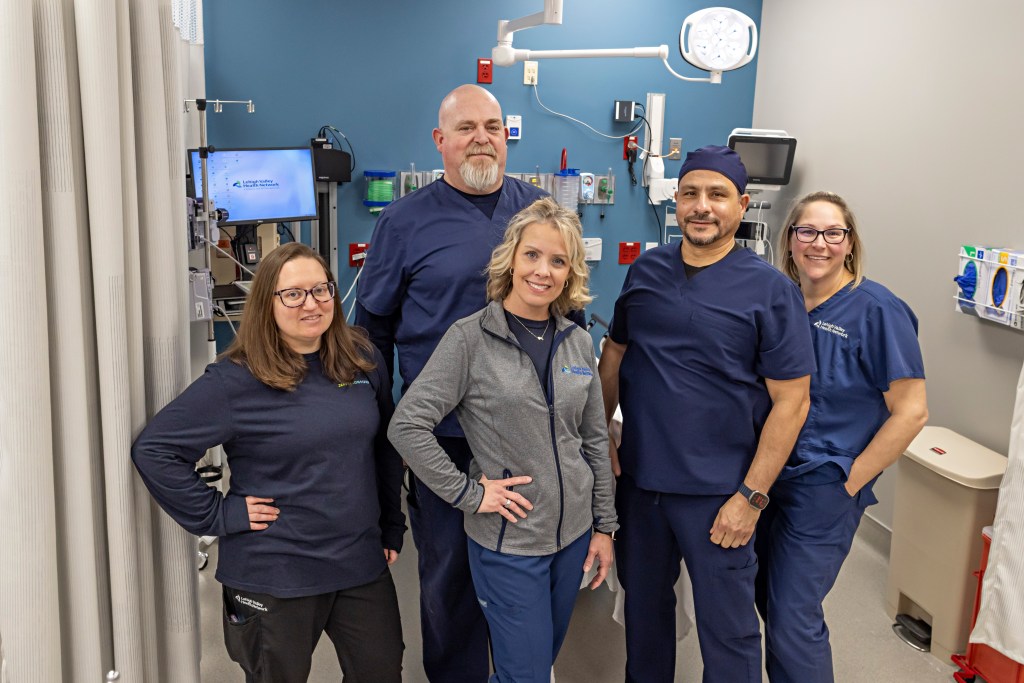
With an ongoing shortage of nurses, Jefferson Health created a program that, while different in execution, is similar in goal. And now, Jefferson’s Nursing Service, Excellence, Advocacy and Leadership — or SEAL — team, which sends experienced nurses wherever they are needed, has expanded to Lehigh Valley Health Network hospitals.
The COVID-19 pandemic severely drained the nursing workforces of hospitals, with many nurses quitting, retiring, joining agencies or even dying. This led to many hospitals relying heavily on agency nurses to fill the gaps and temporarily shore up their workforces.
Andrew Thum, director of nursing workforce operations at Jefferson, said that before the merger between LVHN and Jefferson, Jefferson alone had over 400 nursing vacancies and about 200 contracted external agency nurses.
Jefferson’s leadership realized that they needed a solution. Taking inspiration from the Navy SEALs, the network created its SEAL team in 2022 with the goal of minimizing the impact of shortages and cutting down on the network’s reliance on agency nurses, which often are contracted at much higher rates than staff nurses are paid.
“It allowed us to shift resources to where they’re needed most over the course of a scheduling period due to things like vacant positions or fluctuations in the patient census,” Thum said.
Jefferson picked 25 of the most proven nurses in the network to serve as initial SEAL team nurses.
So far it’s been a resounding success. Since its debut, Jefferson has seen its use of agency nurses decline 75% and the nursing SEAL team has grown to 180 nurses. And with the expansion the team is making into the Lehigh Valley, it plans on recruiting another 86 registered nurses into the program.
“These are nurses that are experienced, skilled and trained. They can be dropped into any hospital, any unit, and work with any team across our health system and still provide safe, quality, competent nursing care to our patients,” Thum said.
On average, nurses in the SEAL team already have nine years of experience when they join and are expected to have met certain certification requirements related to the settings they work in. The network also looks for nurses with experience working in float or resource teams, since these nurses already have experience moving around.
Thum said SEAL nurses are deployed every two to six weeks based on anticipated shift needs and patient censuses. They work in various departments, including medical-surgical, telemetry, critical care and emergency services, throughout the network.
There is a tiered structure and nurses have the option to pick which of Jefferson’s five regions they can be deployed to, with most only being deployed within one or two sections of the system. Sarah Rinker-Puentes, patient care manager of the SEAL Team, said that because of this, many nurses in the Lehigh Valley recruited to the team would stay in the traditional LVHN footprint, unless they decided to also work in the legacy Jefferson regions as well.
Eric-Scott Purnell, a nurse on the SEAL team, said that when he tells people what he does, they often tell him it sounds so stressful, but for him, it’s anything but. He said he loves the variety and he’s more satisfied and less stressed.
“One thing you learn, you go from place to place to place, like a lot of jobs. Nursing is nursing is nursing. So the mechanics of doing the job are pretty similar no matter where you go,” Purnell said. “It’s almost as if you were a regular staff nurse who works in any sort of hospital, except your unit is essentially the whole health system. It’s almost like I work in one big hospital now. I think when the SEAL team first started, it was an adjustment, bouncing around from place to place, but then once you go to a place 10 times, 15 times, 20 times, you meet the staff, you know the secretaries, you meet the people who do environmental [work], you become sort of like just a member of the staff.”
Purnell said when the program started, it was more reactive, filling gaps wherever they were. But he said now it is looking further into the future. He said, for example, if a unit knows that it will be short on staff well in advance due to several nurses being on maternity leave, it can schedule a SEAL nurse in advance to be deployed to that unit.
Thum said that besides helping with staffing, experienced nurses can help the staff they are embedded with grow too.
Purnell said nursing is never boring but being a SEAL gives him all the variety he needs.
“I think there’s something about my spirit where I enjoy going to different places, seeing different people and having these interactions,” Purnell said.