
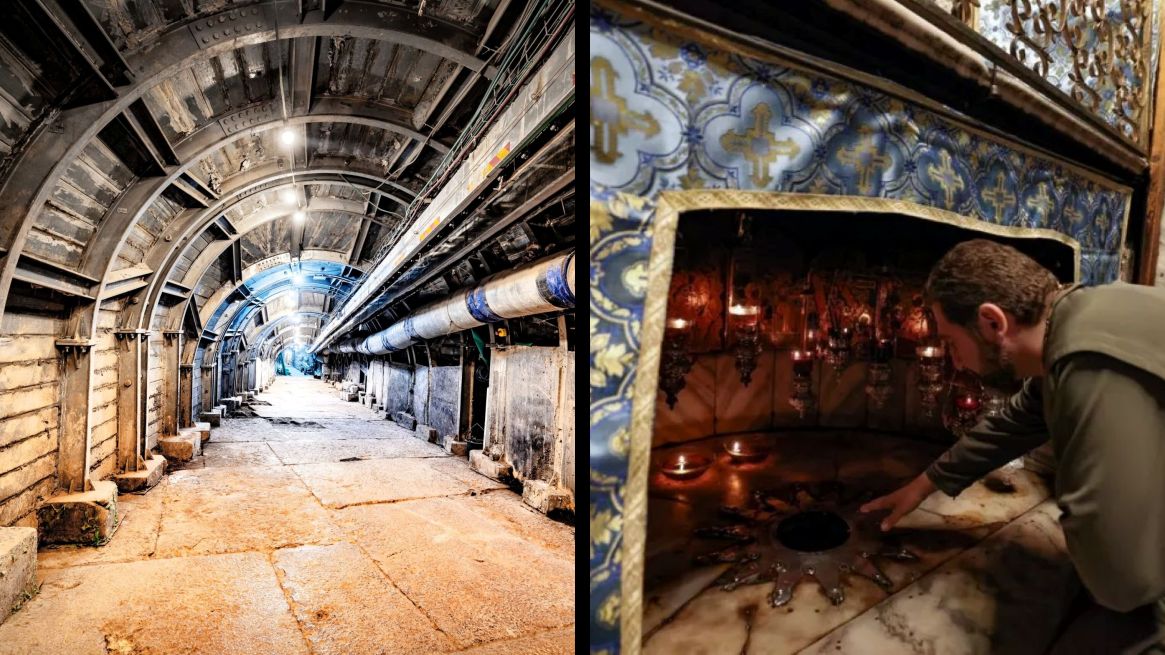
JERUSALEM / BETHLEHEM — After years of excavation and amid fraught politics, two of the Holy Land’s most resonant sites have moved into new chapters of preservation with the 2,000-year-old “Pilgrim’s Path” in Jerusalem opened for visitors, and the Grotto of the Nativity in Bethlehem is set for its first major restoration in six centuries.
In Jerusalem, archaeologists say the stepped street that once carried worshippers up from the Siloam Pool to the Temple Mount — built in the early first century CE, possibly under Herod or Pontius Pilate — has been revealed after roughly two decades of digging. The route, buried during the Roman destruction of the Second Temple in 70 CE, was reopened to the public in late January with guided inaugural walks that attracted Israeli visitors and tourists alike. Amit Re’em, chief archaeologist for the Jerusalem District at the Israel Antiquities Authority, described the find as among the most magnificent discoveries in recent decades, offering for the first time a visible link between the Siloam Pool and the Temple Mount.
Excavators have exposed sections of the original Herodian pavement, shops that once lined the thoroughfare, a mikveh and a stone podium, though only parts of the wide street have been unearthed. To protect homes and modern infrastructure built above the subterranean remains, archaeologists installed a concrete-and-steel tunnel around the shaft — a pragmatic measure that has not quieted objections from many Palestinian residents in the mainly Palestinian neighborhood of Silwan, who fear damage to their buildings and view the project through the lens of competing claims over East Jerusalem. The City of David Foundation, which supports the archaeological park, and other backers argue the work both protects heritage and opens the site to pilgrims and scholars.
In Bethlehem, Christian custodians announced a coordinated restoration of the Grotto of the Nativity — the cave revered as the birthplace of Jesus — led by the Greek Orthodox Patriarchate in cooperation with other Churches and to be carried out by an Italian firm experienced in conserving the Basilica of the Nativity. The project, endorsed by the Palestinian Authority, aims to reinforce adjacent sections of the sanctuary, conserve artistic and liturgical features such as the silver star marking the traditional nativity spot, and revive a shrine that has suffered from decades of wear as well as the economic blows of the pandemic and regional conflict.
Both projects underscore a shared impulse to conserve sites of deep spiritual and historical meaning — even as their management and interpretation remain entangled with the politics of the land and the livelihoods of local communities who depend on pilgrimage and tourism.