
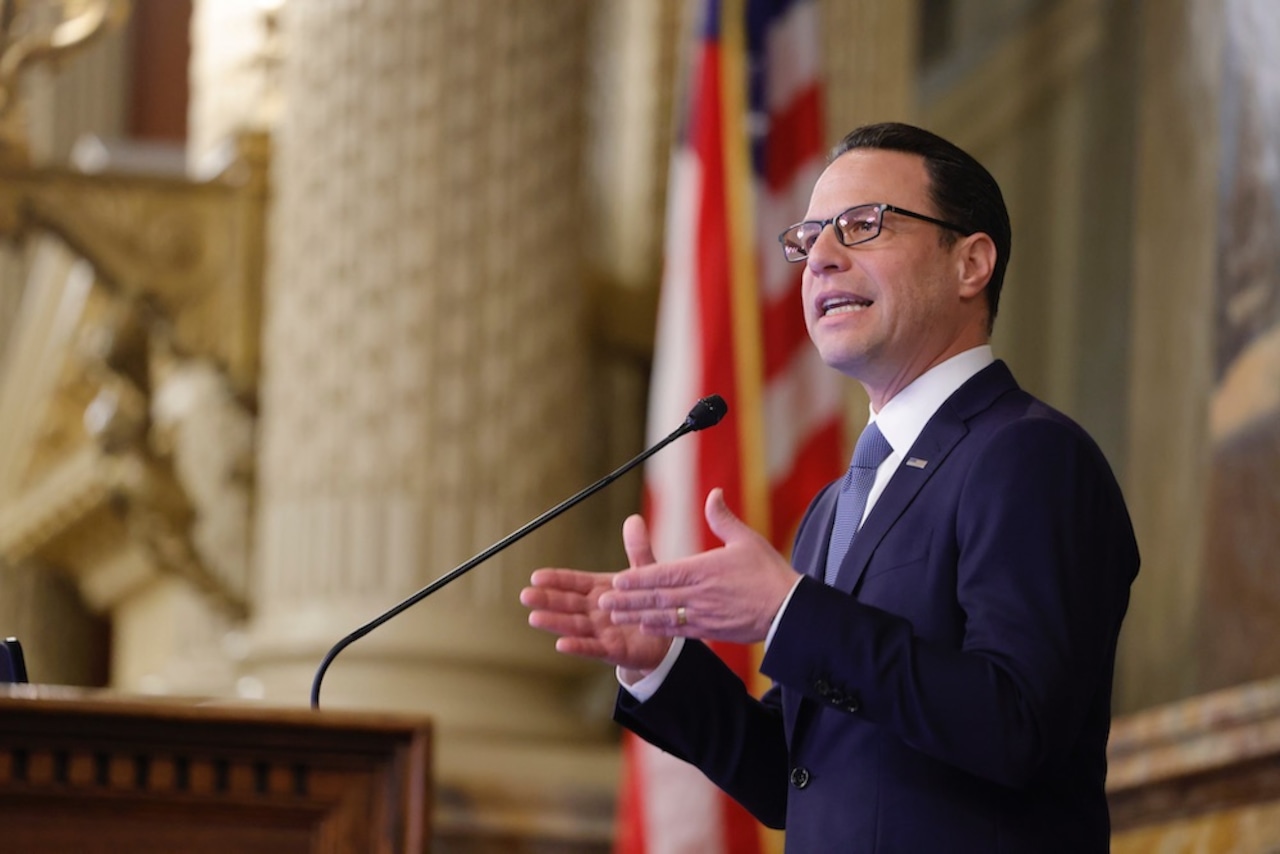
Gov. Josh Shapiro is proposing a $53.26 billion state budget for the year starting July 1 that increases spending for schools and the most vulnerable, but also exceeds projected revenues by nearly $4.6 billion.
That deficit is likely the first, and one of the biggest problems that legislative Republicans will find with the plan.
As proposed, the gap would be covered by withdrawals from the state’s roughly $8 billion Rainy Day fund, using more than half of its available balance at a time when, by most definitions, the overall economy is at least partly sunny.
Shapiro Administration officials say expenses are up about $2.7 billion from projected current year expenditures, or just a tick under 5.4%.
Key Republican leaders have already said they want the finished product to be much closer in balance, for the sake of the state long-term solvency.
“My hope is that the governor will recognize that large requests for massive spending increases are not realistic,” Senate Majority Leader Joe Pittman told Spotlight PA earlier this month.
Democrats in the House and Senate, of course, counter that by investing smartly now, the state can better grow its economy — and tax revenues — to cover its needs down the road.
Where we start
The currented enacted budget came in at just under $50.1 billion.
On Tuesday, however, Shapiro’s budget office estimated actual spending will come in at $50.54 billion, or about $470 million more than budgeted last year.
Most of that increase — about $390 million — is attributable to cost overruns in publicly-funded medical care for seniors and low-income persons.
The big cost drivers in the new plan?
The budget includes $665 million in new funding for the three-largest streams of state aid to K-12 public schools as the state continues to work toward bipartisan “adequacy” goals.
That would bring the total state investment in those line items to $11.837 billion for 2026-27, up 6% from this year’s $11.172 billion.
And then there’s the skyrocketing growth in human services costs, most of it driven by increased costs for publicly-subsidized medical care for older and low-income Pennsylvanians.
The state’s two biggest medical assistance lines alone are projected to cost $11.6 billion in 2026-27, up $1.46 billion from last year’s adopted budget, or 14.4%.
But there are a number of other major policy moves called for in the 2026-27 plan.
For example, in an effort to address three major needs — some persistent, one emerging — across the state, Shapiro is proposing the sale of $1 billion in new bonds, the proceeds of which could be used by his office to help:
Tease major new energy generation projects;Support housing investment, or;Make upgrades to older school buildings in need of major repairs or environmental remediation.
The so-called Critical Infrastructure Investment Program will require legislative buy-in, and even if it gains traction, and will no doubt spawn major debate about who awards the funding.
There are no increases proposed to the state’s income or sales tax rates, and the plan includes another half-percent drop in the state’s step-laddered reduction of the tax on corporate profits.
That will take the rate from 7.49 percent now, to 6.99 percent for the 2027 tax year. Those cuts are scheduled to continue through 2031, when the rate will level off at 4.99 percent.
But there are some key repeated tax proposals that didn’t get over the finish line in Shapiro’s earlier budget plans.
The governor’s main revenue raiser would be the legalization of the never-authorized and unregulated class of skill games.
The new plan would categorize them with the state-regulated video gaming terminals currently permitted at truck stops and regulated by the Pennsylvania Gaming Control Board.
Taxed at the same 52% rate as casino-based slot machines, Shapiro says the plan would more than $2 billion a year in revenues.
Past proposals to legalize and tax skill games have shipwrecked on the details, amonf them: Who can host the games; what is the tax rate; and how is the state’s share used?
The main argument for it?
The state needs the money to help keep recurring revenues in line with ever-growing expenses, and the issue has been around long enough that the issues are by now pretty well-defined.
Shapiro also proposes legalization of marijuana for adult recreational use, tied to an immediate expungement of criminal records for those convicted of marijuana-related drug possession offenses.
While this proposal seems to gain a little traction every year, till now it has never enjoyed enough support in the Senate Republican caucus to get a vote.
And, as with the gambling expansion, there would be pitched battles over the economics of the issue – not the least of which would be rules governing the estblishment of the new market.
The administration’s estimate is that it would bring in $766 million in 2026-27, mostly from license fees, with tax revenues from sales stabilizing at about $200 million per year after that.
The budget also relies on the state collecting a net $328 million in new corporate income taxes by tightening loopholes that permit some larger corps to evade the state’s tax.
There were also some jabs thrown at Washington in the governor’s plan.
Shapiro, citing the federal government’s fiscal shutdown last fall that interrupted SNAP and other benefits to many low-income households, called on the legislature to set aside $100 million in present Rainy Day funds to what he calls a new federal response fund.
Those funds would allow the state to seemlesly plug the gap anytime that actions by the Trump Administration or Congress keep Pennsylvania from receiving previously-appropriated federal funds.
“The Commonwealth requires dedicated resources at the ready to respond to federal efforts to unlawfully cut funding… break the contracts they’ve signed with the good people of Pennsylvania and strip away essential services families rely on to get by,” Shapiro wrote in his budget message.
In a major funding diversion, Shapiro would seek to stabilize chronically deficit-ridden public transit systems in the state’s biggest metro areas by funnelling an additional 1.75 percent of sales tax receipts – estimated at $300 million annually – into their coffers.
If this policy was adopted, it would divert 6.15 percent of all state sales tax revenues to public transit starting July 1, 2027.
The budget, of course, is also littered with a number of smaller, but still important investments likely to enjoy broad bipartisan support.
They include:
More money for 20 new calltakers at ChildLine, the public front door for most of the state’s most serious child abuse and neglect reports.$10 million to help build capacity in the 9-8-8 mental health and suicide prevention hotlines; and $5 million to maintain mental health walk-in centers.Funding for four new Pennsylvania State Police cadet classes.$5.2 million more for community-level violence prevention projects.
The budget flat funds direct state aid to state-owned universities and the major state-related schools – Penn State, Pitt and Temple – though in a first it does allocate $30 million in new performance-based funding for the latter group.
Today’s proposal is only a starting point.
It really kicks off a spring/summer season of negotiations wth Pennsylvania’s divided legislature that is supposed to result in a final spending plan by June 30.
Shapiro and lawmakers typically go into overtime, though election year pressures could speed the process this year; the current budget wasn’t signed into law until mid-November.