
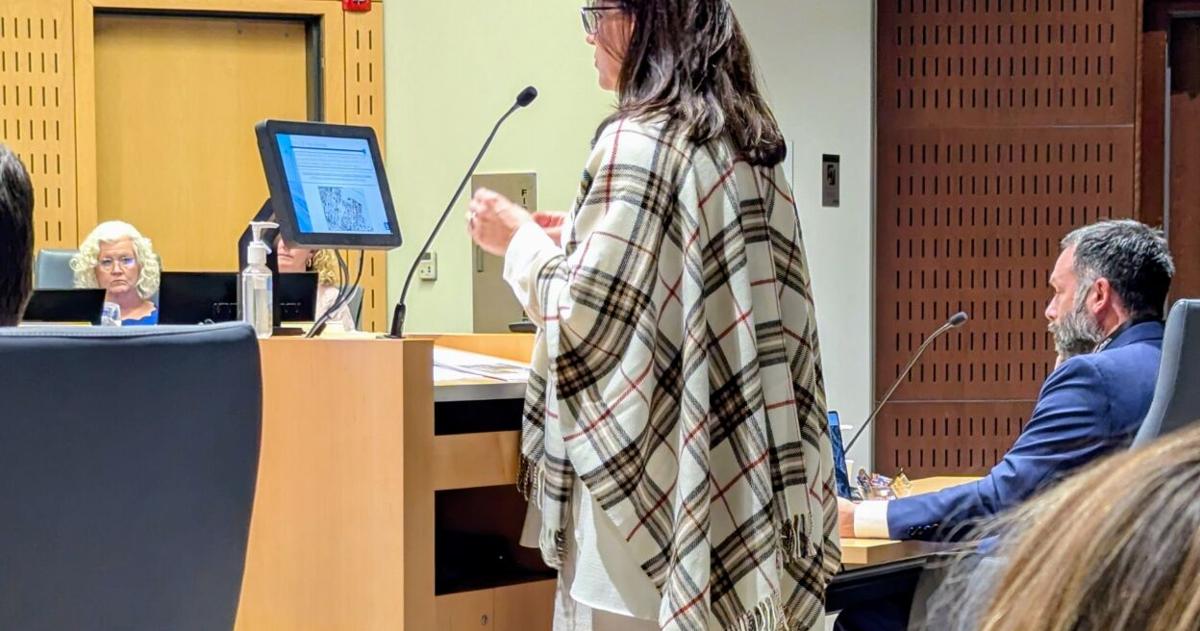
Despite pushback from a few local residents, town council recently moved forward with the annexation of 0.93 acres of county property into Mount Pleasant at 1490 Boston Grill Road. The parcel in question is contiguous to the Mount Pleasant boundary, and is bounded and abutted on the north by land now or formerly part of the Hamlin Plantation POA; it is also bounded to privately-owned properties to the south, east and west of the area in question.
Prior to a first-reading vote on the matter, Mount Pleasant Planning Director Michele Reed informed council that the historically-designated parcel within Hamlin would be assigned CC zoning (Community Conservation) upon annexation.
CC zoning, she added, is the equivalent of the county’s current S3 designation. And the fact that the applicant owner doesn’t own any adjacent parcels, it was noted, will prevent the land owners from subdividing under town standards.
Discussion over the annexation featured comments from Councilmember Mike Tinkey, who offered that without a historic overlay, settlement communities may not be as protected as others.
“It’s basically eroding and decimating the community. So, I’ll be a firm no,” said Tinkey, who was one of three elected officials to decline the action, along with Mayor Will Haynie and Councilmember Alex Crosby.
Among the six who voted to approve the property’s inclusion into Mount Pleasant was Councilmember Jake Rambo, as he pointed to big “misconceptions” and “misunderstandings” on annexations.
By declining annexation, Rambo explained, Mount Pleasant Waterworks has to, by law, provide water and sewer services, which means the property can still be developed.
“Our zoning matches the county zoning. Us denying annexation … is a gift to the developer because now they can develop the property without paying town impact fees, without paying town taxes,” he continued.
While Tinkey restated the lack of a historic overlay in the Hamlin community, Rambo affirmed that not all property owners reside in HOAs, or desire to live in one. He further noted that historic overlays prohibit development moratoriums for non-HOA owners since it only safeguards larger properties.