
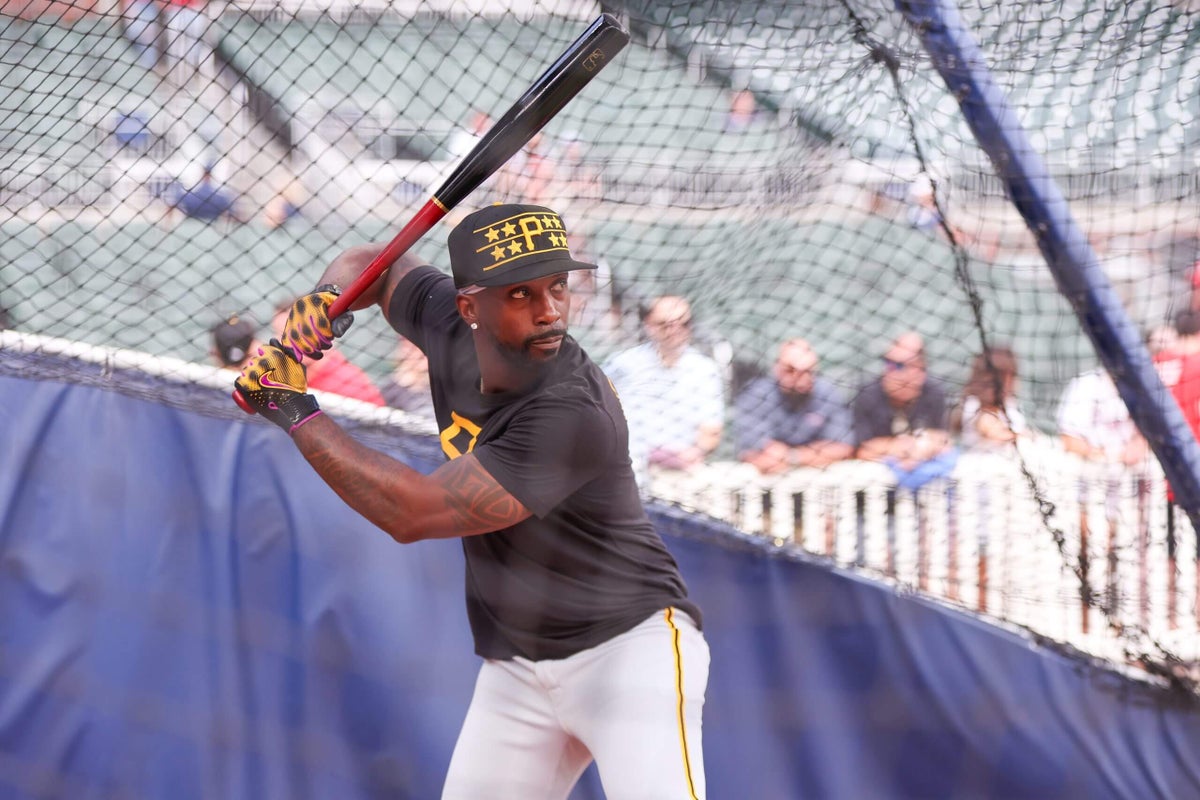
Here’s the thing about Andrew McCutchen versus the Pittsburgh Pirates, which of course should be Andrew McCutchen and the Pittsburgh Pirates, and still might be in the end:
The Pirates screwed up. They know they screwed up, according to multiple people in the organization who were granted anonymity for their candor. But if they were as direct as they should have been with McCutchen, informing him last season or even last offseason that 2025 would be his final year with the club, he probably would not have reacted well.
His recent social media posts indicate as much, reinforcing that, with a player of McCutchen’s stature, closing out a long-term partnership is not always easy.
“There’s more work to do and I’m not done, no matter what label you try to stamp on me,” McCutchen said on Jan. 24 on X in response to a Pittsburgh media personality who posted that the Pirates “have to look at different/better ways to win, even if it means moving on.” “Rip the jersey off me. You don’t get to write my future, God does.”
Bravado aside, McCutchen at 39 surely knows he has only so much control. He cannot bully the Pirates into signing him. The team has endured seven straight losing seasons, three since his return. McCutchen is not to blame for the continuing malaise, but the Pirates are making a greater effort this offseason to fix their offense. If McCutchen feels unwanted, he can sign as a free agent with any of the 29 other clubs – and still retire as a Pirate at some other time.
That’s the cold reality. It’s also an oversimplification. McCutchen is not just any player. He is a former MVP and Roberto Clemente Award winner. He was the face of the franchise and guiding force of the Pirates’ playoff runs from 2013 to ‘15, their only postseason appearances since 1992. He resides in a Pittsburgh suburb with his wife, Maria, whom he met at PNC Park when she was part of the team’s Cannonball Crew, and their five children. And he is still capable of contributing to the Pirates, as a hitter and leader.
In 551 plate appearances last season, McCutchen was close to a league-average hitter. His expected stats indicated he deserved better outcomes. His chase and walk rates ranked in the top 12 percent of the league. The Pirates’ indifference to him is surely, and somewhat understandably, driving him a bit nuts.
McCutchen, through a friend, declined comment.
Superstars become superstars in part because of an immense belief in their own abilities. That belief, when a player’s career is winding down, sometimes leads to an exaggerated sense of self, conflicting with others’ perceptions. And when communication is lacking, as it clearly was with McCutchen and the Pirates, things can get awkward, if not ugly.
Perhaps owner Bob Nutting will intercede and order general manager Ben Cherington to sign McCutchen, fearing yet another public relations nightmare if the team’s relationship with a franchise legend collapses. Nutting met personally with McCutchen last Thursday, according to a person briefed on their conversation. The Pirates have not ruled out the 17-year veteran’s return.
And so, the awkwardness continues.
Nutting typically does not force Cherington to make specific moves. If he overruled his GM with McCutchen, the Pirates would again appear dysfunctional at a time when they claim to be building around the National League Cy Young Award winner, right-hander Paul Skenes, and the game’s top prospect, shortstop Konnor Griffin. Even if the Pirates relent, McCutchen’s resentment might linger. Over the team’s initial refusal to consider him. Over what almost certainly would be a role limited to serving as a DH against left-handed pitching, if that.
A relationship spanning almost two decades should not be ending this way. The Pirates selected McCutchen with the 11th pick of the 2005 draft, oversaw his development into one of the top players in the game, then traded him to San Francisco in January 2018, when he was entering his free-agent year. He drifted from the Giants to the New York Yankees, then Philadelphia and Milwaukee, before returning to the Pirates on three straight one-year, $5 million contracts – bargains, if for no other reason than his public relations value to a perennially downtrodden club.
Each time, the Pirates signed McCutchen relatively early in the offseason, before doing much of anything else. Their plan was to win with him and have him retire as a Pirate. As of now, neither has happened. And the difference this winter, with Nutting apparently figuring out that he already has wasted two otherworldly seasons from Skenes, is that the team clearly does not view McCutchen as a priority, or even necessary at all.
Desperate to improve the league’s worst offense, the Pirates traded for second baseman Brandon Lowe, signed free-agent first baseman Ryan O’Hearn to a two-year, $29 million contract and added other potential contributors as well. They’ve also struck out on a number of high-profile free agents, the latest being Eugenio Suárez.
The Pirates’ bid for Suárez was in the range of the one-year, $15 million deal he landed with the Cincinnati Reds, according to a person briefed on the offer. But Suárez had greater comfort with the Reds, for whom he played from 2015 to ‘21. And as the Pirates have discovered in every case but O’Hearn’s, if a free agent has the option to join a team he considers more competitive – in other words, just about every other club – he’s going elsewhere.
The offseason is not yet over. The Pirates’ estimated $95 million payroll is only $8 million above last season’s final number, a total deflated by trades of David Bednar, Ke’Bryan Hayes and several veterans on one-year deals. As the team’s pursuit of Suárez demonstrated, Cherington still wants to add another hitter. If he does not, the spectre of McCutchen will hang over Don Kelly’s first spring training as manager. Not exactly the vibe the Pirates are seeking.
Perhaps this all was unavoidable for a proud player and often bumbling franchise. But if the Pirates had been more straightforward with McCutchen, they at least would have made clear that they offered him no guarantees beyond 2025. They held internal discussions about relating those intentions to McCutchen, sources said. But they decided against taking a direct approach, perhaps out of fear of confrontation.
McCutchen indeed might have pushed back against the notion his career was coming to an end. Heck, he’s pushing back against the idea that he should be limited to DH duty, even though he has made only 16 starts in the outfield the past three seasons.
“Bottom line is if it is needed, I can not only do it, but do it like I’ve been out there all year,” McCutchen said on X. A former Gold Glove center fielder, McCutchen has long resisted criticism of his defense, going back to when the Pirates moved him to a corner spot almost a decade ago.
In another of his posts, McCutchen asked, “did the Cards do this Wainwright/Pujols/Yadi? Dodgers to Kershaw? Tigers to Miggy (Cabrera)?” Well, no two situations are alike. Wainwright, Molina and Cabrera revealed in advance their plans to play one more season. Pujols returned to St. Louis for a final year to bring his career full circle. Kershaw waited until Sept. 18 to announce his intentions, and pitched capably to the end.
The logical solution, now that most of the desirable free-agent hitters are off the board, is for the Pirates to sign McCutchen to another one-year deal, then make the joint announcement that this season will be his last. With a lockout threatening the 2027 season, McCutchen almost certainly would be agreeable. The Pirates then could spend the season milking his presence one last time, and giving him the farewell he deserves.
If they don’t want McCutchen, fine. But it’s difficult for them to justify moving on when they haven’t found someone better.
The Athletic’s Stephen Nesbitt contributed to this column.