
A federal judge’s order to free a Venezuelan immigrant was undermined by an ankle monitor, underscoring wider concerns over ICE practices
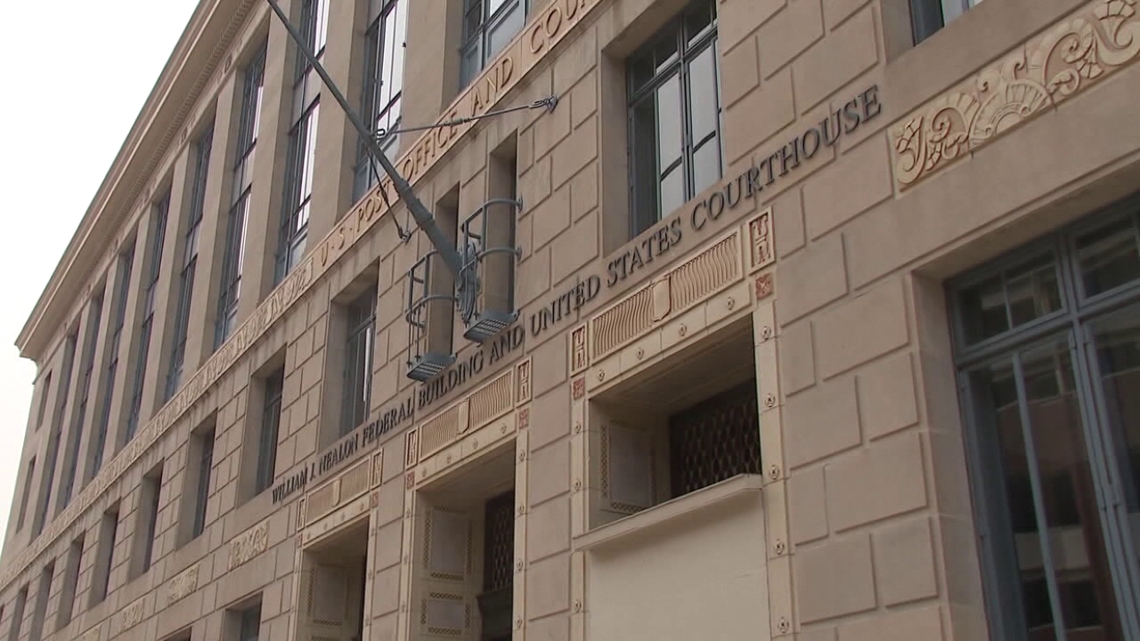
A federal judge in Scranton said immigration authorities did not follow her order to immediately free a man detained in Pike County because agents made him wear an ankle monitor once he left the jail.
The Department of Homeland Security and Immigration and Customs Enforcement requirement that Ronil Jose Gonzalez Centeno wear an ankle monitor “essentially keeps him in custody” and ran afoul of U.S. District Court Judge Julia Munley’s order Jan. 13 to release him because his detention violated his Fifth Amendment due process rights, Munley said last week.
DHS and the U.S. Attorney General’s Office removed Gonzalez Centeno’s monitoring device, but only after Munley rejected the government’s “Kafkaesque” reasoning for why they required it in the first place, Munley’s order and other records show.
“It did not authorize the ankle monitor or any further conditions,” Munley said of her order freeing Gonzalez Centeno. “DHS acted without authority.”
Gonzalez Centeno’s surveillance upon release from jail — which, according to the docket, lasted nearly two weeks — is hardly unique, said his lawyer, Karen Hoffmann, of Philadelphia. “We are seeing this happen all over the country,” she said.
She pointed to a case in New Jersey in which a federal judge in early January found that ICE broke its own regulations by ordering restrictions on a man who was ordered freed. Later in January, before Munley ruled on Gonzalez-Centeno’s case, Munley ordered that ICE end its “unilateral imposition” of release conditions on a man that were not imposed by an immigration judge at a bond hearing.
“Essentially, the government is trying to punish people with surveillance even after a judge says they should be free,” Hoffmann said in an email. “Despite federal orders granting release or bond hearings, DHS is taking it upon themselves to shackle clients with GPS ankle monitors — conditions that were neither requested by the government during litigation nor authorized by the court.”
As of Jan. 24, ICE imposed some level of electronic surveillance on 180,079 people, including 40,661 ankle monitors, according to the latest detention data released by ICE. In the Philadelphia Field Office — which covers Delaware, Pennsylvania and West Virginia — 1,150 people wore ankle monitors.
It was impossible to tell from the data, however, how many of those were imposed on noncitizens unilaterally by ICE despite judicial orders for their release. Federal authorities did not respond to a request for comment.
On Jan. 14, immigration law groups Carolina Migrant Network and Amica Center for Immigrant Rights sued ICE in North Carolina’s federal courts for records tied to the agency’s ankle monitor policies. ICE has not yet responded to the lawsuit, records show.
“While labeled as an ‘alternative’ to physical detention, ICE’s (alternative to detention) program is not an actual alternative to detention but rather a different form of ICE custody over noncitizens, including physical restraint on individuals’ bodies and movements,” the groups’ lawyers said.
That included Gonzalez Centeno, a Venezuelan citizen who has lived in southeastern Pennsylvania for more than three years.
Through his attorney, Hoffmann, Gonzalez Centeno declined to comment.
DHS detained Gonzalez Centeno after he entered the country in 2022 but decided to release him into the country on parole rather than keep him in continuous physical custody, court records show.
He got a job as a construction worker, lived with family and had no criminal record.
On Nov. 20, during a routine check-in at ICE’s Philadelphia field office, agents detained him and held him without a bond hearing under a reading of the Immigration and Naturalization Act that required mandatory detention — part of a change in DHS policy under the Trump administration.
He was held at Pike County’s jail, which is one of four facilities used by ICE in Pennsylvania to house immigration detainees. There were 241 immigrants detained there as of late January, according to the latest detention data.
Gonzalez Centeno spent nearly two months in custody until Munley granted his motion for release by finding — alongside federal judges in hundreds of other cases — that ICE and DHS’s reading of the INS was flawed and that Gonzalez Centeno should have been held under a section that entitled him to a bond hearing.
DHS released him but not without first affixing an ankle monitor.