
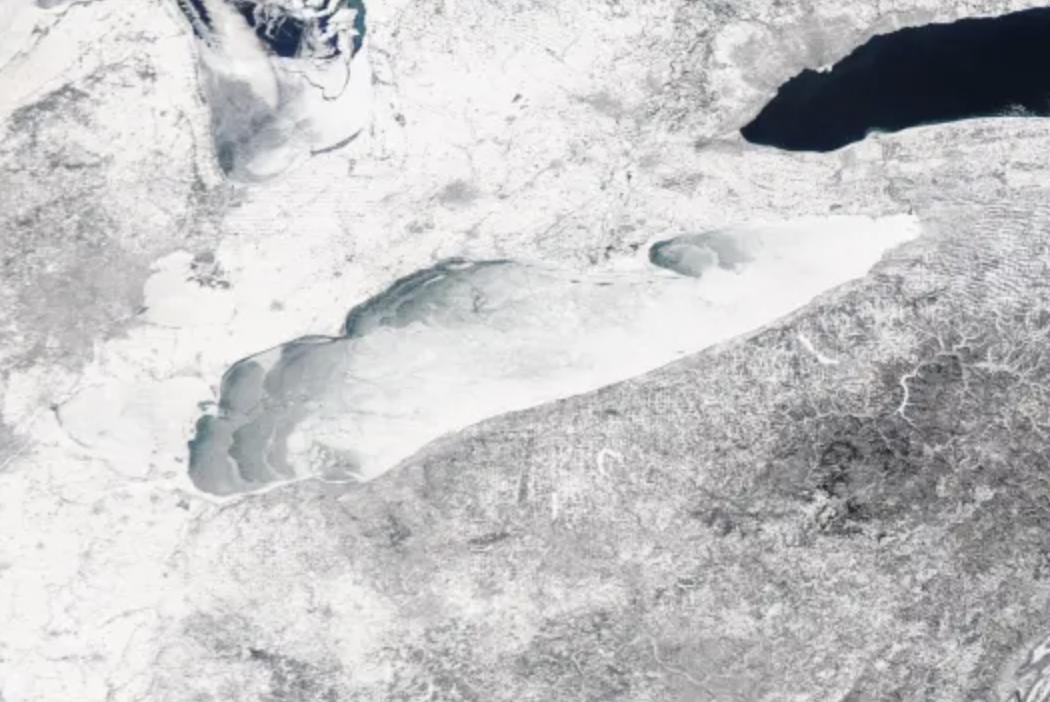
Lake Erie is flirting with a milestone that has happened only a handful of times in the modern record: a complete freeze-over.
As of this week, the lake’s ice coverage reached 95.3, according to an analysis by NOAA’s Great Lakes Environmental Research Laboratory. It is the second year in a row with substantial ice coverage on Erie.
Widespread icing of this magnitude happens once every two or three years, but what is much rarer is for Lake Erie to be completely covered by ice. Since record keeping began in the early 1970s, it has only reached 100 ice cover three times: 1978, 1979 and 1996.
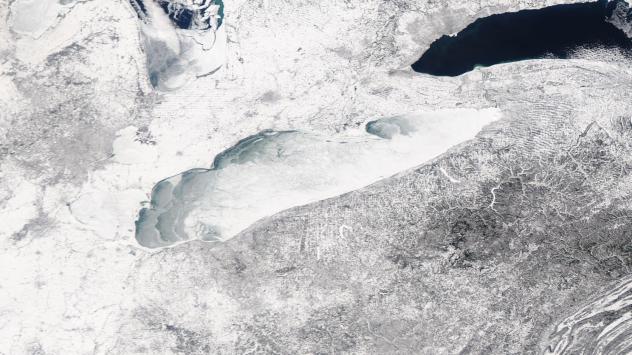 An ice-covered Lake Erie seen from space on Feb. 1, 2026. Photo courtesy of NOAA/Aqua/MODIS/NASA Worldview
AccuWeather Great Lakes expert Brandon Buckingham said Lake Erie’s near-total freeze this winter has been driven by repeated shots of cold air and sustained below-average temperatures.
“From mid-January through early February, temperatures have consistently been 10-25 degrees below historical averages, aiding in a rapid expansion of ice coverage,” Buckingham explained.
Ice coverage surged from just 2 on Jan. 14 to 85 by Jan. 21 during a severe Arctic blast. A reinforcing shot of frigid air helped further ice buildup, with coverage hovering around 95 since the last week of January.
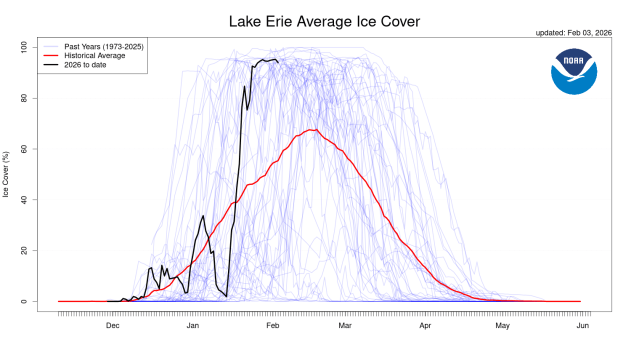 A chart showing the ice coverage on Lake Erie this winter (black line) compared to previous years (blue lines) and the historical average (red line). Image courtesyNOAA/Great Lakes Environmental Research Laboratory
Whether Erie can close the last gap to 100% will come down to the wind, Buckingham said. Even when it is cold enough for ice to build quickly, gusty conditions can shove ice downwind and reopen pockets of open water, preventing the lake from fully sealing over.
The window to reach that historic benchmark may be narrowing.
“Signs point towards a bit of a warmup mid-February that may limit the chances of completely freezing if it does not do so over the next week or so,” Buckingham explained.
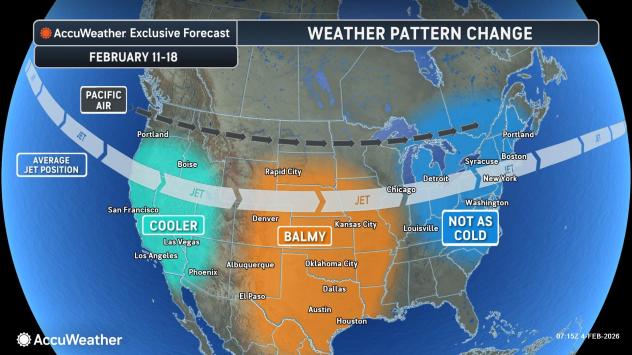
The next several days may determine whether the lake briefly reaches 100% ice coverage again before a warmup in the middle of the month starts to break up the ice.
Ice can also play a role in spring weather across the region. AccuWeather is already predicting a cooler-than-normal spring around the Great Lakes, and expansive ice can delay the arrival of springtime warmth, especially for cities and towns within a few miles of the shoreline.
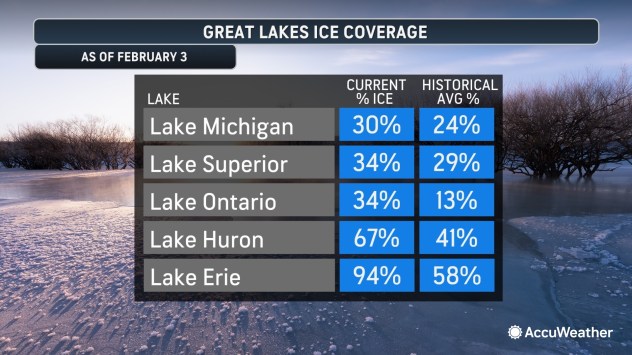
The extended chill may also limit severe weather in the spring and early summer, as cool, stable air near the lake can make it harder for thunderstorms to develop and strengthen.
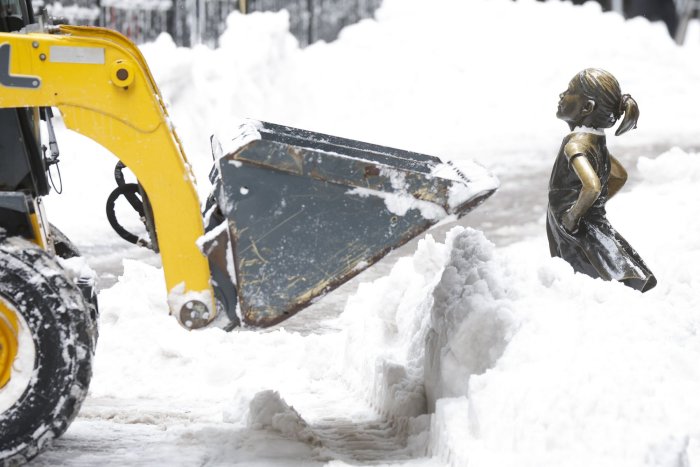
A construction vehicle delicately removes the existing snow that surrounds the Fearless Girl Statue at the entrance to the New York Stock Exchange after Sunday’s major winter snow storm on January 26, 2026. Photo by John Angelillo/UPI | License Photo