
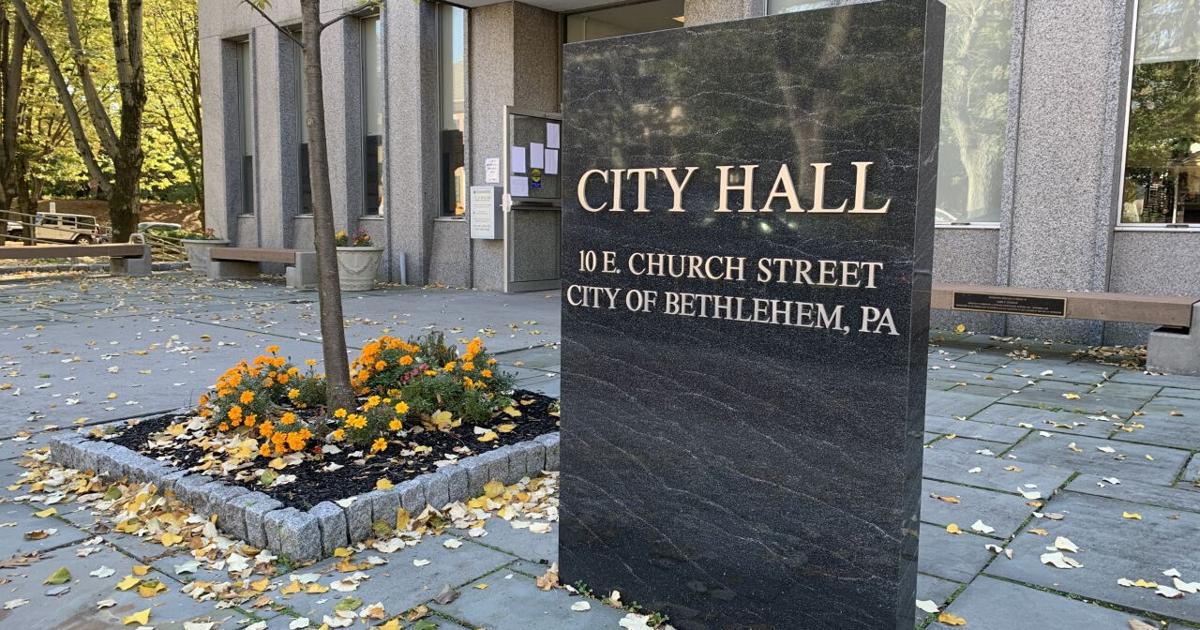
BETHLEHEM, Pa. – Bethlehem City Council on Tuesday postponed a vote on its updated Subdivision and Land Development Ordinance, or SALDO.
Councilmember Colleen Laird initiated the delay after an evening of questions and discussion on a variety of topics, all tied to the 102-page ordinance.
Council voted unanimously to table the measure, which will receive another second reading at the Sept. 2 meeting.
Laird said the SALDO was “substantial enough legislation” to warrant more time for review, noting it had been years in the making.
“Two weeks is not unreasonable,” she said.
Councilmember Rachel Leon seconded the motion. While she didn’t believe the process was rushed, she said there was “some sentiment that maybe it caught people off guard.”
Councilmember Grace Crampsie Smith also supported postponement, calling it a “good idea” given the amount of information raised.
Topics discussed on Tuesday included affordable housing, environmental concerns and the roles of the planning commission and zoning hearing board.
The SALDO, governed by the Pennsylvania Municipalities Planning Code, regulates land development in the city.
Proposed updates include incorporating the city’s Climate Action Plan and formalizing the roles of the Lehigh and Northampton Transportation Authority (LANTA) and the Environmental Action Committee in reviewing plans. Both groups already provide feedback, such as recommending bike parking, solar use, “commonsense” stormwater management and landscaping with native plants.
Laird praised city staff for their work, saying, “Clearly, there’s been tons of work put into this,” but she sought clarification on detailed provisions.
During public comment, resident Diana Rodriguez said sustainability measures in the SALDO gave her hope, but she criticized development near her home that she believes raises her energy costs, citing large parking lots that radiate summer heat.
City Director of Community and Economic Development Laura Collins said the climate-related amendments aimed to “add as much teeth as possible around climate,” while acknowledging, “We are limited by what we can actually require.”
Rodriguez was among several residents who voiced concerns about development, some of whom focused on multi-unit projects in historically single-family neighborhoods.
Amendments to the SALDO also streamline the submission process for development and subdivision plans and simplify lot consolidations. For example, minor subdivisions could be approved through a deed with new boundaries, avoiding what can be a lengthy and costly consolidation process.
Collins fielded questions during the nearly three-hour meeting and was tasked with providing data and a summary of key changes to City Council to better inform its decision.
Other aspects of planning and housing were also discussed on Tuesday — specifically, the deficit of housing in the city.
During new business, Councilmember Bryan Callahan pointed to the Martin Tower site as a potential solution.
In 2023, the planning commission reviewed a proposal for about 1,400 units at the site but approved a revised plan for 1,100 luxury units.
Callahan said development there could help fill housing gaps and “take the pressure off neighbors and neighborhoods.”