
The Erie Town Council is considering two tax measures that could appear on this year’s ballot.
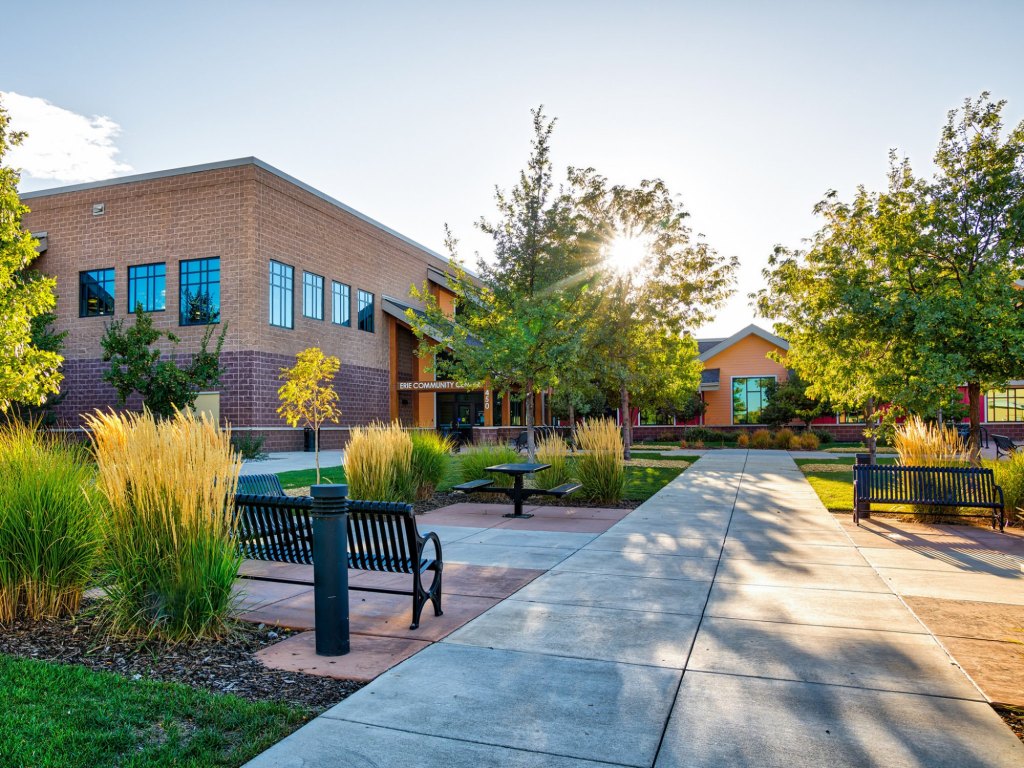
A survey will ask residents about one of those potential measures, a tax increase to pay for a possible expansion and renovation of the current Erie Community Center at 450 Powers St. A proposed new lodging tax that would impact any future hotels in Erie could also go to voters in November.
During its Jan. 20 study session meeting, the Town Council gave direction to town staff to work with the company Polco to create a survey, which could focus on whether residents would support a tax to fund the community center project, along with questions about other details that “might sway them one way or the other,” said town spokesperson Gabi Rae.
The Erie Community Center, which opened in 2008, is 54,000 square feet and includes fitness programming, a gym equipped for basketball and volleyball, an indoor pool, meeting rooms and other amenities, according to the town.
Whether the project should be funded with sales tax or property tax could be among the questions included in the survey, which could go out to residents as early as March, according to Rae.
If survey results show a lack of broad support for a tax increase to fund the community center project, the town will do “a lot more education and outreach with the public, update our possible ballot question, and then survey again in the summer,” Rae said. If results do show broad support for a tax, the town would continue education efforts and have the council approve official ballot language in August.
The council heard a presentation on the conceptual phase of the project during its Jan. 20 meeting. Staff presented two options, the first a “targeted” expansion and renovation project that would add about 6,000 square feet to the facility, estimated to cost about $14.5 million. A second, more extensive option would be a larger expansion of the building, including the work from the first option but adding an estimated $12.5 million and about 10,000 square feet to the project, according to staff’s presentation.
Town staff will work with Polco to find out whether residents would be willing to fund the full $27 million price tag tied to that second option, according to Rae.
The actual amount of a tax increase to fund the project has not yet been determined, but the town’s finance team is “finalizing that,” she added in late January.
A community gathering place
Erie Mayor Andrew Moore said the community center is an important, community-focused project following recent municipal projects such as the completed Town Hall and ongoing police department expansions.
“It’s important to me that we just don’t build more government but build and support the community gathering places as well,” Moore said days after the Jan. 20 meeting.
Moore also mentioned the potential for a tax increase to fund the community center project during his remarks at a January event hosted by the Erie Chamber of Commerce, where business owners told the Daily Camera they were open to the idea, though they said they would need more information on the project’s cost and the extent of any tax increase.
“I want to see more of the details,” said Kate Busenkell, whose law firm is based in Erie. She added: “Before we go raising taxes, I’d want more information about how they’re going to spend money.”
Ronda Grassi, president of CADCO, a design company based in Erie, and a former town government trustee, said she believes more space for recreation is “something the community wants.”
“Letting the community vote on it is never a bad thing,” Grassi added.
Lodging tax for ‘theoretical hotel’
Pending council approval of ballot language in August, a measure to approve a new lodging tax “will indeed be placed on the 2026 ballot,” Rae said. A lodging tax is an amount charged on hotel and motel stays, according to Rae.
Town staff will look at any neighboring communities that have lodging taxes to ensure Erie’s is “competitive with them,” Rae added.
The town does not anticipate using space in the Polco survey to gather feedback on the potential lodging tax.
“We do much shorter engagement and education with the public on items that do not have tax implications, or the tax implications are very limited,” Rae said.
Erie does not currently have a hotel, according to the town.
“With the Lodging Tax, it needs less outreach because it is on a theoretical hotel and would (generally) tax people who are not voting residents,” Rae said.
Plans for new development in the Town Center area — off Erie Parkway and County Line Road — include space intended for a hotel.
The town intends for the lodging tax to be different than a short-term rental tax, focused on the sort of rentals founds on platforms such as Airbnb and Vrbo. A potential short-term rental tax won’t appear on the ballot in 2026, as staff works to learn about the current state of short-term rentals in Erie and set up registration and licensing processes, Rae said, before it asks the residents to vote on a tax.