
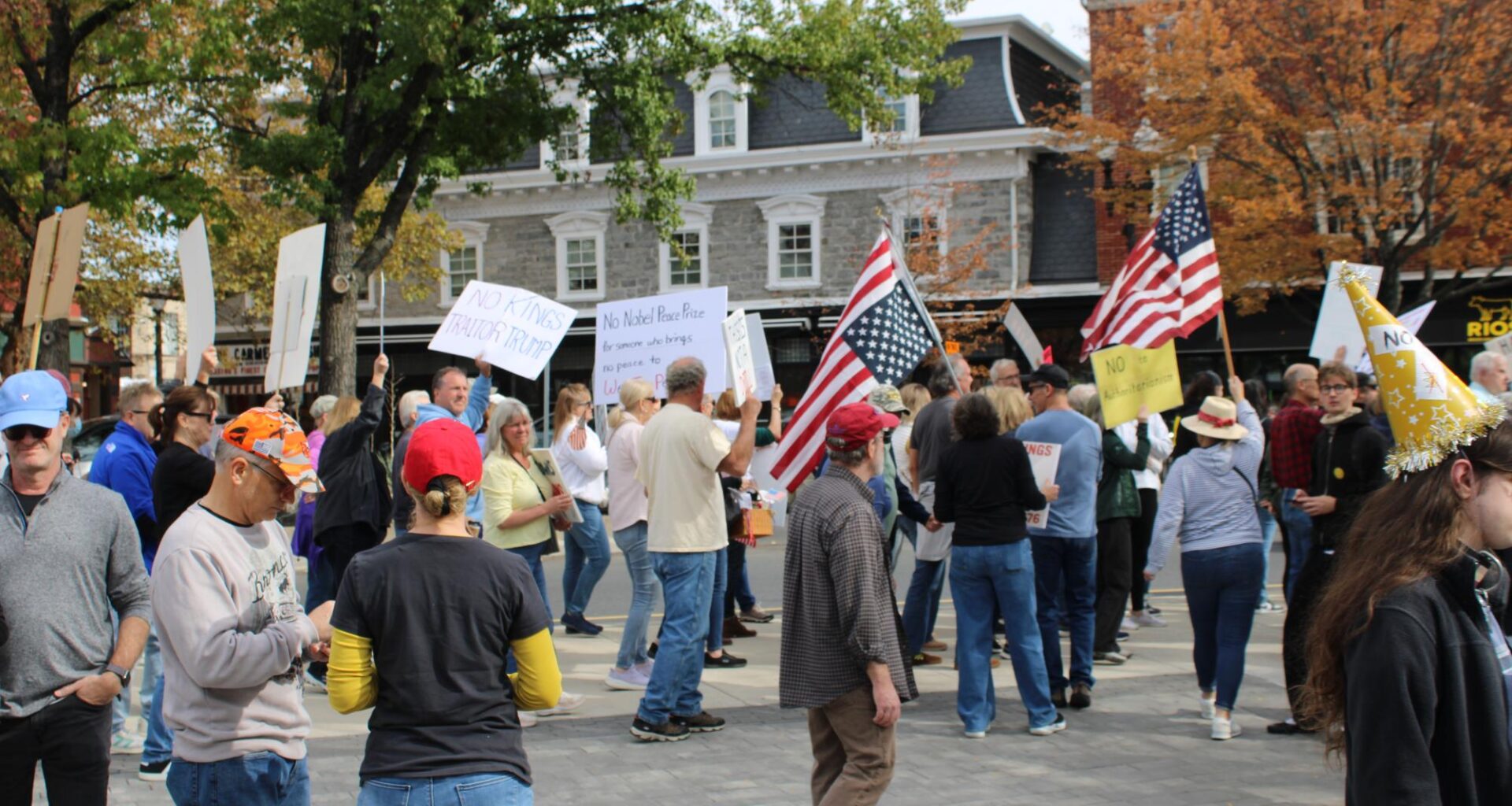
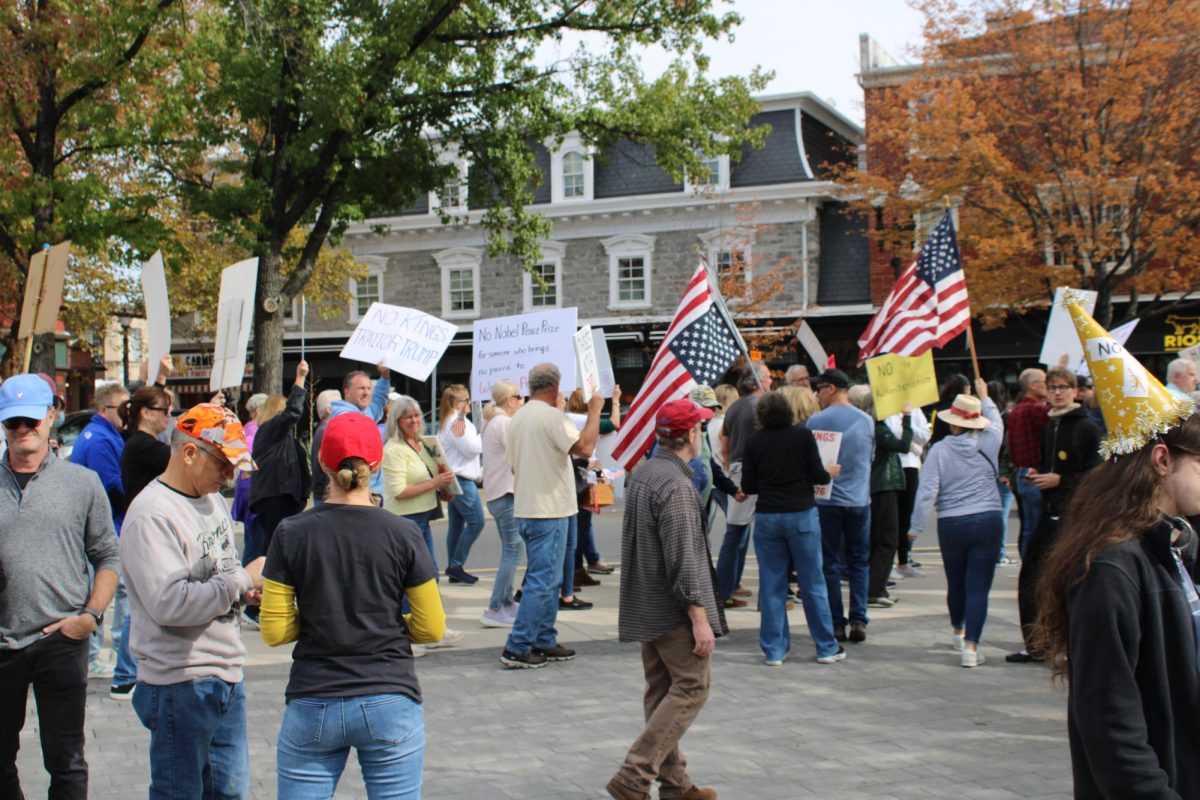
Photo by Makenna McCall for The Lafayette
Recently increased Immigration and Customs Enforcement mobilization has led to protests nationwide.
As unrest over immigration enforcement grows nationwide, Easton’s position reflects a balancing act established months earlier. The city has pledged support for immigrants while declining to adopt a legally-binding “welcoming city” ordinance that surrounding cities have implemented multiple times.
A December resolution
Easton City Council unanimously approved an immigrant protection resolution during its Dec. 10 meeting, affirming the city’s commitment to protecting immigrants and immigrant communities.
The resolution, which was co-sponsored by all council members, is largely symbolic. It encourages cooperation with organizations to provide legal immigration assistance and suggests, but does not require, that city officials not employ city resources to assist immigration enforcement unless legally required to do so.
It also recognizes the “essential contributions of immigrants,” including an appendix detailing industries with workforce shortages that are supported by immigrant labor.
“We will only deal with helping ICE by federal law,” Mayor Sal Panto Jr. said in a recent interview. “We have to help ICE if they have a warrant.”
Panto also mentioned his concerns with the lack of formal training for Immigration and Customs Enforcement agents, highlighting the extensive training process required of Easton law enforcement.
Multiple residents spoke in favor of the resolution prior to the final vote.
“Passing this resolution sends a message that Easton is committed to being a safe, stable and inclusive place for all residents, longtime Easton families and newly arrived families alike,” Wilson resident Ronald Byron Johnson said during the meeting. “It tells our local workforce, our community organizations and our youth that Easton stands by its values, even in a time where national rhetoric can be so divisive.”
“It is about resisting fear, because fear is the quiet destroyer of community and isolates people,” said Mark Rosenzweig, a member of the Lehigh Valley Democratic Socialists of America, who spoke in support of the resolution during the same meeting. “It drives them into the shadows.”
‘By actions, not by words’
The resolution’s approval came after a 10-month-long debate regarding the possible implementation of a “welcoming city” ordinance, which was struck down in August following concerns of the city being targeted by immigration enforcement.
“We are a welcoming city by actions, not by words,” Panto said. “I’m not in favor of a welcoming city. It seems that welcoming cities are being targeted by the federal administration. So we would rather fly under the radar.”
While the would-be ordinance and the resolution contain a lot of similar information, including guidelines for how city officials should interact with immigration enforcement, the resolution only recommends what the ordinance would have put into law.
“Honestly, the statement, it’s really just telling people, ‘Hey, we are with you,’” said former councilwoman Taiba Sultana, who introduced the welcoming city ordinance and the recent protection resolution. Sultana is no longer on the city’s council after she was voted out in the May primary.
“But it means literally nothing, honestly,” she added. “Because it’s not a law, it’s just a statement in solidarity. That’s it.”