
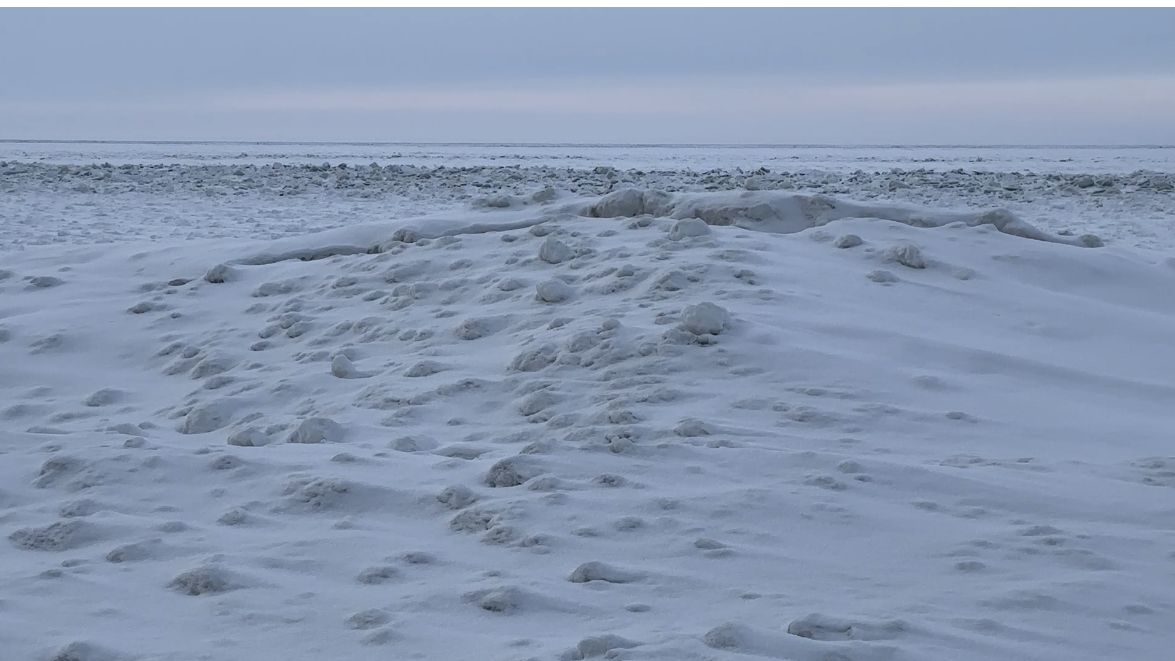
Just when you think it can’t get any colder, another Arctic blast of air is expected to settle in across much of New York over the weekend.
The plummeting, sub-zero temperatures and biting wind chill has caused Lake Erie to be almost completely frozen over for the first time in more than 20 years. After years of producing very little ice cover, Lake Erie is more than 95% frozen.
“It catches people off guard,” said Mike McKay, Great Lakes Institute for Environmental Research, University of Windsor.
McKay said what caught him off guard was how quickly the lake went from 1% frozen on Jan. 14 to where it is now.
“It’s not surprising to see the high ice cover we have in Lake Erie, it’s just that we’ve been having more frequent less ice years in the lake,” he said.
McKay said an almost completely ice-covered Lake Erie helps combat shoreline erosion and protect fish habitat.
He also said the frozen lake can lead to dangerous ice jam flooding, and is a challenge to the marine sector, with many ships needing an escort from ice breaking vessels.
“This cold system has been hovering over the entire Great Lakes basin for an extended period of time,” said McKay.
Spectrum News 1 Chief Meteorologist Chris Gilson said the last time Lake Erie was 100% frozen was in 1996.
He said the frozen waters mean less lake-effect snow, as there is no longer a temperature difference between the colder air flowing over the warmer lake water.
“Lake-effect snow is so localized, we’re not going to get that. Instead we’re going to rely on the regular storm systems that track west to east across the country to bring us snow,” said Gilson.
He said while it’s too early to predict future trends, the lake will continue to freeze when conditions call for long stretches of days with temperatures well below freezing.
“Usually the ice coverage doesn’t peak until mid to late February, so we’re a little bit ahead of schedule,” said Gilson.
McKay said with limited accessibility, his team will call on Coast Guard ice cutters to collect water samples so he can continue his research on low ice winters and their impact on different fisheries.
He also wants to increase awareness and receive funding for future studies in the winter.
“We’re seeing momentum in terms of interest in the winter on the Great Lakes. We know a lot about what goes on from May until October in the Great Lakes. We don’t know a whole lot about what goes on in the winter,” said McKay.
Lake Erie is also quite shallow, as compared to the other Great Lakes, so it loses heat faster and is more prone to freezing.