
Consumers will bear the brunt of rising energy costs until their elected officials take steps to alleviate the supply crunch fueled by data center demand, Lehigh Valley politicians said at a news conference this week that called for federal action.
Federal politicians need to protect funds that assist low-income utility customers and restore green energy incentives that could help expand power generation, Lehigh County Executive Josh Siegel and Allentown Mayor Matt Tuerk argued.
“I know that our congressional representation is interested in helping residents in cities like Allentown get ahead,” Tuerk said Thursday. “We need them to get practical about how to do that. Yes, we have to build more housing. Yes, we have to find ways to make health care more affordable. But we absolutely have to get intelligent about providing support to our low-income residents to make sure that their energy bills aren’t leading to evictions.”
Maintaining access to the Low Income Home Energy Assistance program that gives cash grants to low-income utility customers who need help covering heating bills is crucial, Siegel said.
The federal government shutdown in the fall delayed the opening of Pennsylvania’s LIHEAP applications by about a month. Siegel called Trump administration proposals to eliminate the program “temper-tantrum-like politics.” The latest federal spending bills reverse course and add funds to LIHEAP.
Although the program is fully funded for this winter, federal staff cuts that eliminated the program’s administrative team have consumer advocates worried that grants might not reach customers in a timely manner.
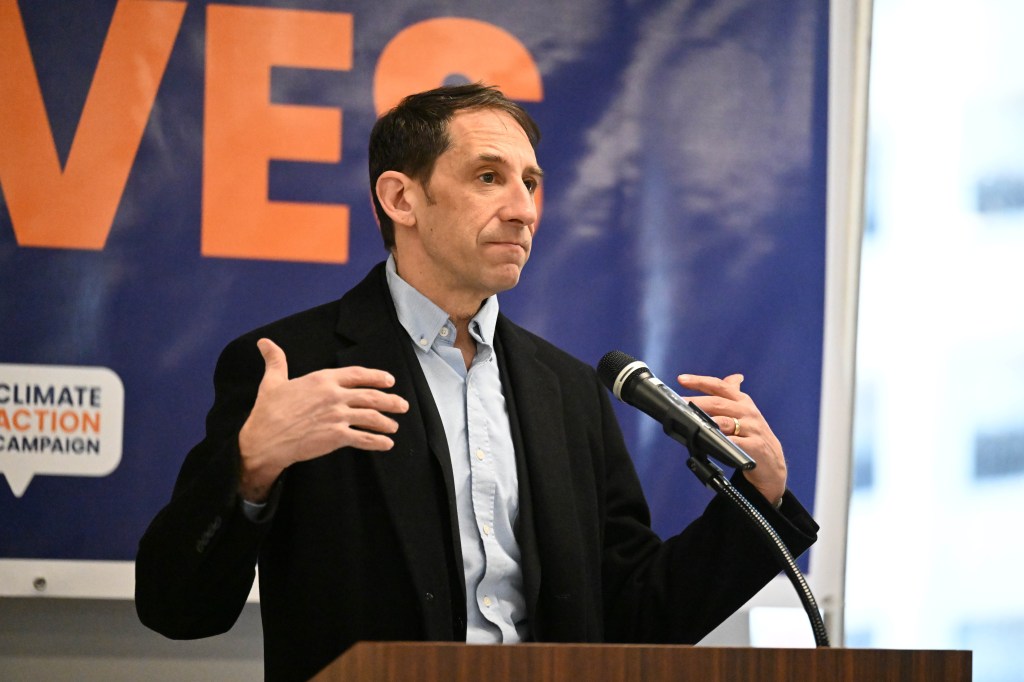
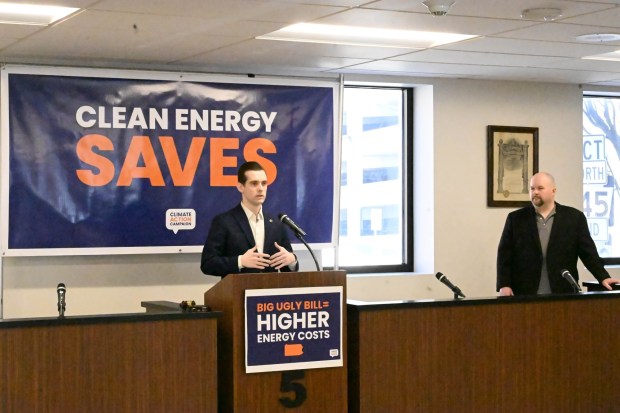 Lehigh County Executive Josh Siegel speaks during a news conference Thursday, Feb. 5, 2026, to call on Rep. Rep. Mackenzie, R-Lehigh, and other congressional leaders to protect clean-energy tax credits and programs and assistance programs for low-income utility customers. (Amy Shortell/The Morning Call)
According to the LIHEAP Clearinghouse, Pennsylvania received more than $229 million in LIHEAP funding for fiscal year 2025. Applicants for heating or winter crisis relief funds are eligible to receive a maximum of $1,000.
In fiscal year 2024, LIHEAP Clearinghouse data show 302,351 Pennsylvania households received heating relief funds with another 86,996 households receiving winter crisis funds and 608 households utilizing weatherization funds.
This fall, U.S. Rep. Ryan Mackenzie co-sponsored a bill that would have continued to fund LIHEAP during a government shutdown. The bill did not make it out of committee.
“That bill is currently sitting in the Appropriations Committee, which he does not serve on,” Mackenzie spokesperson Arnaud Armstrong said via text. “The schedule for a potential markup will be determined by the Committee.”
Renewable energy funding needed
Justin Grimshaw, assistant business manager for IBEW Local 375, joined Siegel and Tuerk in lamenting the loss of federal support for renewable energy projects that could increase Pennsylvania’s generation capacity as the state searches for ways to meet growing demand.
The federal budget bill passed in July set expiration dates for tax credits that had funded renewable energy technologies and called into question whether or not Lehigh Valley projects such as electric vehicle investments and solar installations would continue to expand.
How the One Big Beautiful Bill Act will impact green energy investments in the Lehigh Valley
Siegel and Grimshaw referenced industry experts’ projections of the impact that budget bill will have on America’s capacity to generate power.
Energy Innovation Policy & Tech LLC, a climate policy think tank, estimated that new generation capacity could fall by 300 gigawatts by 2035, calculating that figure is equivalent to taking 150 Hoover Dams worth of power out of the nation’s supply.
PJM, the regional grid operator that serves Pennsylvania and 12 other states, has projected future power shortages and named data center development as a primary reason power demand is set to outpace supply.
How data centers are driving up the cost of electricity — and what grid operators can do
Gov. Josh Shapiro’s recent budget address included a plan to hold data centers responsible for the cost of the extra energy needed to meet their demand. Tuerk said Allentown is among the municipalities working on ordinances that also seek to make data center developers front costs that are now passed on to consumers.
Restoring federal incentives for consumers and businesses to invest in renewable energy would also help ease the supply crunch and ensure that Pennsylvania does not lose out on the chance to benefit from green technology, Siegel said.
“The future of clean energy is going to be written in Beijing, China, not Bethlehem, Pennsylvania,” Siegel said.
Tuerk said the federal government has been a good partner in the past, saying he’s “looking for stability and partnership” from the state’s delegation to D.C. as he works to address his constituents’ worries about rising costs.
Mackenzie is on record supporting tax credits that fund investment in domestic energy production and infrastructure. In March 2025, he was one of 21 House Republicans who signed a letter warning that expiring tax incentives could hurt energy developers and raise prices for consumers.
The letter, addressed to the chairman of the Way and Means Committee, requested that “any proposed changes to the tax code be conducted in a targeted and pragmatic fashion that promotes conference priorities without undoing current and future private sector investments which will continue to increase domestic manufacturing, promote energy innovation, and keep utility costs down.”