
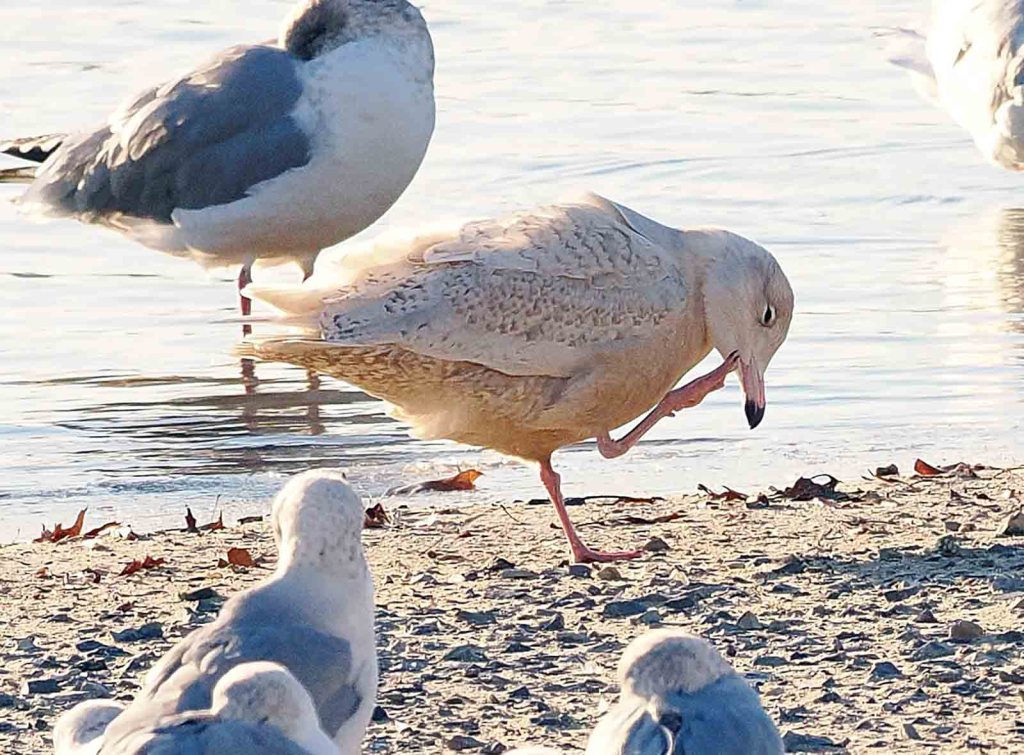
The past year was a below average one for bird species seen in Berks County as 244 were documented, which is eight species less than the 25-year average. In addition, only a few rare or unusual birds made an appearance.
The search for new species to be added to the historical account of birds in Berks is what motivates local birders to scour the hinterlands to find and confirm the first record of a bird species. Probably the most unusual happening was the appearance of five white pelicans at Lake Ontelaunee in June. These very large denizens of the lakes in the West can be found in large flocks but are not regular visitors in the East, the exception being in Florida where they can be found most years. This is only the second record for Berks as one was seen at Blue Marsh Lake in 2023.
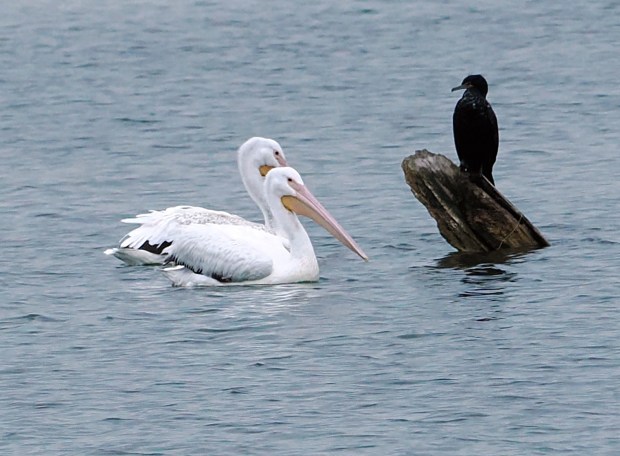 Two American white pelicans swim by a double-crested cormorant at Lake Ontelaunee. Five pelicans have made the lake their stopping-off place on June 10. (Courtesy of Russell Hoffman)
While not rare, an unusual sighting of an immature white ibis occurred at the spillway at Lake Ontelaunee. This species is regular along the Eastern seacoast but is unusual inland. This is only the second record for Berks. There was one seen at Blue Marsh in 2023.
Since the construction of Blue Marsh Lake and the appearance of multiple landfills in the county, rare and unusual sightings of a variety of species of gulls have occurred. These birds are referred to as gulls and not seagulls in ornithological language. There are 26 species of gulls in the North American continent north of Mexico, and many of these birds never see an ocean in their lifetime. They live and breed on the lakes and waterways inland, so the absence of sea in the name is appropriate.
Only one species of gull is considered common here and that is the ring-billed gull. During the winter it can be found around Blue Marsh Lake in the thousands. It is a medium-sized gull that travels to the garbage dumps during the day and roosts at the lake at night. The appearance of any species of gull other than the ring-billed creates an opportunity for local birders to add to their Berks County life list.
But, identifying gulls can be a daunting challenge due to the variety of plumages they progress through before attaining adulthood. The larger gulls do not attain adult plumage for four years and in the interim can look very different. Also winter and summer plumage can also vary. Smaller gulls take three years to achieve adulthood. These factors cause many birders to eschew gull watching.
In December, the appearance of four species of unusual gulls at Blue Marsh Lake caused many birders to seek out the beach in winter, where the birds usually congregate. The great black-backed gull is the largest of the species occurring in our area. It is usually found on the Eastern and Southern coasts but does visit areas with water inland where it scavenges for food. One was at Blue Marsh in late December.
The similar looking but smaller lesser black-backed gull also was here in December. Before the turn of the century, this European species was extremely rare in the U.S, but recently has become a regular visitor due to expanding breeding colonies.
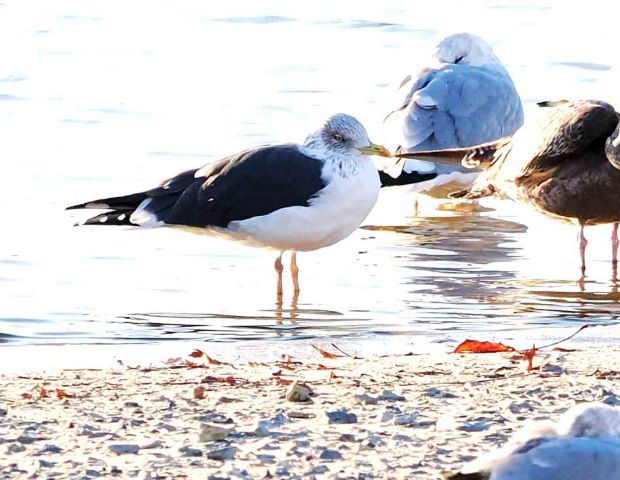 The lesser black-backed gull was once a rare visitor from Europe to Berks but has become more common after its breeding range extended. (Courtesy of Russell Hoffman)
The much sought-after to see Iceland gull arrived here in December and was still being seen in the new year. This bird is uniformly beige, including its tail feathers. The adult is very white with pale gray wings, limited streaking on head and yellow-green bill. This gull breeds in the Arctic and moves to the South in winter, rarely to the U.S.
Another pale gull from the north is the large glaucous gull. which also appeared at Blue Marsh in December. It was probably a first-year bird because of its overall beige coloration. This bird is a real treat to see as its regular range is northern and western Alaska and rare or uncommon elsewhere.
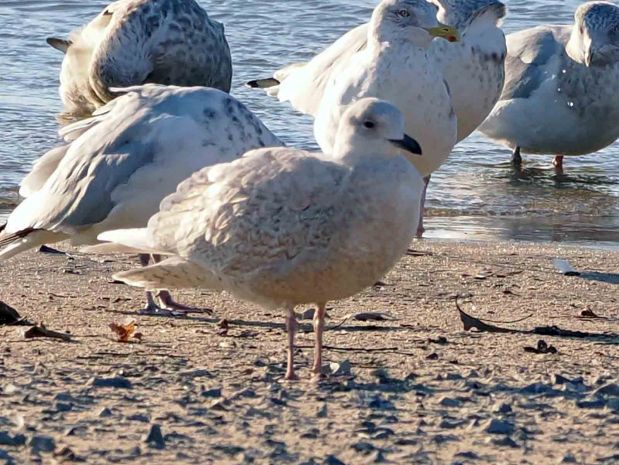 The Iceland gull is a rare visitor from the far North to Berks County at Blue Marsh Lake. (Courtesy of Russell Hoffman)
Besides the five gull species mentioned above, four more been seen locally at various times of the year, mainly during migration in spring or fall. Bonaparte’s gull has been the most numerous of these and can sometimes be seen in numbers when weather interrupts migration. This gull flies buoyantly and flashes its two-tone wing pattern. Little gull has occurred here three times this century at Blue Marsh and Ontelaunee. True to its name, it is our smallest gull and is a dainty flyer, identified by its gray underwings. It is a special treat to find locally.
At the seashore, the laughing gull is often seen as a pest because it tries to take food from people while they eat. Although this bird is frequently seen at the shore, it is rarely found in Berks. There have been only a few sightings in the county, some recently. Franklin’s gull has occurred here only a few times since 2000. This bird occurs mainly in the western U. S. and resembles laughing gull in appearance but is not as comfortable around humans.
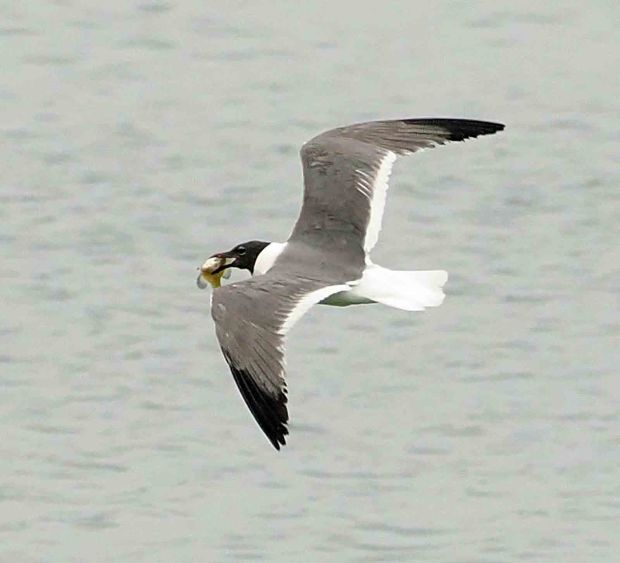 Although common along the Jersey shore, the laughing gull is a rare visitor to Berks at Blue Marsh Lake. )Courtesy of Russell Hoffman)
Gull watching in Berks County is a hit or miss proposition most of the time, but to increase your chances of success in seeing them, the local birders are happy to assist in this endeavor. See Baird Ornithological Club’s website for information at https://bairdornithological.club/.
Russell Hoffman is a member of the Baird Ornithological Club and an avid bird watcher and photographer.