

In early 2026, FirstEnergy’s Pennsylvania utilities filed a new Default Service Plan proposing revised electricity procurement, added consumer protections, and shorter Time‑of‑Use peak hours starting in 2027, subject to regulatory approval.
This filing is significant because it could reshape how default customers interact with competitive suppliers, potentially tightening guardrails around contract expirations and price clarity.
Next, we’ll consider how this proposed Pennsylvania Default Service Plan, particularly its enhanced consumer protections, may influence FirstEnergy’s broader investment narrative.
Rare earth metals are an input to most high-tech devices, military and defence systems and electric vehicles. The global race is on to secure supply of these critical minerals. Beat the pack to uncover the 29 best rare earth metal stocks of the very few that mine this essential strategic resource.
To own FirstEnergy, you need to be comfortable with a regulated utility whose story is driven less by breakneck growth and more by incremental earnings progress, grid investment and regulatory decisions. The Pennsylvania Default Service Plan proposal sits right in that wheelhouse: it aims to tweak how default power is procured, add consumer protections and adjust Time‑of‑Use windows from 2027, with approval expected by late 2026. In the near term, the filing itself does not appear to change the main catalysts, which remain execution on the multi‑year capex program, earnings delivery around the current guidance framework and regulatory outcomes in key states. Where it could matter is on risk: tighter guardrails for retail choice may trim supplier‑driven volatility for customers, but they also add another layer of regulatory scrutiny that shareholders will want to watch.
However, tighter consumer protections could still bring incremental regulatory and earnings uncertainty investors should understand. FirstEnergy’s share price has been on the slide but might be dropping deeper into value territory. Find out whether it’s a bargain at this price.
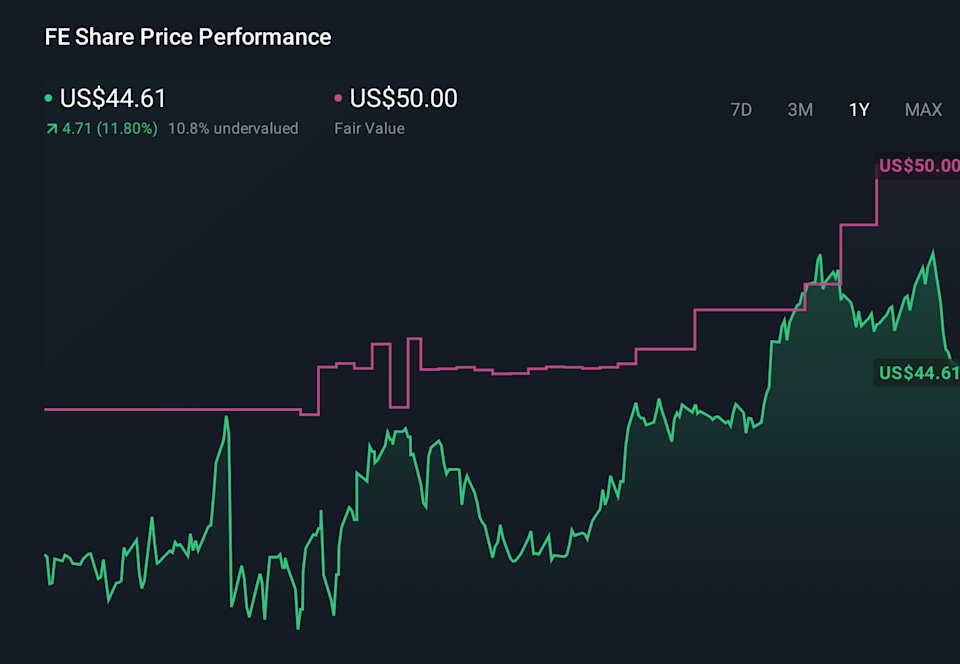 FE 1-Year Stock Price Chart
Two Simply Wall St Community fair value estimates span about US$29 to about US$50, underlining how far apart individual views can sit. Set that against the regulatory and earnings catalysts discussed above and it becomes clear why many readers may want to weigh several perspectives before forming a view on FirstEnergy’s prospects.
Explore 2 other fair value estimates on FirstEnergy – why the stock might be worth 38% less than the current price!
Disagree with this assessment? Create your own narrative in under 3 minutes – extraordinary investment returns rarely come from following the herd.
Opportunities like this don’t last. These are today’s most promising picks. Check them out now:
This article by Simply Wall St is general in nature. We provide commentary based on historical data and analyst forecasts only using an unbiased methodology and our articles are not intended to be financial advice. It does not constitute a recommendation to buy or sell any stock, and does not take account of your objectives, or your financial situation. We aim to bring you long-term focused analysis driven by fundamental data. Note that our analysis may not factor in the latest price-sensitive company announcements or qualitative material. Simply Wall St has no position in any stocks mentioned.
Companies discussed in this article include FE.
Have feedback on this article? Concerned about the content? Get in touch with us directly. Alternatively, email editorial-team@simplywallst.com