
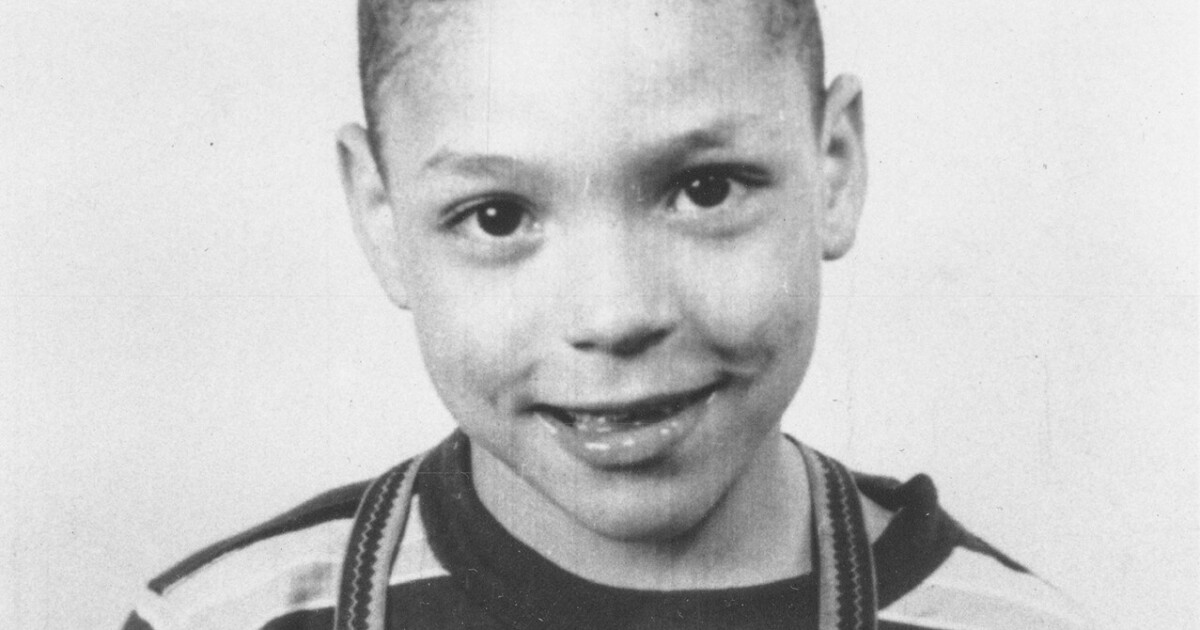
August Wilson is among Pittsburgh’s most honored sons. Famously, nine of the 10 “American Century Cycle” plays that together define his artistic legacy were set in the Hill District, where he was born and began his theater career. He and his plays have been written about extensively.
What more could there be to say about Pittsburgh’s impact on August Wilson?
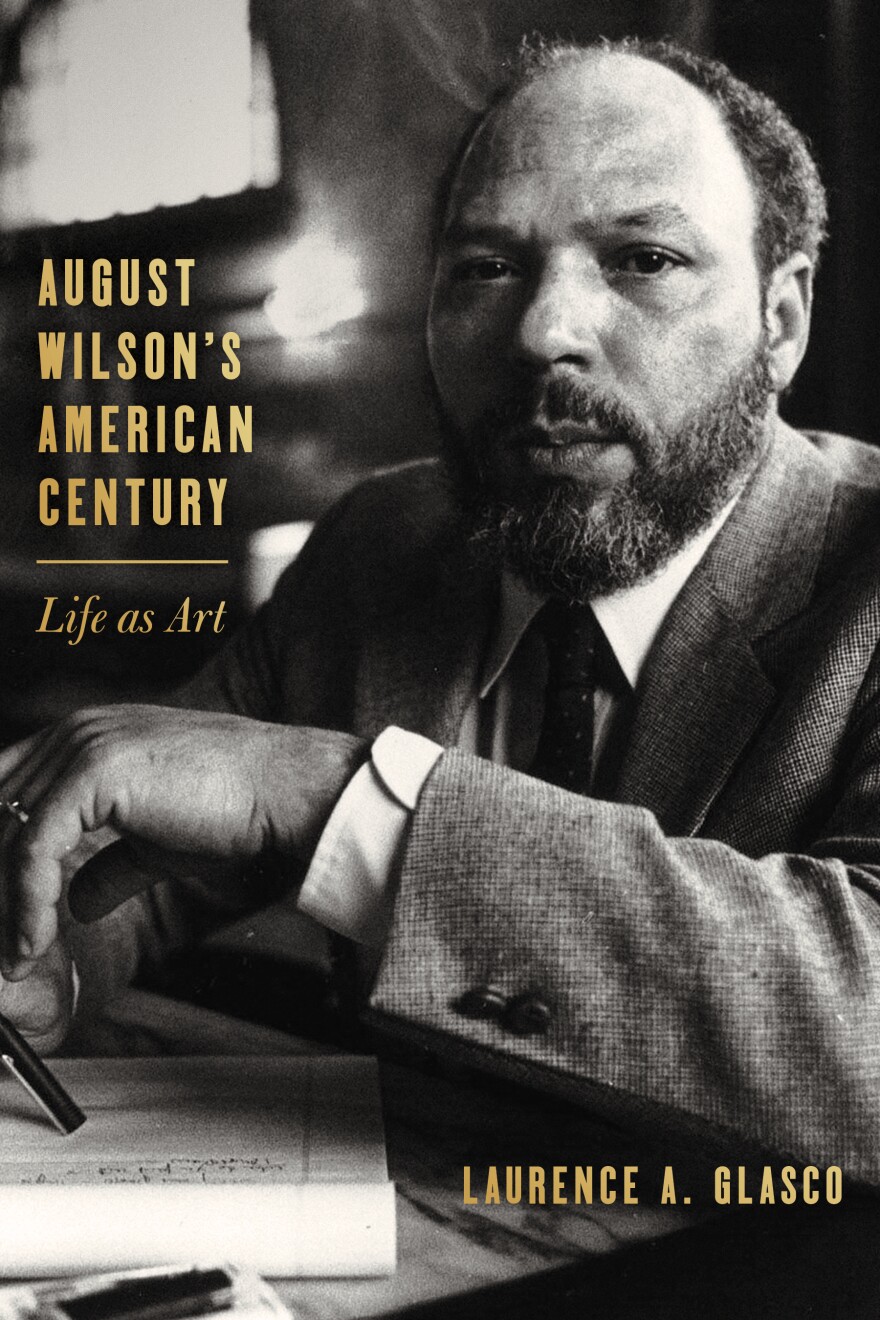
A good deal more, as Laurence A. Glasco demonstrates in his new biography, “August Wilson’s American Century: Life As Art” (University of Pittsburgh Press).
At home in the Hill

Frank F. Hightower Photograph Collection
/
University of Pittsburgh Press
In a 1968 photo, Wilson poses amidst the burnt remains of the Hill District’s Mainway Market, torched in the riots following the assassination of Martin Luther King Jr.
Most writing on Wilson focuses, understandably, on his years as the Pulitzer Prize-winning playwright of “Fences” and “The Piano Lesson.” Such was the case with “August Wilson: A Life,” the acclaimed 2023 book that was the first major biography of the man, by former Boston Globe theater critic Patti Hartigan.
More than half of Glasco’s book, by contrast, is devoted to the nearly 33 years Wilson spent in Pittsburgh before leaving for good, for St. Paul, Minn., in 1978, when he was still finding his feet as a playwright.
Glasco, a University of Pittsburgh history professor emeritus, has been working on the book for well over a decade. As an expert in the history of Black Pittsburgh (he edited the 2004 book “The WPA History of the Negro in Pittsburgh”), he’s well-suited to the task. In the new book, he produces fresh insights into Wilson’s childhood, his personality and his development as an artist.
Especially striking is Glasco’s portrait of Wilson’s time in the Hill as a young man, starting in 1965. After living in that neighborhood until age 13, Wilson moved with his mother and siblings to Hazelwood, then served in the Army. The year he turned 20, he moved back to the Hill, bought a typewriter and declared himself a poet.
Glasco devotes multiple full chapters to the next several years, when Wilson was just one part of a vibrant, Black-led arts and social scene that revolved around Centre Avenue.
“Wilson wasn’t a lone bird singing to himself outside,” said Glasco. “There were talented writers, musicians, artists all around him. It was a very rich cultural venue that he could draw on.”
The scene revolved in part around a venue called the Halfway Art Gallery. Key figures included fellow poets Rob Penny, Nick Flournoy, Maisha Baton and Charlie P. “Chawley” Williams, who with Wilson collectively called themselves the Poets in the Centre Avenue Tradition. Visual artists included Ed Ellis and Carl “Dingbat” Smith.
While many participants in that scene have died, at least two remain prominent in Pittsburgh today: the civil-rights activist and future City Councilor Sala Udin and nationally known sculptor Thad Mosley.
Wilson was independent-minded and could seem something of an outsider even among friends. But it was in such company that Wilson discovered the era’s Black Arts Movement and — at the urging of Penny, especially — took his first steps into theater and playwriting.
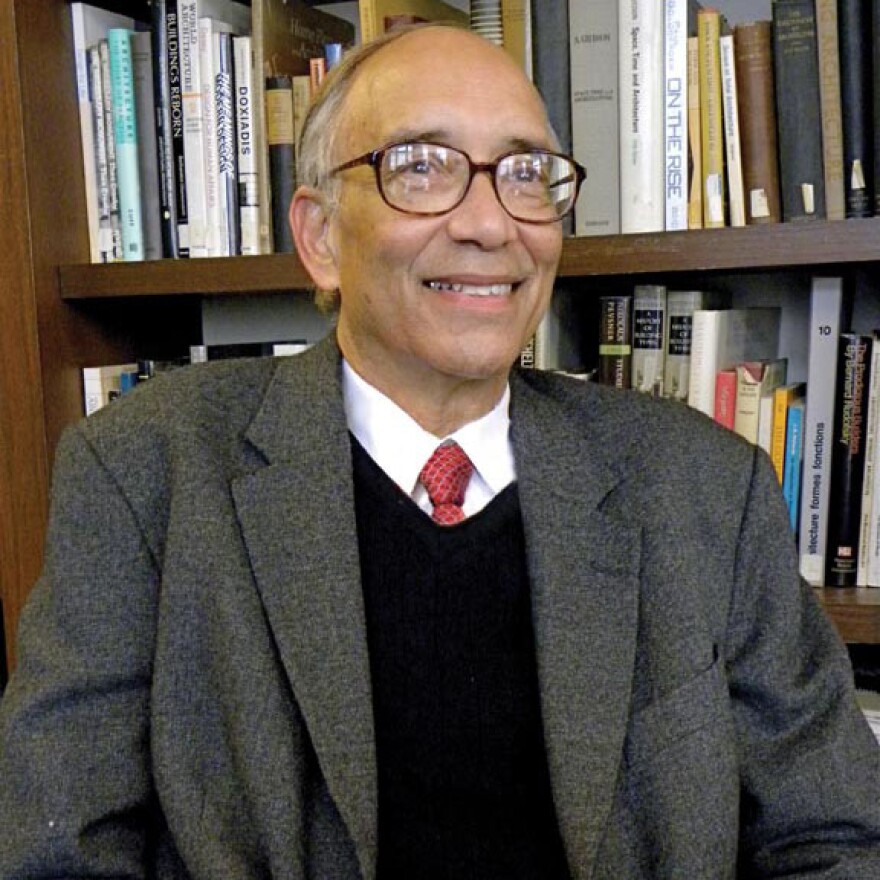
University of Pittsburgh Press
Laurence A. Glasco
Glasco also provides fine-grained detail about Wilson’s formative, if sometimes peripheral, involvement with Pitt’s then-new Black Studies Department, where Penny taught, and with Black Horizons Theater, which the two men helped found. It was in this milieu, starting in the 1970s, that Wilson began to forego the often obscure, avant-garde style that characterized his early poetry and to explore a more straightforward approach.
Glasco emphasizes that the Hill itself, as a neighborhood, was crucial to Wilson’s artistic apprenticeship. While urban-renewal schemes had flattened the Lower Hill, Glasco shows that the Centre Avenue corridor remained a lively commercial and cultural strip — perfect for a young poet who loved watching people and overhearing how they talked.
“August always often talked about how exciting it was to walk down Centre Avenue,” Glasco said. “It was just bustling full of people, parents with their children, guys on dates with their girlfriends, and things like that. So it was a very lively setting for somebody like him.”
Fathers and sons
Glasco shows how Wilson drew characters, storylines and dialogue from such experiences. He also mines new sources of information about Wilson’s childhood, when he lived in an apartment in the Bedford Avenue building that’s since been restored as the August Wilson House.
Glasco interviewed Julia Burley, a former neighbor who was the best friend of Wilson’s mother, Daisy, and was married to the prizefighter Charlie Burley.
“The Wilson kids practically lived across the street with the Burleys,” Glasco said. “Charlie Burley was the neighborhood hero. He was the great boxer of all time, and Wilson was just floored that he would be friends with him. And Charlie Burley served really as a substitute father for Wilson as he was growing up.”
Wilson’s father, August Kittel, was an alcoholic who was married to another woman and not around much. But Glasco depicts the relationship between Kittel and his future-playwright son (born Frederick August Kittel) as complex.
“His father on Saturday mornings would take August and another of his brothers and they would go to the Oyster House restaurant Downtown and August and his brother would sit at the same table,” said Glasco. “And he loved it so much that years later when he came back to Pittsburgh, he always went to the Oyster House restaurant and he’d sit at the same table that he had sat in.”
Later chapters of “August Wilson’s American Century” trace Wilson’s move to St. Paul, the years it took to complete his first mature play, “Jitney,” and his rise to Broadway fame and accolades as a man who forever changed the way Black life is depicted on stage.
But Pittsburgh is never far from the spotlight. For instance, while Wilson truly found his voice with “Jitney” only after leaving town, it was that play’s premiere production, staged here in 1982 by the Allegheny Repertory Theatre, that gave him his first real success as a playwright and set the template for his future work centering everyday Black life.
A growing legacy
Glasco said he began work on the book not long after Wilson’s death, in 2005, as a collaboration by Chris Rawson, the long-time Pittsburgh Post-Gazette theater critic and a good friend of Wilson’s. But Rawson eventually dropped out of the project, Glasco said.
The book tracks Wilson through his funeral, at Soldiers and Sailors Memorial Hall, and brings the story of his legacy practically up to the minute, with the opening of the August Wilson House and the expansive permanent exhibit “August Wilson: The Writer’s Landscape,” at his namesake August Wilson African American Cultural Center, and the arrival of the August Wilson Archives at Pitt.
Among those Glasco interviewed about Wilson’s legacy is Mark Clayton Southers, the Hill District native who met Wilson in the ’90s, studied with him, and went on to produce all 10 of the Century Cycle plays through his Pittsburgh Playwrights Theatre Co.
Southers said he had not yet read Glasco’s book, but told WESA that its focus on Wilson’s Pittsburgh roots is apt.
“I think that is extremely important and I think it’s very interesting for people who just can’t get enough of August Wilson,” he said.