
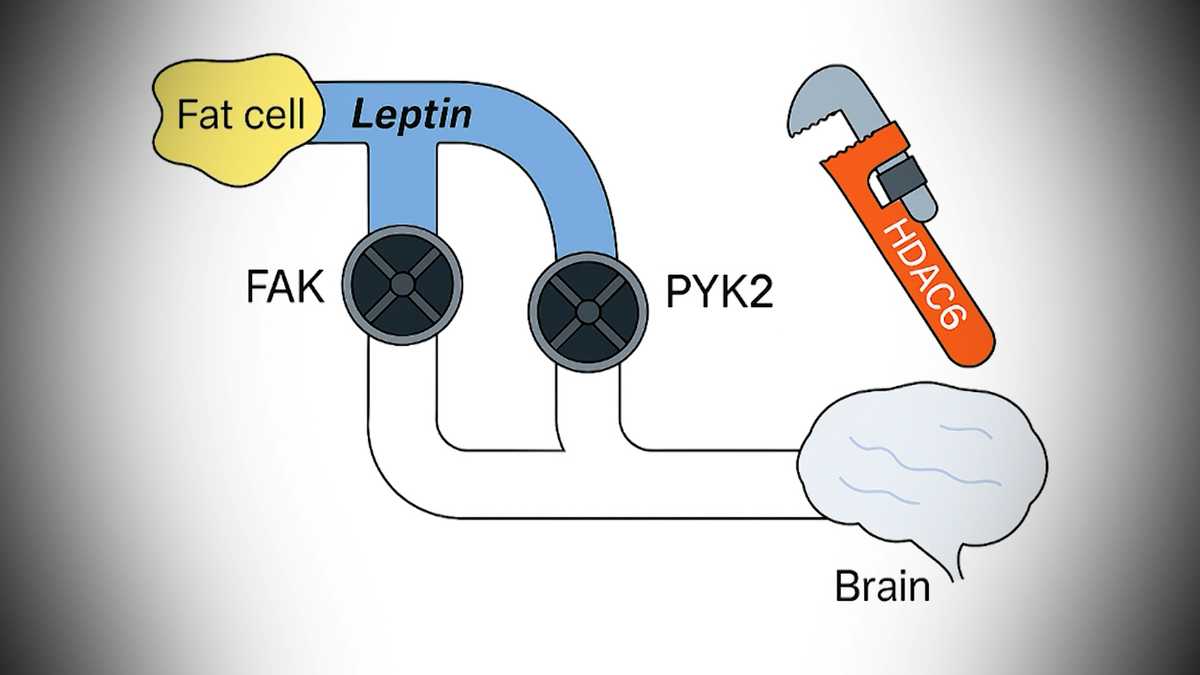
SOME PETS WERE RESCUED FROM HOMES. ALL NEW AT FIVE. AND FOR YOUR HEALTH, THE MEDICAL RESEARCHERS AT THE UNIVERSITY OF PITTSBURGH ARE AT IT AGAIN. THEY PUBLISHED RESEARCH LAST WEEK FOCUSING ON A WAY TO DEVELOP NEW WEIGHT LOSS MEDICATION. YEAH, ANDREW, I HAD TO GO BEHIND THE SCENES INTO THE LAB LED BY DOCTOR CHECKER. HIS TEAM STRETCHES REALLY ACROSS THE WORLD, BUT THE RESEARCH HEADQUARTERS IS RIGHT HERE IN PITTSBURGH. DOCTOR CHECKER AND HIS TEAM STUDY METABOLISM AT THE UNIVERSITY OF PITTSBURGH. CALLS WHAT THEY JUST PUBLISHED A BREAKTHROUGH IN THE SEARCH FOR SAFER AND MORE EFFECTIVE OBESITY DRUGS. AND THEY MADE THIS PLUMBING GRAPHIC TO SIMPLIFY DOCTOR CHECKERS SCIENCE. LEPTIN IS A HORMONE THAT MAKES YOUR BRAIN FEEL FULL. PATIENTS WITH OBESITY SOMETIMES HAVE LEPTIN RESISTANCE. THE LEPTIN JUST ISN’T GETTING THROUGH. DOCTOR. CHECKER. ISOLATED TWO ENZYMES CALLED HDAC6 THAT WORK LIKE A WRENCH TO OPEN THE VALVE, LETTING THE LEPTIN FLOW. AND THERE’S OTHER DRUGS THAT WORK ON BASICALLY BREAKS THE RESISTANCE. SO YOUR BRAIN AGAIN BECOMES RESPONSIVE TO LEPTIN. AND YOU START EATING LESS AND LOSING WEIGHT. THESE SCIENTISTS DO THIS WORK BECAUSE WHILE GLP ONE BASED DRUGS HAVE HELPED MILLIONS OF PEOPLE, THEY’RE NOT PERFECT. GLP ONE BASED DRUGS DON’T WORK IN EVERYONE. THEY OFTEN CREATE SIDE EFFECTS LIKE NAUSEA AND CRAMPS, AND GLP ONE REDUCE LEAN MUSCLE MASS, NOT JUST FAT. THERE’S THIS CLASS OF DRUGS WE WORK WITH, AT LEAST AGAIN IN RODENTS. THE WEIGHT LOSS IS ALMOST EXCLUSIVELY FROM THE FAT, SO ANIMALS LOST ABOUT 50% OF THEIR FAT MASS DURING TREATMENT. AND THEY LEAN MASS, WHICH IS MOST OF THE MUSCLE MASS, DIDN’T CHANGE BEFORE OR AFTER TREATMENT, WHICH IS A BIG PLUS. AND AGAIN, IF THE SAME THING APPLIES TO HUMANS, IT’S GOING TO BE VERY IMPORTANT. IN HUMANS. THE RESEARCH INDICATES THE COMPOUNDS COULD BE USED IN COMBINATION WITH OTHER MEDICINE AND AT MUCH LOWER DOSES, REDUCING SIDE EFFECTS AND INCREASING THE PATIENT POPULATION THAT CAN TOLERATE AND BENEFIT FROM WEIGHT LOSS. MEDICINE. H HDAC6 INHIBITORS MAY HELP PATIENTS WITH OTHER MEDICAL CHALLENGES, INCLUDING. NEURODEGENERATIVE MUSCLE DYSTROPHY AND CARDIOVASCULAR DISEASE, ALONG WITH CANCER AND ANOREXIA. SO YOUR WORK AND YOUR TEAM IS THIS COULD GO WAY BEYOND WEIGHT LOSS. AND I THINK SO, YEAH, IF EVERYTHING GOES AS PLANNED AND IF, YOU KNOW HUMAN PHYSIOLOGY MIMICS RODENTS, IT DOESN’T ALWAYS FIT. BUT SURE I THINK OF NEURODEGENERATIVE DISEASES LIKE ALS. ALS IS ONE OF THEM. ALZHEIMER’S. YES. MAYBE BEYOND WEIGHT LOSS, OF COURSE. HOPEFULLY. THE RESEARCH WAS PUBLISHED IN NATURE COMMUNICATIONS LAST WEEK. THAT JOURNAL. IT WILL BE SOME TIME BEFORE THIS RESEARCH COULD POSSIBLY LEAD TO ANY NEW DRUGS ON THE MARKET TO FIGHT OBESITY. DOCTOR C
University of Pittsburgh researchers reveal new approach to obesity drug development

Updated: 6:34 PM EST Feb 9, 2026
Medical researchers at the University of Pittsburgh published findings that could lead to the next generation of weight-loss medication.Dr. Isin Cakir and his team published a paper in the journal Nature Communications. The research focuses on leptin, a hormone that makes you feel full.Patients with obesity sometimes have leptin resistance, and the “full” feeling does not get through to the brain.The new research isolates two enzymes, FAK and PYK2, that act like valves preventing the flow of leptin. It also indicates that a gene inhibitor can act like a wrench, opening those valves.”And these drugs that we work on basically break this resistance, so your brain again becomes responsive to leptin, and you start eating less and losing weight,” Cakir said.The Pitt scientists do this research because GLP-1-based drugs, which have helped millions of people, are not perfect. The drugs do not work for everyone and often cause side effects like nausea and cramps. Additionally, GLP-1 drugs reduce lean muscle mass, not just fat.”In this class of drugs we work with — this again, in rodents — the weight loss is almost exclusively from the fat, so animals lost about 50% of their fat mass in treatment,” Cakir said. “And the lean mass, which is most of the muscle mass, didn’t change before or after treatment, which is a big plus. And again, if the same thing applies to humans, it’s going to be very important.”Cakir said it will be some time before this research leads to any possible new drug on the market, but it’s a step in that direction.
PITTSBURGH —
Medical researchers at the University of Pittsburgh published findings that could lead to the next generation of weight-loss medication.
Dr. Isin Cakir and his team published a paper in the journal Nature Communications. The research focuses on leptin, a hormone that makes you feel full.
Patients with obesity sometimes have leptin resistance, and the “full” feeling does not get through to the brain.
The new research isolates two enzymes, FAK and PYK2, that act like valves preventing the flow of leptin. It also indicates that a gene inhibitor can act like a wrench, opening those valves.
“And these drugs that we work on basically break this resistance, so your brain again becomes responsive to leptin, and you start eating less and losing weight,” Cakir said.
The Pitt scientists do this research because GLP-1-based drugs, which have helped millions of people, are not perfect. The drugs do not work for everyone and often cause side effects like nausea and cramps. Additionally, GLP-1 drugs reduce lean muscle mass, not just fat.
“In this class of drugs we work with — this again, in rodents — the weight loss is almost exclusively from the fat, so animals lost about 50% of their fat mass in treatment,” Cakir said. “And the lean mass, which is most of the muscle mass, didn’t change before or after treatment, which is a big plus. And again, if the same thing applies to humans, it’s going to be very important.”
Cakir said it will be some time before this research leads to any possible new drug on the market, but it’s a step in that direction.