
Nearly five years after former President Joe Biden’s infrastructure law promised expanded broadband access for rural communities, many areas are still waiting to see progress.
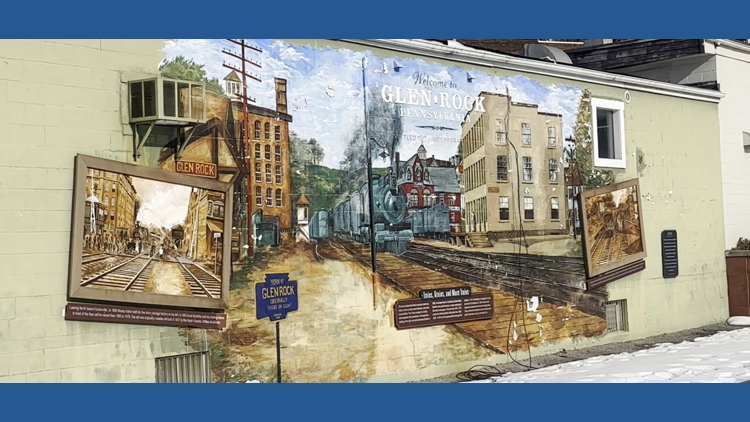
In York County, communities like Glen Rock are among those still struggling without reliable high-speed internet.
Ali Collier, who owns Main Street Market in Glen Rock, said she and her neighbors find it difficult to keep up without dependable service.
“We’ve been told that there will be no broadband access coming to our street, so not enough of us live out there,” Collier said. “When my son has to work from home for school, you have to decide who gets to go to what meeting, sharing internet access, and we don’t actually get great cell reception out there either. So, I can’t check my social media. They can’t work or do anything from there.”
Some help may be on the way, as the National Telecommunications and Information Administration released $711 million in funding Tuesday through the federal Broadband Equity, Access, and Deployment (BEAD) Program. The money had been earmarked since former President Biden’s infrastructure law but had been reduced and delayed over the last four-plus years.
U.S. Sen. Dave McCormick announced the funding, calling it a game changer for rural communities. York County President Commissioner Julie Wheeler said the waiting game for York and other counties may finally be nearing an end.
“We finally know something is coming,” Wheeler said. “We don’t know the exact amounts yet. We do know that some of the funding is going to be diverted to companies who provide satellite access versus fiber in the ground access. But the fact that the decision has been made and funding is actually now going to flow to the counties is a good thing.”
The funding will likely go to internet providers, which would then invest in expanding service to rural communities like the Glen Rock area, as well as southeastern and western York County.
Both Collier and Wheeler said expanded broadband would open new opportunities for businesses and families alike.
“If I put my shoes in the role of a parent who’s got a student in school, the inability for them to get internet at their house means that they’ve got to go to a library, maybe to a convenience store,” Wheeler said. “They have to move from their home to go somewhere else where they can get access to the internet to do their homework. So, that creates a challenge for parents, for any resident.”
“It would be great if we had broadband, and it would make things a lot easier for small business owners and everybody,” Collier said.