
Scott Lewis had a last wish. The passionate gardener wanted to see the Philadelphia Flower Show. He was also passionate about his elderly pug, Maui. A day trip would have been too hard on Lewis, and an overnight stay in a kennel would have been too hard on Maui.
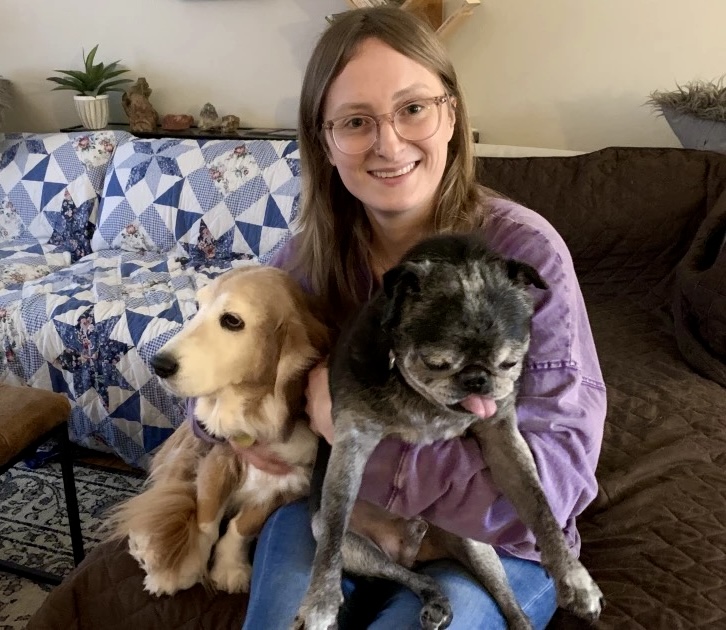
So Maui went home with an Allied Services Hospice & Palliative Care Pet Peace of Mind volunteer. Rebecca Farrell carried Maui up and down stairs and let the dog sleep in her bed.
“He liked walks, so we went for a walk every day and he had a little raincoat,” Farrell said.
Lewis was so energized by the floral displays that he often got out of his wheelchair for a better look. “He did so well,” said his widow, Cheryl. “It was like he just pushed himself.” He bought a few orchids to add to a collection of dozens. “He loved flowers,” she said.
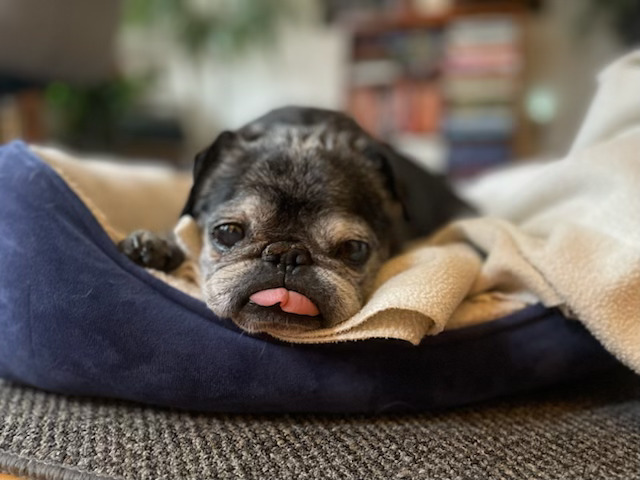
Maui was an elderly pug who belonged to Scott and Cheryl Lewis, of Dalton. Allied Services Hospice & Palliative Care Pet Peace of Mind program brought comfort to Scott at the end of his life. The dog has also since died. (COURTESY OF ALLIED SERVICES)
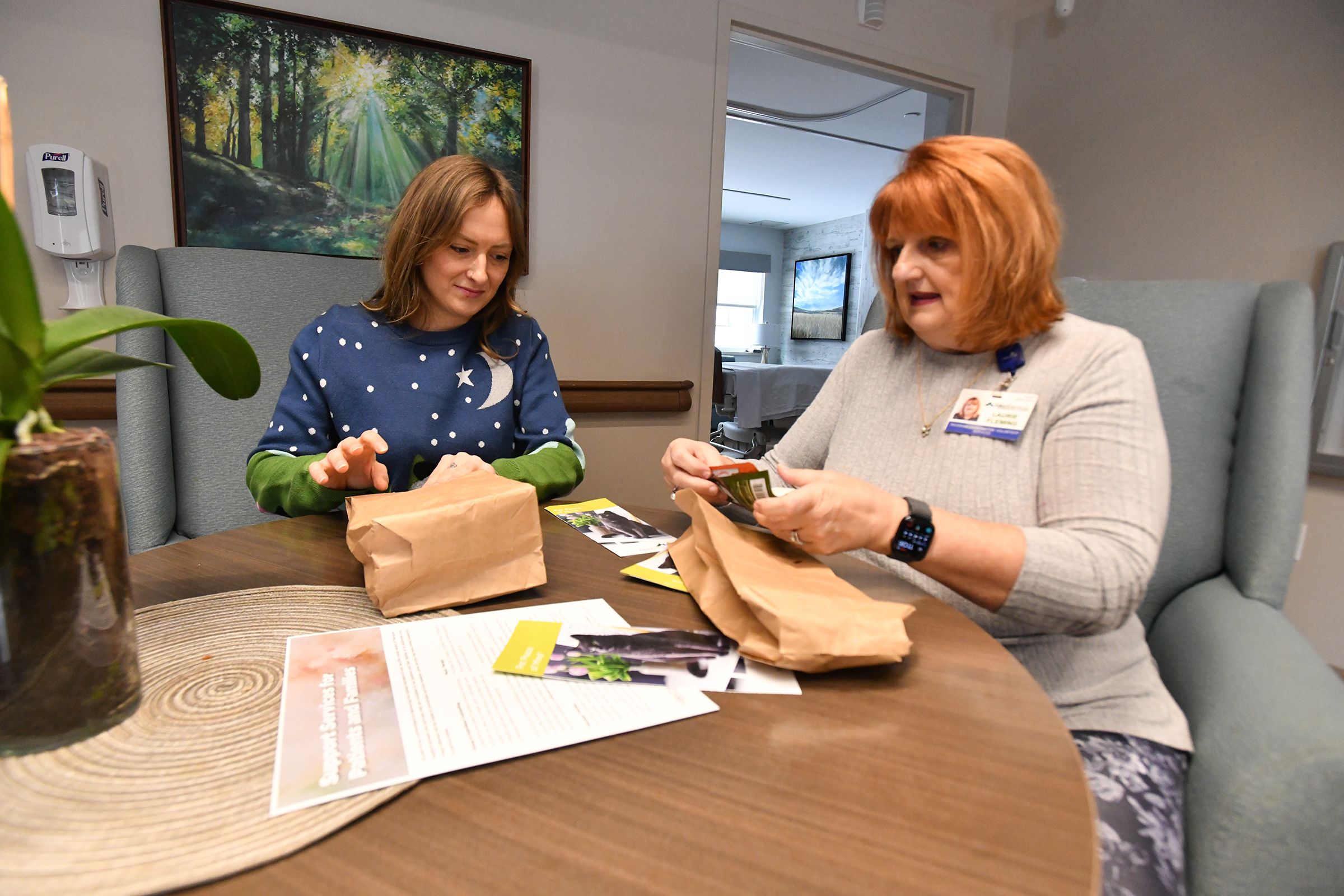
Volunteer Rebecca Farrell and volunteer director for Allied Services Hospice Laurie Fleming assemble materials for the Pet Peace of Mind program at Allied Services Hospice Center in Scranton Monday, January 19, 2026. (SEAN MCKEAG / STAFF PHOTOGRAPHER)
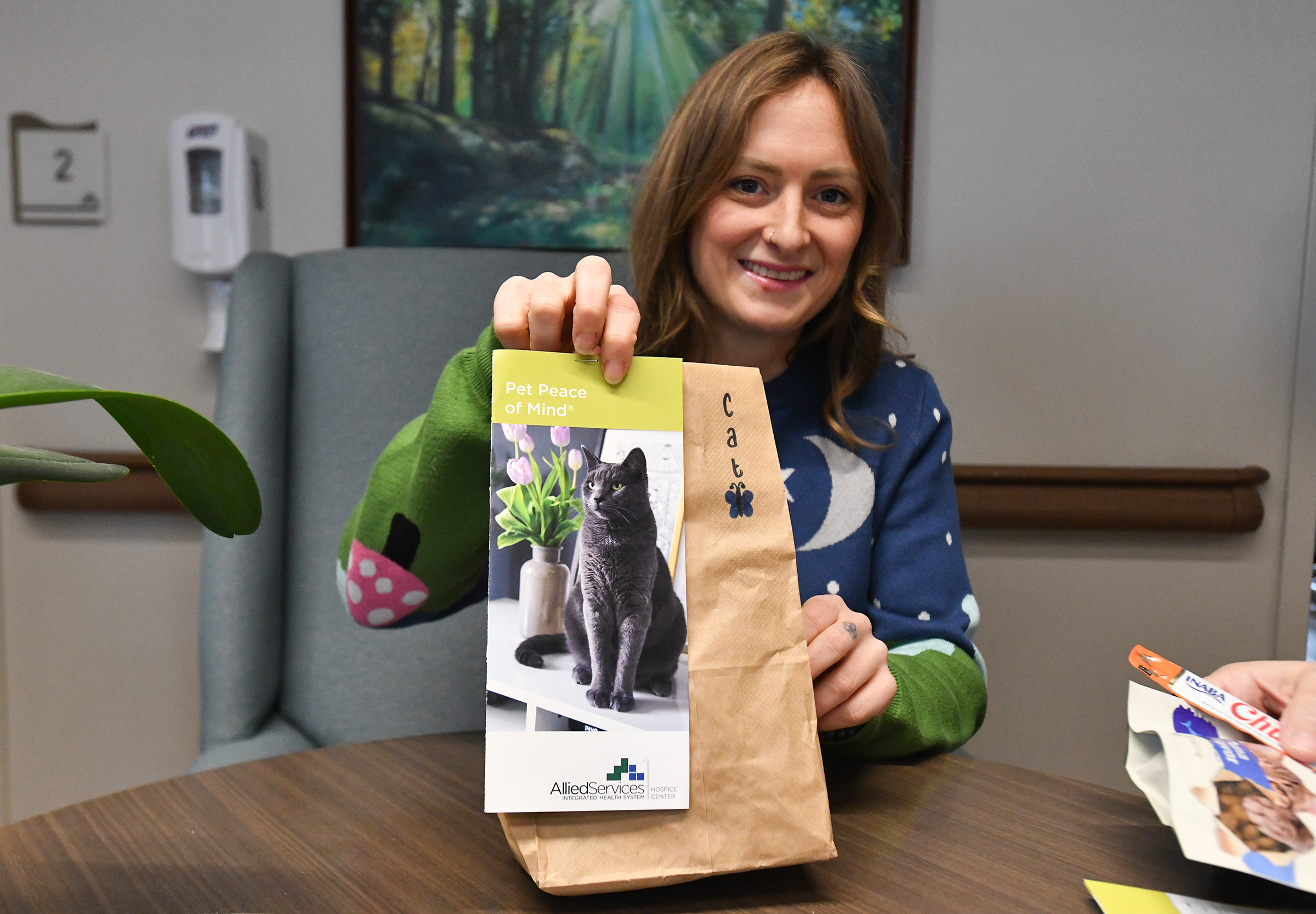
Volunteer Rebecca Farrell holds up a brochure attached to a pet care package for the Pet Peace of Mind program at Allied Services Hospices Center in Scranton Monday, January 19, 2026. (SEAN MCKEAG / STAFF PHOTOGRAPHER)
Show Caption
1 of 3
Maui was an elderly pug who belonged to Scott and Cheryl Lewis, of Dalton. Allied Services Hospice & Palliative Care Pet Peace of Mind program brought comfort to Scott at the end of his life. The dog has also since died. (COURTESY OF ALLIED SERVICES)
The 71-year-old Dalton grandfather died 10 weeks later, in May 2024. Maui and the orchid collection were both mentioned in his obituary.
“It meant a lot,” Cheryl Lewis said. Farrell later took care of Maui again.
Through Pet Peace of Mind, an Allied hospice patient can receive help with most pet needs. The first home they visited had flea-infested cats. Volunteers will walk dogs, scoop kitty litter and arrange visits to an inpatient unit. The program can arrange for vet care and sometimes covers the cost, if needed. Volunteers might drop off pet food for a family in need.
In the end, it can help find new homes when a patient or their survivors can no longer care for a pet.
“We will help them to do that, and that gives them peace of mind, to let go, to be able to move on,” said Laurie Fleming, the hospice program’s coordinator of volunteer services. “Because some people won’t be able to do that, knowing that Fluffy isn’t going to be taken care of.”
Fleming has seen it several times. One family came to their mother’s bedside with the news that her cat had a new home. “That night she went, because she knew she could, because the cat was being taken care of,” Fleming said.
No one knew it at the time, but the woman had left money in her will to go to whoever adopted the cat.
The “rehoming” efforts are handled by animal welfare groups, not directly by Allied Services. Over four years, eight dogs and 37 cats have benefited. The groups found a prospective home for two birds, but they ended up elsewhere.
Peace of Mind pets have advantages over other animals up for adoption. The program covers the adoption fees charged by most shelters. New owners take them home for free, and know that the animal is spayed or neutered and up to date on veterinary care. “A person doesn’t have to do a thing but come and love that pet,” Fleming said.
Fleming didn’t grow up around pets. “I have learned so much, and I have learned that pets are just as much of a family member as a human being is to that family,” she said. “It’s amazing.”
In his final days, Kenny Weaver of Pittston was glad that Presley, a spaniel, was booked to be neutered. Weaver had made a four-hour-long drive to pick up Presley as a surprise 50th birthday gift for his partner, Cindy Guthrie. Then his illness made dog care difficult.
Weaver died prior to the surgery. Guthrie was relieved when Pet Peace of Mind followed through with the neutering. “The people were wonderful,” Guthrie said.
The program is solely for Allied’s hospice patients, whether they live at home or in a facility. Other Allied patients and residents are not eligible.
For four years, the cost has been covered by a $10,500 grant from the Robert H. Spitz Foundation, which is managed by the Scranton Area Community Foundation. Allied is reapplying. It also takes donations.
How it works
The Allied Services Hospice & Palliative Care Pet Peace of Mind program provides support for their patients with pets. Both patients living at home and in health care facilities are eligible, but it is for hospice patients only. For information on receiving help, volunteering or donating, contact Laurie Fleming at Lflemi@allied-services.org or 570-341- 4320.