
At 2 p.m. on a chilly January afternoon, the elementary floor of the Clairton City School District’s building was a buzzing “Beartopia.”

Six months after the fatal coke works blast, with a new mayor and a new owner at U.S. Steel, the industrial Mon Valley’s City of Prayer contemplates its future.
The name nods to Clairton’s Bears — a district long known for its powerhouse football program — but this version of Bear pride is built around leadership, responsibility and imagination.
Students were out in the hallways, rushing between classes. Each classroom had put up signs outside, saying things like “Paws and Pages,” “Paper Purveyors” and “Enchanted Expressions.”
What looks playful on the surface is carefully structured. The school had transformed into “Beartopia” — a world run by students in which each classroom is a business venture. Fifth graders are all managers and bookkeepers, overseeing daily operations.
Fifth-grader Orchidee Augustave was overseeing her assistants as they cleaned and stacked books for their venture, Paws and Pages. The school does not have a librarian and instead of hiring one, they decided to reimagine their library system by integrating it into MicroSociety and having students take on some duties.
“I give my assistants ideas, help them and sometimes get ideas from them,” Augustave said.
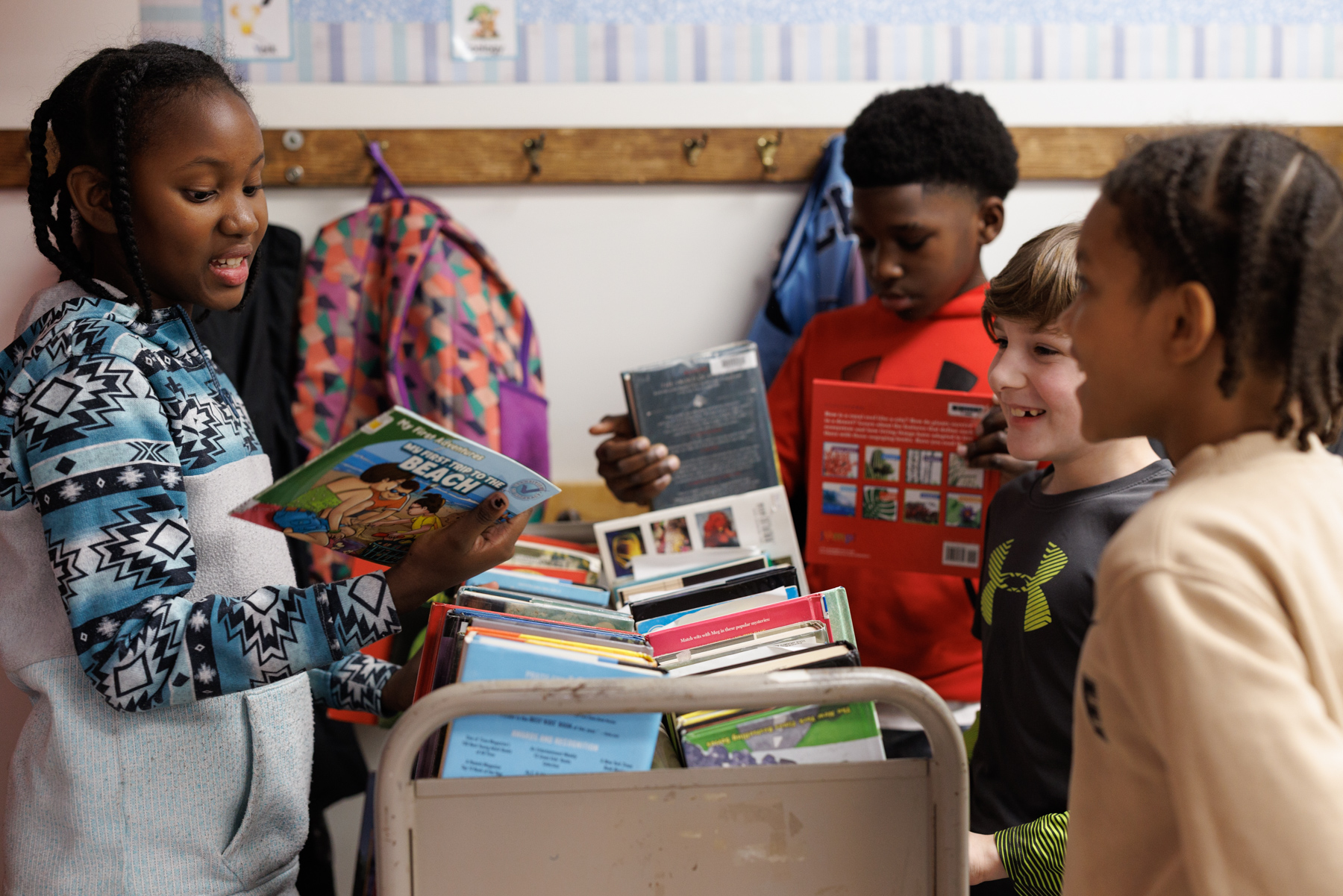 Fifth-grader Orchidee Augustave (left) works with her classmates to clean and stack books for their MicroSociety venture, Paws and Pages, at Clairton Education Center in Clairton on Jan. 22. (Photo by Quinn Glabicki/Pittsburgh’s Public Source)
Beartopia has its own president, vice president, treasurer and secretary — all elected. It’s a society with a judicial system, a security force and a bank. Each grade functions as a state with an elected governor, and each homeroom is a city with an elected mayor. Fifth graders take leadership roles and mentor younger students.
Beartopia was launched at the beginning of this school year at Clairton Elementary as a MicroSociety initiative through nonprofit MicroSociety Inc. Clairton is the only public school district in the state that has adopted this model. The goal is to teach students leadership, teamwork and confidence, and prepare them for the real world by applying for jobs, passing laws and launching businesses.
“It’s giving students the voice and choice,” said Debra Maurizio, principal of Clairton Elementary.
Beartopia unfolds just two-thirds of a mile from the hulking, smoky Clairton Coke Works.
It exists in a district that has long sealed its legacy as a sports school. The Clairton Bears hold a state record for 66 consecutive wins in Pennsylvania high school football between 2009 and 2013. The team clinched its 15th WPIAL championship title in the 2025 season.
It’s giving students the voice and choice.Debra Maurizio, principal of Clairton Elementary.
Academically, the district is one of the 69 lowest-performing districts in the state. Today, as the city attempts to turn a corner after the sale of its biggest business and a tragic explosion, its 793-student school district is searching for creative ways to inspire scholarship.
Beartopia is one piece of that effort. The district is also seeking to expand offerings in arts and STEM courses. Clairton’s per-pupil funding of $21,235 compares to a countywide median of $24,658. To fill the gap, it has partnered with community organizations to offer programs such as coding, robotics and after-school tutoring.
“Through our staff, we try to give our students reasons to come to school,” said Superintendent Tamara Allen-Thomas. “That’s why we’re doing the MicroSociety. That’s why we’re doing the STEM. We’re trying to make sure that learning is relevant for students.”
Building STEAM education
On a recent Thursday, fourth-grade students spent their morning learning about types of energy through hands-on engineering. Using VEX Robotics GO kits, student teams built a robotic pendulum and applied the laws of energy by knocking down domino tiles. The activity also taught them problem-solving and coding through structured design challenges, plus collaboration and perseverance.
Class teacher Tracy Lindsey, a 1988 Clairton graduate who has taught in the district since 1997, said she has seen a noticeable shift in teaching and learning in recent years. With the integration of STEAM courses, the focus has moved from textbook-based instruction to building critical thinking skills.
“We’re seeing that now [students] are connecting ideas, that they can see how this is all going to relate to each other,” she said.
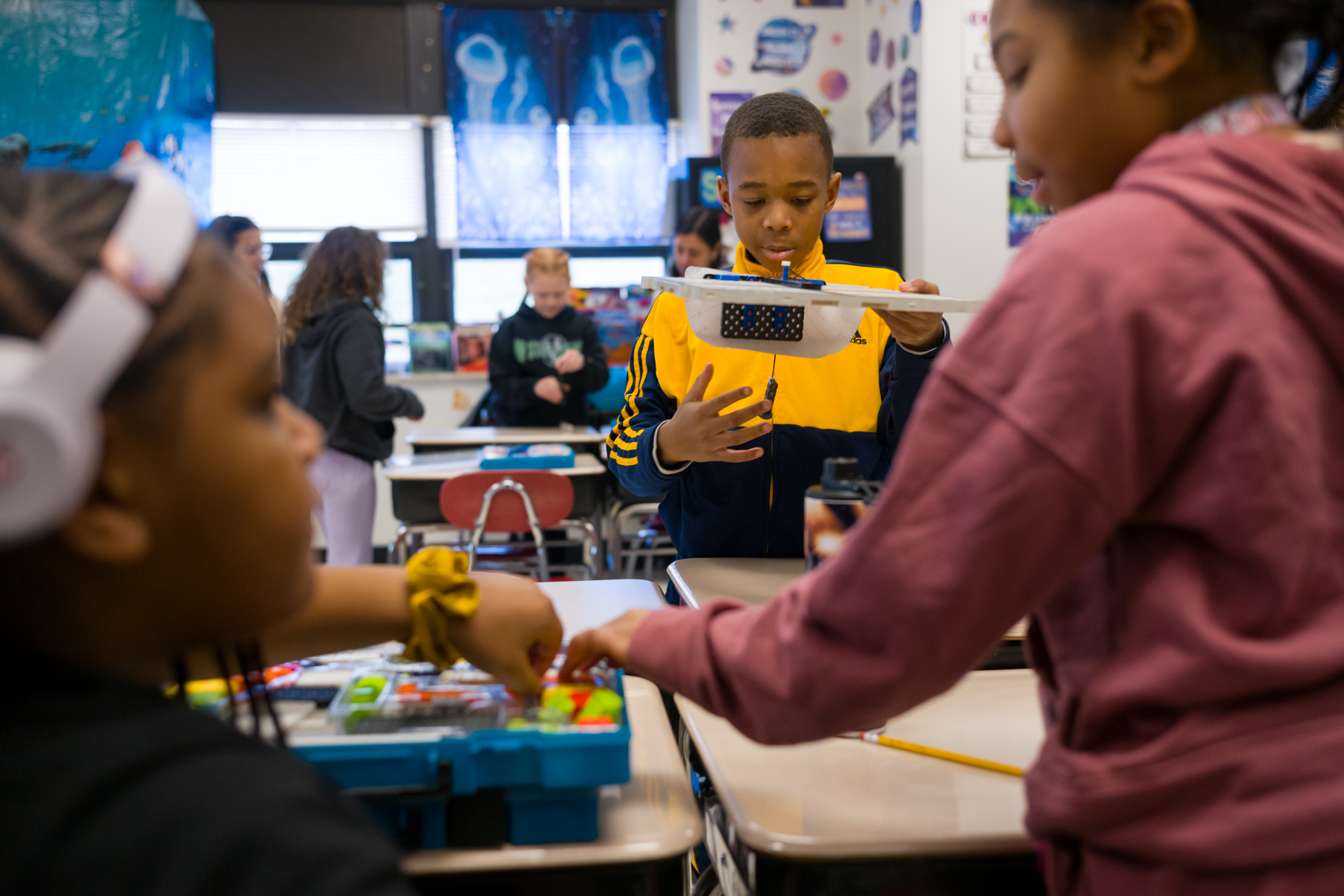 Fourth-grade students use VEX Robotics GO kits to build a robotic pendulum at Clairton Education Center on Jan. 22. (Photo by Quinn Glabicki/Pittsburgh’s Public Source)
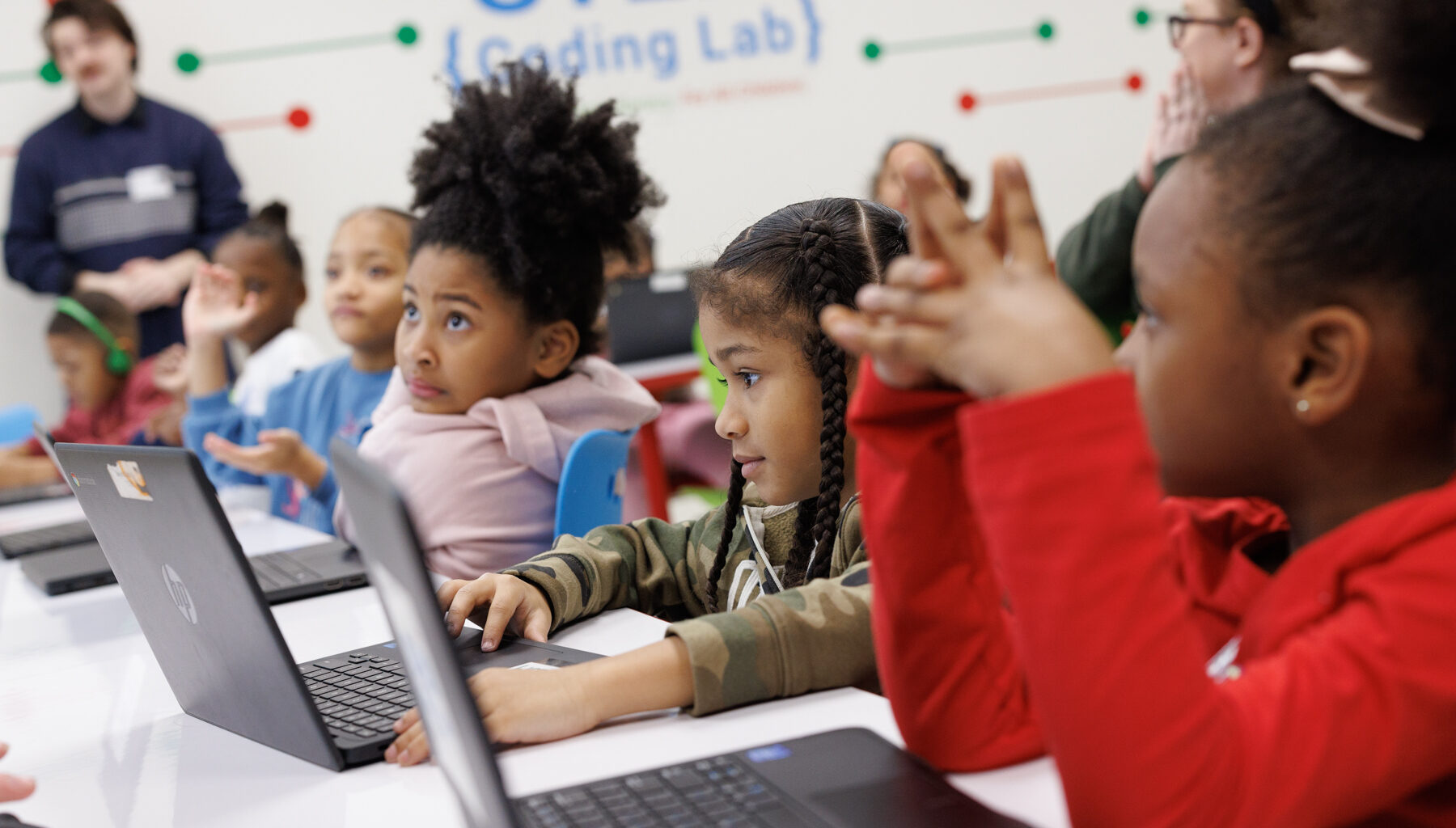
The VEX Robotics program is one of Clairton’s offerings that are only possible through community partnerships the school has with organizations such as Will Allen Foundation, Pittsburgh Area Community Schools (PACS), Eden Hall Foundation, STEM Coding Lab and Youth Opportunities Development.
The Will Allen Foundation began working with the district in 2019 by introducing a high school robotics curriculum through Carnegie Mellon University. Since then, they have expanded to include VEX and after-school tutoring at no cost to the district.
“Those are foundations that when we say we have a need or we need to figure this out, they work with us collaboratively to be able to find ways to help our students,” Allen-Thomas said.
Clairton City School District by the numbers
Share of revenue coming from the state: 73% (vs. state average of 38%)
Students characterized by state as low-income: 85% (vs. 47% statewide)
Elementary students chronically absent, 2023-24: 49% (vs. 20% statewide)
Middle and high school students chronically absent, 2023-24: 59% (vs. 20% statewide)
Most of Clairton’s community partners also work to fulfill basic student needs, ranging from food and clothing to health and hygiene.
Following the explosion at Clairton Coke Works in August, the Will Allen Foundation launched the Clairton Huddle in partnership with CoHatch to help stock up school supplies, clothing and hygiene products.
“When we don’t meet basic needs, students do not experience dignity,” said Jessi Marsh, CEO of Will Allen Foundation. “If they do not experience dignity, they cannot come to school ready to learn.”
At the beginning of 2024, Clairton became a full-service community school through a federal grant received by PACS.
Bridget Clement, executive director of PACS, said the organization approached the school after meeting with community members and families in Clairton with a goal of providing resources and programs such as a clothing store, food distribution, childcare, drama musicals, a DJ program and an entrepreneurship program for students. They turn the school into a place for everyone, not just students.
“We have had our school doors closed for so long. I know that this was made with always the best intentions, right?” Clement said. “We want to keep kids safe, but what we ended up doing was isolating and not getting the right services and not using the resources that we have right in our backyard.”
Learning real-life skills in Beartopia
Back in Beartopia, fifth-grader Terryona Holt managed Enchanted Expressions, a business where first- and second-grade students were making squishy soft toys out of paper and pillow stuffing. Her responsibilities included keeping operations running, plus hiring and firing people.
Down the hall, bookkeeper Emily VanDyke, a fourth grader, was designing a sign for her venture — Paper Purveyors — where all products were made entirely out of paper. Students made ninja stars, paper puppets, fortune tellers and paper claws.
VanDyke loved being part of Beartopia and said it was “pretty fun” to count the money as a bookkeeper, help clients and teach younger students how to make their products.
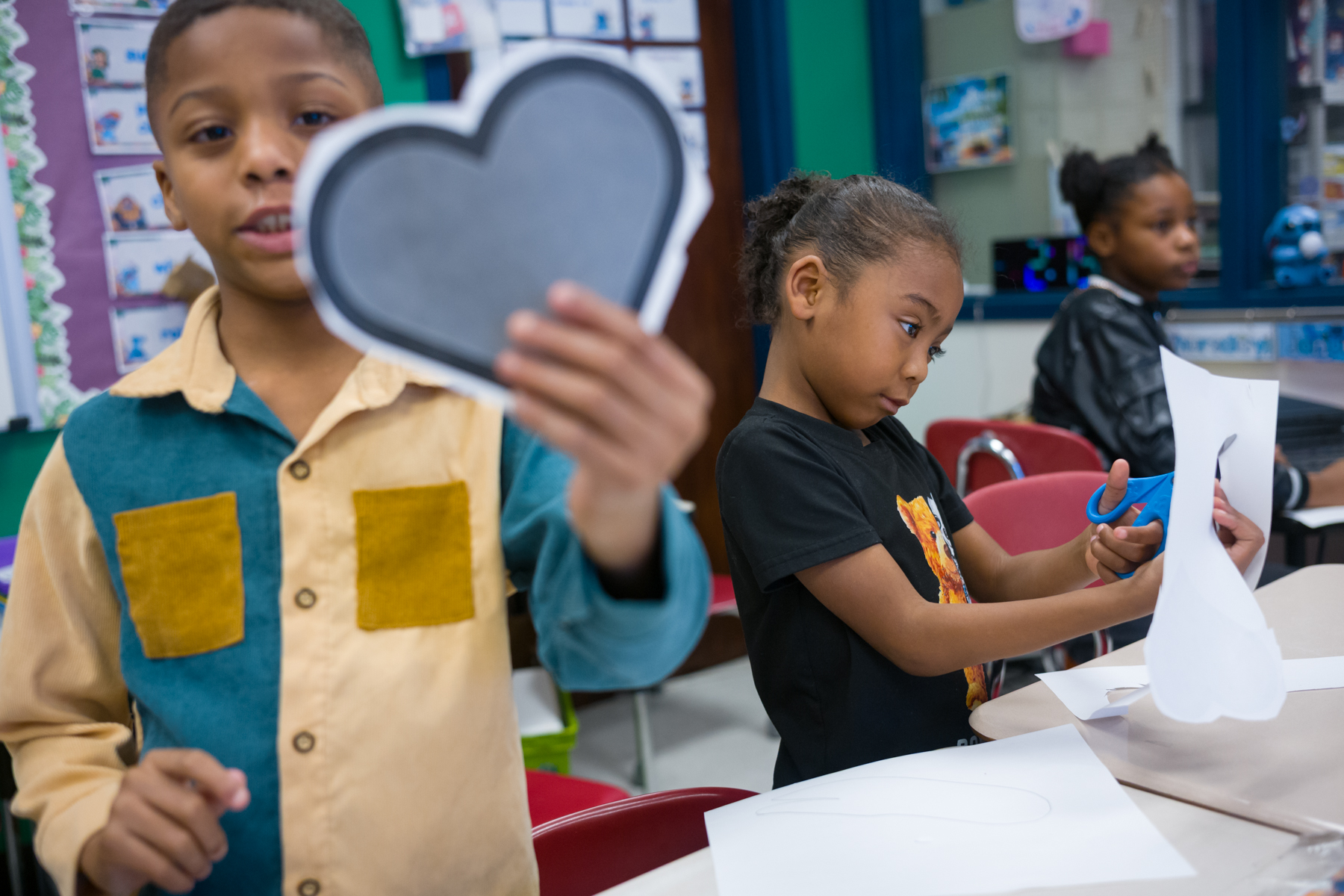 Students make toys out of paper and pillow stuffing for their MicroSociety venture at Clairton Education Center on Jan. 22. (Photo by Quinn Glabicki/Pittsburgh’s Public Source)
Beginning in February, the school will organize market days, inviting parents and community members to shop for student-made products from the school’s 26 businesses. Students can buy products for themselves using a personal MicroSociety debit card. The grant allows the district to pay each student a fixed salary that they will receive at the end of the school year.
“It’s fun when you’re in kindergarten, in first grade to want to be a princess, but we’re seeing that on becoming a fourth and fifth grader, we need a little bit of a reality check of, this is what our actual skills are,” said Macy Jordan, MicroSociety coordinator.
Absenteeism, funding, violence
Despite efforts to create a healthy school environment, significant challenges remain at Clairton.
The district struggles with chronic absenteeism.
The district’s solution: Give students a reason to come to school, from kindergarten on, with programs like STEM coding, theater, entrepreneurship and MicroSociety.
Principal Maurizio said she hopes MicroSociety and its salary will incentivize students to come to school, thus improving attendance, as will fun programs like robotics and coding.
Sustaining the funding is a challenge. Last year, Clairton was doubly hit by state and federal budget stalemates. As active efforts to dismantle the federal Department of Education continue, the district faces constant uncertainty about the continuation of its programs.
If federal funding is cut, Clairton could lose its designation as a community school. Clement said PACS is working with foundations and other organizations to identify a funding stream to sustain its existing contract at Clairton if it loses the grant.
Violence in the community presents another barrier: 135 criminal offenses were registered in the City of Clairton in the last year.
That’s where organizations like Youth Opportunities Development step in, trying to prevent violence through intervention and mentoring, academics, sports and other recreational activities.
Brandon Ziats, executive director of YOD, said spending time in the program means students are not hanging out in the streets after school, thus reducing their exposure to negative influences.
“The long-term success with our program is all about them continually being involved and being consistent coming to our program,” Ziats said. “Because if a kid can be consistent coming to our program day after day, there’s usually that success at the end of the road.”
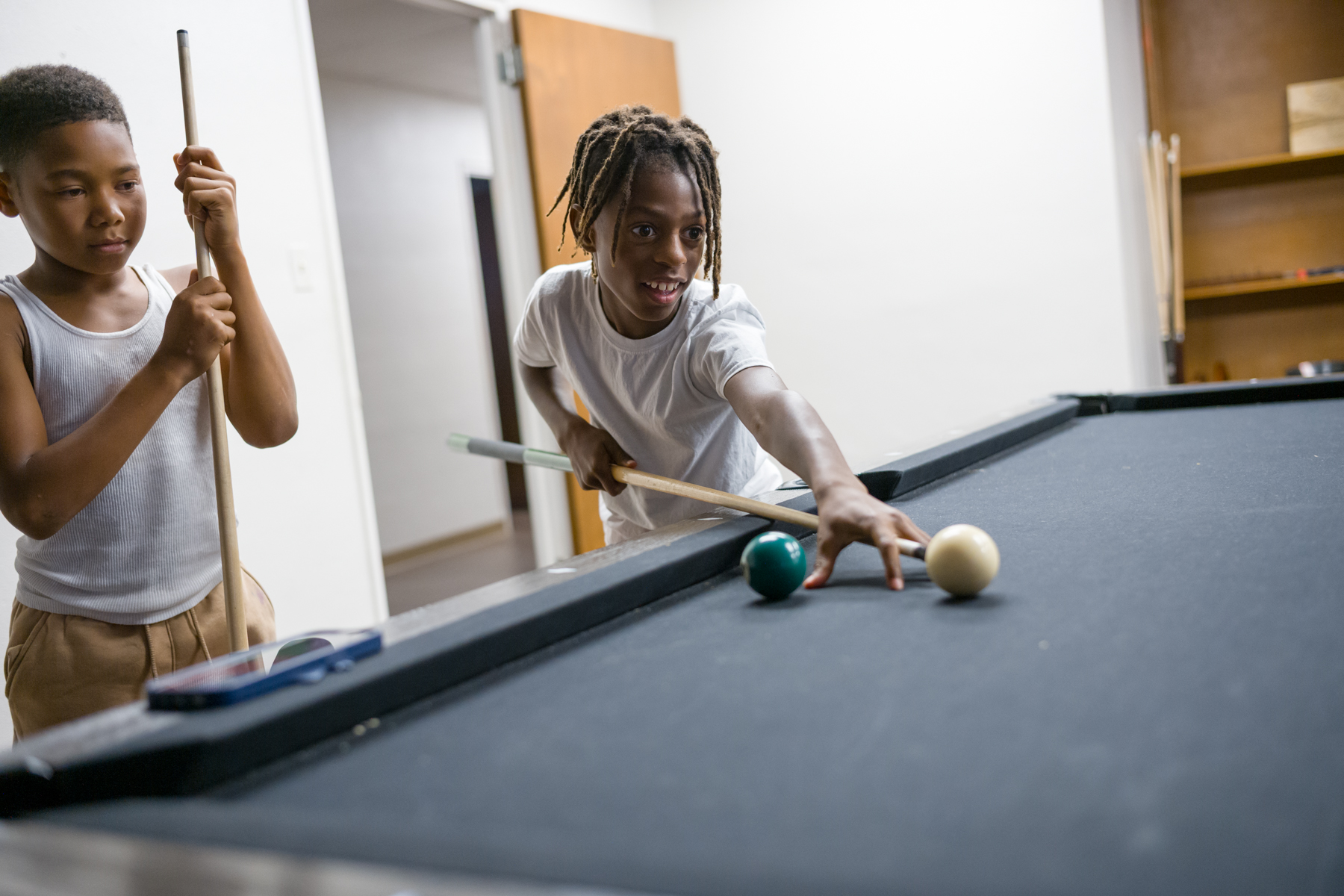 Kids play pool after school at Youth Opportunities Development in Clairton on Oct. 7. (Photo by Quinn Glabicki/Pittsburgh’s Public Source)
Many community partners emphasized the need for mental health supports for students because of violence in the region.
“These are kids who are exposed to trauma,” said Marsh of the Will Allen Foundation. “There are students who have witnessed shootings. There are students who know people who have been murdered. This is trauma that they live with every day.”
PACS works with mental health providers and counselors, and builds relationships with students so that they can learn about their needs.
‘More than just athletics’
Elementary students gathered at 3 p.m. in the auditorium for an introductory session of the district’s second-ever musical production in 20 years.
Director Kristen Hecker gathered a group of students to practice their vocal delivery skills. Each student was instructed to say a line from the musical: “Mr. Aladdin, sir, what will your pleasure be?”
Students were asked to “say it as if you ran a marathon and you’re out of breath,” or “say it as if you are mean and like a villain.”
The exercise tested students’ acting skills and helped Hecker to cast roles. The musical, led by Clairton teachers, will take place in May.
Drama is a key part of the district’s effort to provide a safe environment after school for students with working parents.
Last year, PACS helped the district receive a three-year grant from Disney Musicals in Schools to create a sustainable theater program for elementary grades. Students raised over $6,000, an amount that will support the program beyond the grant period.
Students performed “101 Dalmatians,” the district’s first theater production in 20 years.
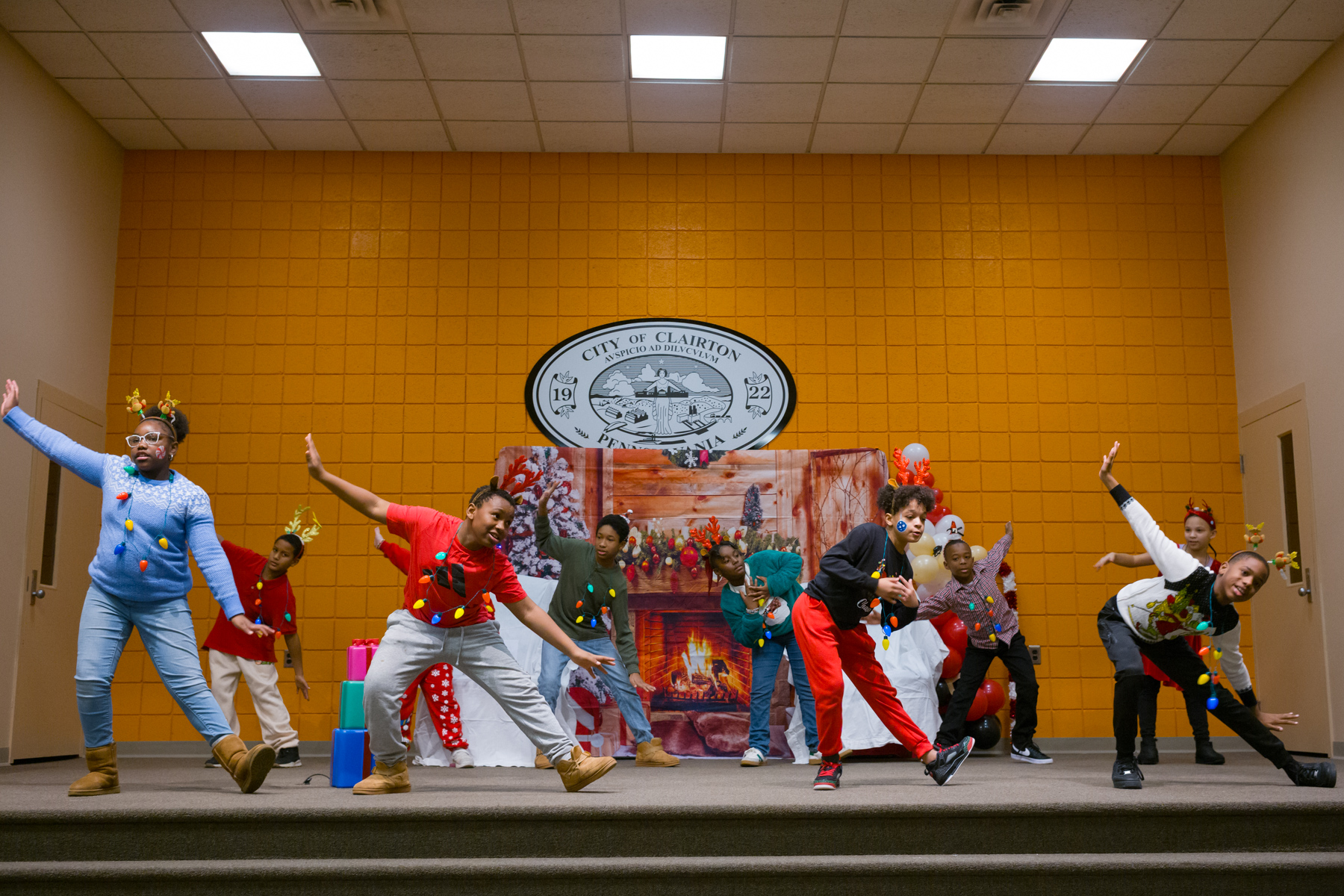 Students perform at the Clairton Municipal Building during a holiday celebration on Dec. 17. (Photo by Quinn Glabicki/Pittsburgh’s Public Source)
Sixth-grader Jayden Williams performed the role of Roger Radcliffe. He was also part of the Pittsburgh Public Theater’s creative dramatics program and has always loved acting.
“It’s like you practice and you keep on practicing, practicing. You can’t forget it ever really and then, like, going out in front of all those people, it’s just, you could really think of it as a white room. Nobody is there, and you’re the only one,” he said.
This year, Williams is helping younger students get into the acting process and is involved in the drama club. The school launched the club this year for middle school and high school students so they can continue to pursue their passion.
The teachers and staff members wear many hats to run the school’s various programs smoothly. Superintendent Allen-Thomas wants to strengthen arts education and provide Clairton’s students with a holistic and positive school experience.
“We are more than just athletics,” she said. “We are a community of resilience, perseverance and high expectations for all students, and how we make sure that that happens is through intentional partnerships.”
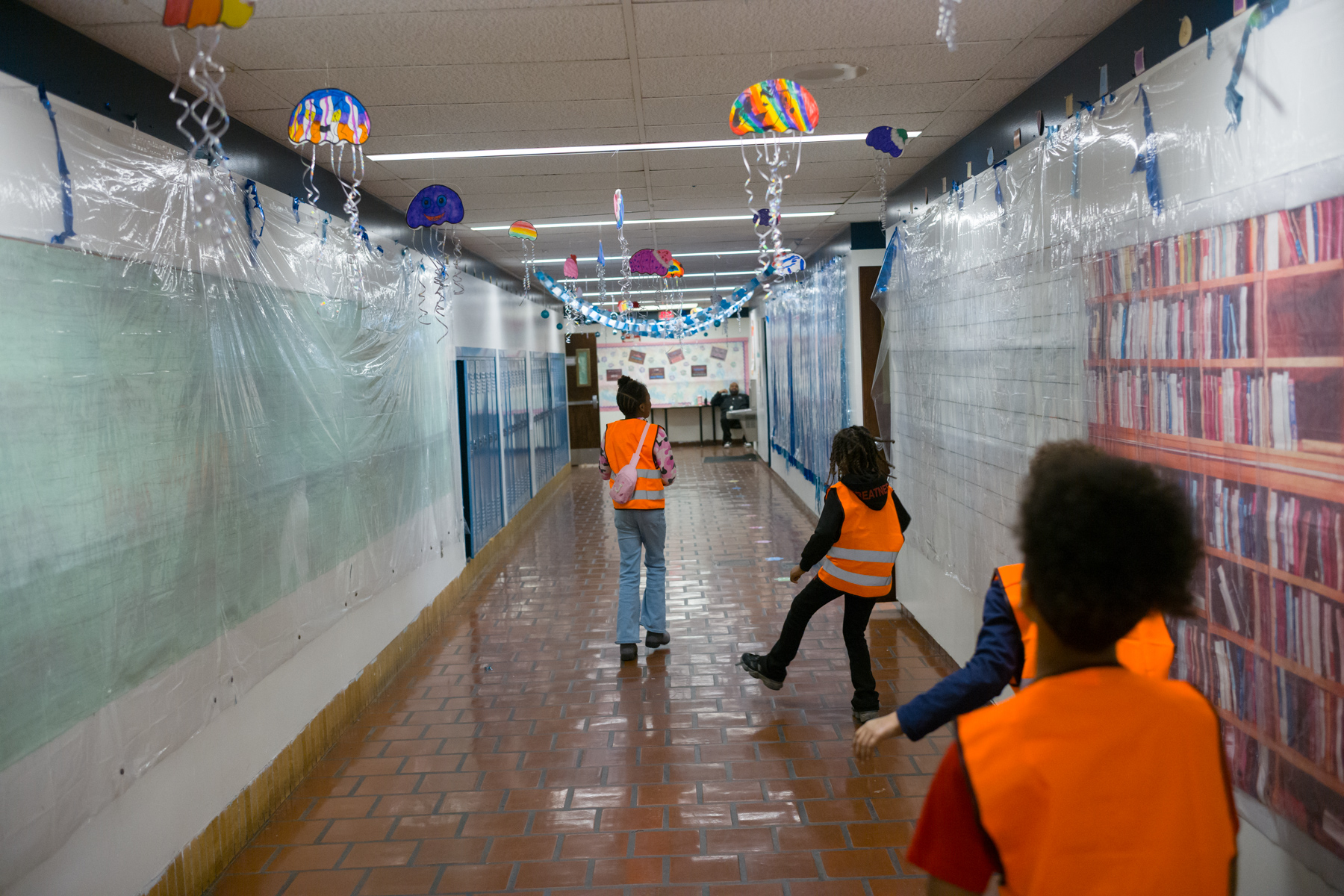 Students wearing orange vests roam the halls at Clairton Education Center, visiting classrooms and informing classmates of their MicroSociety venture on Jan. 22. (Photo by Quinn Glabicki/Pittsburgh’s Public Source)
Lajja Mistry is the K-12 education reporter at Pittsburgh’s Public Source. She can be reached at lajja@publicsource.org.
This story was fact-checked by Ethan Beck.
RELATED STORIES
This story was made possible by donations to our independent, nonprofit newsroom.
Can you help us keep going with a gift?
We’re Pittsburgh’s Public Source. Since 2011, we’ve taken pride in serving our community by delivering accurate, timely, and impactful journalism — without paywalls. We believe that everyone deserves access to information about local decisions and events that affect them.
But it takes a lot of resources to produce this reporting, from compensating our staff, to the technology that brings it to you, to fact-checking every line, and much more. Reader support is crucial to our ability to keep doing this work.
If you learned something new from this story, consider supporting us with a donation today. Your donation helps ensure that everyone in Allegheny County can stay informed about issues that impact their lives. Thank you for your support!
Republish This Story

Republish our articles for free, online or in print, under a Creative Commons license.