
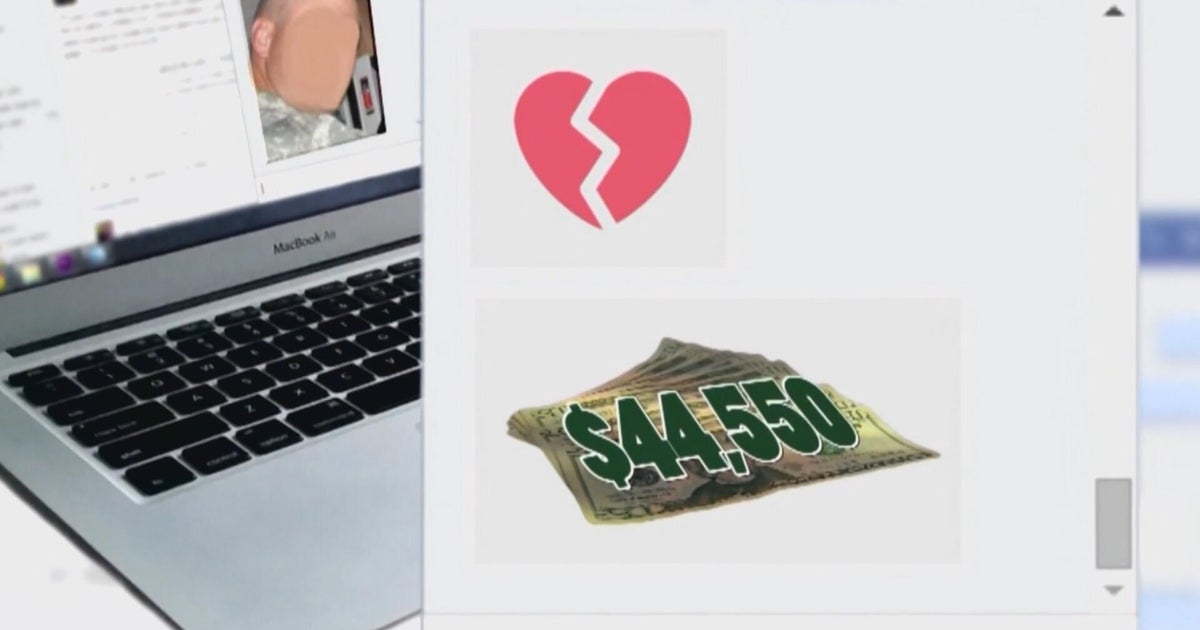
With Valentine’s Day approaching, financial experts warn to be on alert for a rise in romance scams that are becoming harder to spot due to artificial intelligence.
One in four Americans say they’ve encountered a fake profile or AI-generated bot online, according to newly released data from McAfee.
Americans have lost more than $1.14 billion to romance scams since 2023, according to the Federal Trade Commission.
Tanyika Rickard, a community manager with Chase Bank in Philadelphia, who works directly with customers who have been targeted or defrauded, said scammers often spend months building trust before ever bringing up money.
“They love bomb you,” she said in a recent appearance on the In Your Corner podcast with CBS News Philadelphia consumer reporter Josh Sidorowicz. “In the beginning, you’re hearing, ‘I can’t believe I’ve met someone like you,’ and if you are in a space where you don’t have that currently, that loneliness can take over.”
Romance scams and how AI is making them more convincing than ever | In Your Corner Podcast, Ep. 11 by
CBS Philadelphia on
YouTube
Rickard also warns about how artificial intelligence has transformed the landscape of romance scams.
Scammers are now able to create entire fake identities — including photographs, social media histories, real‑time chat responses and even AI‑generated voices or video calls. They can mimic voices, and they can create a video chat with AI.
Rickard said scammers also scrape victims’ online presence to tailor their approach.
“They’ve gone through your social media,” she said. “They know how many grandchildren you have, they know what’s important to you because you post it.”
Kate Kleinert previously shared with In Your Corner how a romance scammer stole her entire life savings. Her story highlighted the emotional manipulation scammers use to con their victims.
“I had been widowed for 12 years at that point,” she said. “It was nice talking to a man again, and every single night he would call me and say, ‘How was your day, honey?’ Nobody asked me that anymore.”
How to spot the red flags
Rickard highlighted several warning signs:
The person refuses to meet in person or video chat.They ask for money suddenly or urgently.They pressure you to act quickly or secretly.Their online profile includes only a few photos or limited information.
She also urged consumers not to answer calls from unknown numbers.
“If it does not look right, nine times out of 10, it isn’t,” she said. “Go with your gut.”
Why reporting is critical and where to get help
Many victims never report what happened, often out of embarrassment.
More than half of adults who lost money said they never reported it, according to new AARP research.
But Rickard said reporting is essential, not only to stop the scammer but to connect victims with resources that may help recover some of the money.
“You absolutely should file a complaint,” she said. “Come into the bank, speak to your banker, don’t feel embarrassed.”
Chase and other institutions regularly host fraud prevention workshops, including sessions in West Philadelphia, to help the community identify threats and protect their finances.
Scammers have made a career out of defrauding people, Rickard said.
“We need to make a career out of protecting each other,” Rickard said.
You can report the crime to local law enforcement or the FBI’s IC3.gov. You can also call the AARP Fraud Watch Network Helpline at 877-908-3360 for support.
The In Your Corner podcast is dedicated to providing practical solutions to everyday problems. Each week will feature a different guest expert. You can find new episodes posted every Wednesday on the CBS Philadelphia YouTube channel.
Looking for help with a consumer issue? Click here to submit your complaint to In Your Corner.
More from CBS News