
SHELDON INGRAM PITTSBURGH’S ACTION NEWS FOUR. WE HAVE SOME BREAKING NEWS JUST IN. WE KNOW THAT BATTERY 13 AT U.S. STEEL’S CLAIRTON COKE PLANT WILL START UP AGAIN TOMORROW. SO THIS BATTERY, THIS PART OF THE PLANT HAS BEEN ON HIGH IDLE SINCE THE EXPLOSION AT THAT PLANT THAT TOOK PLACE BACK IN AUGUST THAT WAS ALLOWING CREWS TO COMPLETE REPAIRS AND EQUIPMENT PLAN. U.S. STEEL COMPANY SAYS THAT WORK IS NOW FINISHED. THEY ARE BRINGING THIS BACK INTO OPERATION. THE RESTART IS EXPECTED TOMORROW, WITH COKE PRODUCTION RESUMING THE FOLLOWING DAY.
The sale of United States Steel was always going to be a global affair. Reporters from across the world descended into the Monongahela River Valley, south of Pittsburgh, to cover President Donald Trump’s celebration of the next chapter of an industrial icon.The question in the cradle of American metalmaking: Would a new Japanese owner break the doldrums of postindustrial decay?“I have faith. I know Nippon Steel is going to pull us through here, get us back up and moving,” says lifelong resident Dorcas Rumble.Beset with illnesses and caring for a granddaughter with severe asthma, Carla Beard-Owens has all but lost hope. “I had confidence years ago that they would change, get better air and help clean it up,” she says. “And it’s still the same as it was when I was growing up.”On whether Nippon will usher in change, “at this point, I’d rather see it than believe it.”An August explosion at the U.S. Steel Clairton Coke Works that killed two people heightened the stakes, and a new mayor is raising that city’s hopes. But many who live and work in Clairton are wondering if they can hope for a sustained departure from decades of disinvestment and persistent pollution.___This story is a collaboration between Pittsburgh’s Public Source and The Associated Press.___ Blocked by one American president, approved by the next, Japan’s Nippon Steel bought the American industrial icon for $15 billion last June, and pledged $11 billion in upgrades to domestic steelmaking. Nippon said $2.4 billion of that might reinvigorate Southwestern Pennsylvania’s Mon Valley, where a half century of deindustrialization has left long strands of scarred riverside steel towns.Nippon hasn’t said whether any money would go to the Clairton Coke Works, the largest facility of its kind in the Western Hemisphere. The sprawling plant, completed in 1916, has sputtered but survived — as has Clairton. For generations, residents have endured community violence, poverty and chronic air pollution consistently ranked among the worst in the nation. The Aug. 11 explosion, though, shook the coke works and sent shockwaves through the city, spurring renewed calls for greater oversight for the coke works that contributes roughly two-thirds of Allegheny County’s industrial particulate air pollution and is often out of compliance with environmental law. In November, Clairtonians rejected 16-year incumbent Rich Lattanzi and his campaign slogan — “If it ain’t broke, don’t try and fix it” — in favor of former U.S. Steel foreman Jim Cerqua. The new mayor’s mantra: “It is broke! We are going to fix it!”Pittsburgh’s Public Source and The Associated Press spent the past six months reporting from Clairton, long known as the City of Prayer, listening to a often-conflicted relationship to an industry that’s provided jobs and collective identity for generations, but also illness and economic collapse. At a crossroads, some see the biggest chance for change in decades. Dorcas Rumble, community health worker: ‘It’s all tied to the mill’Rumble peers out of the windshield across the rows of shuttered storefronts on St. Clair Avenue. “When I was growing up here, we had three movie theaters, four grocery stores,” she says. “We had three banks, we had a jewelry store, clothing stores, a bakery.” Now, Rumble says, there’s nothing.Rumble, 61, steers her car up a hill and through rows of crumbling housing originally built for steelworkers in the 1940s. “There used to be so many families up here, and now not so much.”She recalls her father as one of the first to be laid off from his job at the Clairton Coke Works in 1981, as offshoring swept American steelmaking and downsizing gripped the Mon Valley. A community health worker and part-time jitney driver, Rumble organizes monthly food and clothing drives and a free health clinic for residents who need care. She helps people in the community with housing and rent assistance. She says of her neighbors: “They need everything.”“Us having this new mayor, we have hopes,” Rumble says. “He gives us promises, and I’m gonna hold him to them.”Rumble knows that no mayor can do it alone.“It’s all tied to the mill,” Rumble says, looking around. “Everything’s tied to the mill. Everything. … That’s our only resource. It’s the mill, it’s always been the mill. … Hopefully now with Nippon coming, it’ll start booming again.”Miriam Maletta, business owner: ‘I need help bad’Rumble’s sister, Miriam Maletta, opened her salon on St. Clair Avenue in 1984 when she was 21 and Clairton was bustling. “Business was great, because that mill was thriving.” At times, she worked until 2 a.m., sometimes bringing in $4,000 in a week.“Now I’m one of the only ones left,” she says, her business one of the few along Clairton’s main street, and she struggles. “I need help bad.”In a city dominated by a pollution-emitting plant, and a district long known for football, school administrators tap community partners to build a culture of collaboration and practical skills six months after the mill explosion.In 2016, Maletta was diagnosed with stage 4 lymphoma. After six rounds of chemotherapy and 17 radiation treatments, she is in remission. “Whatever went on in my body,” she says, she believes the mill was a part of it. “I think it was all from me living here.” “My dad worked in the mill. Never drank, never smoked. He was a professional boxer. Hall of Famer. He came down with stage four gastric cancer. … This is stuff that we have endured.”U.S. Steel says its safety is “our core value and shapes our culture.”For as much as Rumble thinks the mill contributes to disease in her family, she says it’s a worthwhile tradeoff to keep the city’s economy afloat. “If they can do better in keeping the air clean, I mean, what else is there? How are we supposed to get any kind of revenue?” U.S. Steel should do more, Maletta says, to contribute to businesses like hers, and build Clairton back up. ”You’re a multibillion dollar industry. Why not help the people of this community?”A Clairton future with a thriving mill can also have rooftop gardens, a place to buy fresh food and something for the children to do on the weekends, she says. Workers could once again roam the streets and stop in at an eatery for a bite to eat. Their spouses could go to Miriam’s for a hair cut — echoes of how it used to be, but not a return to the past, she says. “I see it being new and different, but the mill is a common denominator.”Regulation, she says, “has to be better. … I don’t want you here if you’re not going to help the community, if you aren’t going to care about our health.”Jim Cerqua, mayor: Without merger, ‘my town would be in trouble’“People voted for change,” Cerqua tells a full room of residents and supporters moments after being sworn in as mayor, replacing Lattanzi. “We’re gonna work on bringing change.”Later, over a plate of Italian sweet sausage at the American Legion, the former coke works employee describes his vision. First he needs to balance the budget and spend Clairton’s scant resources wisely.He plans for an advisory council of youth who might inform veteran leaders like him, and he pledges to demolish crumbling buildings and infrastructure, and to push for redevelopment “starting anywhere, just pick a spot.” The new mayor also puts forth a vision of a mental health and recreation center, maybe with a basketball court, a walking track for seniors and a “little coffee spot” to relax. He envisions a space in the back where kids might learn welding, carpentry and plumbing.U.S. Steel, he says, must be a big part of making that vision a reality. “They have to be.” Running Clairton without the plant — and the roughly one-third of city taxes it pays — is hard to imagine. “If U.S. Steel would have not done the merger and pulled out, my town would be in trouble.”Cerqua says he met with the company and will do so routinely to discuss a vision for Clairton. “I want to see more Clairtonians employed, and they do, too.”Brian Pavlack, steelworker: ‘The future is looking pretty bright’At the bar, steelworker Brian Pavlack points to an image hanging on the wall of him on stage with President Donald Trump. A lifelong Democrat, Pavlack switched parties and voted for Trump hoping to extend the lifespan of steelmaking, but supported Cerqua, a Democrat, to help bring Clairton back.Pavlack says he met with U.S. Steel representatives before the acquisition. “They even told us if Nippon don’t take over, we’re gonna leave the Mon Valley and go down south.”In November, the newly merged Nippon and U.S. Steel announced they would invest at least $2.4 billion in the Mon Valley Works, with $1.1 billion already slated for a new hot strip mill and slag recycler several miles up the Monongahela River at Andrew Carnegie’s earliest mill, the Edgar Thomson Works in Braddock. In a statement, a spokesperson said U.S. Steel has already contributed more than $5 million over five years to organizations focused on health and safety, workforce development, environmental stewardship and community resilience in and around Clairton. That includes $500,000 for a new stadium for the Clairton Bears high school football team. The company said it also has active community advisory panels with community leaders “to hear about their concerns and needs.”At the same time, U.S. Steel has made substantial investments in Arkansas, where labor is not unionized and where the company is building modern steelmaking facilities and recently committed another $3 billion. Nothing, so far, has been publicly earmarked for the Clairton Coke Works.Pavlack praises Trump for slashing regulations on emissions, a move he thought best for the industry and his job, but he concedes, “a new president comes in, you can reverse all that.”For now, though, he says, “The future is looking pretty bright in the Mon Valley.” Nippon’s acquisition and investment is likely to extend the lifespan of Mon Valley steelmaking, and in doing so, lengthen a longstanding legacy of industrial pollution.Carla Beard-Owens, grandmother: ‘I take medicine all day long, every day’In November, Beard-Owens stood before Allegheny County Council. She didn’t want the mill to close, she said, noting it still provides jobs, but it has to be held accountable. She told the council about her granddaughter, Nasyiah, who struggles with asthma and lead poisoning and tries her best to stay indoors to limit exposure, and about her parents, who died of cancer. “I lost a lot of loved ones and seen other ones pass because of this mill. Because they don’t want to do nothing. Because they want to brush it under the rug and feed their pockets and not help the kids and the environment and the city. I’m tired,” she said at the council meeting.Beard-Owens and some of her neighbors in Clairton took a bus Downtown to ask the council to increase the permitting fees for U.S. Steel and other industrial polluters, a move that would bring more money and capacity to the chronically underfunded Allegheny County Health Department, which regulates U.S. Steel.“I should still be able to go up steps, take a breath. I can’t,” said Beard-Owens, 56, to council members. “I had surgery to cut my throat open to remove a mass that was huge that was connected to my vocal chords. I couldn’t speak.” The airborne byproducts of coke production — PM2.5, sulfur dioxide, nitrous oxide and benzene, among others — have been scientifically linked by government and private research to an array of health conditions, many of which Beard-Owens and her family have experienced.Beard-Owens has been diagnosed with thyroid and cervical cancers, chronic obstructive pulmonary disease, or COPD, and heart disease.At night, she connects to a breathing machine, and takes a steroid inhaler each morning. “I take medicine all day long, every day,” she says, seated in her apartment in Clairton.Until last year, her granddaughter spent afternoons at cheerleading practice on the fields across State Street from the coke works. “I had to keep bringing my inhaler every day to cheer practice because I could barely breathe,” 9-year-old Nasyiah Mason says.“We don’t walk to school no more,” Beard-Owens says. “She don’t barely go outside.”“Why is it that we got to keep dealing with this, generation after generation after generation?”The childhood asthma rate in Clairton is 22.4%, roughly triple the national average. Of Clairton’s children with asthma, researcher Dr. Deborah Gentile explains, 60% have poor control. “That means they’re having trouble sleeping at night, they’re missing school because they’re sick, they’re running to the emergency room or the doctors, they’re not participating in activities.” Coke oven emissions are classified by the U.S. Environmental Protection Agency as a known human carcinogen. Clairton’s lifetime cancer risk is 2.3 times the EPA’s acceptable limit, and the coke works contributes about 98.7% of the estimated excess risk, according to analysis by ProPublica.The Clairton Coke Works “has a tremendous impact” on human health, and asthma is just part of the picture, Gentile says. Cardiovascular problems like high blood pressure and congestive heart failure have been proven to be caused by exposure to air pollution, she says, and there’s links between neurologic conditions and endocrine disease like diabetes, premature birth, low birth weight and premature death.That evening in November, County Council voted to approve a fee increase. It was a small blip in a long legacy of industrial pollution, but Beard-Owens felt victorious.Jackie Wade, resident: A black hole with one lightOn the bus ride back from County Council’s meeting to Clairton, Jackie Wade cheers. “We won!” She dances in her seat, singing in the dark.Wade moved to Clairton as a teenager in 1969 and experienced decades of industrial decline. Clairton’s slow slump “was like death row,” she says, and community violence and poverty became normal. When the battery exploded, she started to see that inertia break. “It got people thinking, we could’ve been gone right there.”“We’re in that black hole in space,” she says. “We’re wanting out so bad to show our city can be just like everywhere else.” She wishes the community had more opportunity to talk with Nippon before the deal. “What are some of the things that will change in our community and is it going to be based on that area down there where the mill sits or are they willing to look at some things that we need in our community or that people in the Mon Valley need?” And who will pay to meet those needs?Her son, Wayne Wade, was named coach of the year by the Pittsburgh Steelers after leading the Clairton Bears football team to a state championship. Football, Jackie Wade says, “is the only light we have.”She never wanted her son to stay to coach in Clairton.“Anybody that has good sense,” she says, “they move.”Ronald Mitchell, father: ‘We’re getting out of here’At the fields along State Street one evening in October, young football players huddle with their coaches at the end of practice. By the bleachers, Ronald Mitchell waits for his 10-year-old son, Ramir, who soon jogs over. “I’m the hardest hitter in the league!” he exclaims.The team didn’t practice near the mill the week after the explosion, Ronald says. They were back in a week. Across the street, the company was preparing to reopen one of the batteries that exploded. “I don’t like it, but there’s nothing we can do about it,” Ronald says. “We’re getting out of here.”Ronald, his wife, Shandrea and Ramir are planning to move to North Carolina, seeking better opportunity and relief from health worries.The air filters and fans the family bought helped “a little bit,” but Ramir’s asthma was persistent. The practice fields near the mill didn’t help.The family was offered money in a settlement of a class-action lawsuit claiming the pollution from the coke works harmed property values and was a persistent nuisance. The family refused the several hundred dollars, which they understand would have come in return for agreeing not to sue the company.“Not enough money if something’s going to happen to us down the line,” says Ronald, a former worker at the mill.“Our lives don’t have a price,” Shandrea says.The Rev. Deryck Tines: ‘It’s called change’On New Year’s Eve, Clairton’s clergy gathers to pray inside the municipal building on the hill, overlooking the mill.They take turns preaching, praying for the community, for families and children, the sick and homeless. They pray for jobs, for the schools and for the city and the nation.The Rev. Deryck Tines prays for change.“Now it’s time for what’s coming next. And it’s not a slight to what was. It’s called change. And without change we will be stuck in sin and trespasses,” he preaches, asking God to bless the mayor and the city, and thanking him for the miracles of the future.“I pray, God, that our city begins to rebound,” he continues. “God, I pray for new businesses and new ideas and new vision. … I pray that we cross this threshold, God, that we step into a new portal, that we step into new life. New word, new conversation. Hallelujah!” The clergy bow their heads and pray into the night.___Quinn Glabicki is the environment and climate reporter at Pittsburgh’s Public Source and can be reached at quinn@publicsource.org. This story is a collaboration between Pittsburgh’s Public Source and The Associated Press. This story was fact-checked by Jamese Platt.PREVIOUS COVERAGE OF U.S. STEEL BELOW:U.S. Steel and Nippon Steel finalize partnership: Historic deal keeps U.S. Steel in Pittsburgh (June 2025)Trump: United States will have ‘golden share’ in U.S. Steel-Nippon Steel deal (June 2025)Trump clears path for Nippon Steel investment in US Steel, so long as it fits the government’s terms (June 2025)Mon Valley mayors say they’re confident of the future after Trump announces Nippon Steel investment in U.S. Steel (June 2025)‘US Steel will be controlled by the USA’: Trump announces 50% tariff on imported steel in Pittsburgh (May 2025)Steel workers and USW react to Trump’s speech at US Steel (May 2025)Trump says US Steel will keep headquarters in Pittsburgh in a sign he’ll approve Nippon bid (May 2025)US Steel-Nippon Steel ‘partnership’: What Pa. lawmakers are saying (May 2025)US Steel workers react to partnership news with Nippon Steel (May 2025)Mon Valley mayors celebrate news US Steel staying in Pittsburgh (May 2025)Trump opposes Nippon Steel’s purchase of US Steel; local mayors urge reconsideration (April 2025)US Steel hits 52-week high after Trump orders new security review of Nippon Steel bid (April 2025)Pittsburgh leaders questioning implications of potential Nippon investment in US Steel (Feb. 2025)Trump: Nippon will ‘heavily’ invest in US Steel, drops acquisition plans (Feb. 2025)New player arrives in US Steel-Nippon takeover saga with the goal of quashing it (Jan. 2025)A new rival bid for US Steel is emerging as the US extends deadline on Nippon’s bid blocked by Biden (Jan. 2025)Rejection of Nippon Steel’s bid for US Steel rankles Washington’s key ally in Asia (Jan. 2025)Nippon Steel stands firm on a US Steel takeover and denies risks cited by Biden (Jan. 2025)US Steel, Nippon Steel file suit against Biden administration, union, and rival after deal scuttled (Jan. 2025)Biden’s decision to block Nippon Steel takeover creates uncertainty for U.S. Steel workers (Jan. 2025)President Biden blocks acquisition of US Steel by Japan’s Nippon Steel (Jan. 2025)Mon Valley mayors react to President Biden blocking US Steel deal (Jan. 2025)Rise of US Steel paralleled the arrival of the United States on the world stage (Jan. 2025)Local steelworkers voice support for US Steel-Nippon deal amid Trump’s opposition (Dec. 2024)Biden will decide on US Steel acquisition after influential panel fails to reach consensus (Dec. 2024)EXCLUSIVE INTERVIEW: US Steel CEO defends sale to Nippon (Nov. 2024)EXCLUSIVE INTERVIEW: United Steelworkers president says Nippon Steel’s promises short-term, jeopardize US steelmaking (Nov. 2024)Arbitration board rules in favor of US Steel, affirms transaction with Nippon Steel (Sept. 2024)Harris opposes US Steel’s sale to a Japanese firm during joint Pittsburgh event with Biden (Sept. 2024)USW, US Steel comment in wake of Harris opposition to Nippon Steel deal (Sept. 2024)US Steel stages employee rally Downtown, threatens to move headquarters if Nippon Steel deal isn’t approved (Sept. 2024)Nippon Steel boosts capital commitment to US Steel plants (Aug. 2024)Pennsylvania Gov. Shapiro opposes US Steel sale to Nippon (Aug. 2024)Experts weigh in on US Steel buyout offer (Aug. 2024)Sale of US Steel kicks up a political storm, but Pittsburgh isn’t Steeltown USA anymore (July 2024)As Nippon Steel execs visit Pittsburgh, U.S. Steel and steelmaker Cleveland-Cliffs trade barbs (May 2024)Weeks after Biden shows support for US Steel industry, Japanese merger delayed (May 2024)If US Steel’s Nippon Steel deal is blocked, Cleveland-Cliffs CEO says he’s still interested (April 2024)In Pittsburgh, Biden vows to shield U.S. steel industry by blocking Japanese merger and seeking new Chinese tariffs (April 2024)Biden to meet Japan’s prime minister over shared concerns about China and differences on US Steel deal (April 2024)US Steel shareholders approve takeover by Japan’s Nippon Steel opposed by Biden administration (April 2024)Biden opposes plan to sell US Steel to Japanese firm, citing need for ‘American steel workers’ (March 2024)US Steel agrees to takeover by Japan’s Nippon Steel (Dec. 2023)Steelworkers president, Sen. Casey speak on Nippon Steel deal to acquire U.S. Steel (Dec. 2023)
CLAIRTON, Pa. (AP) —
The sale of United States Steel was always going to be a global affair. Reporters from across the world descended into the Monongahela River Valley, south of Pittsburgh, to cover President Donald Trump’s celebration of the next chapter of an industrial icon.
The question in the cradle of American metalmaking: Would a new Japanese owner break the doldrums of postindustrial decay?
“I have faith. I know Nippon Steel is going to pull us through here, get us back up and moving,” says lifelong resident Dorcas Rumble.
Beset with illnesses and caring for a granddaughter with severe asthma, Carla Beard-Owens has all but lost hope. “I had confidence years ago that they would change, get better air and help clean it up,” she says. “And it’s still the same as it was when I was growing up.”
On whether Nippon will usher in change, “at this point, I’d rather see it than believe it.”
An August explosion at the U.S. Steel Clairton Coke Works that killed two people heightened the stakes, and a new mayor is raising that city’s hopes. But many who live and work in Clairton are wondering if they can hope for a sustained departure from decades of disinvestment and persistent pollution.
___
This story is a collaboration between Pittsburgh’s Public Source and The Associated Press.
___
Blocked by one American president, approved by the next, Japan’s Nippon Steel bought the American industrial icon for $15 billion last June, and pledged $11 billion in upgrades to domestic steelmaking. Nippon said $2.4 billion of that might reinvigorate Southwestern Pennsylvania’s Mon Valley, where a half century of deindustrialization has left long strands of scarred riverside steel towns.
Nippon hasn’t said whether any money would go to the Clairton Coke Works, the largest facility of its kind in the Western Hemisphere. The sprawling plant, completed in 1916, has sputtered but survived — as has Clairton. For generations, residents have endured community violence, poverty and chronic air pollution consistently ranked among the worst in the nation.
The Aug. 11 explosion, though, shook the coke works and sent shockwaves through the city, spurring renewed calls for greater oversight for the coke works that contributes roughly two-thirds of Allegheny County’s industrial particulate air pollution and is often out of compliance with environmental law.
In November, Clairtonians rejected 16-year incumbent Rich Lattanzi and his campaign slogan — “If it ain’t broke, don’t try and fix it” — in favor of former U.S. Steel foreman Jim Cerqua. The new mayor’s mantra: “It is broke! We are going to fix it!”
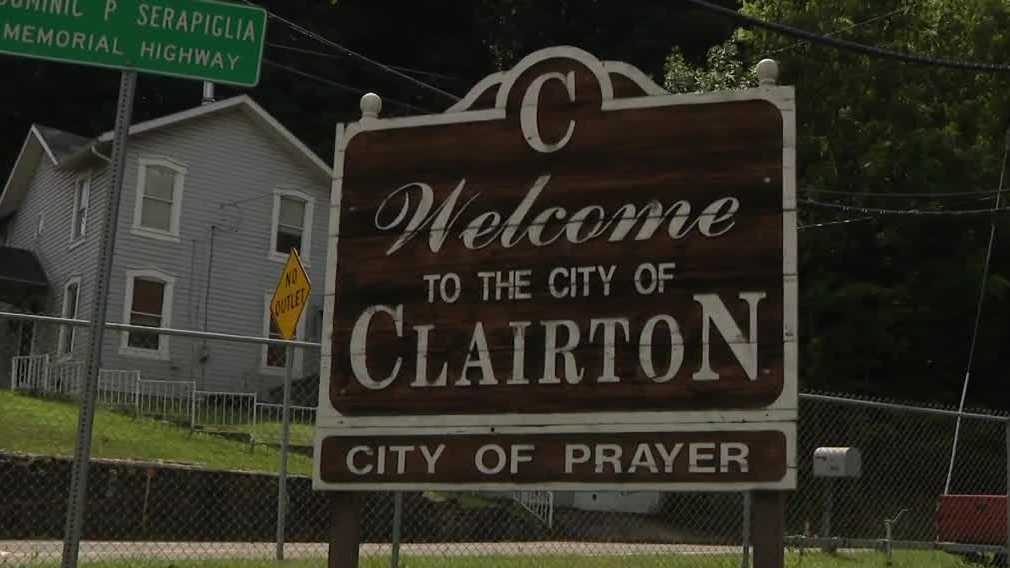
Pittsburgh’s Public Source and The Associated Press spent the past six months reporting from Clairton, long known as the City of Prayer, listening to a often-conflicted relationship to an industry that’s provided jobs and collective identity for generations, but also illness and economic collapse. At a crossroads, some see the biggest chance for change in decades.
Dorcas Rumble, community health worker: ‘It’s all tied to the mill’
Rumble peers out of the windshield across the rows of shuttered storefronts on St. Clair Avenue.
“When I was growing up here, we had three movie theaters, four grocery stores,” she says. “We had three banks, we had a jewelry store, clothing stores, a bakery.” Now, Rumble says, there’s nothing.
Rumble, 61, steers her car up a hill and through rows of crumbling housing originally built for steelworkers in the 1940s. “There used to be so many families up here, and now not so much.”
She recalls her father as one of the first to be laid off from his job at the Clairton Coke Works in 1981, as offshoring swept American steelmaking and downsizing gripped the Mon Valley.
A community health worker and part-time jitney driver, Rumble organizes monthly food and clothing drives and a free health clinic for residents who need care. She helps people in the community with housing and rent assistance. She says of her neighbors: “They need everything.”
“Us having this new mayor, we have hopes,” Rumble says. “He gives us promises, and I’m gonna hold him to them.”
Rumble knows that no mayor can do it alone.
“It’s all tied to the mill,” Rumble says, looking around. “Everything’s tied to the mill. Everything. … That’s our only resource. It’s the mill, it’s always been the mill. … Hopefully now with Nippon coming, it’ll start booming again.”
Miriam Maletta, business owner: ‘I need help bad’
Rumble’s sister, Miriam Maletta, opened her salon on St. Clair Avenue in 1984 when she was 21 and Clairton was bustling. “Business was great, because that mill was thriving.” At times, she worked until 2 a.m., sometimes bringing in $4,000 in a week.
“Now I’m one of the only ones left,” she says, her business one of the few along Clairton’s main street, and she struggles. “I need help bad.”
In a city dominated by a pollution-emitting plant, and a district long known for football, school administrators tap community partners to build a culture of collaboration and practical skills six months after the mill explosion.
In 2016, Maletta was diagnosed with stage 4 lymphoma. After six rounds of chemotherapy and 17 radiation treatments, she is in remission. “Whatever went on in my body,” she says, she believes the mill was a part of it. “I think it was all from me living here.”
“My dad worked in the mill. Never drank, never smoked. He was a professional boxer. Hall of Famer. He came down with stage four gastric cancer. … This is stuff that we have endured.”
U.S. Steel says its safety is “our core value and shapes our culture.”
For as much as Rumble thinks the mill contributes to disease in her family, she says it’s a worthwhile tradeoff to keep the city’s economy afloat. “If they can do better in keeping the air clean, I mean, what else is there? How are we supposed to get any kind of revenue?”
U.S. Steel should do more, Maletta says, to contribute to businesses like hers, and build Clairton back up. ”You’re a multibillion dollar industry. Why not help the people of this community?”
A Clairton future with a thriving mill can also have rooftop gardens, a place to buy fresh food and something for the children to do on the weekends, she says. Workers could once again roam the streets and stop in at an eatery for a bite to eat. Their spouses could go to Miriam’s for a hair cut — echoes of how it used to be, but not a return to the past, she says. “I see it being new and different, but the mill is a common denominator.”
Regulation, she says, “has to be better. … I don’t want you here if you’re not going to help the community, if you aren’t going to care about our health.”
Jim Cerqua, mayor: Without merger, ‘my town would be in trouble’
“People voted for change,” Cerqua tells a full room of residents and supporters moments after being sworn in as mayor, replacing Lattanzi. “We’re gonna work on bringing change.”
Later, over a plate of Italian sweet sausage at the American Legion, the former coke works employee describes his vision. First he needs to balance the budget and spend Clairton’s scant resources wisely.
He plans for an advisory council of youth who might inform veteran leaders like him, and he pledges to demolish crumbling buildings and infrastructure, and to push for redevelopment “starting anywhere, just pick a spot.”
The new mayor also puts forth a vision of a mental health and recreation center, maybe with a basketball court, a walking track for seniors and a “little coffee spot” to relax. He envisions a space in the back where kids might learn welding, carpentry and plumbing.
U.S. Steel, he says, must be a big part of making that vision a reality. “They have to be.” Running Clairton without the plant — and the roughly one-third of city taxes it pays — is hard to imagine. “If U.S. Steel would have not done the merger and pulled out, my town would be in trouble.”
Cerqua says he met with the company and will do so routinely to discuss a vision for Clairton. “I want to see more Clairtonians employed, and they do, too.”
Brian Pavlack, steelworker: ‘The future is looking pretty bright’
At the bar, steelworker Brian Pavlack points to an image hanging on the wall of him on stage with President Donald Trump. A lifelong Democrat, Pavlack switched parties and voted for Trump hoping to extend the lifespan of steelmaking, but supported Cerqua, a Democrat, to help bring Clairton back.
Pavlack says he met with U.S. Steel representatives before the acquisition. “They even told us if Nippon don’t take over, we’re gonna leave the Mon Valley and go down south.”
In November, the newly merged Nippon and U.S. Steel announced they would invest at least $2.4 billion in the Mon Valley Works, with $1.1 billion already slated for a new hot strip mill and slag recycler several miles up the Monongahela River at Andrew Carnegie’s earliest mill, the Edgar Thomson Works in Braddock.
In a statement, a spokesperson said U.S. Steel has already contributed more than $5 million over five years to organizations focused on health and safety, workforce development, environmental stewardship and community resilience in and around Clairton. That includes $500,000 for a new stadium for the Clairton Bears high school football team. The company said it also has active community advisory panels with community leaders “to hear about their concerns and needs.”
At the same time, U.S. Steel has made substantial investments in Arkansas, where labor is not unionized and where the company is building modern steelmaking facilities and recently committed another $3 billion. Nothing, so far, has been publicly earmarked for the Clairton Coke Works.
Pavlack praises Trump for slashing regulations on emissions, a move he thought best for the industry and his job, but he concedes, “a new president comes in, you can reverse all that.”
For now, though, he says, “The future is looking pretty bright in the Mon Valley.”
Nippon’s acquisition and investment is likely to extend the lifespan of Mon Valley steelmaking, and in doing so, lengthen a longstanding legacy of industrial pollution.
Carla Beard-Owens, grandmother: ‘I take medicine all day long, every day’
In November, Beard-Owens stood before Allegheny County Council. She didn’t want the mill to close, she said, noting it still provides jobs, but it has to be held accountable. She told the council about her granddaughter, Nasyiah, who struggles with asthma and lead poisoning and tries her best to stay indoors to limit exposure, and about her parents, who died of cancer.
“I lost a lot of loved ones and seen other ones pass because of this mill. Because they don’t want to do nothing. Because they want to brush it under the rug and feed their pockets and not help the kids and the environment and the city. I’m tired,” she said at the council meeting.
Beard-Owens and some of her neighbors in Clairton took a bus Downtown to ask the council to increase the permitting fees for U.S. Steel and other industrial polluters, a move that would bring more money and capacity to the chronically underfunded Allegheny County Health Department, which regulates U.S. Steel.
“I should still be able to go up steps, take a breath. I can’t,” said Beard-Owens, 56, to council members. “I had surgery to cut my throat open to remove a mass that was huge that was connected to my vocal chords. I couldn’t speak.”
The airborne byproducts of coke production — PM2.5, sulfur dioxide, nitrous oxide and benzene, among others — have been scientifically linked by government and private research to an array of health conditions, many of which Beard-Owens and her family have experienced.
Beard-Owens has been diagnosed with thyroid and cervical cancers, chronic obstructive pulmonary disease, or COPD, and heart disease.
At night, she connects to a breathing machine, and takes a steroid inhaler each morning. “I take medicine all day long, every day,” she says, seated in her apartment in Clairton.
Until last year, her granddaughter spent afternoons at cheerleading practice on the fields across State Street from the coke works.
“I had to keep bringing my inhaler every day to cheer practice because I could barely breathe,” 9-year-old Nasyiah Mason says.
“We don’t walk to school no more,” Beard-Owens says. “She don’t barely go outside.”
“Why is it that we got to keep dealing with this, generation after generation after generation?”
The childhood asthma rate in Clairton is 22.4%, roughly triple the national average. Of Clairton’s children with asthma, researcher Dr. Deborah Gentile explains, 60% have poor control. “That means they’re having trouble sleeping at night, they’re missing school because they’re sick, they’re running to the emergency room or the doctors, they’re not participating in activities.”
Coke oven emissions are classified by the U.S. Environmental Protection Agency as a known human carcinogen. Clairton’s lifetime cancer risk is 2.3 times the EPA’s acceptable limit, and the coke works contributes about 98.7% of the estimated excess risk, according to analysis by ProPublica.
The Clairton Coke Works “has a tremendous impact” on human health, and asthma is just part of the picture, Gentile says. Cardiovascular problems like high blood pressure and congestive heart failure have been proven to be caused by exposure to air pollution, she says, and there’s links between neurologic conditions and endocrine disease like diabetes, premature birth, low birth weight and premature death.
That evening in November, County Council voted to approve a fee increase. It was a small blip in a long legacy of industrial pollution, but Beard-Owens felt victorious.
Jackie Wade, resident: A black hole with one light
On the bus ride back from County Council’s meeting to Clairton, Jackie Wade cheers. “We won!” She dances in her seat, singing in the dark.
Wade moved to Clairton as a teenager in 1969 and experienced decades of industrial decline. Clairton’s slow slump “was like death row,” she says, and community violence and poverty became normal. When the battery exploded, she started to see that inertia break. “It got people thinking, we could’ve been gone right there.”
“We’re in that black hole in space,” she says. “We’re wanting out so bad to show our city can be just like everywhere else.”
She wishes the community had more opportunity to talk with Nippon before the deal. “What are some of the things that will change in our community and is it going to be based on that area down there where the mill sits or are they willing to look at some things that we need in our community or that people in the Mon Valley need?” And who will pay to meet those needs?
Her son, Wayne Wade, was named coach of the year by the Pittsburgh Steelers after leading the Clairton Bears football team to a state championship. Football, Jackie Wade says, “is the only light we have.”
She never wanted her son to stay to coach in Clairton.
“Anybody that has good sense,” she says, “they move.”
Ronald Mitchell, father: ‘We’re getting out of here’
At the fields along State Street one evening in October, young football players huddle with their coaches at the end of practice. By the bleachers, Ronald Mitchell waits for his 10-year-old son, Ramir, who soon jogs over. “I’m the hardest hitter in the league!” he exclaims.
The team didn’t practice near the mill the week after the explosion, Ronald says. They were back in a week. Across the street, the company was preparing to reopen one of the batteries that exploded.
“I don’t like it, but there’s nothing we can do about it,” Ronald says. “We’re getting out of here.”
Ronald, his wife, Shandrea and Ramir are planning to move to North Carolina, seeking better opportunity and relief from health worries.
The air filters and fans the family bought helped “a little bit,” but Ramir’s asthma was persistent. The practice fields near the mill didn’t help.
The family was offered money in a settlement of a class-action lawsuit claiming the pollution from the coke works harmed property values and was a persistent nuisance. The family refused the several hundred dollars, which they understand would have come in return for agreeing not to sue the company.
“Not enough money if something’s going to happen to us down the line,” says Ronald, a former worker at the mill.
“Our lives don’t have a price,” Shandrea says.
The Rev. Deryck Tines: ‘It’s called change’
On New Year’s Eve, Clairton’s clergy gathers to pray inside the municipal building on the hill, overlooking the mill.
They take turns preaching, praying for the community, for families and children, the sick and homeless. They pray for jobs, for the schools and for the city and the nation.
The Rev. Deryck Tines prays for change.
“Now it’s time for what’s coming next. And it’s not a slight to what was. It’s called change. And without change we will be stuck in sin and trespasses,” he preaches, asking God to bless the mayor and the city, and thanking him for the miracles of the future.
“I pray, God, that our city begins to rebound,” he continues. “God, I pray for new businesses and new ideas and new vision. … I pray that we cross this threshold, God, that we step into a new portal, that we step into new life. New word, new conversation. Hallelujah!”
The clergy bow their heads and pray into the night.
___
Quinn Glabicki is the environment and climate reporter at Pittsburgh’s Public Source and can be reached at quinn@publicsource.org. This story is a collaboration between Pittsburgh’s Public Source and The Associated Press. This story was fact-checked by Jamese Platt.
PREVIOUS COVERAGE OF U.S. STEEL BELOW:
U.S. Steel and Nippon Steel finalize partnership: Historic deal keeps U.S. Steel in Pittsburgh (June 2025)Trump: United States will have ‘golden share’ in U.S. Steel-Nippon Steel deal (June 2025)Trump clears path for Nippon Steel investment in US Steel, so long as it fits the government’s terms (June 2025)Mon Valley mayors say they’re confident of the future after Trump announces Nippon Steel investment in U.S. Steel (June 2025)‘US Steel will be controlled by the USA’: Trump announces 50% tariff on imported steel in Pittsburgh (May 2025)Steel workers and USW react to Trump’s speech at US Steel (May 2025)Trump says US Steel will keep headquarters in Pittsburgh in a sign he’ll approve Nippon bid (May 2025)US Steel-Nippon Steel ‘partnership’: What Pa. lawmakers are saying (May 2025)US Steel workers react to partnership news with Nippon Steel (May 2025)Mon Valley mayors celebrate news US Steel staying in Pittsburgh (May 2025)Trump opposes Nippon Steel’s purchase of US Steel; local mayors urge reconsideration (April 2025)US Steel hits 52-week high after Trump orders new security review of Nippon Steel bid (April 2025)Pittsburgh leaders questioning implications of potential Nippon investment in US Steel (Feb. 2025)Trump: Nippon will ‘heavily’ invest in US Steel, drops acquisition plans (Feb. 2025)New player arrives in US Steel-Nippon takeover saga with the goal of quashing it (Jan. 2025)A new rival bid for US Steel is emerging as the US extends deadline on Nippon’s bid blocked by Biden (Jan. 2025)Rejection of Nippon Steel’s bid for US Steel rankles Washington’s key ally in Asia (Jan. 2025)Nippon Steel stands firm on a US Steel takeover and denies risks cited by Biden (Jan. 2025)US Steel, Nippon Steel file suit against Biden administration, union, and rival after deal scuttled (Jan. 2025)Biden’s decision to block Nippon Steel takeover creates uncertainty for U.S. Steel workers (Jan. 2025)President Biden blocks acquisition of US Steel by Japan’s Nippon Steel (Jan. 2025)Mon Valley mayors react to President Biden blocking US Steel deal (Jan. 2025)Rise of US Steel paralleled the arrival of the United States on the world stage (Jan. 2025)Local steelworkers voice support for US Steel-Nippon deal amid Trump’s opposition (Dec. 2024)Biden will decide on US Steel acquisition after influential panel fails to reach consensus (Dec. 2024)EXCLUSIVE INTERVIEW: US Steel CEO defends sale to Nippon (Nov. 2024)EXCLUSIVE INTERVIEW: United Steelworkers president says Nippon Steel’s promises short-term, jeopardize US steelmaking (Nov. 2024)Arbitration board rules in favor of US Steel, affirms transaction with Nippon Steel (Sept. 2024)Harris opposes US Steel’s sale to a Japanese firm during joint Pittsburgh event with Biden (Sept. 2024)USW, US Steel comment in wake of Harris opposition to Nippon Steel deal (Sept. 2024)US Steel stages employee rally Downtown, threatens to move headquarters if Nippon Steel deal isn’t approved (Sept. 2024)Nippon Steel boosts capital commitment to US Steel plants (Aug. 2024)Pennsylvania Gov. Shapiro opposes US Steel sale to Nippon (Aug. 2024)Experts weigh in on US Steel buyout offer (Aug. 2024)Sale of US Steel kicks up a political storm, but Pittsburgh isn’t Steeltown USA anymore (July 2024)As Nippon Steel execs visit Pittsburgh, U.S. Steel and steelmaker Cleveland-Cliffs trade barbs (May 2024)Weeks after Biden shows support for US Steel industry, Japanese merger delayed (May 2024)If US Steel’s Nippon Steel deal is blocked, Cleveland-Cliffs CEO says he’s still interested (April 2024)In Pittsburgh, Biden vows to shield U.S. steel industry by blocking Japanese merger and seeking new Chinese tariffs (April 2024)Biden to meet Japan’s prime minister over shared concerns about China and differences on US Steel deal (April 2024)US Steel shareholders approve takeover by Japan’s Nippon Steel opposed by Biden administration (April 2024)Biden opposes plan to sell US Steel to Japanese firm, citing need for ‘American steel workers’ (March 2024)US Steel agrees to takeover by Japan’s Nippon Steel (Dec. 2023)Steelworkers president, Sen. Casey speak on Nippon Steel deal to acquire U.S. Steel (Dec. 2023)