
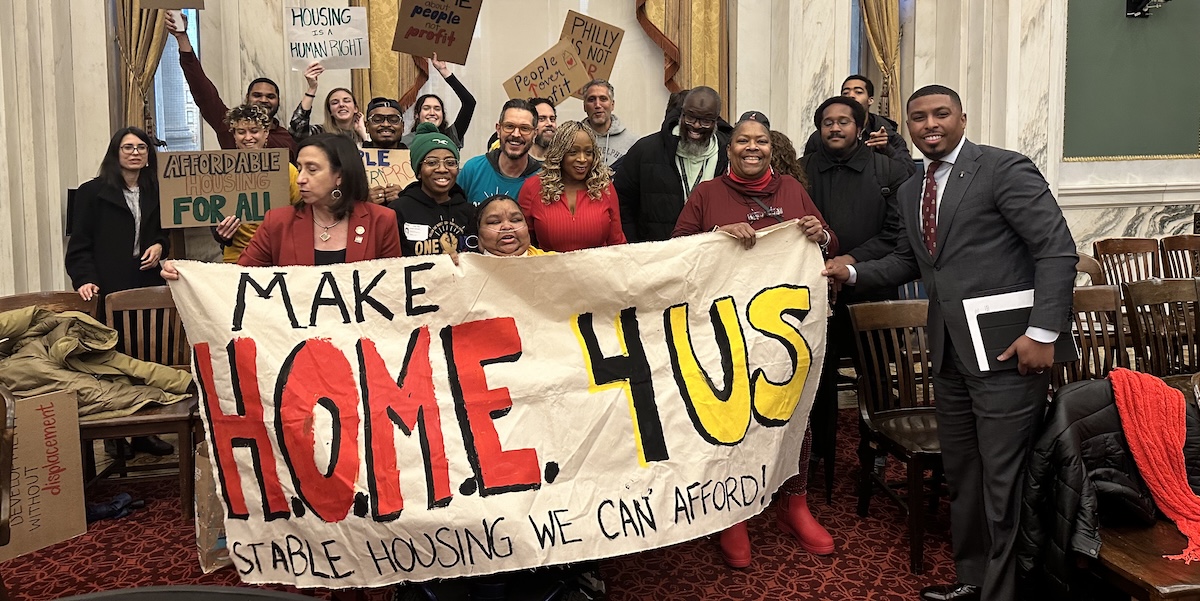
After nearly 10 months of debate and process, the city of Philadelphia is on track to implement the H.O.M.E. plan. This is a win for all Philadelphians.
While the H.O.M.E. initiative has the potential to have a tremendous impact, for the better, on city residents, it doesn’t solve all of our housing problems. Affordable housing is only a half promise if the city’s housing stocking is in disrepair and neglected by absentee property owners, leaving tenants in unsafe conditions.
That’s why we need the Safe Healthy Homes Act. Introduced by Councilmember Nicolas O’Rourke, this legislation would strengthen a renter’s right to repair of their home, including proactive inspections before moving in, and their right to be safe from retaliation by landlords. Those bills remain in committee. The act also includes the right to relocation when a property is deemed unsafe for occupation, which passed last year and was funded in the H.O.M.E. plan.
A lack of access to affordable, healthy housing has been at the heart of my inability to lead a normal life. As a person with a disability that keeps me from being able to work full-time, I need a home with accommodations, like a functional elevator and a wheelchair ramp. But because I’m low-income and under the age of 65, my options are limited.
By failing to ensure accessible, healthy homes for those most at risk, our systems decide who gets to live with dignity and who is left to suffer. That’s not progress — it’s capitulation to absentee landlords and Big Real Estate dressed as reform.
I’ve experienced homelessness. I’ve slept in storage units and under loading docks. But it was an apartment in Frankford that made me as sick as I am today.
I moved into that apartment in 2019, the same year I was in a serious car accident that left me disabled. Before I moved in, I was denied a walkthrough. But I was coming from a homeless shelter and desperate for stability.
The two remaining bills in the Safe Healthy Homes Act will provide a stronger check on absentee landlords and will protect tenants’ right to organize and unionize without fear of retaliation.
From the start, there were problems. A gap in the bedroom floor, a bathroom leak that caused the light fixture to crash from the ceiling, and a toilet that overflowed with sewage. People who were homeless used the building for shelter, leading to human waste in the hallway. The management company wasn’t securing the building. They even periodically stopped paying for trash removal, which led to infestations of mice and roaches.
After a bout of pneumonia in 2023, my doctor told me that my living conditions were causing my health problems. Later, I learned I’m fatally allergic to mice and cockroaches and was eventually diagnosed with pulmonary hypertension, chronic heart failure, and chronic respiratory failure.
I moved into a new apartment in January 2025 but still need home health aides seven days a week because of my health conditions.
As a Black woman who is overweight and disabled, I fight stigma every single day. When people look at me, I have three strikes against me. What they don’t see is that I’m a mother, a grandmother, and a published author.
I tell my story because I know I’m one of thousands of people in Philadelphia living right on the edge.
Under current law, Philadelphia renters have a right to safe, decent housing, and landlords have a legal duty to make repairs that ensure habitable conditions. But tenants often choose not to complain about squalid housing conditions or exercise legal rights available to them because they fear retaliation, and for good reason. Landlords often respond to repair requests with eviction notices. As long as they wait until the end of the lease to do so, Philadelphia law allows them to get away with this.
The two remaining bills in the Safe Healthy Homes Act will provide a stronger check on absentee landlords and will protect tenants’ right to organize and unionize without fear of retaliation. Even when I lived in life-threatening conditions, I was too scared to report them. Tenants should not have to live in fear of landlords evicting us just because we ask for repairs. These bills would protect us from retaliatory and unjust evictions or non-renewals.
The legislation provides critical support to the huge investment being made in the H.O.M.E. initiative. City Council has the opportunity to fulfill the promise of the plan right now, with the expectation that the housing committee will host its second hearing on the remainder of the Safe Healthy Homes Act this month.
Philadelphians need deeply affordable housing that is safe and well-maintained. Take it from me: Our health literally depends upon it.
Melissa Monts is a resident of North Philadelphia and a member of One Pennsylvania Renters United Philadelphia.
The Citizen welcomes guest commentary from community members who represent that it is their own work and their own opinion based on true facts that they know firsthand.
 MORE ON HOUSING FROM THE CITIZEN
Author Melissa Monts (center), along with bill sponsors and City Council members, left to right: Rue Landau, Jamie Gauthier and Nicolas O’Rourke.