
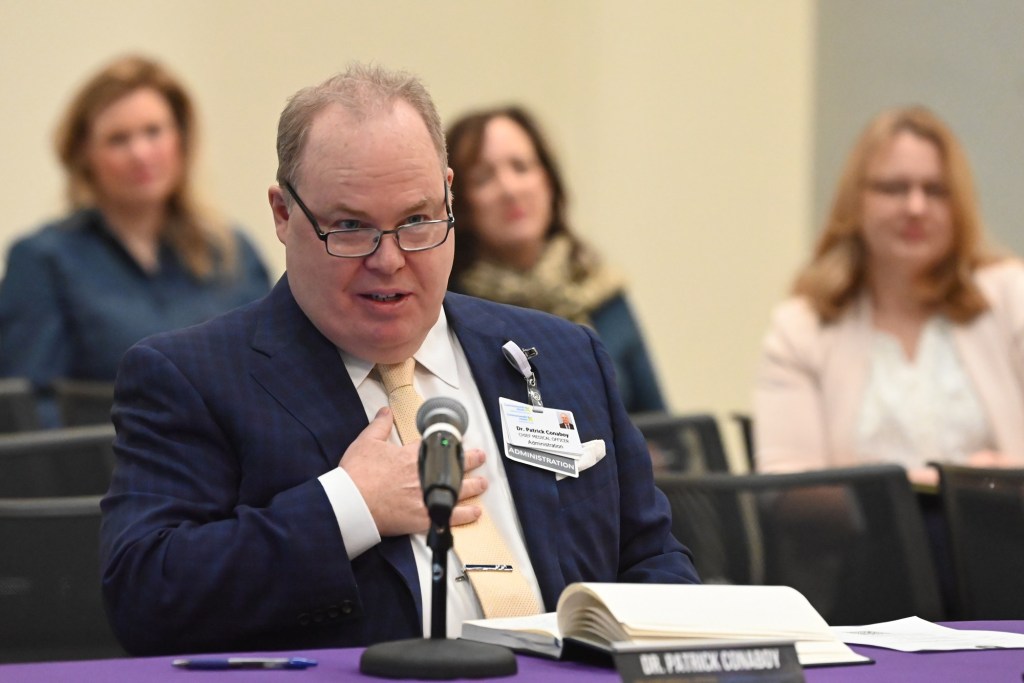
SCRANTON — The chief medical officer of Commonwealth Health’s Scranton hospitals told a panel of state Democratic lawmakers Wednesday that recruitment “for every position” is the biggest challenge they currently face.
Patrick Conaboy, M.D., chief medical officer for Regional Hospital of Scranton and its nearby Moses Taylor Hospital campus, said as much during a state House Democratic Policy Committee hearing on the myriad financial, workforce and other challenges local hospitals and health care providers face. The hearing held at the University of Scranton followed the nonprofit Tenor Health Foundation’s recent acquisition of Commonwealth Health and its hospitals in Scranton and Wilkes-Barre, a much-anticipated transaction that saved Regional and Moses Taylor from closing.
Many of the challenges Conaboy and others who offered testimony highlighted won’t come as a surprise to those who followed or were involved in the yearslong local effort to save the Scranton facilities, the closures of which would have eliminated invaluable points of care for patients and exacerbated considerable capacity issues at Geisinger Community Medical Center in the city.
But while the Tenor deal keeps the Commonwealth hospitals open, their workforce challenges remain.
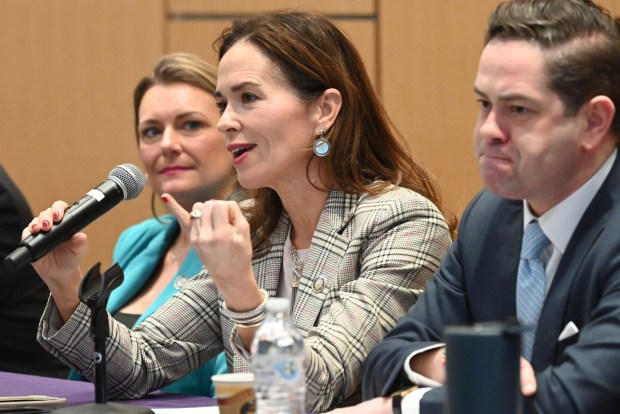 State Rep. Bridget Kosierowski speaks during the state House Democratic Policy Committee hearing regarding access to health care at the University of Scranton on Wednesday, Feb. 11, 2026. (REBECCA PARTICKA/STAFF PHOTOGRAPHER)
“The biggest challenge for the hospitals right now is … recruitment, and understand that’s not just recruitment of physicians, which is a huge problem for us, but it’s recruitment for every position in the hospital, top to bottom,” Conaboy said. “That’s a challenge for a number of reasons. One, as I’ve already alluded to, the cost of bringing on an employee has become very difficult for any hospital to manage.
“Even if I want somebody without advanced training who is coming in to do environmental services, etc., we are competing with Chewy, who will pay you $20 an hour to drop a dog bone in a box,” he continued. “When you get to the higher things, whether it is nurses or critical care nurses or physicians or specialists, we have to be able to assure them of two things: One, that we can pay them a competitive salary, and two, that we’ll still be here in two years. For me to ask somebody to come and work for me is not just a matter of salary. They’re investing in me also.”
A doctor who comes to work at Regional is likely to bring their family with them, Conaboy stressed.
“I can sell this area like there’s no tomorrow, but the tenuous future of the hospital due to all of these financial pressures purely is our biggest challenge,” he said. “And the same with nurses. Quite frankly, nurses move all around the state now and they move to other states if they see progression. But they’re not going to come here, they’re not going to take this job, until they feel that we are financially stable and have a clear future. And that has to do with rebuilding the entire infrastructure, and that takes money.”
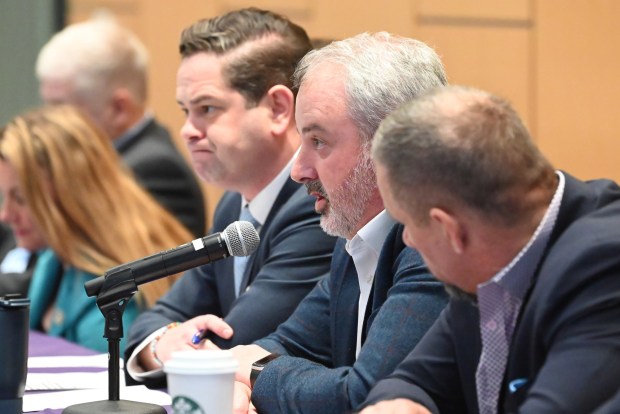 State Rep. Kyle Donahue speaks during the state House Democratic Policy Committee hearing at the University of Scranton on Wednesday, Feb. 11, 2026. (REBECCA PARTICKA/STAFF PHOTOGRAPHER)
Conaboy and others testified to broader financial challenges, too, highlighting issues like insufficient reimbursements for care delivered. As health insurance becomes more expensive, sometimes prohibitively expensive, growing populations of uninsured individuals are also presenting at hospital emergency departments when they need care, he said. It’s a challenge that cuts to Medicaid at the federal level and resulting coverage losses are likely to aggravate further.
“And the end result is a massive number of people in our community aren’t getting what they need, and they all end up knocking on the door of the hospital,” he said. “Whether it’s psychiatric patients or patients with somatic problems, they all end up in the same place: the couple emergency rooms that we have.”
For the time being the region has one fewer emergency room than it did before last week’s fire at Lehigh Valley Hospital-Dickson City temporarily closed that facility and its ER.
The emergency room at Regional also would have closed had Tenor “not stepped in to keep us open,” Conaboy said, noting former owner Community Health Systems “had already published their plan to close” Regional. “And quite frankly Wilkes-Barre General Hospital in Luzerne County would have followed within a few years.”
The panel also heard testimony from Jen Huber, a registered nurse at Geisinger Community Medical Center and president of the Northeast Pennsylvania Nurses Association there, a local of the Pennsylvania Association of Staff Nurses and Allied Professionals union. Huber told the lawmakers she was there to “share what the nursing workforce crisis looks like on the ground in Northeastern Pennsylvania.”
“In our region, the biggest challenge isn’t just recruiting new nurses, it’s keeping experienced nurses at the bedside,” Huber said. “We’re losing nurses to burnout, unsafe staffing and working conditions that made it hard to provide the level of care to our patients.”
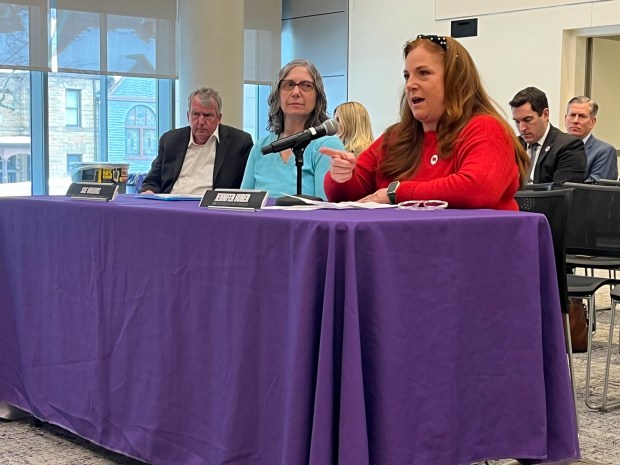 Jen Huber, a registered nurse at Geisinger Community Medical Center and president of the Northeast Pennsylvania Nurses Association there, addresses lawmakers Wednesday at a state House Democratic Policy Committee hearing on health care held at the University of Scranton. (JEFF HORVATH/STAFF PHOTO)
Huber said short-staffing has become “normalized” at her hospital and others across the region, with nurses often responsible for more patients than is safe, affecting outcomes and hurting morale.
“This isn’t just a workforce issue, it is a patient-care issue and regional-access issue,” she said. “When hospitals can’t retain nurses units close, services are reduced and patients face longer wait times and have to travel for their care.”
Sue Wiggins, a medical laboratory technologist at Regional and a local vice president with the SEIU Healthcare PA union there, also said there’s a “health care workforce-shortage crisis throughout nursing, techs and almost every job title which was aggravated by the (COVID-19) pandemic, and it’s only getting worse.”
“Health care work is very tough physically, mentally and emotionally,” she said. “In order to attract qualified staff, it takes incentives like good benefits, longevity pay and keeping up with whatever hospital is offering the latest sign-on bonus. The cost of living has increased by 25% over the past five years. Groceries, housing, child care and utilities have all gone through the roof and our wages have not kept up.”
Full video of Wednesday’s policy committee hearing is available on YouTube and via pahouse.com/policy. The local Democratic state representatives that participated include Bridget Kosierowski, Kyle Donahue, Kyle Mullins, Jim Haddock and Eddie Day Pashinski.
“At the end of the shift we’re looking at each other and it’s not ‘great shift guys, we did great,’ it’s ‘we survived,’” Huber told the panel at one point. “Everyone is in survival mode right now.”
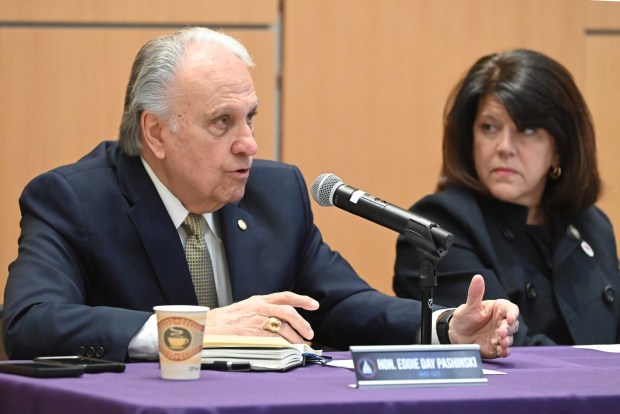 State Rep. Eddie Day Pashinski speaks during the state House Democratic Policy Committee hearing at the University of Scranton on Wednesday, Feb. 11, 2026. (REBECCA PARTICKA/STAFF PHOTOGRAPHER)
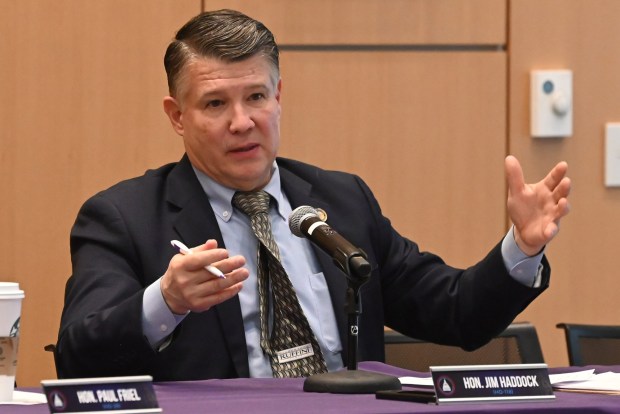 State Rep. Jim Haddock speaks during the state House Democratic Policy Committee hearing at the University of Scranton on Wednesday, Feb. 11, 2026. (REBECCA PARTICKA/STAFF PHOTOGRAPHER)