
Pittsburgh City Council advanced legislation Wednesday that would regulate and license short-term rental units like those offered by AirBnB and VRBO. But final votes on the bills won’t take place for at least three more months — after Pittsburgh hosts the NFL Draft.
The legislation would require the owners of short-term rentals in the city to pay for a license. It would also require an owner to obtain the approval of zoning officials if the rental is in a residential district but not attached to the owner’s home. Someone responsible for property would need to be located within 25 miles of it.
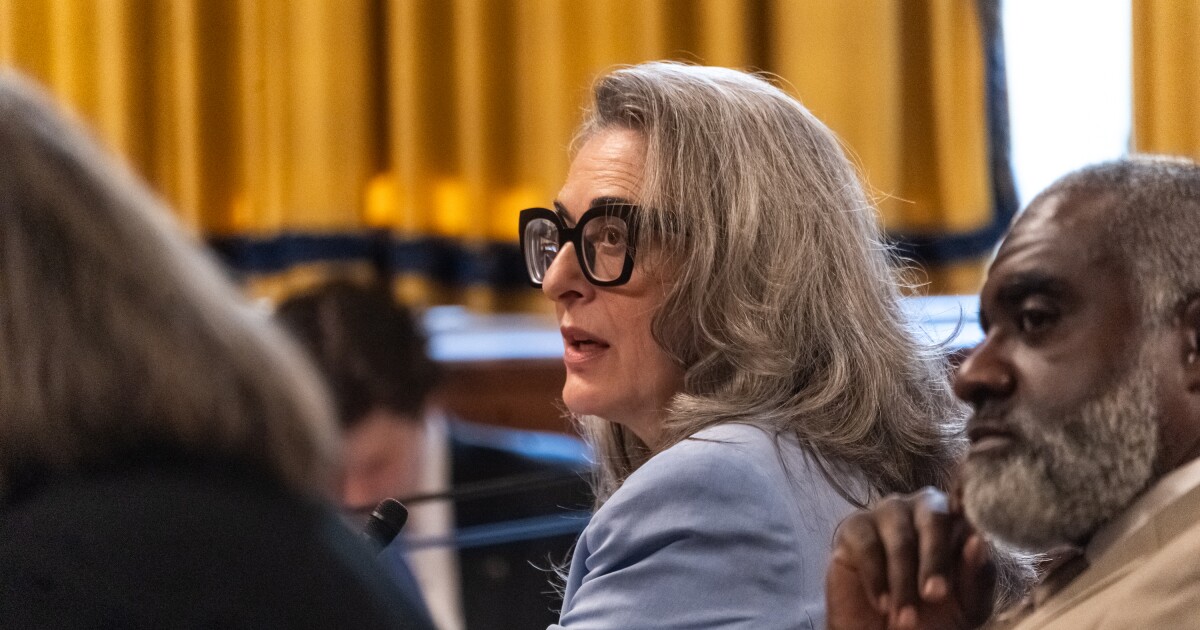
“ We have had nothing in terms of restrictions on locations for short term rentals, ever,” said councilor Deb Gross, who cosponsored the bill along with Bobby Wilson and Anthony Coghill. “This is now spread across the city in many of the neighborhoods. … It cannibalizes housing and removes it from being a place where people can live, [and] creates problems on streets. We’re long overdue in making sure we do something about it.”
Councilors unanimously sent the bill that would require zoning approval to the city’s Planning Commission for a report and recommendation, a process that can take a few months. The measure would be returned to council for a final vote.
Council also postponed action for 12 weeks on the proposal to license short-term rentals — a delay that will mean the bill comes before council around the time that city planners are expected to have weighed in on the zoning proposal.
The new rules are being put forward amid frustration with short-term rentals in the city, following an incident at a New Year’s Eve party in an Airbnb in which a North Side resident was shot in the leg. The incident took place in the neighborhood of East Allegheny, blocks away from the scene of the deadly 2022 Easter Sunday shooting that occurred during a party at an Airbnb.
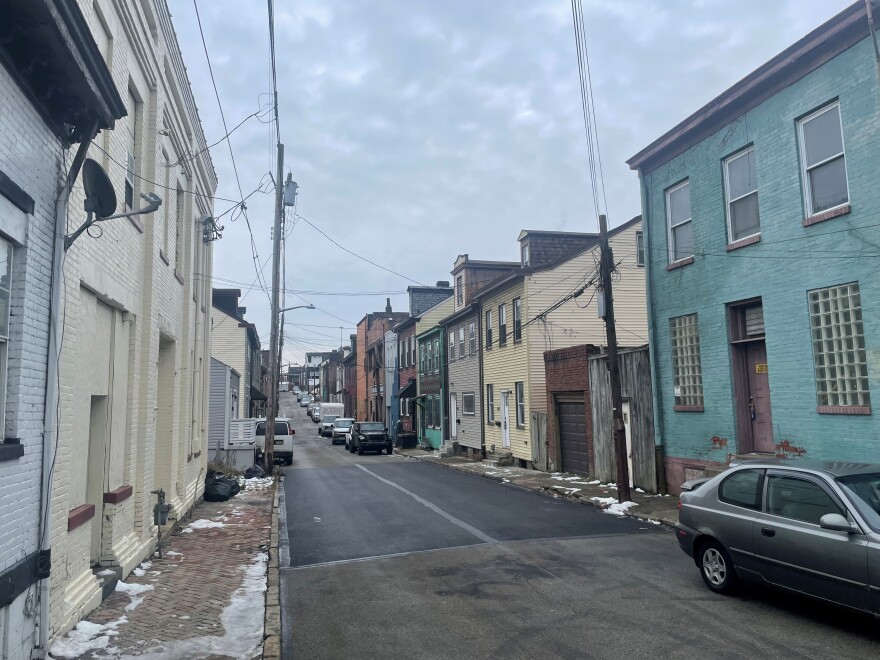
Kate Giammarise / 90.5 WESA
A woman was shot at a party in an AirBNB on New Year’s Eve on this street in the East Allegheny neighborhood, also known as Deutschtown, in Pittsburgh’s North Side.
“Enough is enough. It’s about time that we did something,” said Wilson, who represents the area of the North Side where the parties occurred. “We are missing out on neighbors that could be living in these residences.
“Even though we have operators that come and say they are operating their properties appropriately, this is an issue nationally that is getting out of hand” he added.
Councilors Barb Warwick and Erika Strassburger indicated they supported the bills at the meeting — a positive sign for their chances at passing when the zoning portion returns.
‘Do we want visitors or don’t we?’
Residents in parts of town where short-term rentals have proliferated addressed council Wednesday, expressing frustration about the situation.
“ What’s really at the heart of this issue is an unregulated and unaccountable industry. This is a business model that leverages Pittsburgh’s affordability and lack of regulation to maximize profit,” said Callie DiSabato, a North Sider who has organized concern in the neighborhood over AirBNB’s in recent months. “ This is big business. Our neighborhoods are paying the price of that.”
“ Residents like me are doing our part. We report, we attend meetings, we clean up, but too often the city’s response is slow or fragmented and bad actors quickly learn there are few, if any, consequences,” said Kathleen Whitney of East Deutschtown. She said she lives close to where the New Year’s Eve party took place, and wanted the legislation to be backed by real action – as well as by the staffing, funding and coordination needed to enforce the rules.
Nicholas Petrillo, president of the Brighton Heights Citizens Federation, spoke in support of the regulation.
“ Maybe some people here think, “oh, [short term rentals] won’t find our neighborhood because maybe they’re not right next to the stadiums,” said Petrillo. “Or maybe they don’t have the biggest drags of bars here in Pittsburgh. Well, Brighton Heights doesn’t have either of those either” — and yet police broke up a rowdy party with underage attendees at a short-term rental in Brighton Heights this weekend.
Short-term rental owners and operators were unhappy with some of the proposed rules. While most conceded that registration and licensing made sense, several rental owners and managers said zoning rules would unfairly stifle their businesses.
“ These two bills combined… just go way too far, way too fast, and risk killing off an industry that has a ripple effect of positive impacts on our community,” said Jake Tovey of the Steel City Short Term Rental Alliance, also known as SteelSTRA. “ I urge counsel to prioritize licensing and enforcement as opposed to guessing at drastic zoning changes and blanket building caps.”
Chad Wise, also of SteelSTRA, said his property management business, HostWise, manages 120 short-term rental properties across the city. He emphasized that responsible short-term rental owners do not want or encourage parties on their properties.
“ I know people in this room are upset, and as a community member, I completely understand that when things go wrong with [short-term rentals], the impact on neighbors is real,” he said. “That’s why we need a bill that protects our neighborhoods by punishing irresponsible guests and hosts.”
“ Do we want options for visitors coming to Pittsburgh or don’t we?’ said Ellie Harward, a short-term rental owner who lives in Spring Garden on the North Side. “Are we growing, or are we signaling we only want growth on certain terms?”
Caps on short term units
If approved, the new rules would allow no more than two short-term rentals in buildings of 20 or less units, and no more than five short-term rentals in buildings of over 20 units. Only one unit would be allowed on a given lot in most residential areas. The units would also need to be evaluated by the zoning board for their impacts on surrounding properties.
Short-term rental operators would also need to register the number of bedrooms in their units, along with the maximum number of intended occupants. They’d have to keep a daily register of guests that could be available for city code enforcement to inspect, and all residents would need to be 18 years of age or older, unless accompanied by a parent or guardian. Residents would be limited to stays of no more than 28 days.
The legislation would explicitly ban parties (defined as “public assemblies, recreational entertainment, or hospitality activities”) in short-term rentals.
Airbnb’s own company rules already ban such uses.
The city has struggled for years to implement such policies, as state law generally bars local officials from imposing their own regulations on businesses. Under these rules, existing short-term rentals also wouldn’t have to apply for zoning approval, but they would still have to apply for a license.
While some residents hoped for further-reaching regulation, Gross said she opted not to go for a complete prohibition of short-term rentals. She said less sweeping rules have a better chance to be upheld by judges.
“ Far too often, we’ve passed legislation that then just goes to courts and gets suspended,” she said. “ We wanna make sure at this time that we do something that we know can stick.”